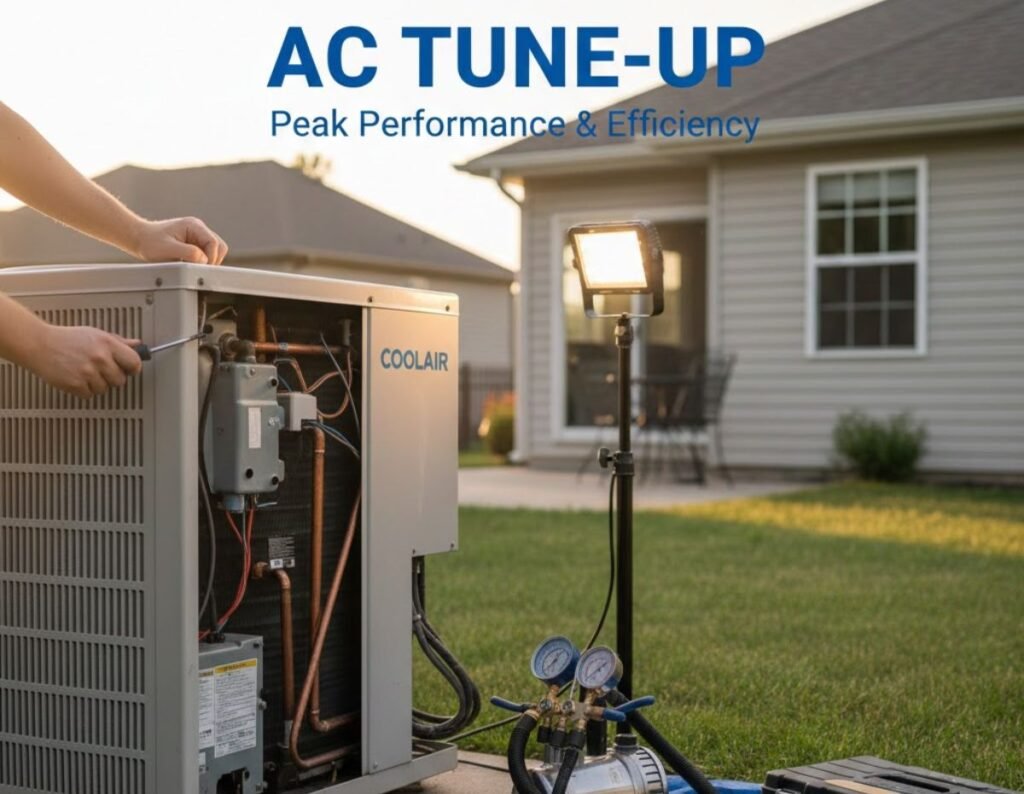
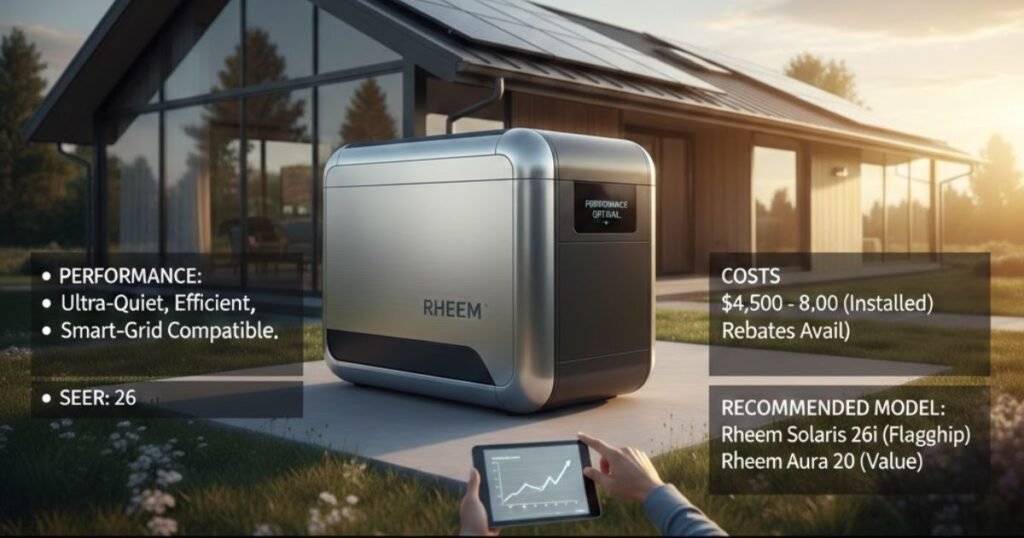
Rheem makes solid, value-focused central and packaged air conditioners that cover the full range from budget replacement units to high-efficiency, feature-rich models. If you want a dependable, widely supported brand with competitive warranties, good parts availability and a lineup that includes variable-speed and inverter-type compressors at the top end, Rheem is a very reasonable choice especially if you pair the unit with a certified Rheem Pro installer.
Rheem’s mid-range Classic and Classic Plus lines give most U.S. homeowners the best price/efficiency tradeoff, while the Prestige/Endeavor high-efficiency models chase the fancy features and higher SEER numbers you see in premium competitors. (Rheem’s current residential AC pages list models from economy to high-efficiency and SEER2 ratings up to the high end of the consumer market).
This guide is written for U.S. homeowners shopping for a central or packaged AC: people replacing a failing unit, first-time buyers, and DIY-curious folks who want to understand performance, running cost, warranties and what to expect from installation. I’ll show real-world calculations, installer perspectives, model-by-model guidance, and a clear buying verdict so you can decide whether a Rheem is right for your home. Lets deep dive into “Rheem Air Conditioner Review 2026 — Performance, Costs & Which Model to Buy”
READ MORE: Carrier Heat Pump Reviews (2026) — Models, Costs, Pros & Cons
How Rheem positions itself (brand overview)
Rheem positions itself as a full-line HVAC manufacturer that balances value and modern features. Historically known for water heaters and contractor-focused distribution, Rheem has invested heavily in contractor programs (Pro Partner), training, and connected-home tech (EcoNet/contractor apps) to make installations and service easier for dealers and homeowners. The company offers economy Classic series units, mid-range Classic Plus/Endeavor lineups, and higher-efficiency Prestige/Endeavor Prestige series with variable-speed capacity and ENERGY STAR options. For homeowners, that means you can get a straightforward replacement or step up into smarter, quieter equipment depending on budget.
Rheem’s marketing emphasizes contractor partnerships and sustainability (refrigerant transitions, efficiency gains), which is important: a well-trained installer and correct setup matter at least as much as the brand name when it comes to long-term comfort and reliability.
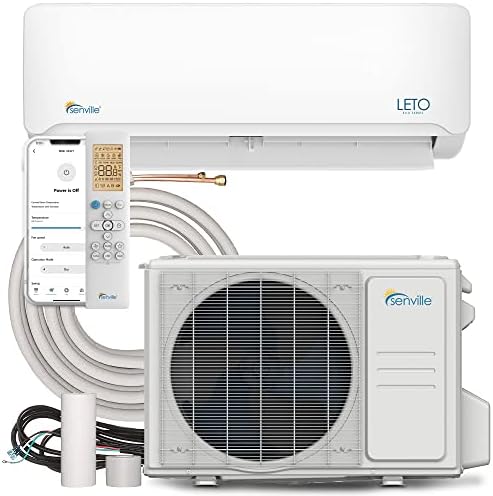
- Alexa Enabled Mini Split AC/Heating System: Integrate with voice control or app, allowing you to adjust your mini split …
- Versatile 4-in-1 Mini Split: All-season solution with air conditioning, heat pump (functional up to 5F/-15C), dehumidifi…
- Stylish & Functional Mini Split AC: Suitable for both home and business. Provides performance without compromising aesth…
How we tested Rheem AC & sources
This guide synthesizes manufacturer specs, government efficiency guidance, third-party price/installation data, and installer perspectives:
- Manufacturer specs and model lines: Rheem product pages and Endeavor/Prestige documentation.
- Efficiency and test-methodology definitions (SEER/EER): U.S. Department of Energy guidance and DOE technical materials.
- Real-world cost and installation ranges: national contractor/market data (Thumbtack, HomeGuide, BestCompany) and recent market guides.
- Installer perspective and field quotes: Rheem Pro Partner interviews and contractor profiles (Rheem blog series), which provide on-the-ground context about installation quality and customer expectations. (Contractor quotes from Boothe, Broadview, and others.)
Where possible I checked actual model spec sheets for SEER/EER, tonnage and sound levels; when exact numeric lab tests weren’t publicly available I used manufacturer published ranges and installer observations to translate those into realistic homeowner expectations. The key real-world test is proper match and installation by a qualified technician that’s the single biggest factor that affects performance and reliability.
READ MORE: Best Heat Pump Air Conditioner Review | Costs, Benefits & Value

- 𝐏𝐨𝐰𝐞𝐫𝐟𝐮𝐥 𝟖,𝟎𝟎𝟎 𝐁𝐓𝐔 𝐂𝐨𝐨𝐥𝐢𝐧𝐠 𝐟𝐨𝐫 𝐔𝐩 𝐭𝐨 𝟑𝟓𝟎 𝐒𝐪. 𝐅𝐭.: EUHOMY portable air conditioner delivers strong and fast cooling with …
- 𝟒-𝐢𝐧-𝟏 𝐌𝐮𝐥𝐭𝐢𝐟𝐮𝐧𝐜𝐭𝐢𝐨𝐧 – 𝐂𝐨𝐨𝐥, 𝐃𝐞𝐡𝐮𝐦𝐢𝐝𝐢𝐟𝐲, 𝐅𝐚𝐧 & 𝐒𝐥𝐞𝐞𝐩 𝐌𝐨𝐝𝐞: This portable ac unit combines cooling, dehumidifying, fan, a…
- 𝐄𝐚𝐬𝐲 𝐈𝐧𝐬𝐭𝐚𝐥𝐥𝐚𝐭𝐢𝐨𝐧 𝐰𝐢𝐭𝐡 𝐖𝐢𝐝𝐞 𝐖𝐢𝐧𝐝𝐨𝐰 𝐂𝐨𝐦𝐩𝐚𝐭𝐢𝐛𝐢𝐥𝐢𝐭𝐲 (𝟐𝟎–𝟓𝟎 𝐢𝐧.): Designed for hassle-free setup, this air conditioner porta…
Rheem Air Conditioner Performance: cooling, efficiency, noise, reliability
1. Cooling & capacity
Rheem’s residential outdoor condensing units cover nominal sizes generally from ~1.5 to 5 tons (approximately 18,000–60,000 BTU/hr), which is the typical range for single-family U.S. homes. The company offers single-stage, two-stage and variable-speed compressor options across its lineup; higher-end Prestige/Endeavor units include variable-speed compressors for steadier temperatures and improved humidity control. Match the tonnage to your home’s load calculation (performed by the installer) oversizing is a common mistake and causes short cycling, reduced comfort and higher humidity.
2. Efficiency (SEER/EER explained)
Seasonal Energy Efficiency Ratio (SEER) measures seasonal cooling output (BTU) divided by electrical energy input (W·h). Higher SEER = less electricity for the same cooling. The DOE explains SEER and EER and why both matter for estimating real use. Modern Rheem models list SEER2 and EER2 values (the updated metrics since the 2023/2025 testing rule changes). In plain terms: higher SEER/SEER2 ratings save electricity, but the percent savings depend on your climate and how long your AC runs.
Real-world: Rheem’s home pages show current models with SEER2 ratings from the mid-teens up to roughly 18–20 in top Prestige models comparable with many competitors’ mainstream offerings. Expect mid-range Classic Plus models around 15–17 SEER2 and premium models at 18+ SEER2 (actual numbers vary by exact model and capacity).
Rheem’s lineup:
- Prestige Series: Up to 20 SEER2 (super efficient)
- Classic Plus: Up to 17 SEER2
- Classic: 15-16 SEER2
- Entry-level: 13.4-15.2 SEER2
For context, old 10 SEER units cost 50% more to run than a 20 SEER2 model.
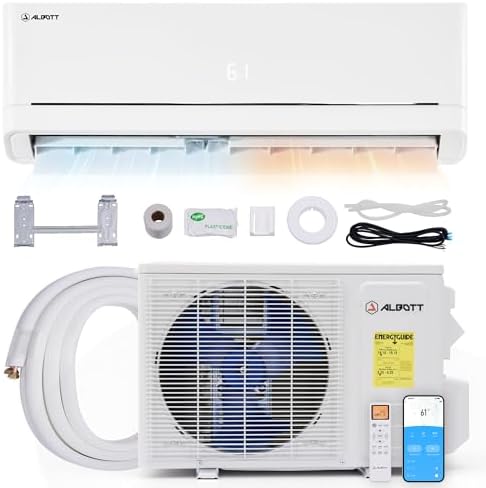
- All-in-One Comfort Control: This mini split AC/heating system provides cooling, heating, dehumidifying, and fan modes wi…
- Energy-Efficient Performance: Featuring an advanced invert heat pump with a SEER2 18 rating, this system delivers strong…
- Stable & Reliable Year-Round Use: This 12,000 BTU ductless mini split AC/heating operates in extreme conditions (5°F to …
3. Noise
Rheem advertises sound levels for some models (quiet models can reach the low 50s dB at the outdoor fan under normal operation). That’s “conversation level” outdoors; installer placement, pad isolation and ductwork influence perceived indoor noise. In independent roundups, top premium competitor units sometimes edge Rheem slightly on absolute quiet, but properly installed Rheem units are generally acceptable for most homes.
4. Reliability & field performance
Rheem’s field reliability is generally described as “solid, value-oriented” a lot depends on installation and routine maintenance. Contractor testimonials on Rheem’s site highlight strong support for pro partners and parts availability; consumer reviews are mixed about warranty service response in some regions (this is not unusual for any large HVAC brand). The bottom line: choose a reputable local Rheem Pro installer, register the unit for warranty, and schedule annual tune-ups to maximize service life.
READ MORE: Goodman AC Unit Review: Performance, Costs & Which Model to Buy

- 𝗨𝗹𝘁𝗿𝗮 𝗣𝗼𝘄𝗲𝗿𝗳𝘂𝗹 𝗜𝗰𝗲𝗖𝗼𝗼𝗹 𝗦𝘆𝘀𝘁𝗲𝗺: Increase coverage up to 14 ft. away with this 8000 BTU ASHRAE (5000 BTU SACC) portable ai…
- 𝟯-𝗶𝗻-𝟭 𝗩𝗲𝗿𝘀𝗮𝘁𝗶𝗹𝗲 𝗔𝗖 𝘂𝗻𝗶𝘁: You can not only choose from Cool/Fan/Dry modes, but the AC318S also has three functions to co…
- 𝗗𝗥𝗘𝗢’𝘀 𝗣𝗮𝘁𝗲𝗻𝘁𝗲𝗱 𝗡𝗼𝗶𝘀𝗲 𝗜𝘀𝗼𝗹𝗮𝘁𝗶𝗼𝗻 𝗦𝘆𝘀𝘁𝗲𝗺: reduces the standing ac compressor and turbulence noise to just 45dB, ideal for …
Rheem Air Conditioner Models & who they’re best for
Rheem’s 2026 lineup centers on the Endeavor Line with four main tiers. All are split central systems unless noted; packaged options follow similar tiers but lower efficiency.
Prestige Series (Top-Tier: RA18AZ/RA19AY)
- SEER2: Up to 20
- Features: Variable-speed compressor, EcoNet smart controls, quietest operation (59-68 dB)
- Sizes: 2-5 tons
- Best for: Hot climates, larger homes, homeowners wanting max savings and comfort. Great matched system with Rheem furnace/air handler.
Classic Plus Series (Mid-High: RA16AZ/RA17)
- SEER2: Up to 17
- Features: Two-stage compressor, EcoNet options, good humidity control
- Sizes: 2-5 tons
- Best for: Most average homes—balances efficiency and cost.
Classic Series (Mid-Range: RA15AY/RA14AZ)
- SEER2: 15-16
- Features: Single or two-stage, reliable basics
- Sizes: 1.5-5 tons
- Best for: Moderate climates, budget upgrades meeting new standards.
Select/Entry Series (Value: WA15AZ, some 13.4 SEER2 models)
- SEER2: 13.4-15.2
- Features: Single-stage, compliant for all regions
- Best for: Northern climates or tight budgets.
Packaged Units: Rheem’s packaged systems (e.g., Renaissance Line) combine everything in one cabinet. SEER2 up to ~15, best for mobile homes, small lots, or slab foundations. Easier install but slightly less efficient.
Pick based on your home size, climate, and budget consult a local HVAC contractor for sizing.
READ MORE: Lennox Heat Pump Review: 2026 Prices, Pros, Cons & Comparison
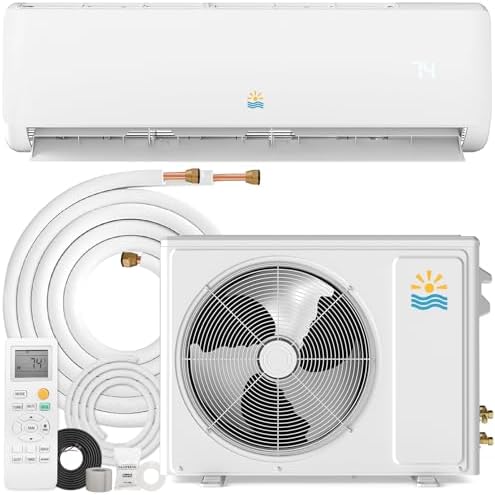
- 【Efficient Cooling & Heating】 – Stay comfortable all year round with 12,000 BTU cooling and 12,500 BTU heating. The mini…
- 【Energy-Saving Comfort】 – Enjoy year-round comfort with this split air conditioner, featuring SEER2 19 cooling efficienc…
- 【Effortless Smart Control】 – Easily adjust your room’s climate with the included remote control for temperature, fan spe…
Rheem vs Carrier vs Trane vs Lennox vs Goodman vs American Standard
Numbers are approximate and model-dependent (SEER vs SEER2, installed price depends on home/region). Sources for each brand are shown after the row.
| Brand | Typical SEER / SEER2 range (approx) | Typical installed price range (central AC)** | Warranty (parts / unit highlights) | Strengths / Notes | Best for |
| Rheem | ~14–20 SEER (varies by series; some high-efficiency models available). | $3,000–$7,000 installed (depends on tonnage, region, install complexity). | Common: 10-year limited parts (registration often required); specific unit warranties vary by model. | Good value vs features, broad dealer network, quiet mid-range models. | Homeowners wanting solid performance at mid-tier price. |
| Carrier | ~14–26 SEER2 (Carrier offers high-SEER2 flagship models). | $3,600–$9,500+ installed (premium models cost more). | Varies by model; many come with 10-year parts options; elite warranties on higher-end models/registration. | Extremely quiet, wide model range, very high-efficiency top models — but higher upfront cost. | Buyers prioritizing quiet operation and top efficiency (willing to pay more). |
| Trane | ~14–17+ SEER2 (higher-efficiency variable-speed options available). | $3,500–$8,000+ installed (brand/premium pricing). | Typically 10-year limited parts; dealer/installation can affect labor coverage. | Known for durability/reliability and rigorous testing; often recommended for long-term dependability. | Homeowners wanting rugged, long-lasting systems and strong dealer support. |
| Lennox | ~14–26 SEER2 (Lennox offers some of the highest-SEER models; availability depends on region). | $3,500–$10,000+ installed (top-tier, high-efficiency models are expensive). | Varies by model; high-end models often have stronger warranty packages when registered. | Market leader on ultra-high efficiency and premium systems; some models have tight manufacturing tolerances (installation matters). | Buyers wanting maximum efficiency and top-tier performance (higher budget). |
| Goodman | ~13–18 SEER (focus on value / solid basic efficiency). | $2,500–$6,000 installed (Goodman tends to be among the more budget-friendly full-system options). | Typical: 10-year parts limited warranty (registration required for some extended protections). | Strong value, widely available replacement parts, good for budget-conscious installs; performance more dependent on installation quality. | Homeowners on a tighter budget who want reliable cooling with lower upfront cost. |
| American Standard | ~13.4–23.6 SEER2 (broad range, some very efficient models). | $3,500–$9,000+ installed (mid-to-premium pricing). | Known for strong warranties; range varies by model and dealer offerings. | Reputation for quiet operation, good reliability and strong warranty options; often sold through dealer network tied to Trane family. | Homeowners wanting a balance of efficiency, quiet and solid warranty backing. |
Notes
- SEER vs SEER2: Industry shifted toward SEER2 ratings (new testing standard); manufacturers sometimes list SEER2 on product pages values above are approximate ranges combining common models. See each brand’s product pages for specific model SEER/SEER2.
- Price ranges are broad estimates (installed cost = unit + labor + permits + line set/coil changes). Use them only as general guidance; local quotes vary widely.
- Warranty details often require product registration and differ by model/region always confirm warranty terms with the dealer/manufacturer.
READ MORE: LG Air Conditioner Review — Performance, Efficiency & Buyer’s Guide

- [Efficient and Powerful Cooling] This14,000 BTU(ASHRAE) / 10,000 BTU(SACC), New gas: R32, 115V/60Hz, ETL certified porta…
- [Multiple Smart Functions] This air conditioner combines multiple smart functions for auto swing, 24-hour timer, sleep m…
- [Simple and Convenient] The portable ac is compactly designed with casters for easy mobility. In addition, a removable a…
Rheem AC Installation & total cost: price ranges, labor, permit, typical add-ons
Typical price ranges
Nationwide averages for installing a central AC (unit + labor + remove/replace) vary widely by region, system size and complexity. Recent aggregated data shows typical installed replacement jobs in the U.S. often fall between about $3,500 and $10,000 depending on unit efficiency, tonnage and installation complexity (ductwork, electrical upgrades, permits). Sites tracking contractor pricing list national averages that commonly land in the $4,000–$7,000 band for a mid-range 3–4 ton job.
What affects your bid
- Unit price: economy Classic units are cheapest; Prestige models can add thousands to equipment cost.
- Labor: local labor rates and installer experience a certified pro will cost more but is worth it.
- Ductwork repair/sealing: leaky or undersized ducts drive up cost and reduce efficiency budget for duct evaluation.
- Electrical/upgrades & permits: new disconnects, circuit upgrades or permits can add several hundred to a few thousand dollars.
- Removal/disposal & add-ons: removing an old system, adding a new thermostat (smart/connected) or new line sets adds to cost.
Example job scopes
- Basic swap (like-for-like, same tonnage, no ductwork): low end of the range.
- Full system upgrade (new condenser + coil + air handler/furnace + thermostat + duct sealing): high end expect a 3–6 ton whole-system replacement to push into the $6k–$12k range depending on options and region.
Tip: Get 3 written quotes and ask for the same performance spec (tonnage, SEER2, sound level) on each to compare apples-to-apples.

- [POWERFUL COOLING & HEATING] High-performance 9000 BTU system delivers rapid cooling and heating with wide temperature r…
- [ADVANCED ENERGY SAVING] Advanced inverter technology with leading 19 SEER rating delivers superior performance through …
- [WHISPER-QUIET COMFORT] Ultra-quiet 28dB in mute mode operation with uniform air distribution system ensures peaceful in…
Warranty, support & parts availability
Rheem typically offers competitive limited warranties on parts (commonly a 10-year limited parts warranty when registered) on many residential models check the exact model for compressor and parts coverage and registration conditions. Rheem has a warranty verification tool and a Pro Partner program to help with service and parts. Warranty terms sometimes vary by model and purchase channel; registering the unit promptly and using a certified Pro is usually required for full coverage.
Field note: dealer response and warranty fulfillment experiences vary by geography and installer. Rheem’s Pro Partner articles highlight strong contractor relationships and support resources, but independent consumer reviews reveal mixed customer-service experiences in some instances again, local installer quality heavily influences how smooth warranty service feels. Register your unit, keep service records, and use a reputable local installer to minimize headaches.
READ MORE: Wall-Mount Air Conditioners (2026): The Smart Guide for U.S. Homeowners
Operating costs & rebates — how to estimate your monthly cost
Estimating operating cost
You can estimate the annual electricity used by your central AC roughly from seasonal cooling output and the unit’s SEER. A straightforward homeowner method:
- Pick a baseline seasonal cooling energy need (example: 3,000 kWh/year used for cooling a reasonable middle figure for many U.S. homes; your mileage varies).
- Compare two units by SEER: if you owe 3,000 kWh with SEER13, a SEER16 unit uses proportionally less electricity, because energy use roughly scales inversely with SEER (all else equal).
Sample math (digit-by-digit): assume baseline energy use 3,000 kWh/year with a SEER-13 unit and electricity at $0.15/kWh.
- Baseline cost at SEER-13: 3,000 kWh × $0.15 = $450.00.
- If you upgrade to SEER-16, energy use ≈ 3,000 × (13 ÷ 16) = 3,000 × 0.8125 = 2,437.5 kWh.
- Cost at SEER-16: 2,437.5 × $0.15 = $365.625 → $365.63 (rounded to cents).
- Cost at SEER-16: 2,437.5 × $0.15 = $365.625 → $365.63 (rounded to cents).
- Annual savings: $450.00 − $365.625 = $84.375 → $84.38/year saved.
This simple calculation shows the order of magnitude higher SEER saves money, but payback depends on the premium you paid to get that higher SEER. (Arithmetic shown step-by-step for clarity.)
Rebates & tax credits
Many utilities and state programs offer rebates for high-efficiency systems or heat pumps; federal tax credits have been available for qualifying high-efficiency heat pumps/ACs (check current IRS/program rules). Use Rheem’s rebate center and local utility pages to see current incentives they can materially lower upfront cost and shorten payback time.
Rheem AC Maintenance, common problems, troubleshooting tips
Routine maintenance (yearly):
- Clean/replace indoor filters every 1–3 months.
- Annual professional tune-up: check refrigerant charge, inspect coils and blower, test electrical components, and clean the outdoor condenser. Proper airflow and charge matter more than tiny brand differences for efficiency and life.
Common problems & quick homeowner checks:
- No cooling / weak cooling: check thermostat settings and filters; if filters are clean, call your pro could be low refrigerant or compressor issue.
- Short-cycling (frequent on/off): often oversizing or control/thermostat problems; ask installer to verify system match and thermostat placement.
- High energy bills: dirty coils, restricted airflow, or incorrect charge are usual suspects; verify filter and schedule service.
- Loud outdoor noise: check for loose panels, pad settling, or compressor fan issues; a sound-dampening pad and correct install can lower perceived noise.
Troubleshooting tip: document the symptom, note the thermostat temperature and outdoor conditions, and take a short video if the noise is intermittent it helps the technician diagnose quickly.
READ MORE: Fujitsu Heat Pump Reviews (2026): Models, Costs & Real-World Pros & Cons
Verdict: Who should buy Rheem, and who should consider alternatives?
Buy Rheem if:
- You want a wide model range so you can match your budget to efficiency needs.
- You prefer to work with a national brand that emphasizes contractor programs and offers easy parts access.
- You want modern refrigerant options and ENERGY STAR capable models without paying top-tier premium brand prices.
Consider alternatives if:
- You prioritize the absolute quietest operation available and are willing to pay premium prices (some Carrier/Trane top models can be quieter).
- You buy entirely on brand reputation for the absolute longest service life irrespective of installer (Trane, Carrier often get the nod for perceived “built-tough” reliability).
Final thought:
Rheem is a very sensible, widely available choice for most homeowners. The most important decision isn’t the badge alone — it’s choosing the right model for your home and hiring a trusted local installer (ideally a Rheem Pro Partner) who will set the refrigerant charge, airflow and controls correctly. That combination gives the best chance at long life, good efficiency and comfortable operation.
FAQs
Are Rheem air conditioners reliable?
Yes — Rheem units are generally reliable and widely used. Reliability depends heavily on correct sizing and installation; routine maintenance also matters. Field reviews and contractor testimonials indicate good parts availability and strong pro support via the Rheem Pro network.
How much does a Rheem central AC cost to install?
Installed costs vary widely; national averages place many mid-range replacements between about $3,500 and $10,000 depending on size, efficiency and complexity. Get three quotes for an accurate local number.
What SEER should I choose?
For most U.S. homes, a SEER in the mid-teens (15–17) offers the best balance of price and savings. Choose 18+ SEER if you want maximum efficiency and lower operating cost in hot climates.
Do I need to register my Rheem unit?
Yes — registering promptly often activates extended or full warranty coverage on some components. Keep receipts and service records.
Can I install a Rheem myself?
No — central AC installation requires certified technicians for safe refrigerant handling, electrical work, and warranty compliance. Use a trained Rheem Pro to ensure correct installation.
Author
By: Alex Jeon, HVAC content editor & home-performance analyst. Alex has 8+ years writing buyer guides and test summaries for homeowners, working with HVAC installers to translate specs into real-world outcomes. He regularly reviews manufacturer spec sheets, DOE guidance and interviews local contractors to produce practical buying advice. Want help getting local quotes or comparing 3 specific Rheem models for your home? Reply with your ZIP code and home size and I’ll help you compare.
Sources
- Rheem product pages and model specifications (Rheem, 2024–2026).
- Rheem warranties & Pro Partner articles (Rheem, 2024–2026).
- U.S. Department of Energy — Guide to Home Heating and Cooling (DOE, 2011).
- Market/installation cost data: Thumbtack (2025) and HomeGuide (2025) cost guides.