Deciding how to keep your home comfortable is a big deal. For most of us, our HVAC system is the single biggest energy consumer in the house. It’s also one of the most expensive things to replace. If your current unit is rattling, blowing lukewarm air, or just costing you a fortune every month, you’ve probably started looking at your options.
The two names that keep coming up are heat pumps and traditional air conditioners. At first glance, they look almost identical. They both have that big metal box that sits outside in the yard and hums away during the summer. But inside those boxes, things work a little differently.
In this guide, we’re going to break down the heat pump vs AC debate. We’ll look at how they work, what they cost, and most importantly, which one actually makes sense for your home and your climate. No jargon, no sales pitches—just the facts you need to make a good choice for your family. Lets deep dive into “Heat Pump vs AC: Which Is Better for U.S. Homeowners?”
READ MORE: Carrier Heat Pump Reviews (2026) — Models, Costs, Pros & Cons
Understanding the Basics: What’s the Difference?
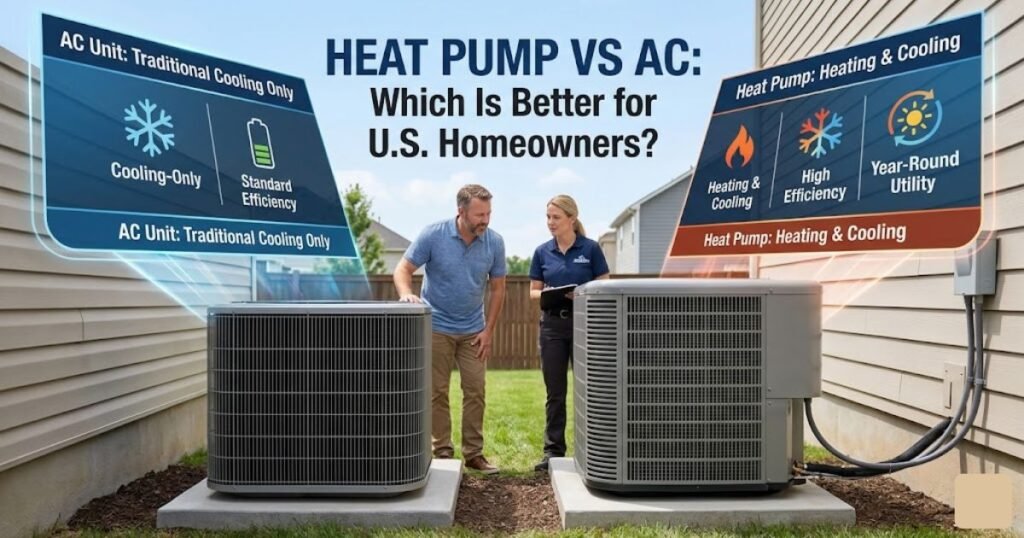
The biggest difference between a heat pump vs air conditioner is actually pretty simple.
A traditional air conditioner is a one-trick pony. Its only job is to cool your home. It takes the heat from inside your house and dumps it outside. When the weather gets cold, the AC takes a nap, and your furnace or boiler kicks in to provide heat.
A heat pump, on the other hand, is a multi-tasker. It provides cooling in the summer just like an AC, but it can also reverse itself to provide heat in the winter. It’s essentially an air conditioner that can run in both directions.
How a Traditional AC Works
Think of your air conditioner like a giant sponge for heat. Inside your home, there is a coil filled with cold refrigerant. A fan blows your warm indoor air over that coil. The refrigerant “soaks up” the heat from the air.
Then, that heat is traveled through pipes to the unit outside your house. The outside unit squeezes the heat out into the neighborhood air. The now-cooled refrigerant travels back inside to start the process all over again. It doesn’t “create” cold; it just moves heat from where you don’t want it to where you don’t care about it.
How a Heat Pump Works
A heat pump uses the exact same process to cool your home in the summer. If you stood next to a heat pump and a standard AC in July, you wouldn’t be able to tell them apart.
The “magic” happens when the temperature drops. A heat pump has a special component called a reversing valve. When you flip your thermostat to “heat,” this valve changes the direction of the refrigerant. Instead of taking heat from inside and moving it out, it finds heat in the outdoor air and moves it into your home.
Even when it feels cold outside, there is still thermal energy in the air. The heat pump captures that energy and brings it indoors. This is much more efficient than a traditional electric heater because the system isn’t “making” heat—it’s just moving it.
READ MORE: Fujitsu Heat Pump Reviews (2026): Models, Costs & Real-World Pros & Cons
Side-by-Side Comparison: Heat Pump vs AC
To help you see the big picture, here is a quick breakdown of how these two systems stack up against each other.
| Feature | Heat Pump | Air Conditioner (AC) |
| Cooling Ability | Excellent (Same as AC) | Excellent |
| Heating Ability | Yes (Primary or supplemental) | No (Requires a separate furnace) |
| Energy Efficiency | Very High (Moves heat) | High (For cooling only) |
| Average Unit Cost | Slightly Higher | Slightly Lower |
| Best Climate | Moderate to Warm (Usually) | All Climates (with a furnace) |
| Maintenance | Twice a year (Year-round use) | Once a year (Pre-summer) |
| Typical Lifespan | 10–15 years | 15–20 years |
The Pros and Cons of Heat Pumps
Heat pumps are becoming incredibly popular across the U.S., but they aren’t perfect for every single house. Here is the reality of owning one.
The Pros
- Two-in-One System: You don’t have to maintain a separate furnace and AC. One unit does it all.
- High Efficiency: Because they move heat rather than creating it through combustion, they can be 3 to 4 times more efficient than electric baseboard heaters.
- Dehumidification: They are excellent at pulling moisture out of the air during the summer.
- Safety: There is no combustion involved (no gas or oil), which means no risk of carbon monoxide leaks from the unit itself.
- Incentives: Many states and federal programs offer big tax credits or rebates for installing heat pumps because they are “green.”
The Cons
- Winter Performance: In extremely cold climates (where it stays well below freezing for weeks), some heat pumps struggle to keep up and may need a “backup” heat source.
- Upfront Cost: The units themselves usually cost more than a standard AC.
- Shorter Lifespan: Because a heat pump runs year-round (cooling in summer, heating in winter), it tends to wear out a few years sooner than an AC that sits idle all winter.
READ MORE: Air to Water Heat Pump — Complete 2026 Buyer’s Guide (costs, brands, pros & cons)
The Pros and Cons of Traditional Air Conditioners
Standard air conditioning has been the gold standard for American homes for decades. It’s a reliable technology that most contractors know inside and out.
The Pros
- Lower Initial Cost: If you already have a working furnace, replacing just the AC unit is usually the cheapest way to get back to being cool.
- Simple Technology: They are straightforward to repair, and parts are easy to find.
- Longevity: Since the unit only runs for part of the year, it often lasts longer than a heat pump.
- Great for Cold Climates: Since an AC is always paired with a furnace, you don’t have to worry about staying warm when a blizzard hits.
The Cons
- Only One Function: It does nothing for you in the winter.
- Requires a Separate Heater: You still have to pay for a furnace and maintain it, which means two separate systems that could potentially break down.
- Energy Use: While modern ACs are efficient, you aren’t getting the overall household energy savings that a full heat pump system provides.
Heat Pump vs AC Cost
When looking at heat pump cost vs central AC cost, it’s important to look at the “sticker price” of the equipment. Prices can vary wildly based on the size of your home and how much work is needed to install the unit.
Here are some real-world price examples from major U.S. retailers to give you a baseline:
- Lowe’s: A typical central air conditioner unit is listed around $1,624.
- Lowe’s: A typical heat pump unit is listed around $1,802.
- Home Depot: For a full ducted heat pump system, you might see prices ranging from $3,208 to $4,024.
- Home Depot: If you are looking at a “mini-split” heat pump (which doesn’t require ducts), they have options starting around $1,499.99.
Why is there a price difference?
A heat pump is more expensive than an AC because it has more parts. It needs that reversing valve, more complex controls, and a larger outdoor coil to handle heating duties.
However, keep in mind that these are just the prices for the equipment. Labor is usually the biggest part of an HVAC bill. If you are replacing an old AC with a new AC, the labor might be lower. If you are switching from a furnace/AC combo to a heat pump, your contractor might need to update your electrical panel or your thermostat wiring, which adds to the total.
READ MORE: Goodman Heat Pump Review 2026 | Efficiency, Cost, Pros & Cons
Heat Pump vs AC Energy Efficiency
Energy efficiency is where the heat pump vs AC conversation gets interesting. According to the Department of Energy (Energy.gov), heat pumps are a fantastic option for homeowners, especially in moderate climates.
Because a heat pump transfers heat rather than burning fuel to create it, it can provide more than three times the amount of energy it consumes. In the HVAC world, we often talk about SEER2 (for cooling) and HSPF2 (for heating). The higher these numbers, the less money you send to the utility company each month.
If you currently heat your home with electricity (like baseboard heaters or an electric furnace), switching to a heat pump could cut your heating bills by 50% or more. If you currently use natural gas, the savings might be smaller, but you’ll be significantly reducing your home’s carbon footprint.
Climate: The Deciding Factor
Where you live is probably the biggest factor in the AC vs heat pump debate.
The “Heat Pump Belt”
If you live in the South, the Southwest, or the Pacific Northwest, a heat pump is often a “no-brainer.” In places like Georgia, Texas, or Oregon, winters are usually mild. A heat pump handles these temperatures with ease and stays incredibly efficient.
The Frozen North
If you live in a place like Minnesota or Maine, where the thermometer regularly drops below zero, a standard heat pump might struggle. In the past, people in these areas stuck with a standard AC and a powerful gas furnace.
However, technology has improved. There are now “cold-climate heat pumps” designed to work in temperatures as low as -15°F. Many northern homeowners are now choosing “Dual Fuel” systems—using a heat pump for most of the year and a gas furnace that only kicks in on the very coldest nights.
READ MORE: Lennox Heat Pump Review: 2026 Prices, Pros, Cons & Comparison
Heat Pump & AC Installation and Replacement
Replacing an HVAC system isn’t like buying a new toaster. You can’t just plug it in.
Sizing is Everything
One of the most common mistakes homeowners make is buying a unit that is too big or too small. An oversized unit will turn on and off constantly (short-cycling), which wears out the motor and doesn’t remove humidity. A professional needs to perform what’s called a “Manual J Load Calculation” to find the perfect size for your specific house.
The Ductwork Factor
If your home already has ducts for a furnace, a “ducted” heat pump or AC can usually slide right in. If you have an older home with no ducts (using radiators or baseboard heat), you might want to look at a mini-split heat pump. These have a small unit on the wall inside and a thin pipe connecting to the box outside. They are great for older homes or room additions.
Replacing Both at Once
If your AC is 15 years old and your furnace is also 15 years old, it usually makes sense to replace them both at the same time. You’ll save on labor costs, and you’ll ensure the two units are perfectly matched to work together efficiently. This is the perfect time to consider switching to a full heat pump system.
Heat Pump vs AC Homeowner’s Buying Guide
If you’re ready to start shopping, here is how to navigate the process without getting overwhelmed.
1. Know Your Numbers
Look at your utility bills from the last year. Are you spending more on cooling or heating? If your heating bills are the pain point, the heat pump is likely your hero. If you just want a reliable way to stay cool in a house that already has a great furnace, a standard AC is a solid choice.
2. Check for Rebates
Before you sign anything, go to the Energy Star website or your local utility company’s page. There are often thousands of dollars available in tax credits (like the 25C tax credit) for high-efficiency heat pumps. Sometimes, these credits make a heat pump cheaper than a standard AC!
3. Maintenance Basics
No matter which you choose, you have to take care of it.
- Filters: Change them every 1–3 months. It’s the easiest way to prevent a breakdown.
- The Yard: Keep weeds, leaves, and “stuff” at least two feet away from the outdoor unit. It needs to breathe.
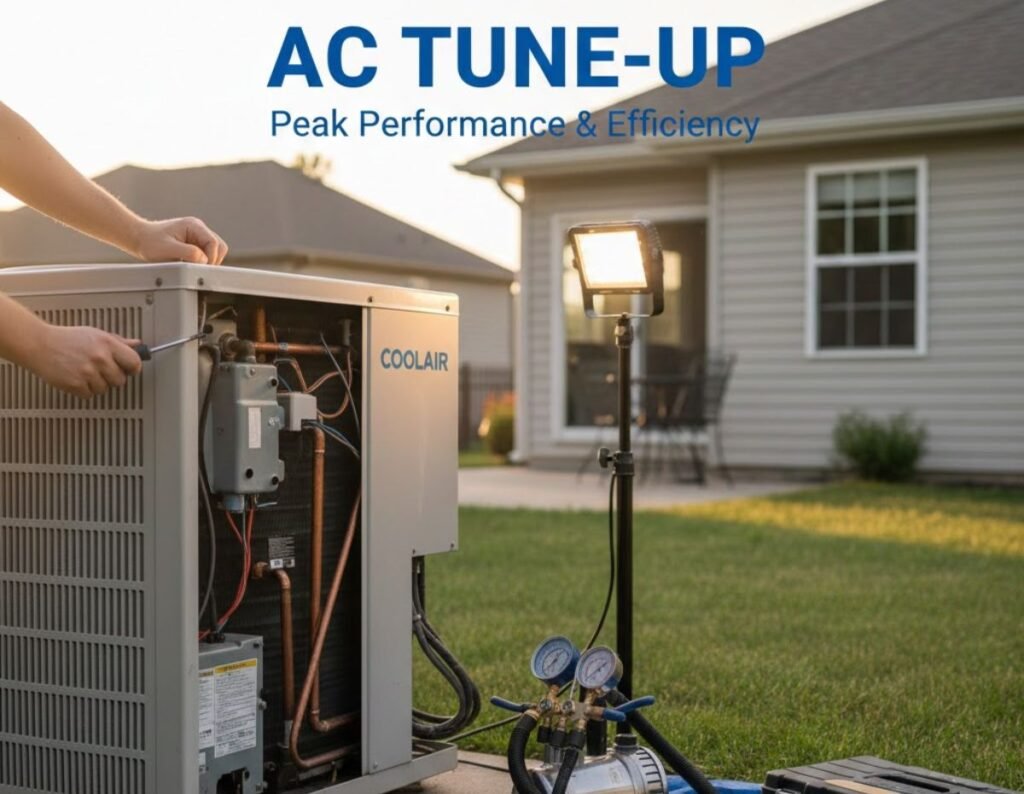
- Professional Tune-ups: Have a pro look at an AC once a year. For a heat pump, since it works double-time, twice a year is better.
READ MORE: Weil‑McLain Boiler Reviews (2026) — Models, Costs, Pros & Cons
Homeowner Checklist Before Buying
Before you call a contractor for a quote, walk through this list:
- [ ] Check your electrical panel: Does it have room for a new 220V breaker? (Heat pumps sometimes need more electrical capacity).
- [ ] Inspect your ducts: Are they leaky or dusty? New equipment won’t work well with bad ducts.
- [ ] Note your “hot spots”: Are there rooms that never get cool? Tell your contractor.
- [ ] Check your insulation: Sometimes a house feels hot because the attic insulation is thin, not because the AC is bad.
- [ ] Think about the future: Are you planning to stay in the house for 10+ years? If so, the energy savings of a heat pump will pay off.
Heat Pump vs AC: Who Should Choose What?
Choose a Heat Pump if:
- You live in a moderate climate.
- You currently use expensive electric, oil, or propane heat.
- You want to reduce your carbon footprint.
- You want to take advantage of federal tax credits.
- You need to replace both your heating and cooling systems at once.
Choose a Standard AC if:
- You already have a relatively new, high-efficiency gas furnace.
- You live in an extremely cold climate and aren’t ready for a cold-climate heat pump.
- You are on a very tight upfront budget and only need cooling.
- You are planning to move in a year or two and just need the house to stay cool for the sale.
READ MORE: Viessmann Boiler Review 2026 | Efficiency, Models, Pros & Cons
Final Recommendation
The “best” HVAC system is the one that fits your specific house and your local weather.
For the average American homeowner today, the heat pump is winning the race. The technology has gotten so good that even people in colder states are making the switch. When you factor in the monthly energy savings and the available tax credits, the slightly higher upfront cost of a heat pump usually pays for itself in just a few years.
However, if you have a perfectly good gas furnace and you just need to get through a scorching summer, there is absolutely nothing wrong with a standard air conditioner. It’s a proven, reliable way to stay comfortable.
Conclusion
At the end of the day, both heat pumps and air conditioners are great pieces of technology. They’ve come a long way from the noisy, rattling boxes of our grandparents’ era. Whether you go with the versatile heat pump or the classic AC, you’re making an investment in your home’s value and your family’s comfort. Take your time, look at the costs, check your local climate, and you’ll make the right call.
FAQs
Is a heat pump better than an AC for a house?
Often, yes. A heat pump can heat and cool, so it may be the better all-in-one choice for many homes. But if you already have a good furnace, a standard AC can still be the better value.
Can a heat pump replace a central air conditioner?
Yes. A heat pump can replace a central AC because it cools the home in summer. It also adds heating, which is why many homeowners see it as a full upgrade.
Are heat pumps worth it in cold weather?
They can be, especially with newer cold-climate models and proper installation. DOE says modern heat pumps now work in colder regions too, though the best fit depends on the local climate and the exact system.
Why is a heat pump more expensive than an AC?
A heat pump does more. It cools and heats, so the equipment and system design are usually more complex. That often raises the upfront price compared with a basic AC.
Which is cheaper to run, a heat pump or an AC?
It depends on what you are comparing. For cooling alone, both can be efficient. For whole-home comfort, a heat pump may cost less to run in many homes because it handles both heating and cooling with one system.
Pingback: Heat Pump Installation Cost in 2026 (Real Prices, Examples & Savings) - Plumbing Guider