When the dog days of summer hit, most of us just want one thing: a cool, dry house. If you are looking at your old, rattling air conditioner and wondering if there is a better way, you have likely heard about heat pumps. But a common question pops up for many folks: Is a heat pump worth it in the summer?
The short answer is a big, resounding yes.
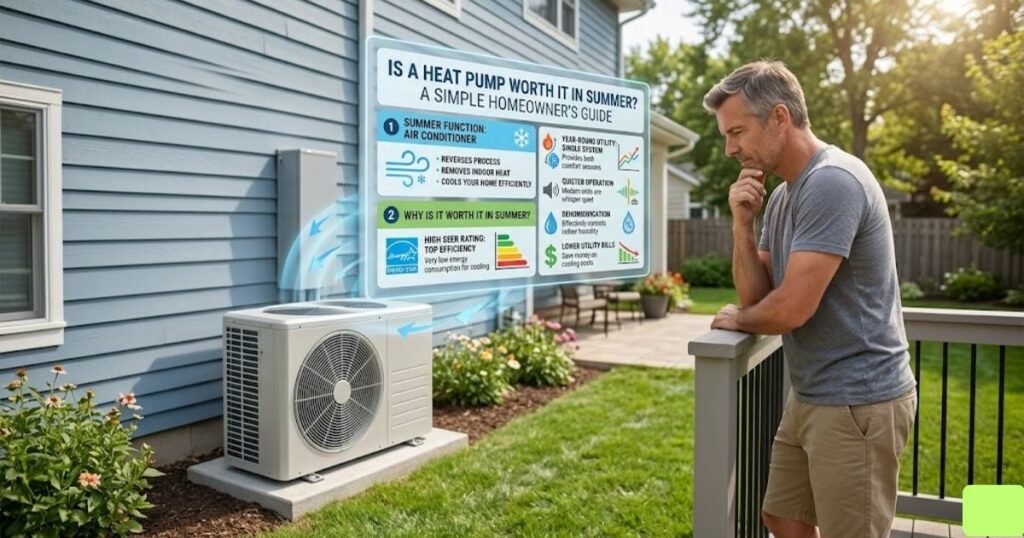
In fact, a heat pump is often just as good and sometimes even better than a traditional central air conditioner when the mercury starts to climb. Despite the name, a heat pump isn’t just for staying warm in the winter. It is a dual-purpose machine that acts as a world-class cooling system during the hottest months of the year.
If you are a homeowner in the U.S. trying to figure out if this is the right move for your family, this guide is for you. We are going to break down how these systems work, what they cost, and why they might just be the best summer investment you ever make for your home. Lets deep dive into “Is a Heat Pump Worth It in Summer? A Simple Homeowner’s Guide”
READ MORE: Carrier Heat Pump Reviews (2026) — Models, Costs, Pros & Cons
What a Heat Pump Does in Summer
To understand why a heat pump is worth it, you first have to understand what it actually does when the sun is beating down on your roof. Most people think a heat pump “creates” cold air. In reality, it doesn’t create anything. It moves things around.
How It Cools Your Home
Think of a heat pump as a “heat mover.” In the summer, it looks at all the heat inside your living room, kitchen, and bedrooms and says, “You don’t belong here.”
It uses a special fluid called refrigerant to soak up the heat from your indoor air. It then pumps that heat through copper lines to the unit sitting outside your house. Once there, it releases the heat into the outdoor air. Because the heat has been removed from your house, the air left behind feels crisp and cool.
Heat Pump vs. Standard AC
Here is a little secret: a heat pump and a central air conditioner are almost identical in how they cool. If you looked at them side-by-side, you might not even be able to tell which is which.
The main difference is a tiny part called a reversing valve. This valve allows the heat pump to change direction. In the summer, it pumps heat out of your house. In the winter, it flips a switch and pumps heat from the outside air into your house. A standard AC can only pump heat out.
Because of this, buying a heat pump means you are getting a high-efficiency air conditioner that also happens to be a furnace replacement.
Comfort, Humidity, and Energy Use
Modern heat pumps are designed for comfort. Many models today use “variable-speed” technology. Instead of blasting on at 100% power and then shutting off (which creates hot and cold spots), they can run at a lower, steady speed.
This leads to:
- Better Humidity Control: By running longer, slower cycles, the heat pump pulls more moisture out of the air. This stops that “sticky” feeling in the middle of July.
- Lower Bills: Because it isn’t constantly “flooring the gas” to start up, it uses way less electricity than an old-school AC unit.
READ MORE: Fujitsu Heat Pump Reviews (2026): Models, Costs & Real-World Pros & Cons
Is a Heat Pump Worth It in Summer?
Is it worth the switch? For the vast majority of U.S. homeowners, the answer is yes, but it depends on your specific situation.
When It Is Worth It
If your current air conditioner is more than 10 or 12 years old, you are likely already overpaying for cooling. Switching to a heat pump is worth it because you aren’t just upgrading your summer comfort; you are also lowering your winter heating bills.
It is especially worth it if you live in a place with high humidity. Standard AC units often struggle to keep up with the moisture in the air without making the house feel like a refrigerator. A heat pump excels at balancing the two.
When It May Not Be the Best Choice
If you just installed a brand-new, high-efficiency central air conditioner last year, it probably isn’t worth it to tear it out just for a heat pump. You should wait until that system reaches the end of its life.
Also, if you live in an area where electricity prices are astronomically high compared to very cheap natural gas, you might want to run the numbers carefully. However, for most of the country, the efficiency of a heat pump wins out in the long run.
READ MORE: Air to Water Heat Pump — Complete 2026 Buyer’s Guide (costs, brands, pros & cons)
Pros of Using a Heat Pump in Summer
There are plenty of reasons why these systems are taking over neighborhoods across the country. Here are the big wins:
- Incredible Efficiency: Modern heat pumps use much less energy to move heat than older systems use to “create” cold.
- Superior Dehumidification: They are excellent at pulling water out of the air, which makes 75 degrees feel much cooler than it would in a humid house.
- Whisper Quiet: New heat pumps are significantly quieter than the loud, buzzing AC units of the past.
- Whole-Home Cooling: Unlike window units, a heat pump works with your ductwork to ensure every room is the same temperature.
- Two-in-One Value: You pay for one installation but get both a premier cooling system and a powerful heater.
- Environmental Impact: Since they run on electricity and are highly efficient, they have a much lower carbon footprint than traditional systems.
Cons of Using a Heat Pump in Summer
We want to keep it real. No system is perfect, and there are a few things you should consider before making the jump:
- Higher Upfront Cost: A heat pump generally costs more to buy and install than a basic, entry-level air conditioner.
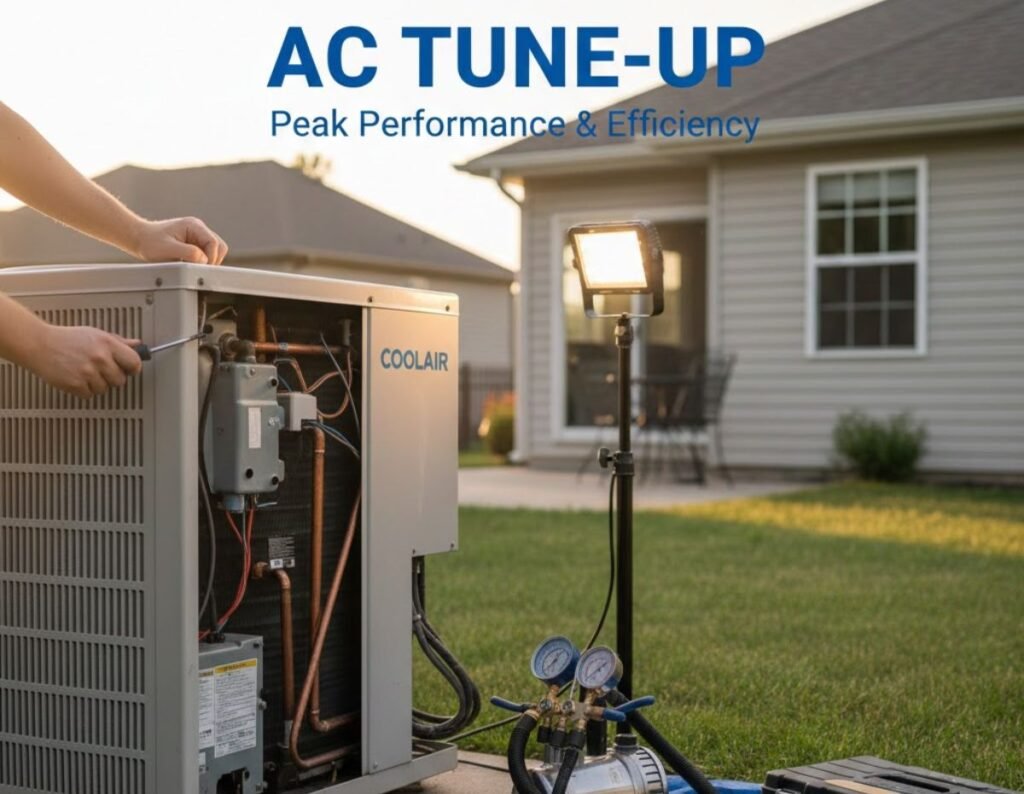
- Complexity: Because they have more moving parts (like that reversing valve), they need regular professional maintenance to stay in top shape.
- System Sizing is Critical: If your heat pump is too big or too small for your home, it won’t dehumidify correctly in the summer. You need a pro to get the math right.
- Performance in Extremes: While they are great in summer, if you live in a place where it hits 115°F regularly, even a heat pump has to work very hard to keep up, though this is true for standard AC as well.
READ MORE: Weil‑McLain Boiler Reviews (2026) — Models, Costs, Pros & Cons
Heat Pump Installation Cost
Let’s talk money. We know that at the end of the day, the “worth” of a system often comes down to the check you have to write.
The cost of a heat pump can vary quite a bit based on where you live and how big your house is. On average, a heat pump installation cost is about $5,500.
However, that is just the middle of the road. Depending on your needs, you might see a typical installation range between $2,500 and $10,000+.
Why the big gap? Here are a few things that change the price:
- The Size of Your Home: A 3,000-square-foot home needs a much larger unit than a 1,200-square-foot bungalow.
- Efficiency Ratings: Units that are “ultra-efficient” cost more upfront but save you more on your monthly power bill.
- Labor Rates: Depending on your city, an HVAC technician’s hourly rate is usually about $80 to $150 per hour.
- Ductwork: If your home already has great ducts, the price stays lower. If a tech has to crawl into your attic to fix or replace old, leaky ducts, the labor costs will go up.
While the price tag might look higher than a window unit from a big-box store, remember that this is an investment in your home’s value and your monthly savings for the next 15 years.
READ MORE: Goodman Heat Pump Review 2026 | Efficiency, Cost, Pros & Cons
Who Should Buy One?
Not every home is the same. Some people will get a much bigger “bang for their buck” with a heat pump.
Warm and Mixed Climates
If you live in the South, the Southwest, or the Mid-Atlantic, a heat pump is a no-brainer. These areas have long, hot summers where the cooling efficiency of a heat pump really shines.
Homes with Older Systems
If your furnace is old and your AC is dying, don’t replace them one by one. A heat pump replaces both at the same time. It’s a cleaner, more modern way to handle your home’s climate.
Homeowners Looking for Better Air Quality
Because heat pumps run more consistently, they are constantly moving air through your home’s filters. This means less dust, less pollen, and cleaner air for your family to breathe during allergy season.
Who May Want to Skip One?
While we love heat pumps, they aren’t the only answer for everyone.
If you live in a very old home that has no ductwork at all, installing a traditional central heat pump might be too expensive because of the construction required. In that case, you might look at a “mini-split” (which is still a heat pump, just a different style).
Also, if you are planning on moving out of your home in the next six months, you might not stay long enough to see the energy savings pay back the installation cost. In that scenario, a cheaper, basic AC repair might make more sense for your wallet.
Heat Pump vs. AC in Summer
Let’s do a quick side-by-side. Most people are surprised to learn how similar they are.
| Feature | Standard Air Conditioner | Heat Pump |
| Cooling Ability | Excellent | Excellent |
| Humidity Control | Good | Superior (on variable models) |
| Winter Use | None (Needs a furnace) | Excellent (Heats the home) |
| Energy Efficiency | High | Very High |
| Long-Term Value | Moderate | High (2-in-1 system) |
The biggest takeaway here is flexibility. An AC is a one-trick pony. It cools. A heat pump is a versatile tool that handles the whole year. In the summer, you won’t notice a difference in how the air feels, except that the heat pump might be a bit better at keeping things from feeling “swampy.”
READ MORE: Ductless Heat Pump
Heat Pump Energy Savings and Efficiency
We all know that feeling of opening the electric bill in August and wincing. A heat pump can help change that.
Because modern heat pumps are designed to meet strict federal efficiency standards, they use less “juice” to get the same results as an older AC. Many homeowners see their summer cooling costs drop by 20% to 40% when switching from a unit that is 15 years old.
Beyond the money, there is the comfort factor. Have you ever been in a house where the AC kicks on, freezes you out for ten minutes, then shuts off until you start sweating again? That “seesaw” of temperature is annoying. A good heat pump avoids this by staying in a “low gear,” keeping the temperature steady and the air moving.
The Humidity Factor
If you live in a place like Florida, Georgia, or even the Midwest, you know that heat isn’t the only enemy—it’s the moisture.
A heat pump is essentially a giant dehumidifier. As the warm air from your house passes over the cold indoor coils, the moisture in the air turns into liquid and drains away. Because heat pumps (especially variable-speed ones) run longer cycles, they have more time to “squeeze” the water out of your air. This means you can keep your thermostat at 74 degrees and feel just as comfortable as you would at 70 degrees with a standard system.
Buying Tips for Homeowners
If you have decided that a heat pump is the way to go, don’t just buy the first one you see. Here are a few tips to make sure you get the best deal:
- Check the SEER2 Rating: This is the “Seasonal Energy Efficiency Ratio.” For summer cooling, a higher SEER2 number means lower bills. Look for something at least 15 or higher.
- Don’t Forget HSPF2: This measures the heating efficiency. Even if you are buying it for summer, you want a good heating rating for the winter months.
- Get the Right Size: Bigger is not always better. A system that is too big will turn off too quickly and won’t remove humidity. A pro should perform a “Manual J” calculation to find the perfect size for your house.
- Check Your Insulation: A heat pump works best when your home is sealed up. Adding a little extra insulation in the attic can make your new heat pump even more effective.
- Look for Rebates: Many local utility companies and federal programs offer big tax credits or rebates for installing heat pumps. This can knock thousands off that upfront price we talked about.
READ MORE: Lennox Heat Pump Review: 2026 Prices, Pros, Cons & Comparison
Conclusion
So, is a heat pump worth it in the summer?
If you are looking for a system that provides elite cooling, handles humidity like a pro, and lowers your monthly energy bills, then the answer is a clear yes. While the upfront cost is a bit higher than a basic AC, the long-term value of having one system that handles both summer and winter is hard to beat.
For most U.S. homeowners, making the switch means a more comfortable home, a quieter backyard, and a lot less stress when the summer heatwaves arrive. It’s not just an air conditioner—it’s an upgrade for your entire lifestyle.
Frequently Asked Questions
Is a heat pump good for summer cooling?
Yes. A heat pump cools your home in summer much like a central air conditioner. It can also help reduce humidity and keep temperatures steady.
Does a heat pump work better than AC in hot weather?
Not always in a simple way. A heat pump and AC both cool. A heat pump is often better for overall value because it also heats in winter.
How much does a heat pump cost to install in the U.S.?
A common average is about $5,500. Many installations fall between $2,500 and $10,000+, depending on the home and the system.
Do heat pumps help with humidity in summer?
Yes, they can. A heat pump removes moisture from the air while cooling, which helps make the home feel less sticky and more comfortable.
Is a heat pump worth it if I already have central air?
Sometimes. If your central air is newer and works well, you may not need to replace it yet. If you want heating and cooling in one system, a heat pump may be worth it.
Pingback: Heat Pump Installation Cost in 2026 (Real Prices, Examples & Savings) - Plumbing Guider