When it comes to modern plumbing, the materials you choose can make or break the performance of your water system. For decades, plumbers have experimented with various materials like copper, PVC, PEX, and stainless steel. Yet, among these, CPVC (Chlorinated Polyvinyl Chloride) stands out as one of the most durable, versatile, and cost-effective choices.
But what exactly makes CPVC so special? Why do professionals prefer it over other materials for hot and cold water distribution? In this guide, we’ll dive deep into the world of CPVC plumbing its composition, advantages, limitations, and why it has become a go-to option in both residential and industrial applications. Lets deep dive into “What is CPVC in Plumbing? CPVC vs. PVC Plumbing Explained”
READ MORE: Best Tankless Water Heater 2026 — Top Picks, Costs & Buyer’s Guide
What Does CPVC Stand For?
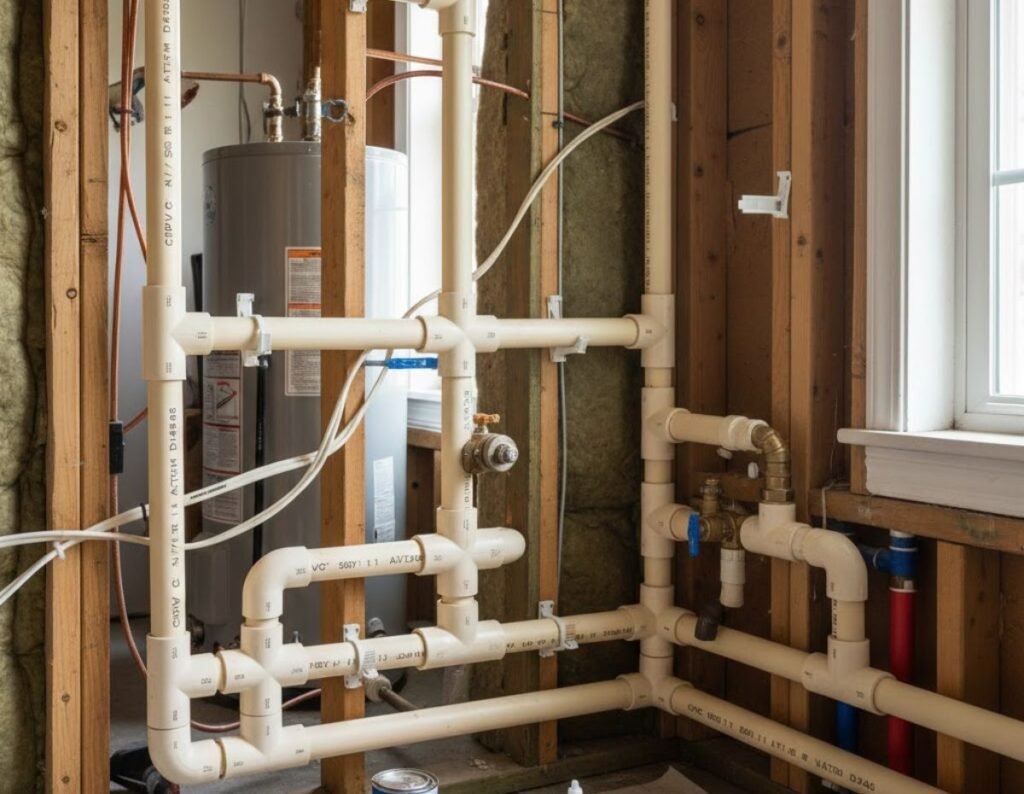
CPVC stands for Chlorinated Polyvinyl Chloride, a thermoplastic material derived from PVC (Polyvinyl Chloride). It undergoes a chlorination process that increases its chlorine content, enhancing its performance characteristics. While standard PVC contains about 56% chlorine, CPVC increases this to roughly 63–69%. This seemingly small difference significantly improves the pipe’s resistance to heat, corrosion, and chemical damage.
Essentially, CPVC combines the lightweight nature of plastic with the robustness required for plumbing systems that handle both hot and cold water. It is this combination that makes CPVC a preferred choice among builders, plumbers, and homeowners.
History and Development of CPVC Pipes
CPVC was first developed in the 1950s, when scientists experimented with modifying PVC to withstand higher temperatures. Over time, as industries demanded more durable materials for fluid transport, CPVC became an attractive alternative to metal pipes. Initially, its adoption was slow, mostly limited to industrial use. However, by the 1970s, residential plumbing systems started incorporating CPVC due to its safety, longevity, and easy installation.
Today, CPVC is a globally accepted plumbing material, with brands like FlowGuard, Astral, and Finolex producing high-quality pipes and fittings. It has evolved from a niche product into a mainstream solution for modern plumbing challenges.
How CPVC Differs from PVC
Though CPVC and PVC sound similar, they serve very different purposes. The main distinction lies in chlorination. The added chlorine atoms make CPVC more resistant to high temperatures up to 200°F (93°C) compared to PVC’s limit of 140°F (60°C).
Here’s a quick comparison table:
| Property | PVC | CPVC |
| Chlorine Content | ~56% | ~63–69% |
| Max Temperature | 140°F (60°C) | 200°F (93°C) |
| Color | White or gray | Cream or light yellow |
| Application | Cold water only | Hot and cold water |
| Chemical Resistance | Moderate | Excellent |
So while PVC works well for drainage and cold-water lines, CPVC excels in hot-water systems and chemical transport.
READ MORE: Weil‑McLain Boiler Reviews (2026) — Models, Costs, Pros & Cons
Physical and Chemical Properties of CPVC
CPVC is known for its exceptional durability and chemical resistance. It doesn’t corrode like metals or degrade easily under exposure to chlorinated water. It’s also non-toxic and smooth internally, preventing scale buildup.
Key properties include:
- High Temperature Tolerance – Ideal for both hot and cold water.
- Corrosion Resistance – Unaffected by aggressive water or most household chemicals.
- Smooth Interior Surface – Ensures better flow rates with minimal friction losses.
- Low Thermal Conductivity – Helps maintain water temperature.
- UV Resistance – Certain grades can withstand sunlight exposure.
These properties make CPVC suitable not just for homes but also for hospitals, hotels, and manufacturing units.
Advantages of CPVC in Plumbing Systems
Why is CPVC such a popular choice? Because it offers a combination of features that few materials can match:
- Durability: CPVC pipes can last 50 years or more, even under tough conditions.
- Corrosion Resistance: Unlike metal, CPVC doesn’t rust or corrode.
- Heat Tolerance: Can handle both hot and cold water without deforming.
- Smooth Flow: The inner surface resists scaling and deposits.
- Easy Installation: CPVC is lightweight and uses solvent cement for leak-proof joints.
- Cost-Effective: Offers long-term value due to minimal maintenance.
- Non-Toxic: Safe for drinking water as it doesn’t leach harmful substances.
These benefits make CPVC a reliable solution for long-term plumbing systems.
READ MORE: Signs Your Pipes Need Replacing — When to Repair vs. Replace & Costs
Disadvantages and Limitations of CPVC
While CPVC has many advantages, it’s not flawless. Some challenges include:
- Brittleness Over Time: Prolonged exposure to UV light can make it brittle.
- Higher Cost than PVC: Although cheaper than copper, CPVC is pricier than PVC.
- Installation Sensitivity: Requires correct solvent cementing and curing.
- Temperature Extremes: Not suitable for freezing conditions as it can crack.
- Chemical Sensitivity: Some oils or incompatible sealants can damage it.
These issues are manageable with proper installation and maintenance, but awareness is key.
READ MORE: What Does FNPT Mean in Plumbing?
CPVC vs PEX vs Copper: A Detailed Comparison
Choosing the right plumbing material often comes down to comparing CPVC, PEX, and copper three of the most popular options today. Each has unique characteristics, and understanding these can help you make an informed choice.
Let’s break it down:
| Feature | CPVC | PEX | Copper |
| Material Type | Thermoplastic (Chlorinated PVC) | Cross-linked Polyethylene | Metal (Copper) |
| Temperature Resistance | Up to 200°F (93°C) | Up to 180°F (82°C) | Excellent (up to 400°F / 204°C) |
| Corrosion Resistance | Excellent | Excellent | Prone to corrosion in hard water |
| Installation | Solvent cement jointing | Crimp or push-fit connections | Soldering required |
| Cost | Affordable | Moderate | Expensive |
| Lifespan | 50+ years | 40–50 years | 60+ years |
| Flexibility | Rigid | Highly flexible | Rigid |
| Maintenance | Low | Low | High |
CPVC vs PEX: CPVC is ideal for hot and cold water lines but lacks flexibility, while PEX can bend easily around corners, reducing fittings. However, PEX is sensitive to UV rays and cannot be used outdoors, unlike CPVC which performs better in exposed conditions.
CPVC vs Copper: Copper is durable and has an excellent track record, but it’s more expensive and prone to corrosion in acidic or hard water. CPVC, on the other hand, doesn’t rust, is easier to install, and offers the same reliability at a fraction of the cost.
In most modern homes, CPVC strikes the perfect balance between cost, performance, and safety making it a practical replacement for older materials.
READ MORE: What Are SharkBite Fittings in Plumbing?
Applications of CPVC Pipes
CPVC’s versatility allows it to be used across a wide range of applications beyond just household plumbing.
1. Residential Plumbing Systems:
Homeowners use CPVC pipes for hot and cold water distribution because of their safety and long service life. They are ideal for bathrooms, kitchens, and water heaters where temperature fluctuations are common.
2. Industrial Use:
CPVC is widely used in industries that handle chemicals, acids, and hot fluids. Its chemical resistance makes it suitable for processing plants, cooling systems, and even food production facilities.
3. Commercial Buildings:
Hospitals, hotels, and schools prefer CPVC because it provides a safe, hygienic, and low-maintenance piping solution. It also helps maintain water temperature over long distances.
4. Fire Sprinkler Systems:
CPVC is approved for use in certain fire protection systems, especially in light-hazard applications, thanks to its high heat resistance and low flame spread.
5. Agricultural and Municipal Uses:
In some cases, CPVC is used in irrigation systems and municipal water distribution networks where corrosion resistance is critical.
Its adaptability, cost-effectiveness, and safety make CPVC a true all-rounder in the plumbing world.
Installation Process of CPVC Plumbing
One of the key reasons plumbers love CPVC is its simple and clean installation process. Here’s a quick step-by-step overview:
- Cut the Pipe: Use a CPVC cutter or fine-toothed saw to get a clean, square edge.
- Deburr and Clean: Smooth the edges to prevent leaks.
- Dry Fit: Check all joints for proper alignment before gluing.
- Apply Primer (if required): Some systems need primer to soften the material.
- Use Solvent Cement: Apply CPVC solvent cement evenly on both the pipe and fitting.
- Join and Hold: Insert the pipe into the fitting with a slight twist and hold for 10–15 seconds.
- Cure: Allow proper curing time before pressurizing the system (usually 24 hours).
No special tools, heat, or welding are needed just precision and care. That’s why CPVC is often considered a DIY-friendly plumbing solution.
READ MORE: How Much Does It Cost to Reroute Plumbing?
Common Mistakes to Avoid During Installation
Even though CPVC installation is simple, mistakes can lead to leaks or premature failure. Here are some common errors to avoid:
- Using the Wrong Cement: Always use CPVC-specific solvent cement; PVC cement won’t bond correctly.
- Over-tightening Joints: CPVC threads can crack if fittings are overtightened.
- Improper Support: Pipes must be supported at regular intervals to prevent sagging.
- Exposing to Sunlight: Unless UV-resistant, prolonged sunlight exposure can cause brittleness.
- Pressurizing Too Soon: The system must cure fully before testing for leaks.
By following the manufacturer’s installation guidelines and using the right materials, you can ensure a leak-proof, long-lasting system.
Maintenance and Lifespan of CPVC Plumbing
One of the strongest selling points of CPVC is its minimal maintenance requirements. Unlike metal pipes that rust or plastic ones that degrade, CPVC maintains its integrity for decades.
Here’s how to keep your CPVC system in top condition:
- Inspect annually for leaks or cracks, especially near joints.
- Avoid physical impact that may damage exposed pipes.
- Keep it clean from oil-based paints or solvents that could weaken the material.
- Flush occasionally to prevent sediment buildup.
A well-installed CPVC system can easily last 50 years or more, making it a cost-effective choice for long-term plumbing infrastructure.
READ MORE: Should I Buy a House with Galvanized Plumbing?
Safety and Environmental Considerations
Safety is a key reason why CPVC is widely used in potable water systems. It doesn’t leach harmful chemicals into the water, ensuring clean and safe drinking water. Moreover, CPVC’s smooth interior prevents bacterial growth and scaling common problems in metal pipes.
Environmentally, CPVC is a low-impact material. It requires less energy to produce compared to metal pipes and is partially recyclable. Additionally, its long lifespan means fewer replacements, leading to reduced waste.
While it’s not biodegradable, responsible recycling and proper disposal help minimize environmental footprint, aligning CPVC with today’s green building standards.
Future of CPVC in the Plumbing Industry
As technology advances, so does the world of plumbing. CPVC continues to evolve with improved formulations, higher temperature ratings, and better jointing methods. With global trends shifting toward sustainable materials and energy-efficient systems, CPVC is poised to remain a key player.
Manufacturers are also developing lead-free, UV-resistant, and antimicrobial CPVC variants, expanding its scope beyond traditional plumbing. With a focus on eco-friendly construction, CPVC’s balance of performance, safety, and affordability makes it an essential part of future plumbing infrastructure.
READ MORE: How Much Does a Plumbing Snake Cost?
Conclusion
CPVC has revolutionized plumbing systems by combining durability, safety, and affordability into one efficient package. It’s a material that stands strong under pressure, resists corrosion, and ensures water purity all while being easy to install and maintain.
Whether you’re building a new home or upgrading an old system, CPVC offers a reliable and sustainable solution that meets modern plumbing needs with confidence.
FAQs
Is CPVC better than PVC for plumbing?
Yes. CPVC is stronger, handles higher temperatures, and is ideal for both hot and cold water—while PVC is limited to cold water applications.
Can CPVC pipes be used outdoors?
Yes, but only if they are UV-resistant or properly insulated from sunlight to prevent brittleness.
How long do CPVC pipes last?
With proper installation and maintenance, CPVC pipes can last 50 years or more.
Is CPVC safe for drinking water?
Absolutely. CPVC is non-toxic and approved by health and safety agencies for potable water use.
Can I connect CPVC with metal or PEX pipes?
Yes, using the correct adapters or transition fittings designed for mixed-material systems.

