A heat pump air conditioner is a simple idea with a big payoff. It cools your home in summer. It also provides heat in colder months. That means one system can handle comfort most of the year. For many U.S. homeowners, that is the main appeal. It is practical, efficient, and easier to live with than juggling separate heating and cooling setups.
If you are trying to lower energy use without giving up comfort, a heat pump deserves a close look. It does not create heat the same way a furnace does. It moves heat from one place to another. That simple difference is why many homeowners see it as a smarter long-term option.
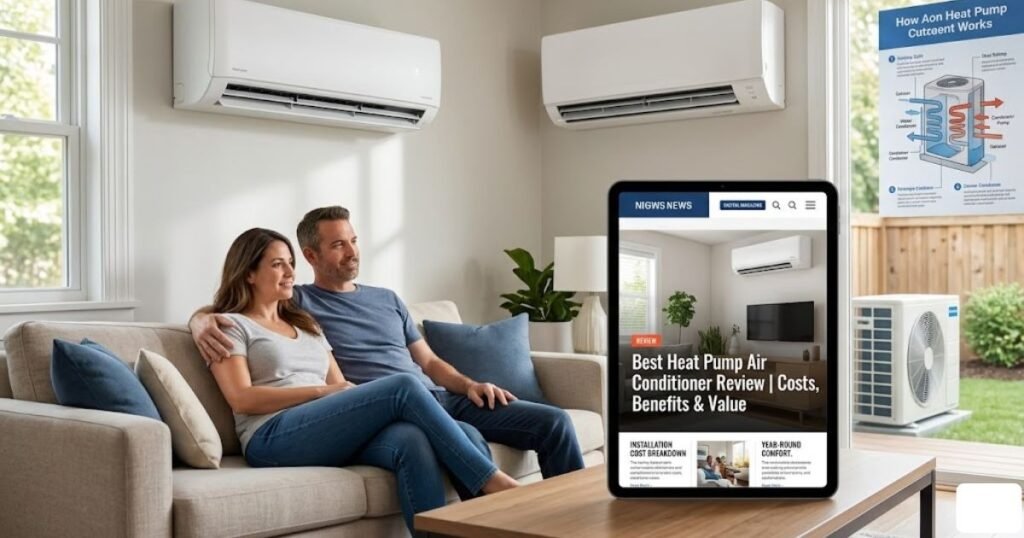
In this guide, we’re going to break down exactly what a heat pump is, why it might be the smartest investment you make for your home this year, and how to navigate the costs and options available in today’s market. Lets deep dive into “Best Heat Pump Air Conditioner Review | Costs, Benefits & Value”
READ MORE: Carrier Heat Pump Reviews (2026) — Models, Costs, Pros & Cons
What is a Heat Pump Air Conditioner?
At its simplest, a heat pump air conditioner is a two-in-one system. It does the work of both an air conditioner and a heater.
In the summer, it acts exactly like a traditional central AC. It pulls the heat out of your house and dumps it outside, leaving you with a crisp, cool living room. But here’s the “magic” part: when the weather turns cold, the system literally flips a switch (a reversing valve) and starts pulling heat from the outdoor air to pump into your home.
Even when it feels cold outside, there is still thermal energy in the air. A heat pump is incredibly good at finding that energy and moving it.
Common Types You’ll See:
- Central Heat Pumps: These use your existing ductwork, just like a standard furnace and AC setup.
- Ductless Mini-Splits: These are those sleek units you see mounted high on walls. They don’t need ducts at all, making them perfect for older homes or room additions.
How Heat Pump Air Conditioner Works (Without the Science Lecture)
You don’t need an engineering degree to understand a heat pump. Think of it like your kitchen refrigerator.
Your fridge doesn’t “create” cold; it just moves heat from the inside of the fridge to the coils on the back, releasing it into your kitchen. A heat pump does the exact same thing, just on a much larger scale for your entire house.
- In Cooling Mode: The system uses a refrigerant to soak up the heat inside your home. It then carries that heat through copper lines to the outdoor unit, where a fan blows it away.
- In Heating Mode: The process reverses. The refrigerant gets very cold and absorbs heat from the outside air (yes, even in the snow!). It then compresses that refrigerant to make it hot and pumps that warmth into your home.
Because it is moving heat rather than creating it (like a furnace burning gas or an electric baseboard heater glowing red), it is vastly more efficient. In fact, for every unit of electricity you put in, you often get three or four units of heat out.
READ MORE: Fujitsu Heat Pump Reviews (2026): Models, Costs & Real-World Pros & Cons
Why U.S. Homeowners are Making the Switch
There are four big reasons why heat pumps are taking over American neighborhoods right now:
- Massive Energy Savings: Since they don’t burn fuel to create heat, they can cut your electricity use for heating by about 50% compared to electric furnaces or baseboard heaters.
- Year-Round Comfort: You get a steady, consistent flow of air. Modern heat pumps are also excellent at dehumidifying your home in the summer, which is a huge plus in the humid South or Midwest.
- Simplified Maintenance: Instead of maintaining a gas furnace and an AC unit, you only have one system to worry about. That’s one filter type to buy and one professional tune-up per year.
- Safety and Air Quality: There’s no combustion happening inside your home. No gas lines, no carbon monoxide worries from the heating side, and no dry, “scorched” air feeling that sometimes comes with old furnaces.
Heat Pump Air Conditioner Best Uses: Is Your Home a Good Fit?
While heat pumps work in almost any home, they are a “slam dunk” for these specific situations:
- Older Homes: If you have an old house with no room for bulky metal ducts, a ductless mini-split is a lifesaver. You can get modern climate control without tearing down your plaster walls.
- New Construction: If you’re building a home, installing one system instead of two saves money upfront and lowers your long-term footprint.
- Bonus Rooms & Additions: Finished a garage or an attic? Don’t try to tap into your old ductwork—just put a small heat pump out there.
- Replacing an Aging AC: If your AC is 10–15 years old, don’t just replace it with another AC. For a bit more money, you can get a heat pump and potentially stop using your expensive oil or propane backup heat.
READ MORE: Goodman Heat Pump Review 2026 | Efficiency, Cost, Pros & Cons
Heat Pump Air Conditioner Comparison Table (2026): Goodman vs Carrier vs Daikin vs MRCOOL vs Mitsubishi
When you start shopping, you’ll see several big names. Prices vary wildly based on your local labor rates and the complexity of your home, but here is a snapshot of what’s on the market right now.
| Brand / Model Example | Type | Current Price Example (Unit Only) | Best For |
| Goodman 2 Ton 15.2 SEER2 | Central split system | $2,896.00 | Budget-minded homeowners |
| Daikin 24k BTU Oterra | Ductless (1-Zone) | $3,018.00 | Efficient single-room comfort |
| MRCOOL DIY 24k BTU | Ductless DIY | $3,329.00 | DIYers who want to skip labor costs |
| Carrier Infinity 24 SEER2 | Multi-zone ductless | $5,249.99 | Premium multi-room comfort |
| Mitsubishi 2 Ton 18 SEER | Premium ductless | $6,133.00 | High-end reliability and performance |
Pro Tip: While the “unit only” prices look affordable, a full professional installation for a family home usually runs between $7,000 and $10,000. If you have a large home or need new ductwork, that price can climb higher.
Heat Pump Air Conditioner Pros and Cons
Let’s be real—no system is perfect. Here is the honest breakdown.
The Pros:
- One system does it all: Less clutter in your yard and attic.
- Incredible efficiency: Can lower monthly bills significantly.
- Eco-friendly: No on-site fossil fuel burning.
- Quiet: Modern “inverter” models are so quiet you might not even know they’re running.
- Incentives: As of 2026, many U.S. homeowners can get up to $2,000 in federal tax credits (and sometimes thousands more in state rebates) for installing high-efficiency heat pumps.
The Cons:
- Higher Upfront Cost: They generally cost more than a basic AC unit.
- Installation Matters: If it’s sized wrong or the refrigerant lines aren’t perfect, it won’t save you a dime.
- Extreme Cold Performance: While modern “cold climate” heat pumps work down to -15°F, very old or cheap models might struggle when it gets below freezing.
- Electrical Needs: You might need to upgrade your breaker panel if you’re moving from gas to all-electric.
READ MORE: American Standard HVAC Systems: Complete Buyer’s Guide for U.S. Homeowners (2026)
Heat Pump Air Conditioner Cost:
When a contractor hands you a quote, it can be a bit of a shock. Here is why the numbers look the way they do:
- The Unit Itself: High-efficiency units (18–24 SEER2) cost more than basic ones but pay for themselves in lower bills.
- Labor: This is usually 50% or more of the bill. It involves electrical work, refrigerant charging, and often modifications to your existing setup.
- Ductwork: If your old ducts are leaky or too small, they’ll need to be fixed or replaced to handle the new airflow.
- The “Hidden” Stuff: New 2026 regulations require lower-GWP (Global Warming Potential) refrigerants. These are better for the planet, but the equipment designed for them is currently a bit more expensive than the old stuff.
How to Choose the Right Heat Pump Air Conditioner for Your Home
Don’t just buy the first thing you see on sale. Use these three “S’s” to guide you:
- Size (Capacity): This is measured in “Tons” or BTUs. A 2-ton unit is common for smaller homes; a 4-ton for larger ones. Have a pro do a Manual J calculation—this is a fancy way of saying they check your windows, insulation, and square footage to ensure the unit isn’t too big or too small.
- Standard (Efficiency): Look for the SEER2 (cooling) and HSPF2 (heating) ratings. The higher the number, the lower your bill. In 2026, look for at least 15.2 SEER2.
- Sound: If the unit is right outside your bedroom window, check the decibel (dB) rating. Many premium units (like Mitsubishi or Daikin) are whisper-quiet.
READ MORE: Daikin Heat Pump Buying Guide
Heat Pump Air Conditioner Simple Maintenance Tips
A heat pump is a workhorse, but it needs a little love to stay efficient.
- Filters: Change them every 1–3 months. A dirty filter makes the system work twice as hard.
- Clear the Debris: Make sure leaves, tall grass, or snow aren’t choking the outdoor unit. It needs to “breathe” to move heat.
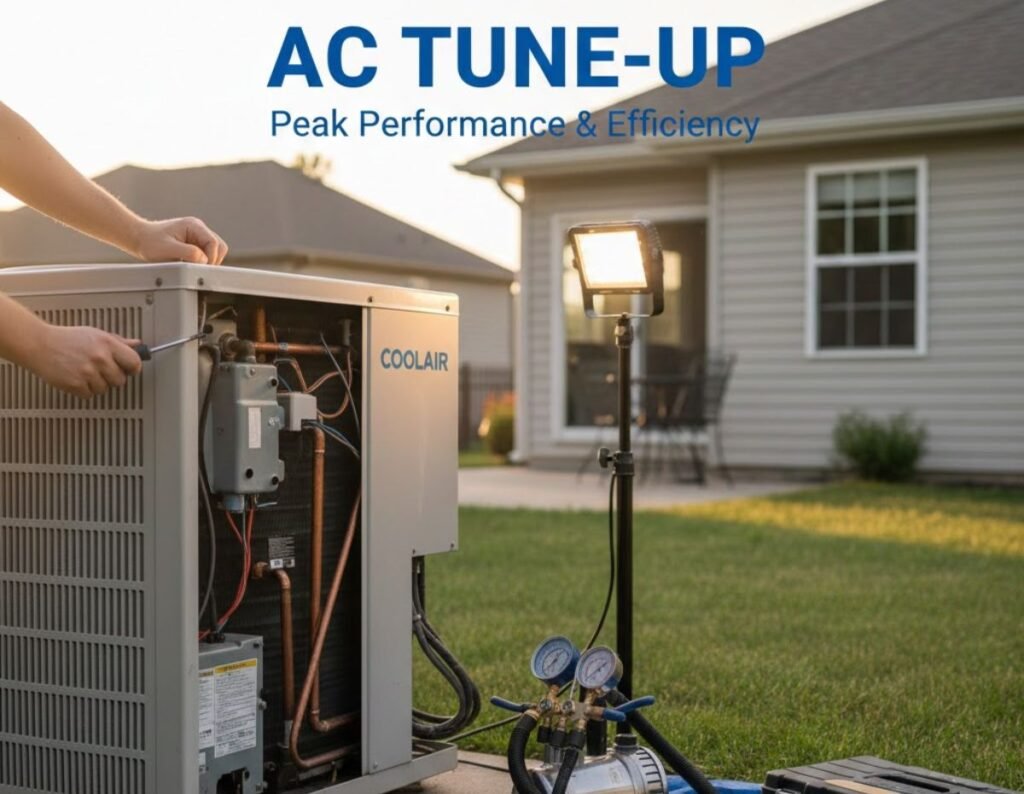
- Annual Checkups: Have a pro come out once a year. They’ll check the refrigerant levels and clean the coils.
- Listen: If it starts making a loud “clanking” or “whirring” noise, call someone. It’s usually a cheap fix that turns into an expensive one if you ignore it.
Heat Pump Air Conditioner Buying Mistakes to Avoid
- Buying for Price Alone: A “cheap” system that breaks in five years or runs your electric bill through the roof isn’t a deal.
- The “One-Size-Fits-All” Trap: Just because your neighbor has a 3-ton unit doesn’t mean you do. Your insulation might be better (or worse) than theirs.
- Skipping the Rebates: Check your local utility company’s website. Sometimes they offer $500 or $1,000 rebates that the contractor might not even mention.
- Ignoring the Warranty: Make sure you register your product! Most brands give you 10 years of parts coverage only if you register it within 60 days of installation.
READ MORE: Central Heating: Cost, Types & Buyer’s Guide for U.S. Homeowners
Final Recommendation
Is a heat pump air conditioner worth it? For 90% of U.S. homeowners, the answer is a resounding yes.
If you live in a moderate or warm climate (the South, Southwest, or West Coast), a heat pump is a no-brainer. If you live in the frozen North, you might want a “Cold Climate” model or a “Dual Fuel” system (a heat pump paired with a small gas furnace for those rare -20°F nights).
At the end of the day, you’re getting a system that is quieter, safer, and much cheaper to run than the old tech we used for the last fifty years. It’s an investment in your home’s value and your daily comfort.
FAQ
What is a heat pump air conditioner?
It is a heating and cooling system that moves heat into or out of your home using refrigerant. It replaces both a traditional AC and a furnace, providing year-round comfort in one unit.
Is a heat pump air conditioner worth it for homeowners?
Yes, especially with current 2026 energy prices and federal tax credits. While the upfront cost is higher, the monthly savings on heating and the convenience of a single system usually provide a return on investment within a few years.
How much does a heat pump air conditioner cost in the USA?
A typical whole-home system costs between $7,000 and $10,000 fully installed. DIY ductless units can be found for around $3,000, while high-end, multi-zone professional systems can reach $15,000 or more.
Can a heat pump air conditioner heat and cool a house?
Absolutely. It is designed to do both. It uses a reversing valve to change the direction of the refrigerant flow, allowing it to pull heat out of your house in the summer and pull heat into your house in the winter.
What size heat pump air conditioner do I need?
Size depends on your home’s square footage, insulation quality, and local climate. Generally, you need 1 ton of capacity for every 500–1,000 square feet. Always have an HVAC professional perform a “Manual J” load calculation to get the exact size for your specific home.