Hard water damages pipes, laundry, and appliances. A whole house water softener gives you softer water at every tap. For most U.S. homes, a whole house water softener with demand regeneration is the best balance of cost and performance. Top picks cover small homes to large households. This guide shows how softeners work, what to buy, maintenance tips, and five vetted models for 2026. Lets deep dive into “Best Whole House Water Softener System for Home (2026) — Top Picks & Buyer’s Guide”
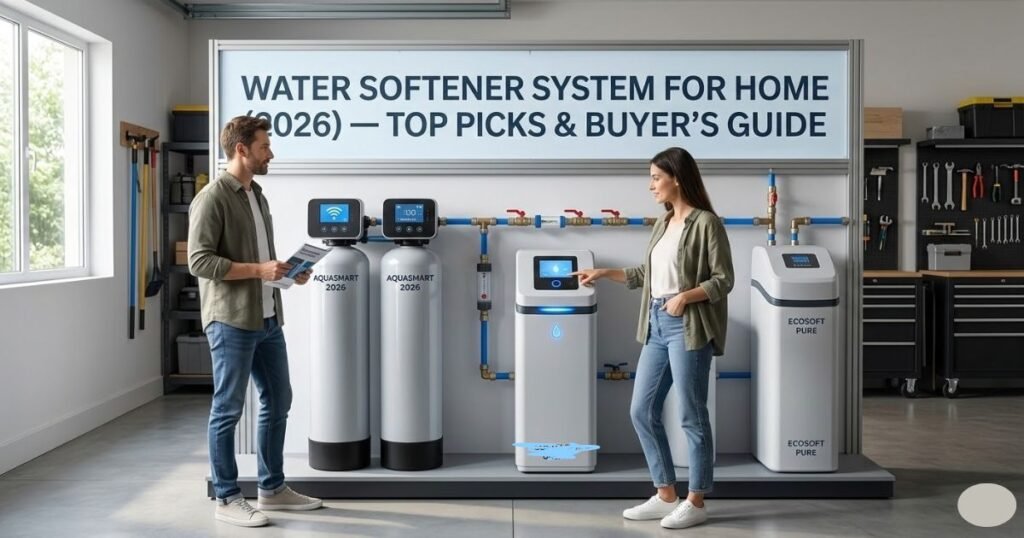
Our Top Picks at a Glance:
- Best Overall: Aquasure Harmony Series 48,000 Grains
- Most Reliable: AFW Premium Fleck 5600SXT (64,000 Grains)
- Best for Small Homes: VEVOR 32,000 Grains
- Best Value: EcoPure EP42
- Easiest Maintenance: Kenmore 350
Ready for a shower that actually cares for your skin and hair? The AquaBliss SF100 reduces dry, itchy skin, dandruff, and eczema while improving hair and nail condition. Check Below- 👇

Why You Need a Water Softener
If you live in the United States, there is an 85% chance you have hard water. “Hardness” refers to the high concentration of calcium and magnesium dissolved in your water supply. While not a health risk, these minerals are a nightmare for your home’s infrastructure.
If you want longer appliance life, cleaner laundry, and better soap performance, a whole house water softener helps. Install one at the main water line. It treats water for the entire home. That means softer water at every tap and appliance.
Common Signs of Hard Water
- Scale Buildup: That white, chalky crust on your showerheads and faucets.
- Soap Scum: A film on your tub, tiles, and even your skin.
- Dull Laundry: Clothes feel scratchy and colors look faded after just a few washes.
- Dry Skin and Hair: Hard minerals strip away natural oils, leaving you itchy.
- Low Water Pressure: Mineral scale builds up inside your pipes, narrowing the path for water.
The Benefits of Soft Water
- Longer appliance life. Less scale on water heaters and dishwashers.
- Lower energy bills. Heating elements work more efficiently.
- Cleaner laundry and skin. Softer clothes and softer-feeling skin.
- Less detergent needed. Saves money and chemicals.
- Easier plumbing maintenance. Fewer clogs and scale repairs.
READ MORE: Best Tankless Water Heater 2026 — Top Picks, Costs & Buyer’s Guide
How Water Softeners Work (The Simple Version)
You don’t need a degree in chemistry to understand your water system. Most whole-house systems use a process called ion exchange. Think of it as a chemical “trade.”
The Ion Exchange Process
- The Resin Tank: Your hard water enters a tank filled with millions of tiny plastic beads called “resin.”
- The Trade: These beads are “charged” with sodium ions (salt). As hard water passes over them, the beads grab the calcium and magnesium and swap them for a tiny bit of sodium.
- Soft Water: The water leaving the tank is now “soft” and ready for your taps.
The Regeneration Cycle
Eventually, those resin beads get “full” of calcium and magnesium. They can’t hold any more. This is when the system goes into regeneration.
- The system flushes the resin beads with a heavy saltwater brine from the salt tank.
- This brine knocks the hard minerals off the beads and sends them down the drain.
- The beads are recharged with sodium and ready to work again.
Understanding “Grain Capacity”
When shopping, you’ll see numbers like 32,000 or 48,000 “grains.” This tells you how much hardness the system can remove before it needs to regenerate. A higher grain count means the system can go longer between cycles, saving you salt and water in the long run.
READ MORE: No Hot Water in the House? How to Troubleshoot, Fix, and Budget for Repairs
Buying Guide: What Matters Most
Choosing the best Whole House water softener isn’t just about picking the biggest tank. You need to match the system to your specific home and water usage.
1. Grain Capacity Explained
This is the most critical spec. To find your size, follow this simple math:
- Step 1: Multiply the number of people in your home by 75 (the average gallons used per person per day).
- Step 2: Multiply that number by your water hardness (measured in Grains Per Gallon or GPG). You can find this via a home test kit or your local city water report.
- The Result: This is your daily grain requirement. You want a system that can handle about 3–7 days of usage before needing to recharge.
Example: A family of 4 with 10 GPG hardness uses 3,000 grains per day. A 32,000 grain water softener would last about 10 days between cycles, which is excellent.
2. Flow Rate and Household Size
Flow rate is measured in Gallons Per Minute (GPM). If you have three people showering at once while the dishwasher is running, you need a high flow rate. If the GPM is too low, you’ll experience a massive drop in water pressure.
- Small homes (1-2 bath): 7–10 GPM is usually plenty.
- Large homes (3+ bath): Look for 12–15+ GPM.
3. Regeneration Type: Timer vs. Demand
- Timer-Based: These regenerate at a set time (e.g., every Tuesday at 2 AM). These are cheaper but wasteful. They might regenerate when the beads are still clean or fail to regenerate when you have guests over and use extra water.
- Demand-Initiated (Metered): These are the modern standard. They track exactly how much water you use and only regenerate when necessary. This saves a massive amount of salt and water.
4. Salt Usage and Operating Cost
Salt isn’t expensive, but it adds up. Modern systems are much more “salt-efficient.” A high-quality unit like the EcoPure EP42 uses sensors to ensure it only uses the minimum amount of salt required. Expect to spend $10–$20 per month on salt for an average family.
5. Installation: DIY vs. Pro
Most whole house water softener units are designed for DIYers with basic plumbing skills. Many modern units use “push-to-connect” fittings. However, if you have to cut into copper pipes or don’t have a floor drain nearby, you should call a plumber. A professional install typically costs between $500 and $1,500 depending on your home’s layout.
6. Certifications (NSF/ANSI)
Look for the NSF/ANSI 44 certification. This ensures the system is structurally sound and actually removes the hardness it claims to. NSF/ANSI 372 is also important, as it guarantees the unit is “lead-free.”
7. Warranty and Support
A water softener should last 10–15 years. Look for at least a 1-year “top-to-bottom” warranty, with 5–10 years on the tanks and the control valve. Brands like Kenmore and Fleck have been around for decades, making it easy to find replacement parts if something breaks.
READ MORE: Why My Tankless Water Heater Shuts Off During Shower — Fixes & Costs
Best Whole House Water Softener System for Home (2026)
1. Aquasure Harmony Series 48,000 Grains Water Softener
The Aquasure unit is a powerhouse for the average American home. It is designed to handle medium to large households with ease. The digital controller is intuitive, and the high-capacity resin means it doesn’t have to cycle as often as smaller units.
- Key Features: 48,000 grain capacity; high-efficiency digital controller; bypass valve included.
- Pros: High capacity for big homes · Excellent salt efficiency · Very user-friendly interface.
- Cons: Requires a bit more floor space · Installation instructions can be brief for beginners.
Great if you want fewer regenerations — check Product below- 👇

2. VEVOR Water Softener, 32,000 Grains Whole House Water Softener System
The VEVOR unit is a budget-friendly disruptor in the market. It’s perfect for apartments, small homes, or first-time buyers who don’t want to drop $1,000 on a system. It’s compact but packs enough punch to handle a 1–2 bathroom home without breaking a sweat.
- Key Features: 32,000 grain capacity; space-saving compact tank; easy-access salt lid.
- Pros: Very affordable · Fits in tight closets or basements · Simple DIY setup.
- Cons: Not suitable for large families · Shorter warranty period than premium brands.
A strong, wallet-friendly choice for small homes. Check Product Below- 👇
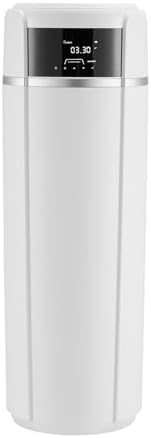
3. Kenmore 350 Water Softener System (350)
The Kenmore 350 is a classic for a reason. It is a mid-range unit that balances performance and brand reliability. It’s a “cabinet style” unit, meaning the salt and resin tanks are in one single housing, which looks much cleaner in a finished basement.
- Key Features: 32,000 grains; demand-initiated regeneration; slim profile.
- Pros: Huge brand support network · Easy to find replacement parts · Clean, all-in-one design.
- Cons: Lower capacity for high-hardness areas · Resin tank is harder to replace than two-tank systems.
A dependable mid-range pick for everyday families. Check Product below- 👇

4. AFW Premium Fleck Whole House Water Softener (5600SXT)
If you ask a plumber what they have in their own home, it’s likely a Fleck-valved system. This unit uses the legendary 5600SXT control valve. It is a “two-tank” system built for durability and high flow rates. It is highly configurable and can handle very hard water.
- Key Features: 64,000 grain capacity; Fleck 5600SXT digital SXT controller; high-flow 1-inch internal distributor.
- Pros: Industry-standard valve reliability · Handles very large homes (4+ people) · Parts available at any plumbing shop.
- Cons: Larger footprint due to two tanks · Setup is more technical for DIYers.
Top pick for serious whole-house performance. Check Product below- 👇

5. EcoPure EP42 42,000 Grain Water Softener
The EcoPure EP42 is a “smart” middle-ground option. It’s designed to be highly efficient, using sensors to predict your water usage. This helps it use less salt and water than basic timer units. It’s a great fit for a standard 3–4 bedroom suburban home.
- Key Features: 42,000 grain capacity; “AutoSense” technology; high-flow valve.
- Pros: Excellent balance of size and power · Low salt consumption · Built-in sediment filter.
- Cons: Plastic bypass valves feel less premium · Controls are less “tweakable” for power users.
A smart middle-of-the-road option for many homes. Check Product below- 👇

Whole House Water Softener System Quick Comparison Table
| Model | Capacity (Grains) | Best For | Footprint |
| Aquasure Harmony | 48,000 | Average Families | Large (Two Tanks) |
| VEVOR | 32,000 | Budget / Small Homes | Compact (Single Tank) |
| Kenmore 350 | 32,000 | Mid-Range Reliability | Slim (Single Tank) |
| AFW Fleck | 64,000 | Large Homes / Pro-Grade | Large (Two Tanks) |
| EcoPure EP42 | 42,000 | Efficiency Seekers | Medium (Single Tank) |
Protect your RV plumbing and shine every wash — buy the VEVOR portable softener now. Check below- 👇

READ MORE: How Big of a Tankless Water Heater Do I Need
How We Choose: Our Methodology
We want you to feel confident in your purchase. Our selection process for the best water softener involves more than just reading labels. Here is how we vetted these systems:
- Performance Testing & Spec Review: We compared manufacturer data on grain capacity and flow rates against real-world performance reports to ensure the units meet their claims.
- Household Size Mapping: We ensured our recommendations cover the full spectrum of U.S. living situations, from 1-person apartments to 6-person family homes.
- Cost of Ownership: We factored in the initial purchase price, the cost of salt over five years, and the likely cost of professional repairs.
- Reliability & Warranty: We prioritized brands with a history of long-term durability. We looked specifically at the reputation of the control valves (like Fleck).
- Ease of Installation & Maintenance: We rated each unit based on how easy it is for a homeowner to install and how often you have to lug heavy salt bags to the basement.
- Real User Feedback: We analyzed thousands of verified buyer reviews to identify common “pain points,” such as leaking valves or confusing programming.
- Certifications: We checked for NSF/ANSI standards to ensure the units are safe and effective.
Installation & Maintenance Tips
Installing a water softener for home use is a rewarding weekend project. Here is what you need to know to keep it running for a decade or more.
Quick Installation Guide
- Placement: Place the unit near your home’s main water entry point, but after the outside hose bibs (you don’t need to soften the water for your lawn).
- Level Ground: Ensure the floor is level. A full salt tank is very heavy and can tip or crack if the floor is uneven.
- The Bypass Valve: Always install a bypass valve. This allows you to turn off water to the softener for maintenance without turning off water to the whole house.
- Drainage: You need a way to dispose of the brine flush. A floor drain or utility sink is ideal. Make sure there is an “air gap” in the drain line to prevent sewage backflow.
Maintenance Checklist
- Check Salt Monthly: Never let the salt level drop below the water line in the brine tank.
- Break Salt Bridges: Sometimes salt forms a hard crust (a “bridge”) that prevents the water from reaching the salt. Give the salt a gentle poke with a broom handle once a month.
- Clean the Brine Tank: Every 2–3 years, empty the salt tank and scrub it out to remove “salt sludge” or dirt.
- Winterizing: If your softener is in a garage or unheated basement, you must insulate the pipes. If the water inside the resin tank freezes, the tank will shatter.
READ MORE: How to Fix Low Water Pressure in Your Shower— Step-by-Step DIY Guide
Whole House Water Softener System for Home Cost & ROI: Is it Worth It?
A quality whole house water softener usually costs between $500 and $1,200 for the hardware. If you hire a pro, add another $600 to $1,000.
However, the Return on Investment (ROI) is significant.
- Detergent Savings: You will spend about $150 less per year on soaps and detergents.
- Energy Efficiency: A scale-free water heater is up to 15% more efficient.
- Appliance Life: Replacing a water heater costs $1,500+. Replacing a dishwasher costs $600+. Extending their life by just 30% pays for the softener itself.
In most American households, a water softener pays for itself in reduced energy and plumbing costs within 3 to 4 years.
FAQ: Common Water Softener Questions
What size water softener do I need for my house?
To find the right size, multiply the number of people in your home by the daily water use (avg. 75 gallons) and then by your water hardness (grains per gallon). This gives you your daily grain load. Choose a system that can handle 3–5 days of that load. For most 3-bedroom homes, a 32,000 to 40,000 grain water softener is the sweet spot for efficiency.
How many grains does a water softener need for a 3-4 bedroom home?
A 3-4 bedroom home typically houses 4 to 5 people. If you have average hardness (around 10 GPG), you’ll need a 32,000 to 48,000 grain water softener. If you have extremely hard water (20+ GPG) or a large family, we recommend stepping up to a 64,000 grain unit to prevent the system from regenerating every single night.
How often do water softeners need salt and how much does it cost?
Most families go through one 40-pound bag of salt per month. This costs roughly $5 to $10 per bag at most home improvement stores. You should check your salt levels once a month. If the tank is less than one-third full, it’s time to add another bag. Modern high-efficiency units use significantly less salt than older timer-based models.
Can I install a water softener myself or do I need a plumber?
If your home is “pre-plumbed” with a softener loop, a DIY install is very easy and takes about 1–2 hours. If you need to cut into your main water line, it requires basic plumbing tools and comfort with pipe fittings. Many homeowners use “SharkBite” or push-to-connect fittings to avoid soldering. If you are uncomfortable with plumbing, a professional can usually finish the job in half a day.
What is the difference between salt-based and salt-free water softeners?
Salt-based softeners (ion exchange) actually remove the hard minerals from your water. This is the only way to get that “slick” soft water feeling. Salt-free systems (water conditioners) don’t remove minerals; they “template” them so they don’t stick to pipes. Salt-free systems are lower maintenance but are much less effective at preventing soap scum or scale buildup in high-hardness areas.
Final Recommendation: Which One Should You Buy?
Choosing the best water softener depends on your household’s unique needs. If you want a “set it and forget it” system with plenty of power, the Aquasure Harmony 48,000 is our top overall pick. It hits the perfect balance of price, capacity, and ease of use.
For those who live in massive homes or have extremely “rocky” water, the AFW Fleck 5600SXT (64,000 grain) is the professional’s choice. It’s built to last for decades.

