-When your air conditioner dies in the middle of a heatwave or starts smoking at 2 a.m., it’s more than an inconvenience it can be dangerous. This guide walks U.S. homeowners through exactly when an AC problem becomes an emergency, how emergency AC service works, what you should do right away, and how to pick a trustworthy local technician so you get fast, safe help.
Read on for a simple homeowner checklist, realistic response-time and cost expectations, a comparison table you can scan in 30 seconds, and short real-world examples that show how emergency calls typically go. If you need help now, call a local 24/7 emergency AC provider many companies list a click-to-call button on their site or a 24/7 hotline. (Writer note: insert local click-to-call anchor / phone number near the top of the published page.)
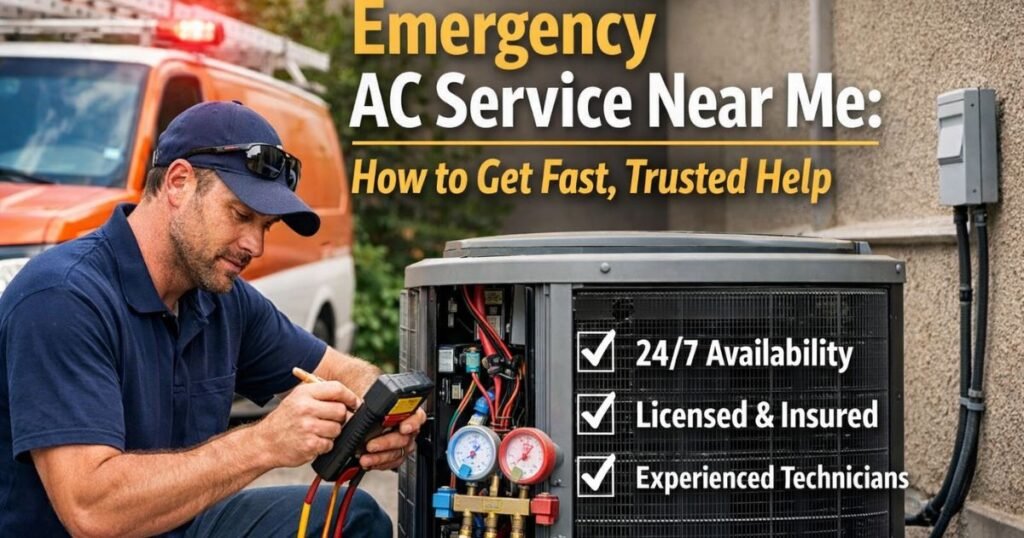
Signs Your AC Problem Is an Emergency
Not every AC glitch requires an immediate after-hours call. Sometimes it’s a minor issue you can schedule for the next day. But certain problems demand urgent attention because they pose safety risks, can cause major damage, or become downright dangerous in extreme weather.
Here’s how to tell if you’re dealing with a true HVAC emergency.
1. Electrical hazards or burning smells
If you smell burning plastic or notice sparks near your unit, shut everything off at the breaker and evacuate if needed. These are signs of electrical issues that could lead to fire. According to industry safety guidelines, electrical malfunctions account for a significant portion of HVAC-related hazards.
Deon Smith, a NATE-certified HVAC technician with 11 years of experience, says: “I’ve seen too many calls where a burning smell turned out to be wiring overheating. In those cases, it’s not just your AC at risk—it’s your whole home. Always treat electrical symptoms as an emergency.”
2. No cooling during extreme heat
When outdoor temperatures climb above 90°F and your AC stops blowing cold air or stops altogether it’s often an emergency, especially if you have young children, elderly family members, or anyone with health conditions. Heat-related illnesses can set in quickly indoors when temperatures rise above 85°F.
A complete shutdown could mean compressor failure, refrigerant loss, or a failed capacitor. In heat waves, indoor temps can spike 10–15 degrees per hour without cooling.
3. Refrigerant leaks with physical symptoms
Refrigerant leaks themselves are often invisible, but large leaks can cause dizziness, headaches, or nausea in occupants. If anyone in the house reports these symptoms or you notice a strong chemical smell, get people to fresh air and contact emergency service.
4. Strange Noises or Leaks
Grinding, banging, or screeching noises often signal a failing motor or loose parts that could seize up completely. Water pooling around the indoor unit might indicate a clogged drain line leading to overflow and water damage or worse, a refrigerant leak (which appears as ice buildup or hissing sounds).
Refrigerant leaks aren’t just inefficient; they’re hazardous to health and the environment, requiring EPA-certified handling.
Other red flags include:
- High indoor humidity making the air feel sticky even with the AC running
- Frequent circuit breaker trips
- Foul odors like musty smells (possible mold) or chemical scents (refrigerant)
If you’re experiencing any of these, especially in combination, it’s time for emergency AC repair. Delaying can turn a $400 fix into a $2,000+ replacement.
Prioritization
If the issue includes fire risk, electrical smoke, toxic symptoms, or rapid water damage, call emergency service immediately and take safety steps (power off, evacuate, ventilate). For less dangerous but still urgent problems no cooling on a very hot day, loud mechanical noise, or flooding call an emergency or same-day provider.
READ MORE: HVAC Near Me
Quick homeowner checklist: immediate steps to take
Here’s a simple, safe, step-by-step checklist to follow while you call for help:
- Isolate the hazard. If you smell burning or see smoke, turn off the thermostat and the HVAC breaker at the main panel, and get everyone out of the house.
- Turn off the unit. For non-smoking problems, switch the system off at the thermostat to avoid further damage.
- Check breakers and filters. Sometimes the fix is a tripped breaker or a clogged filter reset breakers only once and replace dirty filters.
- Look for obvious water. If you see pooling water, place towels or buckets to limit damage and move sensitive items out of the way.
- Ventilate if safe. Open windows and doors if there’s a chemical smell, but avoid doing this if you see heavy smoke.
- Document the issue. Take short videos or photos for the technician and for insurance claims capture noises, water levels, or visible smoke.
- Call a trusted emergency service. Use local search, your insurer’s list, or a trusted local HVAC company’s emergency line. Ask about ETA, fees, and whether the tech is NATE-certified or EPA-licensed.
- Protect pets and vulnerable family members. Move them to a cool neighbor’s house or to a shaded area until the home is safe.
How emergency AC service works:
Emergency AC services operate on tighter timelines and different terms than standard service calls. Here’s the typical flow:
- Call & Triage. When you call, a dispatcher asks about symptoms (smoke, smell, no cool, noises) to triage severity and send the right technician and tools.
- Dispatch & ETA. Reputable companies give an estimated arrival window (often 30 mins to a few hours). During peak heat waves or storms, expect longer waits.
- On-site diagnostics. The technician performs safety checks first (electrical, gas lines, refrigerant leaks), then runs diagnostic tests to identify the root cause. They typically explain initial findings before doing any paid work.
- Estimate & Authorization. For major repairs, techs provide an on-site estimate. Emergency jobs often require a deposit or verbal approval before work begins; make sure you get a clear cost breakdown.
- Parts & repair vs. replace. Techs sometimes carry common parts. For uncommon components, they may offer temporary fixes to restore safety, then schedule full repairs or replacement. If a replacement is the most cost-effective and safe choice, technicians should clearly explain why.
- Aftercare & warranty. Reputable services provide a written receipt, explain warranty on parts/labor, and recommend follow-up maintenance.
What to expect from response times and service level:
- Urgent hazards (smoke, fire risk): 30–90 minutes typically for local emergency teams.
- No cooling during extreme heat: 1–4 hours depending on demand and location.
- Flooding or active water damage: immediate response prioritized.
Be prepared for after-hours or holiday premiums emergency calls usually cost more than standard weekday service visits.
Emergency AC Service Comparison
Choosing the right provider matters response time, pricing transparency, and guarantees vary. Here’s a comparison of typical options based on industry averages and homeowner feedback.
| Feature | Local Independent | Regional Chain | National Franchise | Typical Same-Day (Non-24/7) |
| Typical Response Time | 30–90 minutes | 1–2 hours | 1–3 hours | 2–6 hours |
| 24/7 Availability | Yes | Yes | Often limited | No |
| After-Hours Fee | $75–$150 | $100–$200 | $50–$150 | N/A |
| Typical Total Cost Range* | $200–$900 | $300–$1,200 | $250–$1,000 | $150–$700 |
| Warranty/Guarantee | 30–90 days labor | 60–120 days parts/labor | 1 year parts | Varies |
*Costs exclude major component replacements like compressors ($1,300+). These ranges are national averages compiled from sources like Angi and HomeAdvisor data through 2025–2026; actual prices vary by region, issue severity, and unit age.
Local independents often win on speed and personal service, while franchises offer standardized warranties. Regional chains balance both but may have higher fees. Always verify current offerings good companies are transparent.
READ MORE: AC Tune-Up
Costs & pricing expectations
Emergency AC service costs vary widely. Below are ballpark figures to help you prepare:
- Emergency dispatch / after-hours fee: $50–$250. This covers the cost of sending a technician outside of normal business hours and often the first 30–60 minutes of labor.
- Diagnostic fee: $75–$200. Some companies fold diagnostic into the dispatch fee; others charge separately.
- Minor repairs (capacitors, contactors, control board resets): $150–$600 including parts and labor.
- Major repairs (compressor, condenser replacement, major refrigerant repairs): $600–$2,500+ depending on unit age and size.
- Temporary fixes / emergency parts: $100–$500 for temporary parts to get cooling restored quickly.
Regional variation and timing
- Urban areas can have higher labor rates but shorter ETAs. Coastal or high-cost-of-living areas often see higher after-hours fees.
- During extreme weather events, expect surge pricing and longer wait times technicians get busier and parts may be scarce.
How to avoid surprises
- Ask for a written estimate before authorizing major work.
- Clarify which fees are refundable if you decline repairs after diagnosis.
- Get the warranty in writing — what parts and labor are covered, and for how long.
- Compare two estimates if time allows for non-life-safety issues; for hazardous conditions, prioritize speed and safety over price shopping.
How to choose the best local emergency AC service
In an emergency, it’s tempting to call the first Google result. But choosing wisely saves money and stress.
Look for these credentials:
- State HVAC contractor license (verify on your state’s licensing board)
- Liability insurance and workers’ comp
- NATE certification (North American Technician Excellence—proves advanced training)
- EPA 608 certification for refrigerant handling
Check online reviews on Google, Angi, and BBB—aim for 4.5+ stars with recent activity. Ask about:
- Guaranteed response times
- Upfront pricing (no hidden fees)
- Parts and labor warranties
- Service area coverage
Red flags: No license display, pressure for immediate decisions, cash-only demands.
Start with “emergency AC service near me” searches, then narrow to 2–3 options. Call and compare how they handle your questions a professional dispatcher is a good sign.
Preventing Future AC Emergencies
An ounce of prevention beats a midnight panic call.
Schedule annual professional tune-ups (spring is ideal). Techs clean coils, check refrigerant, and catch small issues.
Homeowner habits:
- Change filters every 1–3 months
- Keep outdoor unit clear of debris
- Run the system regularly to spot issues early
- Install a smart thermostat for alerts
Consider a maintenance plan many companies offer priority emergency service to members.
Regular care extends system life 5–10 years and cuts emergency risk dramatically.
READ MORE: AC Technician Near Me
Conclusion
A broken AC in extreme weather is stressful, but you’re now armed with the knowledge to handle it safely and smartly. Recognize the emergency signs, take safe immediate steps, choose a qualified local provider, and don’t hesitate to call.
If your AC is struggling right now, search for “emergency AC service near me” and get a trusted technician en route. Fast action restores comfort and protects your home. Stay cool!
Frequently Asked Questions
How much does emergency AC repair cost near me?
Expect $200–$900 for most fixes, plus $75–$200 after-hours fees. Costs vary by region and issue—get an upfront quote.
What qualifies as an emergency AC repair?
No cooling in extreme heat, electrical smells/sparks, strange loud noises, or refrigerant leaks. Safety risks or health concerns bump it to urgent.
How fast do emergency AC services respond?
Reputable local providers aim for 30–90 minutes; others 1–3 hours. Peak times may delay slightly.
Can I fix my AC myself in an emergency?
Only basic safe steps like filter changes or breaker resets. Leave electrical/refrigerant work to pros—it’s dangerous and often illegal without certification.
Is it worth repairing an old AC unit in an emergency?
Depends on age and cost. If repair exceeds 50% of replacement value and unit is 12+ years old, replacement might be smarter long-term.