You make your morning coffee, take a sip and there’s a weird metallic tang. If you searched “why does my hot water have a metallic taste”, you’re not alone. Many U.S. homeowners notice a metallic flavor coming from their hot tap (or in drinks made with hot water) and want a clear, practical path to fix it without panic. This “Why Does My Hot Water Have a Metallic Taste? Causes, Tests & Fixes for Homeowners” guide explains why hot water often tastes different than cold, the most common causes (from corroded water heaters to plumbing fittings), what the taste might mean for health, how to test and diagnose the problem, and sensible short- and long-term fixes.
I’ll use plain language and cite trusted authorities (EPA, CDC, USGS, AWWA, NSF and state water departments) so you can verify details locally. You’ll get a quick diagnostic checklist and realistic next steps you can take today plus when to stop DIY and call a licensed plumber or a state-certified testing lab.

How Taste and Temperature Interact — Why Hot Water Often Tastes Different
Two things happen when water gets hot that make metallic flavors more noticeable:
1. Chemistry changes.
Many solids dissolve more readily in warmer water, so hot water can dissolve metal ions from corroded tank linings, anode rods, or pipe surfaces more easily than cold water. (Solubility of many solids increases with temperature.)
2. Your taste perception changes.
Heat also alters how taste receptors respond warm liquids can highlight metallic, salty, or bitter sensations that cold water mutes. Biological studies show taste responses vary with temperature, so a metal trace that’s subtle in cold water may be obvious when hot.
Put together, warmer water both releases more metal ions and makes you more likely to notice them. That’s why a metallic tang appearing only in hot water is an important diagnostic clue.
READ MORE: Why Is My Hot Water Brown But Cold Water Is Clear? Causes, Risks & Fixes
Top Causes of Metallic Taste in Hot Water
If the metallic taste is localized specifically to your hot water, the problem is likely occurring inside your home’s plumbing system—most often within the water heater itself. Here are the most common culprits.
1. Corroded Water Heater Components (Anode Rod and Tank)
The most frequent cause of metallic tasting water hot only is the “sacrificial” anode rod inside your water heater. This rod is usually made of magnesium, aluminum, or zinc. Its sole job is to corrode so that your steel tank doesn’t have to.
As the anode rod reaches the end of its life, it may begin to dissolve rapidly, releasing high concentrations of metal ions into the hot water. If the rod is completely gone, the water will begin attacking the steel walls of the tank itself, leading to a rusty or metallic flavor.
- Signs: The taste is present at every hot water faucet in the house.
- Urgency: Moderate. If the rod is gone, your tank will soon leak, leading to an expensive replacement.
2. Pipe Materials and Corrosion (Copper and Galvanized Steel)
If your home was built before the late 1980s, you might have galvanized steel pipes or copper piping joined with lead-based solder. When hot water sits in these pipes, it can pick up a metallic flavor. Galvanized pipes are notorious for rusting from the inside out, which adds iron to the water. Copper pipes can release a bitter, metallic taste if the water is slightly acidic.
- Signs: The taste is strongest after the water has been sitting in the pipes for several hours (like first thing in the morning).
- Urgency: High if lead is suspected; otherwise, it is a long-term maintenance issue.
3. High Mineral Content and Water Chemistry
The chemistry of your local water supply matters. If your water has a low pH (acidic) or is “soft,” it is naturally more “aggressive” and eager to dissolve metals. The American Water Works Association (AWWA) notes that water chemistry varies wildly by region. In some parts of the U.S., naturally occurring minerals like manganese or iron in the groundwater can create a metallic profile that becomes more pronounced when heated.
- Signs: You might also notice blue-green stains (copper) or reddish-brown stains (iron) in your sinks.
4. Brass Fittings and Faucet Components
Many “lead-free” brass faucets manufactured before 2014 were still allowed to contain up to 8% lead. Even modern brass contains copper and zinc. Hot water flowing through these fixtures can pick up metal ions right at the point of exit.
- Signs: The taste is only present at one specific faucet.
5. Municipal Water Issues vs. Private Wells
If you are on a private well, you are responsible for your own water quality. High levels of naturally occurring iron or a failing well pump can cause metallic tastes. For those on municipal water, the utility often adds “corrosion inhibitors” to prevent metals from leaching. If the city is performing maintenance on the water mains, you might see a temporary spike in metallic sediment.
READ MORE: Signs Your Pipes Need Replacing
Health Implications — Is Metallic Tasting Hot Water Dangerous?
When you notice a hot water metallic taste, your first concern is likely safety. Is it okay to brush your teeth? Can you use it for pasta?
It is important to distinguish between aesthetic issues and health hazards.
- Iron and Zinc: These often cause a strong metallic taste but are generally not considered harmful at the levels typically found in home plumbing. They are classified by the EPA as “Secondary Contaminants,” meaning they affect taste, odor, and appearance rather than safety.
- Lead and Copper: These are the primary concerns. Lead is a neurotoxin that is especially dangerous for infants, young children, and pregnant people. Copper, in high doses, can cause gastrointestinal distress.
The EPA’s Lead and Copper Rule mandates that public water systems monitor these levels. However, the EPA cannot control what happens once the water enters your private pipes. As the EPA states in its consumer guidance: “You cannot see, taste, or smell lead dissolved in water.” Therefore, if you have a metallic taste, you should not assume it is “just iron.” It could be a sign that your water is corrosive enough to be leaching lead from older solder or brass.
Expert Recommendation: If you have children in the home or are pregnant, always use cold, filtered water for consumption. If a metallic taste persists, seek professional testing.
READ MORE: What Plumbing Pipes Are Bad?
How to diagnose — step-by-step checks and tests
Before you spend money on a plumber, you can do some detective work yourself. Use the following steps to narrow down the source.
Step-by-Step Checks
- The Cold vs. Hot Comparison: Fill one glass with cold water and another with hot. Let the hot water cool down to room temperature so the temperature doesn’t bias your taste buds. If only the hot water tastes metallic, the problem is your water heater or hot water lines.
- The “First Draw” Test: Taste the water first thing in the morning. Then, run the water for two minutes and taste it again. If the taste disappears after running the water, the metal is leaching from your home’s pipes while the water sits stagnant.
- The Single Fixture Test: Check every faucet in the house. If the taste is only at the kitchen sink, the problem is likely that specific faucet or the supply lines leading to it.
Diagnostic Checklist Table
| Symptom | Likely Cause | What to Check |
| Taste in hot water only (all taps) | Water heater anode rod | Check the age of the water heater; inspect anode rod. |
| Taste in hot and cold water | Municipal supply or main line | Check your local Water Quality Report (CCR). |
| Taste goes away after running water | Pipe leaching | Investigate pipe material (copper vs. galvanized). |
| Blue-green stains in tub/sink | Copper leaching | Test the pH of your water; check copper pipes. |
| Red/Orange “rusty” stains | Iron corrosion | Check for galvanized steel pipes or old heater tank. |
Professional Testing
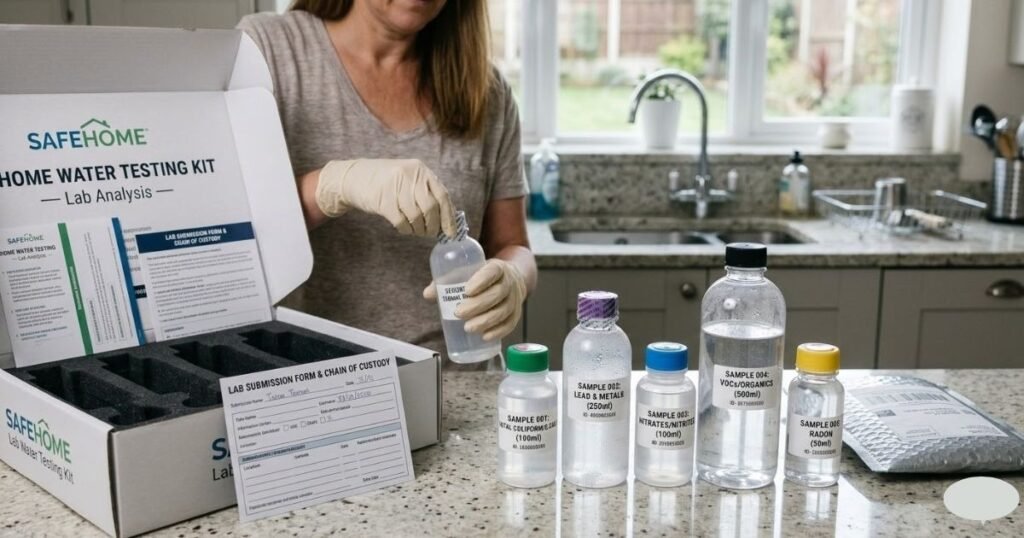
If you cannot identify the source, or if you suspect lead, do not rely on a $20 hardware store kit. The CDC recommends using a state-certified laboratory. You can find these through your state’s environmental or health department website. Most local water utilities will also provide a list of certified labs, and some even offer free lead testing kits to residents.
READ MORE: How Long Does Copper Plumbing Last?
Practical Fixes: From DIY to Pro
Once you have identified the cause, it is time to take action. Here is how to handle a water heater metallic taste and other common issues.
Immediate Actions (Low Cost)
- Flush Your Water Heater: Over time, sediment and “scale” build up at the bottom of your tank. This can trap metal ions and create odors. Follow your manufacturer’s manual to drain and flush the tank at least once a year.
- Flush the Lines: If you haven’t used a faucet in a few hours, run the water for 30–60 seconds before using it.
- Clean Aerators: Unscrew the small mesh screens (aerators) at the tip of your faucets. Tiny metal shards or “scale” can get trapped there and affect the taste.
Mid-Term Solutions (Moderate Cost)
- Replace the Anode Rod: This is a classic DIY-friendly task if you have a large wrench and some muscle. A new magnesium or aluminum rod typically costs between $30 and $60 and can add years to your heater’s life while fixing the taste.
- Install a Point-of-Use Filter: If you cannot afford to replace pipes, install an NSF/ANSI 53 or 58 certified filter at your kitchen sink. Ensure it is specifically rated for lead and heavy metal removal.
Long-Term Solutions (Higher Cost)
- Replace Galvanized Pipes: If your home is full of old iron pipes, the metallic taste will likely persist until they are replaced with copper or PEX (cross-linked polyethylene).
- Install a Water Neutralizer: If your water is acidic (low pH), a professional can install a system to balance the chemistry, making the water less “hungry” for the metals in your pipes.
When to call a professional
While flushing a tank is a great DIY Saturday project, some situations require a licensed plumber or a water specialist. You should call a professional if:
- You see “brown” or “rust-colored” water that doesn’t clear up after flushing.
- Your water heater is more than 10–12 years old and showing signs of external rust.
- A certified lab test shows lead levels above the EPA Action Level of 15 parts per billion (ppb).
- You are on a well and suspect the pump or casing is corroding.
A licensed plumber can perform a “pressure test” and use a camera to inspect the interior of your lines, giving you a definitive answer.
READ MORE: How to Clean Copper Plumbing Pipes
Quick maintenance checklist for homeowners
- Annually: Flush your water heater and check for leaks.
- Every 3–7 years: Inspect/replace the water heater anode rod (verify interval with your heater’s manual).
- Every 6–12 months: Clean faucet aerators and screens.
- Every 1–3 years: Test well water or, if on a public utility, review your utility’s annual Consumer Confidence Report and test if you have old plumbing or vulnerable household members.
- After plumbing work: Flush lines and retest taste.
- If you smell or taste metal: Use cold water for consumption, test, and consider a certified filter until the cause is fixed.
Why does my hot water taste metallic but cold water does not?
Hot water dissolves and releases metal ions from corroded tanks, anode rods, or hot plumbing more readily than cold water. If the metallic taste is only in hot water, focus diagnosis on the water heater and hot-only piping or fixtures.
Is metallic tasting hot water harmful to drink?
Taste alone doesn’t prove toxicity. Low levels of iron or manganese usually cause taste/staining. But dangerous metals like lead can’t be seen or tasted—test with a certified lab if you suspect lead or have at-risk household members.
How do I stop my hot water from tasting like metal?
Start by flushing hot lines and testing other taps. Mid-term fixes include replacing a corroded anode rod, servicing or flushing the water heater, and replacing corroded pipes or defective fittings. For confirmed lead or widespread issues, hire a licensed plumber.
Can my water heater cause a metallic taste?
Yes — a failing or corroded water heater (especially older tanks) is a common cause because heat increases metal solubility and can release rust, magnesium, or other ions into hot water. Inspect the anode rod and sediment levels.
Should I test my hot water for lead?
If you have older plumbing, brass fittings, or vulnerable occupants, test for lead. Use a state-certified laboratory or contact your local water utility for guidance. Don’t rely on taste—lead is tasteless and odorless.
Conclusion & Next Steps
A metallic taste in your hot water is your home’s way of telling you that something is reacting with your plumbing. In many cases, it is a simple fix like replacing a $40 anode rod or flushing out a years’ worth of sediment from your water heater. However, because you cannot taste lead, it is vital to remain cautious.
Your next steps:
- Perform the Cold vs. Hot taste test today.
- If the taste is only in the hot water, schedule a water heater flush.
- If you live in an older home, contact a state-certified lab for a lead and copper test.
Don’t ignore the signs of corrosion. By taking action now, you can protect your plumbing, save money on a premature water heater replacement, and ensure your morning coffee tastes exactly the way it should. If the taste persists after a flush, contact a licensed plumber to inspect your system.
Authoritative Sources Cited:
- U.S. Environmental Protection Agency (EPA): Lead and Copper Rule and Secondary Drinking Water Standards.
- Centers for Disease Control and Prevention (CDC): Guidance on using cold water for drinking and cooking.
- United States Geological Survey (USGS): Water properties and solubility data.
- American Water Works Association (AWWA): Residential water quality and corrosion control standards.
- NSF International: Standards for water filtration (NSF/ANSI 53).

