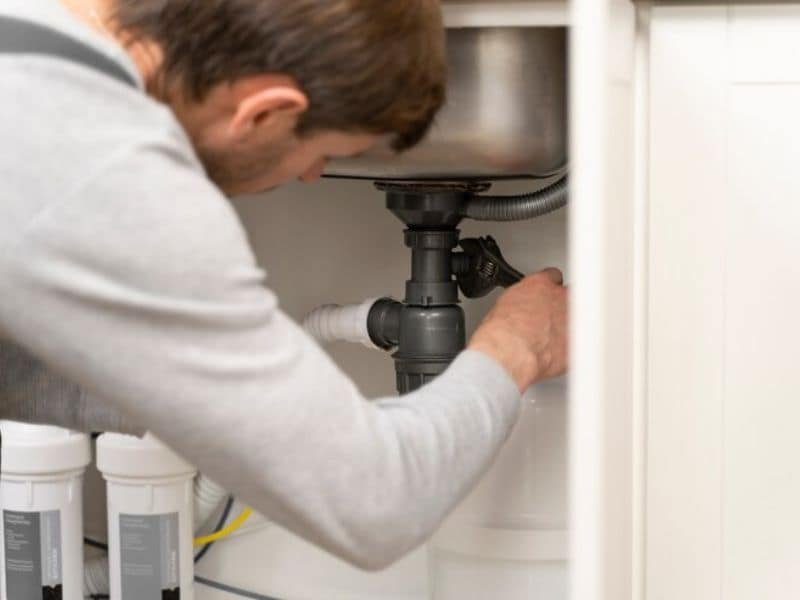
A double sink is one of the most practical upgrades you can make in your kitchen or bathroom. It allows two people to work side by side, keeps dirty dishes separate from clean ones, and adds a touch of convenience to your daily routine. But while the concept seems simple, plumbing a double sink can get tricky if you’re not familiar with the right fittings, pipe alignments, and venting requirements.
The good news? With the right tools, materials, and a bit of guidance, you can handle this project yourself. This comprehensive guide walks you through every step of plumbing a double sink from planning the layout to testing for leaks so you can complete the job confidently and safely. Lets deep dive into “How to Plumb a Double Sink: Step by Step”
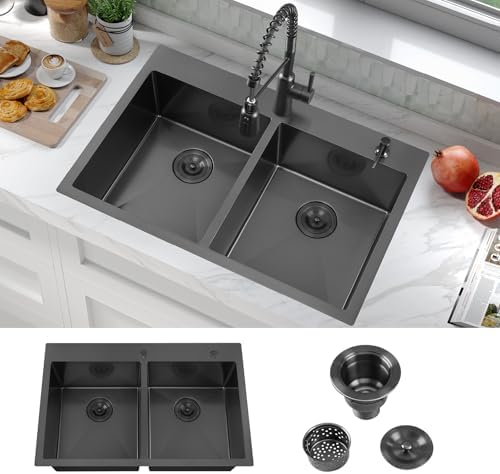
- 33 Inch double bowls drop in kitchen sink: 33″ L x 22″ W (front-to-back) x 9″, 3.0mm edge plate and 18 Gauge bowl stainl…
- Nano black mini bead embossed finish prevent scratches during daily use ,prevent oil stains and floating rust from remai…
- Nano black mini bead embossed stainless steel finish ensures that it is highly resistant to dirt and grime,easy to clean…
Understanding the Basics of Double Sink Plumbing
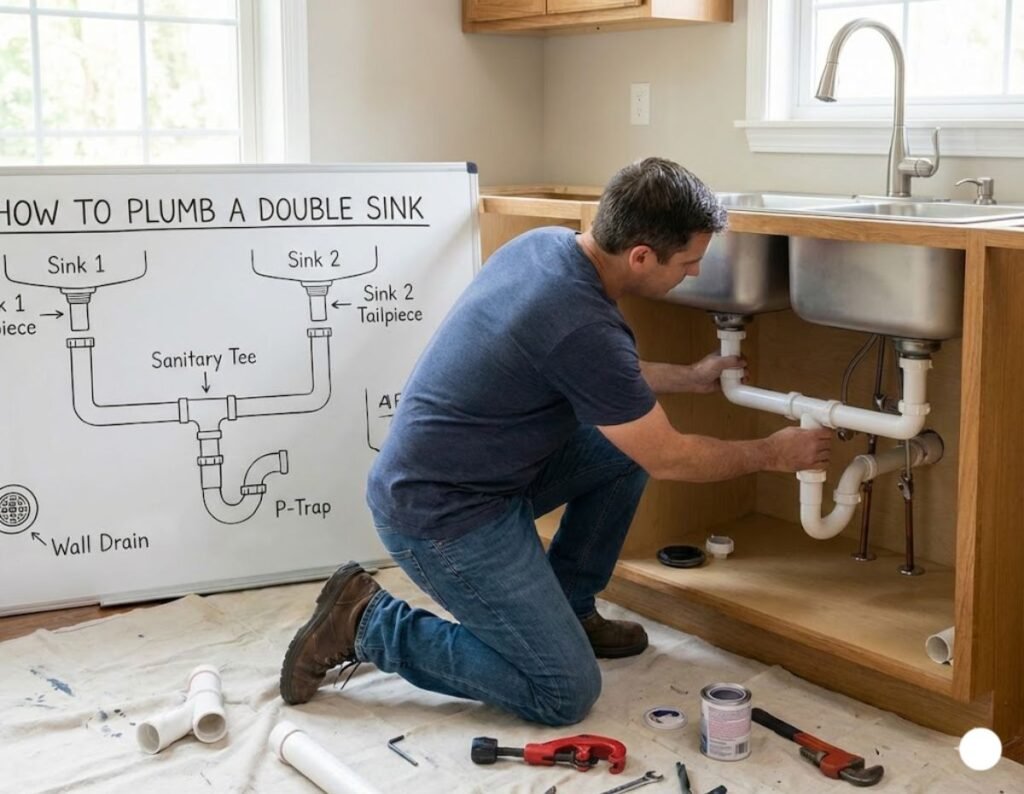
A double sink consists of two basins connected to a single drain system. Each basin has its own drain assembly, but they merge into one pipe before connecting to the home’s main drain line.
The key components include:
- Drain assemblies: Connect each sink bowl to the waste pipes.
- P-trap: Holds water to prevent sewer gases from entering your home.
- T-fitting or Y-fitting: Joins the two sink drains into one outlet.
- Vent pipe: Allows air to flow, preventing suction and slow drainage.
Unlike a single sink, double sinks require precise alignment and correct fittings to ensure smooth drainage from both sides.
Tools and Materials You’ll Need
Before starting, gather all your tools and supplies. Here’s a checklist to make sure you have everything:
Tools:
- Adjustable wrench. See Wrench & Price
- Pipe wrench. See Wrench & Price
- Hacksaw or PVC cutter. See Product & Price
- Plumber’s tape (Teflon tape). See Tape & Price
- Bucket and rags
- Level. See Level & Price
- Screwdriver
- Measuring tape
Materials:
- PVC or ABS drain pipes (1 ½ inch diameter). See Product & Price
- T-fitting or Y-connector. See Product & Price
- P-trap kit. See Product & Price
- Drain assemblies for both sinks. See Product & price
- Slip-joint nuts and washers
- Silicone sealant or plumber’s putty. See Product & Price
- Shut-off valves and flexible supply lines. See Product & Price
Having all the materials ready prevents unnecessary trips to the hardware store mid-project.
READ MORE: How to Install Kitchen Sink Plumbing
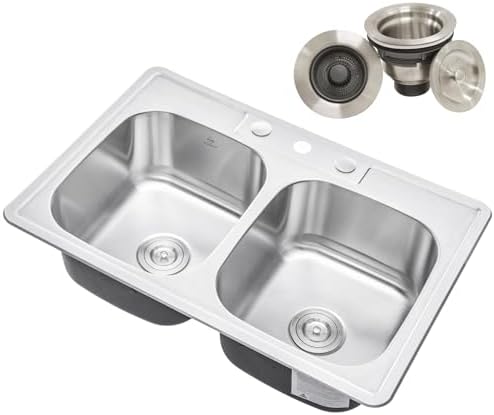
- [Finest Materials] The sink is crafted from high quality premium 18 gauge T304 stainless steel, which is highly resistan…
- [What Will be Included] The package will come with a sink and a deluxe lift-out basket strainer. The basket strainer hel…
- [Retrofit to Most Existing Cabinet] Top mount rim design allow the sink to sit on top of the countertop, and this design…
Planning the Layout
Planning is critical for a smooth installation. Start by measuring the distance between the two sink drains and the wall outlet. Typically, both sink drains should be level and aligned horizontally to ensure proper flow.
Key points to consider:
- The center drain should be directly above the P-trap.
- Allow enough space for both drain pipes to slope slightly downward toward the wall.
- Confirm that the vent connection is accessible and correctly positioned.
It’s helpful to draw a quick sketch of your setup before cutting or assembling any pipes. This step ensures all components fit together neatly and function properly.
Understanding the Drain System
The drain system in a double sink works by channeling wastewater from each basin into a shared line. The most common configuration uses a T-fitting or sanitary tee to merge the two drains into one pipe.
Here’s how it works:
- Each sink has its own drainpipe and trap arm.
- Both trap arms meet at a T-fitting located below the sinks.
- The combined pipe leads to the home’s main drain through a P-trap.
- The vent pipe (usually vertical) connects nearby to allow airflow.
This system prevents suction and ensures smooth drainage from both basins.
Setting Up the Supply Lines
The supply lines deliver hot and cold water to each faucet. You’ll typically find two shut-off valves under the sink one for hot water and one for cold.
Follow these steps:
- Attach flexible supply lines from each valve to the corresponding faucet inlet.
- Use plumber’s tape on threaded connections for a watertight seal.
- Make sure the lines are not twisted or overly tight.
If you’re installing a new sink, it’s wise to replace old valves to avoid future leaks.
Installing the Sink Basin
Before plumbing begins, the sink itself must be properly mounted.
- For drop-in sinks, apply a bead of silicone sealant around the edge before placing it into the countertop cutout.
- For undermount sinks, secure brackets beneath the counter and seal the edges with silicone.
Tighten the mounting clips evenly, ensuring the sink sits flat and secure. Wipe away any excess sealant for a clean finish.

- STAINLESS STEEL KITCHEN SINK with universal design and sweeping rounded corners that resist build-up for easy cleaning –…
- EXTERNAL DIMS: 32 1/4 in. L x 18 7/8 in. W x 9 in. D – BOWL DIMS (Both Bowls): 14 1/2 in. L x 16 7/8 in. W x 8 5/8 in. –…
- UNDERMOUNT SINK INSTALLATION creates a seamless transition from sink to countertop and simplifies cleanup by allowing yo…
READ MORE: Fix Clogged Kitchen Sink
Connecting the Drain Assembly
Now comes the hands-on part attaching the drain system.
- Insert the drain flange into each sink’s drain hole using plumber’s putty to seal it.
- From underneath, attach the rubber gasket and locknut to secure it.
- Connect the tailpiece (the straight pipe under the drain) to each flange.
At this stage, both sinks should have drain assemblies ready to connect to the waste arm or T-fitting.
Installing the Waste Arm and T-Fitting
The waste arm connects both sink drains to a common outlet.
Steps:
- Cut and dry-fit PVC pipes from each tailpiece to the T-fitting.
- Adjust the height and alignment so that both sides connect evenly.
- Use slip-joint nuts and washers for easy adjustment.
- Once everything fits perfectly, tighten all connections securely but not excessively.
If the sinks are at different heights, use a Y-fitting instead of a T to maintain good drainage flow.
Installing the P-Trap
The P-trap is essential it traps water to block sewer gases from entering your home.
Here’s how to install it:
- Attach the curved trap bend to the waste arm from the T-fitting.
- Connect the other end to the drain stub-out from the wall.
- Use compression nuts and washers to secure the joints.
- Check that the trap forms a proper “P” shape, with no sharp angles.
Make sure the trap’s water level is stable and that it aligns properly with the outlet pipe.
Connecting the Vent Pipe
A vent pipe maintains airflow in your drainage system, preventing vacuum pressure that slows water flow.
If your double sink is replacing a single one, you might already have a vent line in place. If not, tie the drain line into an existing vent stack or use an air admittance valve (AAV) if local codes allow.
Always ensure the vent connection sits above the P-trap to prevent backflow.
Testing for Leaks
Before declaring victory, test your system:
- Plug both drains and fill the sinks with water.
- Release the water simultaneously and check for leaks at each joint.
- Tighten connections or reseal any dripping areas.
Also, look for slow drainage this may indicate improper slope or venting issues.
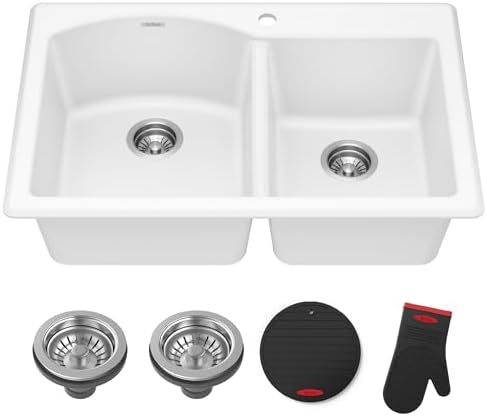
- WHITE GRANITE SINK offers a clean look and pairs with trending gold faucet or black faucet finish; Dims: 33 in L x 22 in…
- KIT INCLUDES white kitchen sink, stainless steel drain w/ strainer (x2), silicone mitt and trivet, hardware, cut-out tem…
- GRANITE KITCHEN SINK made from advanced quartz composite material w/ the look of natural granite; quartz composite sink …
Troubleshooting Common Double Sink Issues
Even a well-installed system can encounter problems over time.
- Slow Drainage: Often caused by clogs in the shared pipe. Use a plunger or drain cleaner to clear it.
- Gurgling Sounds: Usually a venting issue check if the vent pipe or AAV is functioning properly.
- Water Backing Up in the Other Sink: The common drain line may be partially blocked.
- Leaks at Joints: Tighten slip nuts or replace worn-out washers.
Regular maintenance can prevent most of these issues.
READ MORE: Kitchen Sink Draining Very Slowly
DIY vs Professional Installation
Installing a double sink is manageable for confident DIYers familiar with plumbing basics. However, you should call a licensed plumber if:
- You’re adding a new sink where no drain line exists.
- The venting needs modification.
- You notice persistent leaks after installation.
A professional ensures compliance with plumbing codes and long-term reliability.
Maintenance Tips for Double Sinks
Once installed, keep your double sink running smoothly with these simple practices:
- Avoid pouring grease or oil down the drain.
- Use strainers to catch food particles.
- Flush with hot water weekly to clear soap and residue.
- Check connections under the sink periodically for leaks.
- Clean traps occasionally to remove buildup.
Preventive maintenance ensures a long-lasting, trouble-free plumbing system.
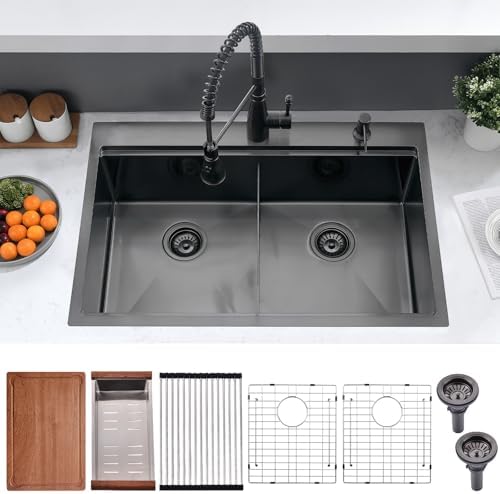
- Durability Material: Crafted from high-grade black stainless steel, this kitchen sink black resists scratches, rust, and…
- Practicality Function: This double bowl kitchen sinks 50/50 design lets you wash dishes and prep food separately. As a w…
- Ease of Installation: A perfect drop in kitchen sink double bowl, this 33×22 drop in kitchen sink fits most standard cou…
Conclusion
Plumbing a double sink might seem intimidating, but with patience and the right approach, it’s a task most homeowners can handle. Understanding the flow system, planning your layout, and assembling components carefully are key to success. Whether you’re upgrading your kitchen for convenience or remodeling your bathroom, a well-installed double sink adds both functionality and value to your home.
So grab your tools, follow these steps, and turn your plumbing project into a successful DIY achievement!
FAQs
Do I need a separate P-trap for each sink?
No. Both basins can share a single P-trap as long as the connection is properly aligned using a T-fitting.
Can I connect a dishwasher to a double sink drain?
Yes. You can connect the dishwasher’s drain hose to one side of the double sink’s tailpiece with a branch fitting.
How do I fix slow drainage in a double sink?
Try plunging each drain or cleaning the P-trap. If the issue persists, check for clogs in the shared pipe.
Is venting always required?
Yes, proper venting prevents suction and slow drainage. If a wall vent isn’t available, install an air admittance valve.
What pipe size should I use for a double sink?
A 1½-inch PVC pipe is standard for most kitchen and bathroom double sink installations.