A slow sink or recurring toilet backup is more than an annoyance; it’s a household hazard that can damage floors, invite pests, and turn small repairs into expensive emergencies. Whether you’re facing a stubborn kitchen clog, a bathtub that drains like molasses, or the dreaded multiple-fixture backup that signals a mainline issue, understanding how drains are cleaned and how much it should cost saves you time, money, and stress.
This guide explains the methods plumbers use (from a hand auger to hydro-jetting and camera inspection), gives clear price ranges so you know what to expect, and walks you through when a DIY attempt is reasonable and when to get a licensed pro on the phone. I’ll also show you a comparison table with typical costs and trusted source notes so you can quickly compare options, plus prevention tips to stop clogs from coming back.
What causes clogs?
Clogs form when materials that don’t belong in pipes accumulate and bind together. The common culprits differ by fixture:
- Kitchen sinks / garbage disposals: grease build-up, coffee grounds, food scraps that slip past the disposal. Over time grease forms a sticky layer that traps solids and narrows pipe diameter.
- Bathroom drains / tubs / showers: hair, soap scum, body oils, small objects (toothpaste caps), and mineral scale in hard-water areas.
- Toilets: non-flushable items (wipes, feminine products), large waste, or repeated attempts to flush problematic items.
- Laundry drains: lint and fabric fibers that clump, sometimes mixed with detergent residue.
- Main sewer line: tree root intrusion, collapses or bellied pipe sections, grease and long-term sediment buildup problems here show as backups in multiple fixtures.
Signs a clog is minor vs serious
- Minor (DIY-friendly): single fixture slow draining, gurgling with isolated sink, slow drain that responds to plunging.
- Serious (call a pro): multiple fixtures backing up (e.g., tub + toilet), sewage smell, sewage backup, toilets bubbling when another fixture runs, persistent recurring clogs, or standing water that won’t move after plunging.
Understanding which fixture shows trouble helps you choose the right method: sink-trap removal or hand snake for simple branch-clogs; camera inspection and hydro-jetting for mainline or recurring problems.
READ MORE: How Much Does a Plumber Cost to Unclog a Drain?
Methods to Clear a Clogged Drain
Below are the usual methods you’ll encounter, how they work, invasiveness, typical use-cases, time, risk level, and how commonly pros use them.
Manual snaking (hand auger)
A hand auger (or “plumber’s snake”) is a flexible coiled cable with a hooked tip. For kitchen and bathroom branch lines you feed the cable into the drain and crank it to break up and pull out the clog.
- Typical time: 10–45 minutes for most household clogs.
- Risk level: Low when used properly (avoid forcing cables into fragile fixtures).
- Use-case: Hair, soap, small debris, and items stuck near the trap.
- How often pros use it: Very common for quick branch-line jobs and first-line mechanical clearing.
Typical cost (retail): $14–$179 for hand augers depending on length/brand (sources: Lowe’s, The Home Depot; accessed February 2026).
Motorized auger / plumber’s snake (pro)
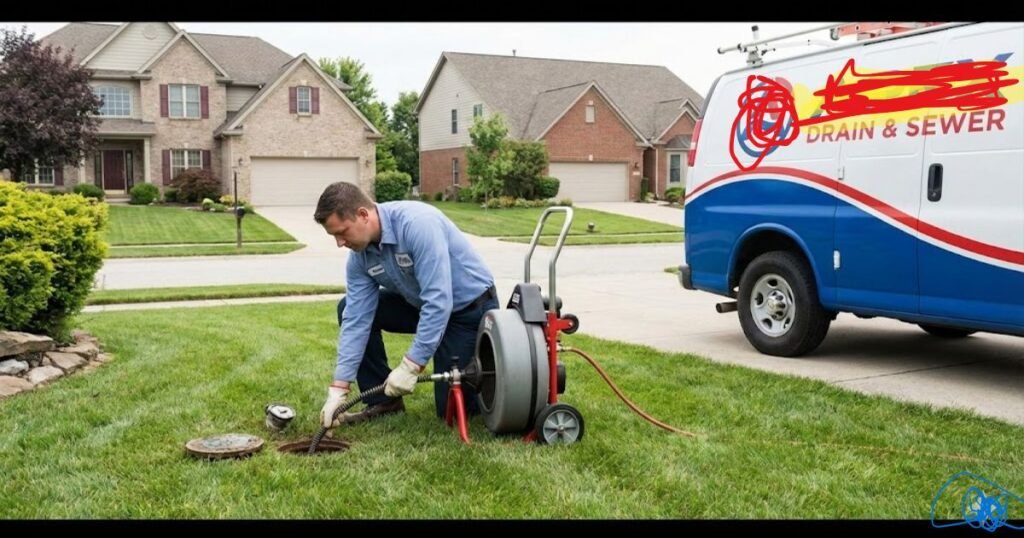
This is a powered machine (tractor-style drum or walk-behind) with a rotating cable and cutters; pros use it to reach farther into branch lines and sometimes mainlines.
- Typical time: 30 minutes–2 hours (depends on access and clog severity).
- Risk level: Moderate — powerful cutting heads can damage old or brittle pipes when misused.
- Use-case: Stubborn branch clogs, tree roots (root cutting heads), branch-to-main clogs.
- How often pros use it: A standard tool in most plumber trucks for service calls.
Typical cost (service): Expect a service call for snaking to run about $136–$450 depending on region and complexity (sources: HomeAdvisor, local plumbing pages; accessed February 2026).
Hydro-jetting (high-pressure water)
Hydro-jetting uses a high-pressure hose with special nozzles to blast water at 1,500–4,000 psi (varies) through the pipe, removing grease, scale, roots, and sludge.
- Typical time: 1–3 hours on residential jobs (including prep and inspection).
- Risk level: Moderate-to-high for older or damaged pipes plumbers typically run a camera first to confirm pipe condition.
- Use-case: Severe grease build-up, recurring clogs, root intrusion, mainline cleaning, preventative maintenance for older systems.
- How often pros use it: Increasingly common as a first-choice for mainline cleaning after inspection.
Typical cost (service): As of February 2026, hydro-jetting typically runs about $350–$600 for many residential jobs, with severe jobs higher. (sources: HomeAdvisor, Angi; accessed February 2026).
Chemical/caustic drain cleaners (store-bought)
These are lye- or acid-based products (e.g., sodium hydroxide, sulfuric acid) sold to consumers. They dissolve organic material but can be dangerous and may damage certain pipe materials.
- Typical time: Works within minutes to hours.
- Risk level: High if used incorrectly — skin/eye burns, toxic fumes, and they can cause damage if the pipe is cracked or if mixed with other chemicals.
- Use-case: Quick emergency dissolving of organic clogs in metal or PVC pipes (use sparingly). Many plumbers discourage repeated use.
Typical cost (retail): Common consumer brands range roughly $6–$20 per bottle (sources: The Home Depot, Lowe’s; accessed February 2026).
Enzyme/biological cleaners
These use bacteria and enzymes to slowly digest organic matter. They’re safer for pipes and septic systems but require time (hours to days) and regular use for best effect.
- Typical time: Several hours up to days depending on product and clog.
- Risk level: Low; good for maintenance rather than emergency unclogs.
- Use-case: Preventative maintenance, greasy kitchen lines, septic-safe treatments.
Typical cost (retail): Enzymatic treatments and kits range from about $25–$75 for consumer packages; commercial/septic kits can be more (sources: Bio-Clean, news coverage listing product prices; accessed February 2026).
Camera inspection + targeted repair
A small video camera on a flexible cable is sent through the pipe to identify the exact location and cause of a clog or defect before deciding the best fix.
- Typical time: 30 minutes–2 hours including prep and review.
- Risk level: Very low (diagnostic).
- Use-case: Locating mainline issues, roots, breaks, offsets, bellies, and verifying jetting outcomes.
Typical cost (service): Camera inspections commonly run between about $270 and $1,730 with many estimates clustering around $250–$1,000 for residential jobs. (sources: Angi, HomeAdvisor; accessed February 2026).
Comparison table of Drain Cleaning Service
Below is a side-by-side comparison to help you quickly compare options. All price ranges are date-stamped and sourced.
| Service / Product | Best for | Typical cost (US) (sources; accessed Feb 2026) | Pros | Cons | Recommended frequency |
| DIY drain snake (hand auger) | Small branch clogs (sink, tub) | $14–$179 (sources: Lowe’s, The Home Depot; accessed Feb 2026). | Cheap, immediate, reusable | Limited reach, may not clear mainline | As-needed |
| Store-bought chemical cleaner | Quick emergency dissolve of organic clogs | ~$6–$20 per bottle (sources: The Home Depot, Lowe’s; accessed Feb 2026). | Fast, widely available | Hazardous, can harm pipes/septic | Occasional (sparingly) |
| Enzyme cleaner | Preventative maintenance, septic-safe cleaning | ~$25–$75 retail for consumer kits (sources: Bio-Clean, news coverage; accessed Feb 2026). | Safe for pipes/septic, good long-term | Slow acting; not for severe clogs | Monthly or quarterly |
| Motorized auger (pro) | Stubborn branch clogs, root cutting | Typical service: ~$136–$450 (sources: HomeAdvisor, local plumbing pages; accessed Feb 2026). | Very effective for many clogs | Can damage fragile pipes; costlier than DIY | As-needed |
| Hydro-jetting (pro) | Severe grease, roots, mainline cleaning | $350–$600 typical; can be higher for complex jobs (sources: HomeAdvisor, Angi; accessed Feb 2026). | Deep clean, long-lasting | Needs camera pre-check; can harm older pipes | 1–3 years for high-use homes |
| Camera inspection | Diagnose mainline issues and confirm results | $270–$1,730; avg ~$1,000 for many jobs (sources: Angi, HomeAdvisor; accessed Feb 2026). | Accurate diagnosis, non-invasive | Adds cost but avoids guesswork | Yearly if issues recur |
READ MORE: How Much Does a Plumber Charge to Unclog a Toilet?
Real Cost of Drain Cleaning Service
The cost of a residential drain cleaning service is not arbitrary; it is a reflection of labor, specialized equipment depreciation, and the complexity of the plumbing architecture.
Professional Service Pricing (National Ranges)
As of late 2025 and into 2026, the following price ranges have been established across the United States:
- Standard Single Drain (Sink/Tub/Toilet): $110 – $275 (Sources: HomeAdvisor, HomeGuide; accessed Jan 2026).
- Main Sewer Line Snaking: $175 – $800 (Sources: Angi, HomeAdvisor; accessed Jan 2026).
- Professional Hydro-Jetting: $350 – $900 for standard residential runs; up to $2,000 for severe industrial-scale blockages (Sources: Angi, Western Rooter; accessed Jan 2026).
- Diagnostic Camera Inspection: $125 – $500 (Sources: HomeGuide, Fuse Service; accessed Jan 2026).
Retail Components and DIY Costs
For homeowners attempting minor repairs, current retail pricing for replacement components is as follows:
- Chrome/Brass P-trap with Cleanout (Bathroom): $49.53 – $64.79 (Source: Home Depot, SKU Internet # 329943376; accessed Jan 2026).
- Enzymatic Drain and Grease Trap Cleaner (1 Gallon): $25.47 (Source: Home Depot, Green Gobbler; accessed Jan 2026).
- Main Line Opener Chemical (1 Gallon): $18.82 (Source: Home Depot, Instant Power; accessed Jan 2026).
Regional and Seasonal Price Drivers
Geography plays a critical role in service pricing. In the Northeast and Midwest, the necessity of deep-burying sewer lines to avoid the frost line can make repairs more expensive if excavation is required. Conversely, in urban centers with high competition but higher overhead, such as San Francisco or New York, labor rates may reach the upper end of the $45–$200 hourly range. Emergency services those requested after 6:00 PM or on weekends routinely see markups of 25% to 100% due to the scarcity of available licensed technicians.
The Definitive Comparison Table for Drain Clearing Solutions
| Service / Product | Best For | Typical Cost (US) | Pros | Cons | Recommended Frequency |
| DIY Hand Snake | Local hair/food clogs in P-traps | $10–$80 (Source: Home Depot, 2026) | Immediate use; no toxic fumes | Limited reach; potential to scratch porcelain | As needed for isolated clogs |
| Store-bought Chemical Cleaner | Light organic buildup (hair/scum) | $5–$30 (Source: Lowe’s, 2026) | Lowest cost; widely available | Corrosive to metal; toxic if it splashes | Not recommended for recurring issues |
| Enzyme Cleaner | Preventative grease/FOG control | $12–$45 (Source: Home Depot, 2026) | Safe for septic; eco-friendly | Slow-acting; cannot clear total blockages | Monthly for maintenance |
| Pro Motorized Auger | Solid clogs; toilet backups; roots | $100–$275 (Source: HomeAdvisor, 2026) | High torque; retrieves objects | Does not clean pipe walls; temporary for grease | When DIY methods fail |
| Pro Hydro-Jetting | Heavy grease; deep roots; total scale | $350–$900 (Source: Angi, 2026) | 360-degree clean; longest value | Higher cost; can damage weak pipes | Every 1–3 years (older homes) |
| Pro Camera Inspection | Diagnostic clarity; proof of repair | $125–$500 (Source: HomeGuide, 2026) | Eliminates guesswork; identifies cracks | Costly if no cleaning follows | Prior to any major mainline work |
READ MORE: Fix Clogged Kitchen Sink
When to DIY vs When to call a licensed plumber for Clogged Drain Cleaning Service
Use this checklist-style guidance to decide:
Try DIY first (safe, low-cost attempts):
- Plunging (toilet, sink): 5–15 minutes with a good plunger.
- Remove and clean the P-trap under a sink (tighten with a bucket under it).
- Hand-snake a visible sink/tub drain (short auger).
- Use enzyme cleaners as a proactive maintenance step (not for emergencies).
Red flags — call a licensed plumber immediately:
- Multiple fixtures backing up simultaneously (toilet + tub + sink).
- Raw sewage in any fixture or yard drain.
- Strong sewage odor inside or outside the house.
- Persisting clogs after a snake, or repeated clogs in short succession.
- Visible signs of mainline trouble: lawn sinkholes, unusually lush patches (from leaks), or slow drains across the home.
- You suspect tree-root intrusion, collapsed pipe, or damaged old cast-iron lines.
Safety tips for DIYers
- Never mix chemical drain cleaners (dangerous reactions).
- Wear eye and skin protection if using caustic products.
- If you smell gases or strong fumes, ventilate and leave the area.
- Don’t use a motorized auger unless you have experience improperly used, it can damage traps and fixtures.
When a plumber is the right call
- If your first-line DIY fixes fail, schedule a licensed plumber who offers camera inspection before invasive work. Many pros will perform an inspection then recommend snaking, hydro-jetting, or targeted repairs depending on what the camera shows. This avoids unnecessary expense and prevents damage to fragile plumbing.
How to choose a drain cleaning service
Hiring a plumber should be viewed as an investment in the home’s infrastructure. Homeowners should utilize the following “hiring checklist” to ensure value and competence.
Licensing and Credentials
A reputable service should be led by a Master Plumber. In many states, a Master Plumber must have held a Journeyman license for at least 2 years and completed over 3,750 hours of supervised work. Licensing ensures that the technician understands the Uniform Plumbing Code (UPC) or the International Plumbing Code (IPC), protecting the homeowner from illegal installations that could void insurance claims.
The “Quote Trap”
Homeowners are strongly advised against companies that provide firm pricing over the phone. Without a visual inspection, a plumber cannot know the pipe material, the location of the clog, or the ease of access. Accurate quotes require an in-person assessment, and homeowners should be wary of “bait-and-switch” pricing where a low phone quote dramatically increases once the technician is on-site.
Sample Questions for the Service Provider
- “Are you a licensed Master or Journeyman plumber in this state?”
- “Do your drain cleaning quotes include a post-service camera inspection?”.
- “What PSI does your hydro-jetting equipment use, and do you adjust it for older pipes?”.
- “Do you offer an itemized estimate that includes potential disposal or cleanout fees?”.
- “Is there a warranty on the cleaning if the clog returns within 30 or 60 days?”.
Prevention & maintenance plan for avoid clogging
The most cost-effective residential drain cleaning service is the one that is never needed. A proactive maintenance schedule can prevent the catastrophic failures that lead to emergency calls.
Seasonal Maintenance Schedule
- Spring: Inspect outdoor faucets and irrigation systems for winter freeze damage. Check gutters and downspouts to ensure water is being diverted away from the foundation and sewer cleanouts.
- Summer: Test the sump pump, as heavy summer rains can overwhelm the system. Check basement baseboards for signs of moisture or sewer line “seeping”.
- Fall: Conduct a final gutter cleaning after the leaves have dropped to prevent debris from entering the underground drainage tiles. Winterize exterior pipes and shut off outside water supplies.
- Winter: Monitor exposed pipes in crawlspaces and attics. Ensure that the attic is well-insulated to prevent ice dams that can back up into the drainage vents.
Daily and Monthly Best Practices
- The “Three Ps”: Only flush Pee, Poop, and (toilet) Paper. Never flush wipes, cotton swabs, or feminine hygiene products.
- FOG Management: Pour cooking grease into a jar, let it solidify, and throw it in the trash. Never rinse grease down the sink with hot water, as it will simply solidify further down the line.
- Hair Traps: Use a fine-mesh strainer in every shower and tub. Cleaning a strainer takes 30 seconds; clearing a 10-foot hair clog takes a professional an hour.
- Monthly Boiling Water Flush: Once a month, pour a large pot of near-boiling water down the kitchen sink to help melt and move any “soft” grease deposits before they harden.
READ MORE: What Causes Low Water Pressure in One Faucet — Easy Fixes, Costs & When to Call a Plumber
Local considerations & regional freeze / climate notes
The challenges facing a homeowner’s plumbing are often dictated by the local environment and the age of the municipality.
The Mid-Atlantic and Southeast
These regions are characterized by mature trees and high clay content in the soil. The expansion of clay soil during wet months can exert immense pressure on buried pipes, leading to “joint offsets” that invite tree roots. In states like Georgia and Florida, root intrusion is the primary cause of mainline failure.
The Northeast and Midwest
In older cities like Boston, Chicago, or Minneapolis, the aging infrastructure consists largely of cast iron and clay. These materials are susceptible to internal scaling and corrosion over decades. Furthermore, the extreme freeze-thaw cycles can cause the ground to shift, leading to pipe shears.
The Western United States
In more modern developments, PVC and ABS are the standard. While these materials are superior in their resistance to corrosion, they are lightweight and can be easily crushed by the roots of fast-growing desert trees or the shifting of seismic-prone soil.
Cost-saving tips & financing options
- Bundle maintenance: Ask plumbers about membership or annual maintenance plans lower per-service rates and priority scheduling are common.
- Coupons & promotions: Local companies sometimes run seasonal discounts (watch local ads and their social pages).
- Second opinions for big jobs: Camera inspection is inexpensive relative to full excavation, getting a video and then shop written bids.
- Home warranty / service contracts: Some home warranty plans cover clogged mainlines or offer partial reimbursement read terms carefully.
- Financing: For large repairs (trenchless pipe lining / replacement), many plumbing companies partner with financing firms offering 0% for short terms or low monthly payments.
5 FAQs
Q1: How much does a residential drain cleaning service cost?
A1: Costs vary by method and severity. Simple snaking often runs from roughly $136–$450 for a professional service, while hydro-jetting typically ranges $350–$600 for many residential jobs. Camera inspections are commonly between $270 and $1,730 depending on pipe length and complexity. DIY options (hand auger) cost $14–$179 retail; chemical cleaners are $6–$20 per bottle. Regional labor, emergency hours, and pipe access can raise prices. (sources: HomeAdvisor, Angi, retailer product pages; accessed Feb 2026).
Q2: Is hydro-jetting safe for my house?
A2: Hydro-jetting is safe for most modern plumbing and is especially effective against grease and roots, but it can damage very old or heavily deteriorated pipes (cast iron or clay). Reputable plumbers run a camera inspection first to confirm pipe integrity before jetting. If the camera shows cracks or severe corrosion, they’ll recommend an alternative.
Q3: Can I use chemical drain cleaners regularly?
A3: Regular use of caustic chemical cleaners is not recommended. While they may clear small organic clogs, repeated use can corrode or weaken pipes and damage septic systems. Safer long-term options include enzyme-based treatments and mechanical clearing for persistent clogs. If you must use a chemical cleaner, follow label precautions and avoid mixing products.
Q4: When should I get a camera inspection?
A4: Get a camera inspection if you have recurring clogs, multiple fixtures backing up, suspected root intrusion, or before any major excavation/repair. Camera inspections identify exact problem location and help you avoid guesswork and costly, unnecessary dig-ups. Many plumbers recommend a camera check before hydro-jetting on older systems. (sources: Angi, HomeAdvisor; accessed Feb 2026).
Q5: How can I prevent clogs long-term?
A5: Prevent grease down the drain, use sink strainers and hair traps, perform monthly enzyme treatments, and flush kitchen lines with hot water periodically. Schedule professional cleaning or camera inspections every 1–3 years if your household generates heavy grease or you have older pipes or many trees on the property. Regular maintenance is cheaper than emergency excavation.
Conclusion
Clogs are a normal part of homeownership but they don’t have to be a mystery. Use this guide to match the problem to the right method (and cost): plunger or hand snake for quick fixes, camera-first diagnostics for recurring or multi-fixture problems, and hydro-jetting for severe grease or root issues. When in doubt, get a camera inspection it’s usually the most cost-effective way to avoid unnecessary repairs.
Author Profile: Robert Milles, Licensed Master Plumber
Robert Milles is a Master Plumber with over 12 years of experience in residential drainage systems across the United States. He has served as a lead technician for regional infrastructure projects and is a contributing editor for several home services publications. His expertise focuses on trenchless pipe restoration and advanced hydraulic cleaning technologies.
Disclosure: This report provides average cost data and technical guidance for informational purposes. Local prices and conditions may vary; always consult with a licensed professional in your specific jurisdiction.

