You’ve timed it: a wash cycle that used to take minutes now drags as the machine “sips” water. Slow fills mean more laundry backlog, damp smell, and wasted time exactly the kind of inconvenience nobody needs. The good news: a slow-filling washer is usually a diagnosable, often inexpensive problem. This article walks U.S. homeowners through what a washer needs to fill correctly, the most common causes for slow fills, safe step-by-step tests you can do, DIY fixes you can reasonably try, what problems require a pro, and realistic cost ranges so you’re not surprised when the bill arrives.
Read this as if a friendly neighborhood appliance tech is at your side: plain language, clear symptom checks, and trusted cost sources so you can decide whether to fix or replace. Stick around for a short, printable troubleshooting checklist at the end. Lets deep dive into “Washing Machine Takes Too Long to Fill? Causes & DIY fixes”
READ MORE: How to Identify a Plumbing Vent Pipe Blockage by Sound
Washing Machine Filling Slowly: How a Washer Fills
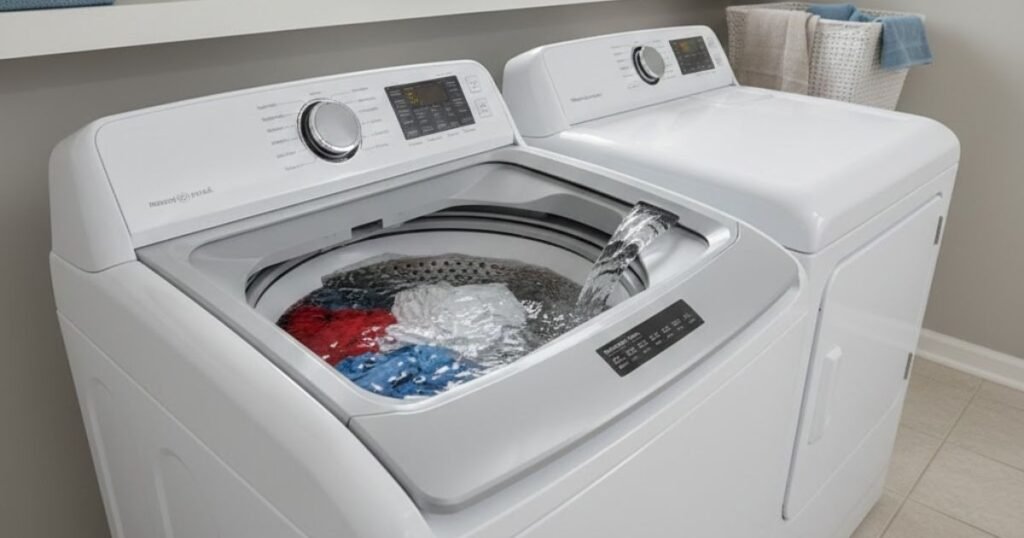
Most modern washers have two water inlets (hot and cold) that feed into a central water inlet valve. When the control board calls for water, it sends a small electrical signal to the valve’s solenoids and the valve opens. Water travels from the house supply, through the supply hoses, through fine inlet screens on the valve (to trap debris), and into the tub.
A pressure switch (aka water level sensor) or an electronic sensor tells the washer how much water is in the drum. The control board coordinates the fill, then closes the valve when the set level is reached.
So a slow fill can mean anything that reduces water flow or prevents the valve, sensor, or controls from operating normally: low household water pressure, blocked hoses or screens, a faulty inlet valve, or an incorrect signal from the level sensor or control board. Simple checks (tap water flow, other fixtures, visible hose kinks) help narrow down the cause.
- NO. 1 WASHING MACHINE CLEANER TABLET*. *Whirlpool Corporation calculation based on US Whirlpool (Synd) database for the …
- HELPS POWER AWAY SMELLS created by odor causing bacteria, soap scum and stinky grime hiding deep inside the washing mach…
- TIME RELEASE TABLET. Affresh time release tablets are scientifically designed to deliver extended cleaning action throug…
READ MORE: How to Clean Lint From Washing Machine Drain Hose (Step-by-Step for U.S. Homeowners)
Washing Machine Takes Too Long to Fill? Causes & DIY fixes
A washing machine taking too long to fill with water is rarely the result of a single catastrophic failure but is often the culmination of environmental factors and component wear.
1. Clogged Inlet Filter Screens and Mineral Calcification
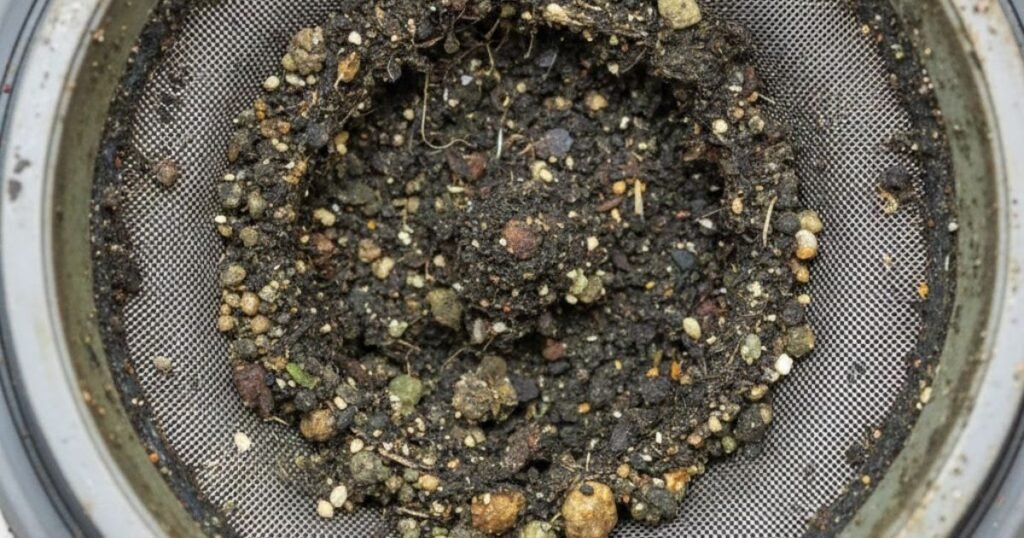
The most frequent cause of slow water intake in U.S. households is the accumulation of debris in the inlet valve’s filter screens. These screens are tiny mesh circles located inside the intake ports of the water inlet valve where the supply hoses connect. Their primary function is to catch sediment, sand, and rust before they can enter the delicate internal chambers of the machine.
Over time, these screens become obstructed. In areas with “hard water”—water containing high levels of dissolved calcium and magnesium—these minerals can calcify on the mesh, creating a hard, white crust that significantly restricts water flow. Homeowners often report that the machine makes a humming sound but very little water enters the drum, a classic symptom of a “starved” inlet valve.
2. Supply Hose Integrity and Path Obstructions
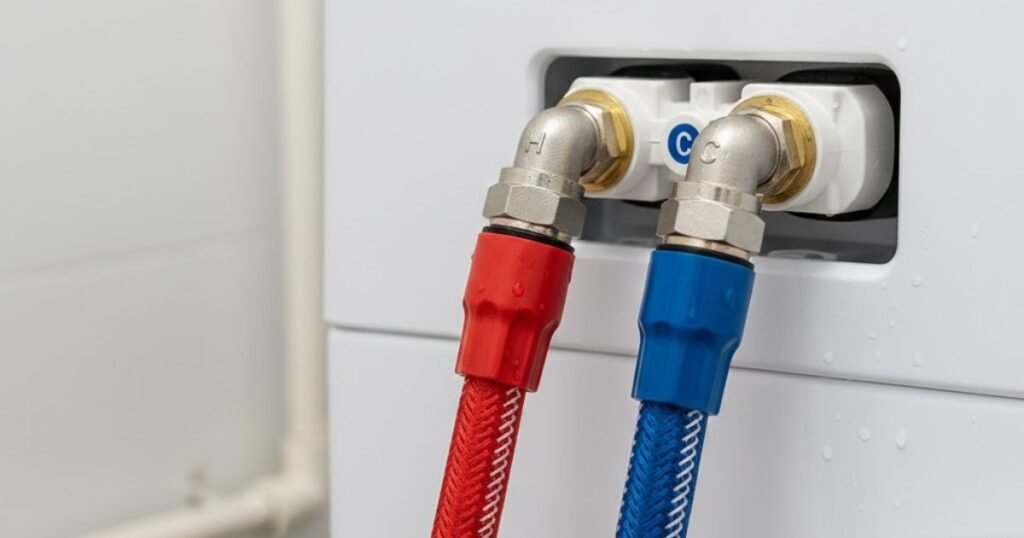
The physical path the water takes from the wall spigot to the machine is a common point of failure. Standard rubber supply hoses are flexible but prone to kinking if the washing machine is pushed too close to the wall. A kink acts as a manual throttle, restricting the flow of water and forcing the inlet valve to work harder to pull water into the machine.
Furthermore, the internal degradation of hoses can lead to slow fill issues. Over several years, the rubber lining of a hose can weaken, leading to internal collapsing or the shedding of rubber particles that then clog the downstream inlet screens. This is why many manufacturers recommend replacing supply hoses every five years.
Recommend “burst-proof” braided versions for better flow and safety. See below-

READ MORE: Best drain snake for home use — buyer’s guide for U.S. homeowners
3. Municipal and Household Water Pressure Variables
Residential washing machines are engineered to operate within a specific pressure range, typically between 20 and 116 PSI. If the household water pressure drops below 20 PSI, the inlet valve may not have enough force to fully open its internal diaphragm, resulting in a slow, struggling fill.
Several factors can lead to low water pressure washer performance:
- Peak Usage Hours: In many U.S. municipalities, water pressure drops during the early morning and early evening when neighbor-wide demand is highest.
- Faulty Pressure Reducing Valve (PRV): Many modern homes have a PRV on the main water line to protect plumbing from high-pressure spikes. If this valve fails, it can inadvertently throttle the entire home’s water supply.
- Water Main Breaks and Maintenance: Nearby construction or repairs to city water mains can introduce air into the lines, which causes sputtering and reduced flow until the system is flushed.
| Cause of Slow Fill | Common Symptoms | DIY Difficulty | Estimated U.S. Cost* |
| Low household water pressure | Slow fill across multiple fixtures; weak shower/tap flow | Easy (check other taps) | $0–$100 (if PRV adjustment) |
| Kinked/old supply hoses | No/slow fill; visible bend or bulge in hose | Very easy | $10–$40 (new hoses) |
| Clogged inlet screens | Valve clicks/hums but little water enters | Easy–moderate | $0–$20 (cleaning) |
| Faulty inlet (water) valve | No/very slow fill; valve leaks or hums | Moderate | $50–$200 (parts & labor) |
| Pressure switch/sensor issue | Erratic fill levels; cycle stops unexpectedly | Moderate–hard | $100–$300+ |
| Control board failure | Multiple cycle errors; no signal to valves | Hard (pro required) | $200–$600+ |
Note: Costs are based on 2025-2026 industry averages for parts and professional labor in the U.S.

- YOU WILL RECEIVE: Tide Washing Machine Cleaner powder packets, activating 20% faster than tablets, for 5 months of clean…
- ODOR ELIMINATOR: Tide Washing Machine Cleaner lifts away & eliminates odor causing residues and deposits with its specia…
- POWDER WORKS MORE EFFICIENTLY THAN TABLETS: Tide Washing Machine Cleaner is a powder that creates a cleaning action that…
READ MORE: How to Plumb a Washing Machine Drain
Washer Slow to Fill: Step-by-step homeowner troubleshooting
Safety first: Always unplug the washer and shut off the water at the wall valves before disconnecting hoses. If you’re unsure or electrical work is involved, call a pro.
Tools you’ll need (simple): adjustable wrench, bucket/towel, flashlight, screwdriver, small brush, stopwatch, basic pressure gauge (optional). Expect 10–60 minutes per check depending on comfort.
Sequence (recommended):
1. Verify house water at the tap (5–10 min).
Turn on the cold and hot taps closest to the washer (sink, laundry faucet). If both are weak, it’s a household water pressure problem. If only the washer is slow, continue.
2. Check other fixtures (5 min).
Turn on shower and kitchen sink. If multiple fixtures show low flow, call your plumber or water utility. If only the washer is slow, proceed.
3. Inspect hoses for kinks or age (5–10 min).
Pull washer forward and visually inspect hoses. Replace collapsed or bulging hoses. Stainless braided hoses cost roughly $12–$40.
4. Shut off water, disconnect hoses, inspect inlet screens (15–30 min).
Place towel and bucket under hose connections. Unscrew hoses from the washer, check the fine mesh screens in the valve and at the hose ends. Clean with a small brush and vinegar if mineral buildup is present. If screens are damaged, replace them.
5. Run a diagnostic / fill test (10–20 min).
Many washers have a diagnostic or service mode that runs a fill cycle check your owner’s manual or manufacturer’s quick-start instructions. Listen for valve clicks when the machine calls for water. If the valve clicks and you have low flow, it’s likely a plumbing pressure or clogged inlet screen issue. If the valve does not click, suspect the valve or control board.
6. Check for error codes (5 min).
If your washer displays errors, note the exact code and check the owner’s manual or manufacturer site. Some codes map directly to inlet valve or pressure sensor faults.
7. If you hear clicking but see no flow: double-check water shutoff valves (2 min).
Make sure the wall valves behind the washer are fully open.
If steps above fail: photograph error codes and steps you tried, and call a technician if the problem involves internal wiring, a leaking valve, or control board failure.
READ MORE: Why is my water bill so high but no visible leaks (Cause, Fix & Costs)
Washer Filling Slowly: DIY fixes
Here’s what you can safely try yourself:
- Replace supply hoses. Fast, cheap, and effective. Braided stainless hoses are inexpensive and reduce burst risk. (See retailer pricing above.)
- Clean inlet screens. Often solves slow fill after mineral deposits accumulate. Turn off water, remove hose, gently clean screens.
- Clear kinks & rearrange loads. Make sure heavy items are balanced and water can circulate.
- Reset the washer. Unplug for 1–5 minutes and restart to clear electronic glitches.
- Check wall valves. Ensure the water supply valves behind the washer are fully open.
When to stop and call a pro:
- If the inlet valve is suspected (electrically driven) and you don’t feel comfortable working around wiring and water.
- If you see leaks inside the cabinet or puddles when the machine should be empty.
- If diagnostic codes point to the control board or internal sensor and the machine is under warranty (don’t open it call the manufacturer).
Remember: DIY repairs can void warranties. If your washer is young and under warranty, check warranty terms before opening the cabinet.
What to expect on cost and process: Service call fees often run around $50–$150; hour labor rates typically $50–$150 depending on location. Diagnostic + part replacement (e.g., inlet valve) can add $100–$300+ depending on part and labor. If a control board is needed, expect higher costs (often $200–$500 or more). Sources with current repair-cost ranges: Angi, The Spruce, and ConsumerAffairs.
READ MORE: Why Does My Laundry Room Smell Like Sewage Gas?
Price snapshot: Washing machine repair cost
- Supply hoses (stainless braided): roughly $12–$37 per set at major retailers like Home Depot (example product listings).
- Water inlet valve (parts): typical OEM/aftermarket part prices commonly range $20–$75; some branded replacement assemblies or hard-to-find OEM pieces may cost more. RepairClinic lists inlet valves in the ~$20–$75 range.
- Pressure switch / sensor parts: many pressure switches are commonly available in the $30–$60 range for brand parts; appliance parts retailers show switches around $40–$55.
- Labor / service call & control board: average service calls and labor vary; expect a service/diagnostic fee of $50–$150 and repairs for control board or complex electronic work often $200–$500+ total depending on parts and labor.
- New washer (mid-range): retail prices for a new washer commonly sit around $700–$1,200 for many mainstream models (sales and promos vary).
(Prices vary by brand, model, local labor rates and promotions; these ranges were checked against appliance parts retailers and trade sites on Feb 20, 2026.)
READ MORE: How to Get Air Out of Plumbing Lines: A Simple Step by Step DIY Guide
FAQs
Why is my washing machine filling very slowly but water from my sink is fine?
Likely clogged inlet screens, a partially closed wall valve, or a failing inlet valve. Disconnect hoses to check screens first. If screens are clear, the inlet valve or internal sensor may be the issue.
How do I clean the inlet screens on my washer?
Turn off water and power, disconnect hoses, inspect the tiny mesh screens at the valve and hose ends, and gently clean with a brush or soak in vinegar to remove mineral buildup. Reinstall and test.
Can a pressure switch cause slow filling?
Yes — a clogged pressure-sensor hose or a failed pressure switch can cause erratic or slow fills. The part is inexpensive, but diagnosis and replacement can be trickier.
How much does it cost to replace an inlet valve?
Part prices usually range $20–$75; with labor expect the total to climb into the low hundreds depending on rates. Always get a few local quotes.
Should I replace the washer if it fills slowly?
Not immediately. If it’s a simple part (hoses, screens, valve) repair is cost-effective. Consider replacement when repair costs near half the price of a similar new washer or if the machine is 10–14+ years old.
Conclusion
Slow fills are usually fixable without replacing the whole machine. Try the simple checks first: verify house water, inspect hoses, clean inlet screens, and run a diagnostics/fill test. If the valve, sensor, or control board looks suspect, call a licensed appliance tech armed with the price ranges above you’ll be prepared. Save or print this article as your quick troubleshooting checklist and start with the low-cost, low-risk steps first.

