If you’ve ever watched a plumber fix a leak in minutes or tried a quick DIY plumbing repair yourself you may have heard the term SharkBite fittings. These small, brass push-to-connect fittings have changed the way many homeowners and professionals handle plumbing jobs, especially repairs and upgrades.
So, what are SharkBite fittings in plumbing, and why are they so popular in modern homes across the United States?
In this guide, I’ll explain everything in plain English, just like I would to a homeowner standing in their garage holding a leaky pipe. No confusing jargon, no sales talk just real-world plumbing advice based on experience.
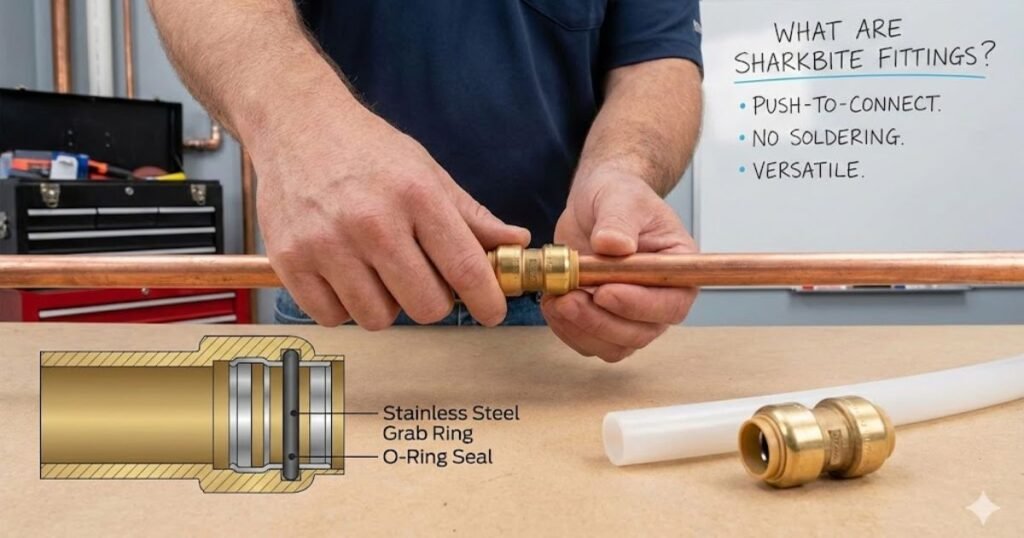
Why SharkBite Fittings Get So Much Attention
SharkBite fittings are popular because they make plumbing simpler. Instead of soldering copper pipes with a torch or wrestling with glue and cure times, these fittings let you connect pipes by simply pushing them together.
Homeowners usually hear about SharkBite fittings when:
- A pipe starts leaking unexpectedly
- They’re replacing a water heater or faucet
- They want a quick DIY plumbing solution
- A plumber suggests a faster repair option
They’re often marketed as “no tools, no solder, no stress” and in many situations, that reputation is well deserved.

What Are SharkBite Fittings in Plumbing?
A Simple Definition:
SharkBite fittings are a type of push-to-connect plumbing fittings designed to join pipes without the need for soldering, clamps, or glue. Think of them as the “plug-and-play” option in the plumbing world you just push the pipe in, and it locks securely.
That’s it. No flame. No cure time. No special training required.
How They Differ From Traditional Fittings
Traditional plumbing connections usually require:
- Soldering copper pipes with heat
- Crimping PEX fittings with special tools
- Gluing CPVC and waiting for it to cure
SharkBite plumbing fittings skip all of that. They’re designed to work with:
- Copper
- PEX
- CPVC
All using the same fitting. That flexibility alone is a big reason plumbers and DIYers keep them in their toolboxes.
READ MORE: How to Plumb a Shower Valve
How Do SharkBite Fittings Work?
Understanding how SharkBite fittings work helps you decide whether they’re right for your project.
What’s Inside a SharkBite Fitting?
Each fitting contains four key internal components:
- Stainless steel teeth
These grab the pipe and prevent it from pulling out. - O-ring seal
A high-quality rubber O-ring creates a watertight seal around the pipe. - Plastic support liner
Keeps softer pipes like PEX from collapsing. - Release collar
Allows you to remove the fitting if needed.
Here’s a step-by-step on how it all comes together:
- First, cut your pipe squarely using a sharp cutter – no jagged edges, or you’ll risk damaging the internals.
- Deburr the end to remove any burrs or rough spots that could nick the O-ring.
- Mark the insertion depth on the pipe (usually about 1 inch, depending on size) to ensure it goes in far enough.
- Push the pipe straight into the fitting until it hits the stop – you’ll feel it lock in.
- Give it a gentle tug to confirm it’s secure.
In real life, I’ve used this on a hot water line repair where space was tight, and it held up perfectly under pressure. No leaks, no fuss.

Types of SharkBite Fittings
SharkBite offers a wide range to cover just about any plumbing scenario you might face. From straight connectors to angled turns, they’ve got you covered.
Common SharkBite Fitting Types
- Couplings: Straight pieces for joining two pipes end-to-end, great for repairs.
- Elbows: 90-degree or 45-degree bends to change direction, like routing around a corner.
- Tees: For splitting one line into two, handy for adding a new fixture.
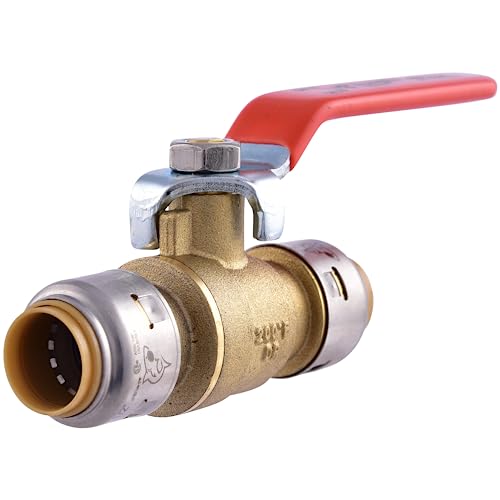
- Valves: Shut-off options, including ball valves for quick water control.
- Caps: To seal off the end of a pipe temporarily or permanently.
- Reducers and Adapters: For connecting different pipe sizes or transitioning to threaded ends.
These fittings work with several pipe materials common in US homes:
- PEX (flexible and affordable),
- copper (the classic choice),
- CPVC (for hot water lines),
- PE-RT, and even SDR-9 HDPE in some cases. I’ve mixed copper and PEX in remodels using these, and it’s seamless.

READ MORE: How to Plumb a Pedestal Sink
Pros of Using SharkBite Fittings
One of the biggest wins with SharkBite plumbing fittings is how they make life easier. As a plumber, I’ve seen them shave hours off jobs that would otherwise involve flames and flux.
1. Extremely Easy Installation
You don’t need years of plumbing experience. If you can:
- Measure
- Cut a pipe
- Push it into place
You can install a SharkBite fitting correctly.
2. No Soldering or Special Tools
- No torch.
- No fire risk
- No expensive crimp tools.
This makes SharkBite fittings ideal for:
- Tight spaces
- Finished homes
- Emergency repairs
3. Perfect for Quick Repairs
When a pipe bursts or a valve fails, time matters. SharkBite fittings let you restore water service fast without shutting down the whole house for hours.
4. Reusable Connections
Unlike glued fittings, SharkBite fittings can be removed and reused using a simple disconnect clip.
5. Great for DIY Projects
From installing a new sink to adding an outdoor spigot, push-to-connect plumbing fittings give homeowners confidence to handle smaller jobs themselves.
Cons and Limitations of SharkBite Fittings
No plumbing product is perfect. It’s important to understand the SharkBite fittings pros and cons before committing to them.
Cons of SharkBite Fittings:
1. Higher Cost: They’re pricier upfront than basic soldered fittings a simple coupling might run $5-10 versus pennies for solder joints.
2. Long-Term Reliability Concerns: If not installed right, the O-ring can fail over time, especially if exposed to heat or chemicals. Some pros prefer traditional methods for hidden spots.
3. Code Compliance and Hidden Installations: While approved in most areas, check local codes they’re fine behind walls if done properly, but not for repeated disconnects.
I’ve had clients worry about longevity, but in my experience, proper prep avoids most issues. They’re not ideal for every situation, like high-heat areas near boilers.
READ MORE: How to Plumb a Double Sink
SharkBite vs Traditional Plumbing Methods
Understanding SharkBite vs soldering and other methods helps you choose the right solution.
SharkBite vs Soldering
SharkBite advantages:
- Faster installation
- No flame
- Beginner-friendly
Soldering advantages:
- Lower material cost
- Proven long-term durability
- Preferred for permanent, hidden work
SharkBite vs Compression Fittings
Compression fittings:
- Require tightening nuts
- Can loosen over time
- Are harder to install in tight spaces
SharkBite fittings:
- Lock automatically
- Require no tightening
- Are easier for beginners
When Each Method Makes Sense
- SharkBite: Repairs, remodels, temporary or accessible installations
- Soldering/Crimping: New construction, long-term systems, concealed plumbing
Are SharkBite Fittings Safe and Reliable? Expert Opinion
Absolutely, when used correctly. SharkBite fittings are reliable with pressure ratings up to 400 psi in their Max series, handling typical home water pressures (around 60-80 psi) with ease. They’re tested for durability and approved by major codes like the Uniform Plumbing Code (UPC) and International Plumbing Code (IPC) for permanent use, even behind walls.
From real-world insights, I’ve installed hundreds without callbacks, but reliability hinges on clean cuts and full insertion. Some plumbers are wary due to potential O-ring failures, but data shows they’re as good as soldered if prepped right. Just note: in states like California and Vermont, use lead-free versions to comply with regs.
When Should You Use SharkBite Fittings?
SharkBite shines in emergencies, like a midnight pipe burst slap one on to buy time for a pro. For temporary fixes, they’re unbeatable, but they’re also fine for permanent spots if code-approved.
Ideal Use Cases
- Emergency pipe repairs
- Water heater replacements
- Adding shut-off valves
- Temporary plumbing setups
- DIY home improvement projects
Temporary vs Permanent Use
While SharkBite fittings can be permanent, many professionals prefer them for:
- Accessible areas
- Repairs that may need future changes
For buried or sealed walls, traditional methods may still be the better choice.
READ MORE: How to Measure Plumbing Fittings
Common Mistakes to Avoid When Using SharkBite Fittings
Even pros slip up sometimes, so here’s what to watch for:
- Improper Pipe Preparation: Skipping the deburr or leaving solder residue can nick the O-ring, leading to leaks down the line.
- Incorrect Pipe Depth: Not pushing in fully? It’ll pop out under pressure. Always mark and check.
- Reusing Damaged Fittings: These aren’t meant for multiple disconnects if the grab ring’s worn, toss it.
Other pitfalls: Using on scratched pipes, twisting during insertion, or ignoring temperature limits. I’ve seen leaks from jagged cuts always use a quality cutter. Test with water pressure before closing up walls.
Frequently Asked Questions (FAQs)
Are SharkBite Fittings Permanent?
Yes, they’re designed for permanent installations but can be disconnected with a tool for adjustments. Not ideal for frequent reuse, though.
Can They Be Used Behind Walls?
Absolutely, as long as they meet local codes and are installed correctly – no accessibility required once set.
How Long Do SharkBite Fittings Last?
With proper install, they can last 25 years or more, backed by warranties. Factors like water quality and temperature affect lifespan.
Conclusion: Are SharkBite Fittings Right for You?
So, what are SharkBite fittings in plumbing, really?
They’re a modern, homeowner-friendly solution that makes plumbing repairs faster, safer, and more accessible especially for DIYers and quick fixes. While they’re not always the best choice for every situation, they’re incredibly useful when speed, simplicity, and flexibility matter.
If you’re tackling a repair, upgrading a fixture, or just want peace of mind during a plumbing emergency, SharkBite fittings are worth considering just be sure to install them properly and use them where they make the most sense.

