If your laundry room smells like sewage gas, that rotten-egg / sewer-like odor is alarming but it’s usually fixable. In this article you’ll learn the plumbing basics that let sewer gas in, the nine most common causes for laundry-room sewage odor, a homeowner-friendly diagnostic checklist, eight safe DIY fixes with estimated time and difficulty, a comparison table of common products (with Feb, 2026 price examples), cost guidance, safety and health notes, and short FAQs you can use to act fast and safely.
Read this in order if you want to diagnose the problem yourself. If anything looks like active sewage backup or you feel sick, follow the safety notes and call a licensed plumber immediately. Lets deep dive into “Why Does My Laundry Room Smell Like Sewage Gas?”
Check this & Get Discount here-
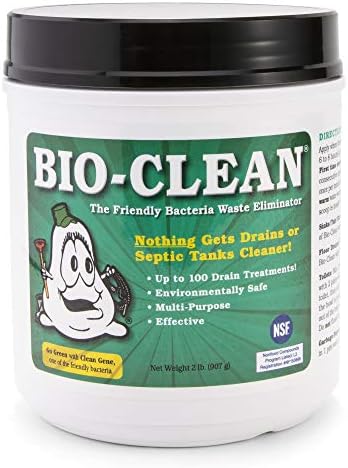
- LISTING IS FOR 1 TWO POUND CANISTER
- Special combination of natural microbes and enzymes that DIGESTS dead organic waste found in your plumbing system
- Eliminates costly backups. Up to 100 Drain Treatments.
Laundry Room Smells like Sewer Gas: How gas gets into a home
Sewer gas is the mix of gases that sits inside the drain and sewer system (mostly hydrogen sulfide, methane, carbon dioxide, and small organics). A properly working plumbing system keeps that gas in the drains and pipes — away from your house using three simple features:
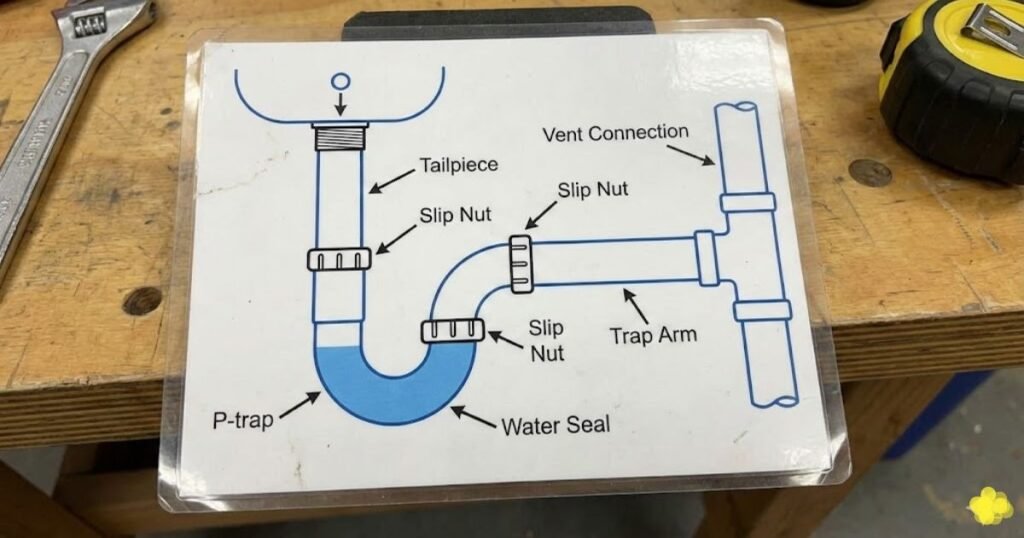
- P-traps: the U-shaped bend under sinks, standpipes, and many floor drains. Traps hold a small water seal that physically blocks sewer gas from coming back into the room.
- Vents: plumbing vents (roof vents/vent stacks) let sewer gases escape above the house and prevent traps from getting siphoned when water flows.
- Backflow / one-way devices: check valves, backwater valves, and certain valve devices can stop gas or sewage from moving in the wrong direction.
- Floor drains and cleanouts: floor drains, utility sinks, and cleanouts are all access points where sewer gas can escape if the trap is missing, dry, or damaged.
How the water seal works: the trap’s water prevents gas flow. If the trap dries (evaporation), is siphoned (poor venting), or the physical seal is compromised (crack, loose nut), sewer gas flows into the room.
Check this & Get Discount here-

- ENZYME ENHANCED FORMULA: Green Gobbler Enzymatic Drain & Grease Trap Cleaner uses an enzyme enhanced formula to clear bu…
- SAFE FOR PIPES: Green Gobbler helps maintain drain lines, septic tanks, grease traps and grease interceptors. Our enzyme…
- IMPROVE GREASE TRAP EFFICIENCY: Green Gobbler increases the efficacy of grease traps by allowing enzymes & bacteria to w…
READ MORE: How to Clean Lint From Washing Machine Drain Hose (Step-by-Step for U.S. Homeowners)
Laundry Room Odor Sewage: 9 most common causes
Diagnosing the infiltration of sewer gas requires a forensic examination of nine distinct failure points within the laundry room’s plumbing and appliance configuration. Each cause carries specific diagnostic markers and mechanical origins.
1. Dry P-trap (evaporation in infrequently used floor drains)
The most frequent cause of laundry room odor is a dry P-trap, a condition where the water seal has completely evaporated due to lack of use. This is particularly prevalent in floor drains located in utility rooms or basements that do not receive regular water flow from daily activities. In climates with low humidity or during the winter months when indoor heating systems further desiccate the air, a trap can lose its seal in as little as 30 to 60 days. Without the liquid barrier, the floor drain serves as an open conduit for the sewer main’s atmosphere to vent directly into the home.
2. Faulty or missing trap on floor drain or utility sink
In some older residences or homes where non-permitted renovations have occurred, a drain may have been installed without a P-trap entirely. This “straight-piping” error means there is no physical mechanism to hold water and block gas. Furthermore, even if a trap is present, it may be an “S-trap,” which is illegal under most modern plumbing codes because its design makes it highly susceptible to self-siphoning. If a utility sink or floor drain has never functioned without an odor, the absence of a properly engineered trap is the likely structural culprit.
3. Evaporated or siphoned trap because of improper venting
Improper venting creates a hydraulic imbalance that can “pull” or “push” the water out of a P-trap. If the primary vent stack on the roof is blocked, the vacuum created by a flushing toilet or a draining dishwasher will suck the water out of the laundry room trap. This often results in a “gurgling” sound emanating from the laundry sink or floor drain as air is forced through the dwindling water seal. This mechanical failure is often seasonal, occurring when snow or ice caps the vent pipe, or during autumn when falling leaves accumulate in the stack.
4. Damaged or failed trap seal (cracked trap, loose connections)
Physical degradation of the plumbing materials can lead to a loss of the trap seal even if the drain is used regularly. Slip-joint washers on utility sinks can dry rot, or the trap itself—if made of older thin-walled metal—can develop pinhole leaks from corrosion. If the water level in the trap drops just a fraction of an inch below the “weir” (the top edge of the trap’s exit), the airtight seal is compromised. Homeowners should inspect the floor beneath the utility sink for subtle mineral deposits or dampness, which indicate a slow, seal-breaking leak.
Check this & Get Discount here-

- The Green Drain 3.5″ model offers enhanced versatility and protection for pipes measuring 85-94 mm in diameter.
- Simple installation – Please make sure to recess the Green Drain 2-4 inches into the drain to allow water to properly pa…
- 3.5-inch connection, 51 mm in height, with a remarkable 51 GPM flow rate
5. Floor Drain Insert missing or defective
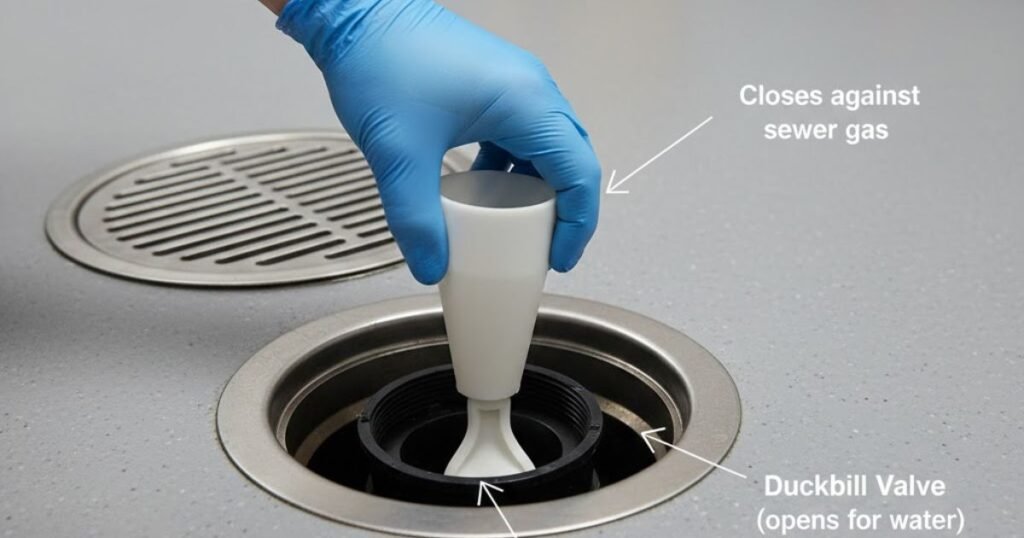
Many modern floor drains are equipped with a secondary defense known as a TrapShield or a one-way valve. These silicone or rubber inserts are designed to allow water to flow into the drain but close tightly to block odors from rising. If the insert is missing, or if the rubber diaphragm has become brittle or encrusted with debris, it can no longer prevent gas migration. This is a common failure point in high-traffic laundry rooms where lint and hair can prevent the valve from seating properly.
6. Sewer line backup or slow drain (biofilm / sewage)
A partial blockage in the main sewer line can cause organic matter to accumulate in the pipes, creating a thick “biofilm” or sludge. This sludge produces its own localized sewer gas through decomposition. If the laundry room drains slowly, the water sitting in the pipe becomes a reservoir for these gases. If the odor is accompanied by water backing up into the floor drain when the washing machine discharges, it indicates a significant downstream obstruction that is forcing sewer air back into the room.
7. Broken or loose cleanout plug / cracked pipe under slab
The sewer cleanout is a critical access point, usually capped with a threaded plug. If this plug is loose, missing, or cross-threaded, it allows gas to escape from the main line before it ever reaches a trap. More severely, a crack in the sewer line beneath the concrete foundation (a slab leak) can allow gas to saturate the soil and seep through foundation cracks. This is often identified by a “musty” sewage smell that is not isolated to a single drain but seems to emanate from the floor itself.
8. Dry washing machine standpipe trap
The transition to high-efficiency (HE) washing machines has introduced a specific phenomenon called “velocity siphoning.” Modern HE pumps discharge water at a rate of 17 to 24 gallons per minute (GPM), compared to 10 to 12 GPM in older units. This high-speed water creates a powerful suction effect that can pull the water seal out of the standpipe’s P-trap at the end of the drain cycle. If the standpipe is not at least 34 inches tall, it lacks the volume to prevent this siphoning, leaving the trap dry and the room smelling of sewage after every load of laundry.
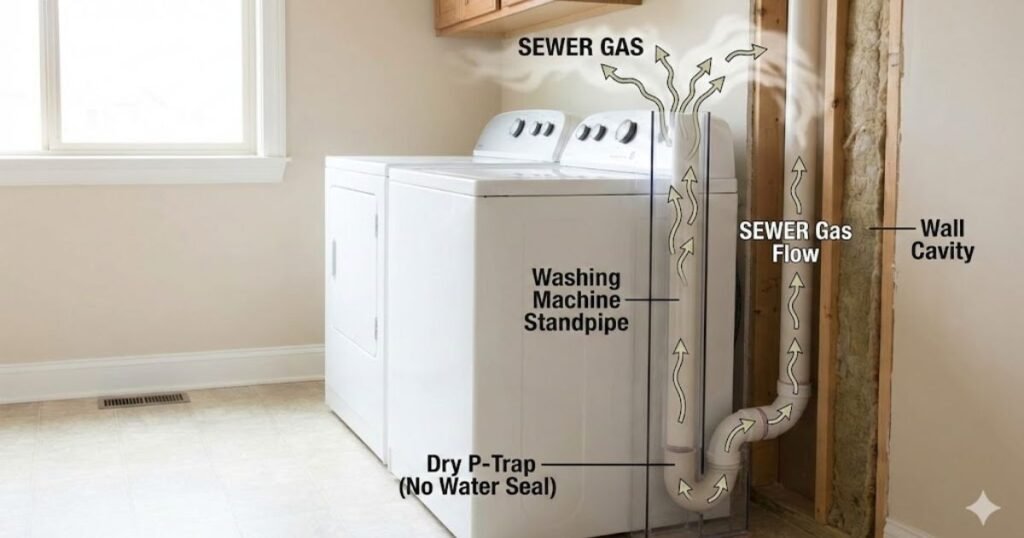
9. Cross-connections or sewer gas entering from laundry appliances
In rare cases, the odor is generated within the appliance itself. Front-loading washing machines are notorious for mold and bacterial growth in the door gasket and the internal drain pump filter. While this is technically “mildew,” the decomposition of trapped lint and hair can produce a scent nearly indistinguishable from sewer gas. Furthermore, if the dryer is gas-powered, a faint leak in the gas line can sometimes be mistaken for the sulfurous scent of sewer gas, though natural gas typically has a more chemically “sharp” odor.
READ MORE: How to Measure Sludge Levels in a Septic Tank — DIY & Pro Guide
Check this & Get Discount here-
- 𝐆𝐄𝐍𝐔𝐈𝐍𝐄 𝐑𝐄𝐏𝐋𝐀𝐂𝐄𝐌𝐄𝐍𝐓 𝐅𝐈𝐋𝐓𝐄𝐑: Designed specifically for the Core 300-P / Core 300S-P air purifiers to maintain its peak pe…
- 𝐇𝐄𝐏𝐀-𝐆𝐑𝐀𝐃𝐄 𝐏𝐄𝐑𝐅𝐎𝐑𝐌𝐀𝐍𝐂𝐄 𝐈𝐍 𝐒𝐋𝐄𝐄𝐏 𝐌𝐎𝐃𝐄: Helps Levoit Core 300-P achieve HEPA* filtration efficiency during Sleep Mode. Zer…
- 𝐋𝐄𝐕𝐎𝐈𝐓 𝐆𝐄𝐍𝐔𝐈𝐍𝐄 𝐅𝐈𝐋𝐓𝐄𝐑: Guaranteed quality, detailed manufacturing process, and free from size mismatches to tackle unwan…

- Genuine HEPA PURE Air Filter: Experience the power of authentic HEPA PURE air filtration with this GermGuardian filter r…
- Why HEPA PURE: Proudly manufactured in North America and backed by rigorous scientific testing using reputable independe…
- Reliable Room Deodorizer: The activated carbon pre-filter traps and absorbs volatile organic compounds along with dust, …
Laundry Room Smelling like Sewer Gas: How to diagnose (step-by-step homeowner checklist)
Isolating the source of a sewer gas leak requires a systematic, process-of-elimination approach. Warning: Sewer gas contains methane and hydrogen sulfide; never use an open flame to “search” for a leak, and avoid direct inhalation of concentrated vapors from open pipes.
Tools needed for diagnosis
- High-intensity LED flashlight.
- Handheld inspection mirror.
- 5-gallon bucket.
- Screwdrivers (flat and Phillips).
- Disposable nitrile gloves.
- Plumbing dye tablets or dark food coloring.
Step 1: The Visual Inspection of Water Seals
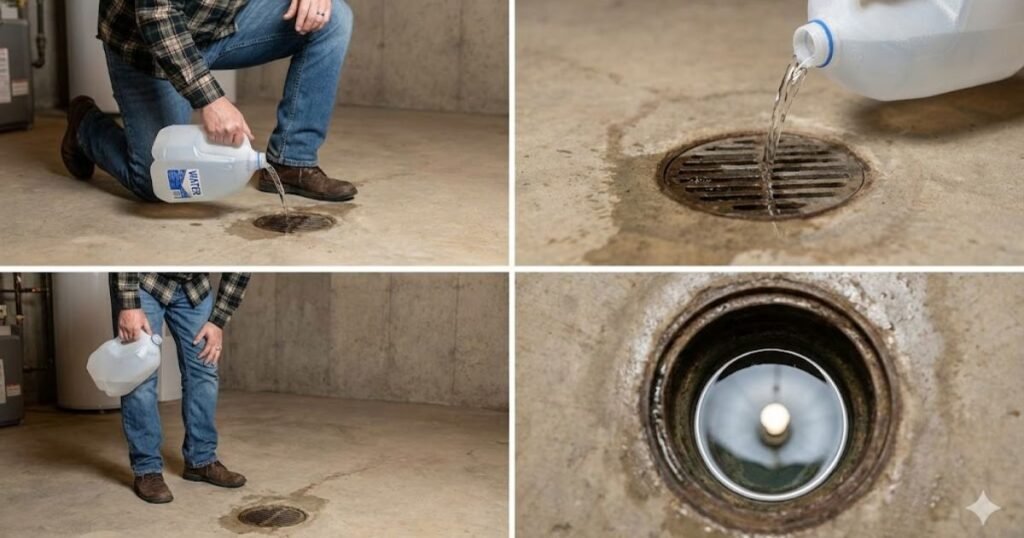
The first and most effective diagnostic step is to physically verify the presence of water in every trap. Remove the grates from floor drains and use a flashlight to look into the bend of the pipe. If you see a reflecting pool of water, the seal is intact. If the pipe is dry or filled with dry debris, the seal has failed.
- Why this works: The trap is a physical barrier; if the barrier is missing, the path for gas is open.
- Risk if skipped: You may spend hundreds on professional diagnostics for a problem that could be fixed with a gallon of water.
Step 2: The “Gurgle” Test and Pressure Monitoring
Run a heavy-duty cycle on the washing machine or flush the nearest toilet while standing in the laundry room. Listen for any “glugging” or gurgling sounds coming from the floor drain or utility sink.
- Why this works: Gurgling indicates a venting problem where the system is “gasping” for air through the P-trap.
- Diagnostic outcome: If gurgling occurs, the issue is likely a blocked roof vent or an improperly sized drain line.
Step 3: The Dye/Tracing Test for Hidden Leaks
If traps appear full but the smell persists, use dye to check for internal leaks or cross-connections.
- Drop a dye tablet into the laundry tub or flush it down the nearest toilet.
- Wait 30 minutes.
- Check the floor drain or any cracks in the basement floor. If colored water appears where it shouldn’t, there is a breach in the waste line or a slab leak.
Step 4: The Appliance Isolation Sniff Test
Clean the washing machine’s gasket and drain filter. If the smell disappears, the issue was bacterial growth in the machine. If the smell remains concentrated behind the machine near the standpipe, the issue is plumbing-related.
Step 5: Professional Smoke Testing
If all DIY steps fail, a plumber will perform a “smoke test.” This involves pumping non-toxic artificial smoke into the sewer system under pressure. Smoke will exit from any crack, loose joint, or failed trap, providing an undeniable visual map of the leak. This is typically a pro-only step due to the specialized equipment required.
Check this & Get Discount here-

- Safe and Gentle Formula: Made in the USA, non-toxic, non-allergenic, and biodegradable, making it suitable for use aroun…
- Eliminate Tough Commercial Odors – Zero Odor PRO Effectively Removes the Most Challenging Odors in Commercial Environmen…
- Temporary Tracer Scent : Zero Pet Odor Eliminator effectively eliminates strong odors, including urine.This pet odor eli…
How to Stop Sewer Smell Laundry Room: 8 safe DIY fixes
Note: If at any point you see actual sewage, heavy soiling, or the smell won’t go away after simple fixes, call a licensed plumber.
1. Rehydration and Mineral Oil Sealing:
For infrequently used floor drains, pour one gallon of water down the drain to restore the seal. For a longer-term fix, add 2 to 3 tablespoons of mineral oil. The oil floats on the water and significantly slows the evaporation process, extending the life of the seal for months.
2. Install a Floor Drain Insert (TrapShield):
If a floor drain frequently dries out, install a one-way valve like the Sioux Chief TrapShield (~$70). These are push-fit devices that allow water to enter but use a silicone diaphragm to block gases from rising.
3. Replace Sink P-Trap and Washers:
If a utility sink trap is leaking or cracked, replace it with a new PVC P-trap kit (~$15). Ensure the beveled plastic washers are seated correctly before hand-tightening the slip nuts. Over-tightening with a wrench can crack plastic fittings.
4. Clear Roof Vent Obstructions:
If you can safely access your roof, check the plumbing vent. Remove any leaves, bird nests, or ice caps. For a deeper blockage, run a garden hose down the vent; the weight of the water can often push through minor debris clogs.
5. Adjust the Washing Machine Standpipe:
Ensure your standpipe is at least 34 inches tall. If it is too short, you can add an extension. Also, ensure the drain hose is not shoved too far into the standpipe; it should be secured with a U-hook and zip-tie to maintain an air gap, preventing siphoning.
6. Tighten or Replace Cleanout Plugs:
Locate the main sewer cleanout. If the cap is loose, tighten it with a pipe wrench. If it is cracked, replace it with a “gripper” expansion plug (~$15) which creates a superior airtight seal compared to old threaded caps.
7. Deep Clean Appliance Biofilm:
If the smell is from the washer, run a “clean” cycle with 1 cup of bleach or a specialized cleaning tablet. Wipe the rubber door seal and clean out the pump filter, which often collects foul-smelling debris.
8. Install an Air Admittance Valve (AAV):
If a laundry room was added to a home without proper venting access, an AAV (like a Studor valve) can be installed on the standpipe or sink. This allows air in to prevent siphoning but closes to keep sewer gas out.
READ MORE: How to Plumb a Basement Bathroom
Laundry Room Odor Sewage Comparison Table: 5 common product types
The following comparison illustrates the primary hardware solutions available to homeowners for stopping sewer gas infiltration. Prices are current as of February 20, 2026.
| Product / Brand | Example model / type | Typical price (examples) — checked Feb 20, 2026 | Primary use | Installation difficulty | Pros | Cons |
| HepvO | HepvO BV1B/UB 1½” waterless waste valve | See Price | Replace/retrofit P-trap where evaporation or freezing is a problem | Medium — needs trap area access | Works where traps dry; no continuous water seal required | Not a substitute for mainline repairs; can clog with solids |
| Sioux Chief | TrapShield (835 series insert) | See Price | Protects floor drains from trap evaporation and sewer gas | Easy — push into drain | Low-cost, simple install, no plumbing changes | Higher-end finishes and sizes cost more |
| Oatey | Drain seal / 2″ floor drain with integrated trap | See Price | Seal smells from infrequently used drains; backwater prevention | Easy–medium | Inexpensive options, many sizes | Basic models may not handle heavy solids; assemblies cost more |
| Watts | A200 / LFTP trap primer (flow-through / commercial units) | See Price | Keeps P-traps primed in long-idle drains | Hard — plumber tie-in required | Permanent solution for evaporation issues | Costly; usually overkill for single laundry rooms |
| Fernco | CV series check valves | See Price | Prevents backflow into fixtures (sump/discharge) | Medium — plumbing familiarity helpful | Affordable; widely available | Wrong application can cause backups; must size correctly |
Notes on the table & prices: prices vary by seller, model, and finish. The examples above were checked on retailer/manufacturer listings and distributor pages on or near Feb 20, 2026. Use the model number to confirm compatibility before buying. (See cited sources after each row.)
Cost guide & who to hire: Dry p-trap laundry room
Residential plumbing costs in 2026 are influenced by labor rates and the accessibility of the problem area. Below are the typical market ranges for sewer gas-related repairs.
Typical DIY Cost Ranges
- Replacement Washers/Gaskets: $10 – $25.
- P-Trap Kit (Sink): $15 – $40.
- Floor Drain Insert (TrapShield): $60 – $100.
- Mineral Oil/Cleaning Supplies: $5 – $20.
Professional Plumber Costs
- Diagnostic Call / Service Fee: $75 – $200. This typically covers the first 30-60 minutes of inspection.
- Video Sewer Camera Inspection: $125 – $500. Highly recommended for any odor that persists after basic trap checks.
- Snaking a Clogged Main Line: $150 – $450. Essential for clearing organic “sludge” that causes localized gas.
- Hydro-Jetting Pipes: $300 – $800. A high-pressure water scrub to remove years of lint and biofilm.
Complex Structural Repairs
- P-Trap Replacement (Behind Wall): $250 – $350. This involves opening the drywall and replacing the fixture drain.
- Sewer Line Spot Repair: $600 – $1,050. Repairing a single cracked pipe in the yard or basement.
- Sewer Trap Replacement: $1,500 – $3,000. For replacing the main house trap buried under the foundation or yard.
- Slab Leak Repair: $500 – $4,000. The highest cost factor, especially if it requires jackhammering the laundry room floor and restoring concrete.
READ MORE: How to Plumb a Washing Machine Drain
Laundry Room Odor Sewage: Safety, code & health notes
- Do NOT inhale sewer gas directly. Brief diagnostic sniffing at a safe distance is okay; avoid deep inhalation. If you feel dizzy, nauseous, or have headaches, leave and seek fresh air.
- Sewer gas can contain hydrogen sulfide (the rotten-egg smell) which is detectable at low concentrations. High concentrations can be dangerous to evacuate and call professionals if you suspect a concentrated leak or feel ill.
- Ventilate the room and avoid using appliances if you suspect a mainline backup.
- Do not attempt to dig under a slab, perform sewer main work, or install backwater valves yourself unless you are licensed and local code permits. Those are higher-risk and often require permits and inspections.
- Carbon monoxide vs hydrogen sulfide: carbon monoxide is odorless; do not confuse symptoms. If you suspect carbon monoxide, evacuate and call emergency services. Hydrogen sulfide smells like rotten eggs but can deaden smell at high levels so symptoms may occur without strong smell.
FAQs
Why does my laundry room smell like sewage gas only sometimes?
Intermittent smells are usually trap-related: a floor drain or standpipe that sits unused allows evaporation; a washing cycle or neighbor usage might temporarily push odors through a vent.
Will pouring bleach down the drain fix sewer gas smell?
Bleach can disinfect and temporarily reduce odors but does not fix a dry trap, missing trap, or a cracked trap. Bleach is not a permanent solution and should be used carefully — never mix bleach with ammonia or other cleaners.
Can a dryer vent cause sewer smell in the laundry room?
A dryer vent itself will not carry sewer gas; however, if a dryer duct is venting into a crawlspace or through an area with a sewer leak, odors can travel. Ensure dryer vents go directly outside and are not venting into wall cavities or crawlspaces.
How long will a floor drain insert last?
With normal use, inserts like TrapShield last several years; rubber/silicone parts degrade eventually and should be inspected yearly. If an insert becomes brittle or clogged, replace it.
Is sewer smell in laundry room a health emergency?
If you see active sewage backup, feel sick (headache, nausea, dizziness), or smell a very strong odor that won’t dissipate with ventilation, treat it as an emergency ventilate the area, avoid contact with sewage, and call a licensed plumber or emergency services if necessary.
Conclusion
If your laundry room smells like sewage gas, start with the water-in-traps test and a simple floor-drain inspection those two steps fix many problems. For dry traps, a quick pour or installing a TrapShield/HepvO will often solve the problem. If the smell persists, you have multiple affected fixtures, active sewage backup, or a loose/missing cleanout plug call a licensed plumber.
Next steps (simple):
- Pour a quart of water into the floor drain and the laundry standpipe now.
- Remove the floor drain grate, inspect for an insert, clean any debris.
- If smell continues, take photos and call a licensed plumber mention whether you saw missing traps, loose cleanout plugs, or backup signs.

