A high water bill with no visible leaks usually means water is leaving your system where you can’t see it under the slab, in the service line between the meter and house, through a silent toilet leak, an irrigation system problem, or even a billing/meter error. Small, slow leaks and hidden appliance failures can waste thousands of gallons over weeks, and even a running toilet or a hairline underground leak can multiply your monthly cost fast.
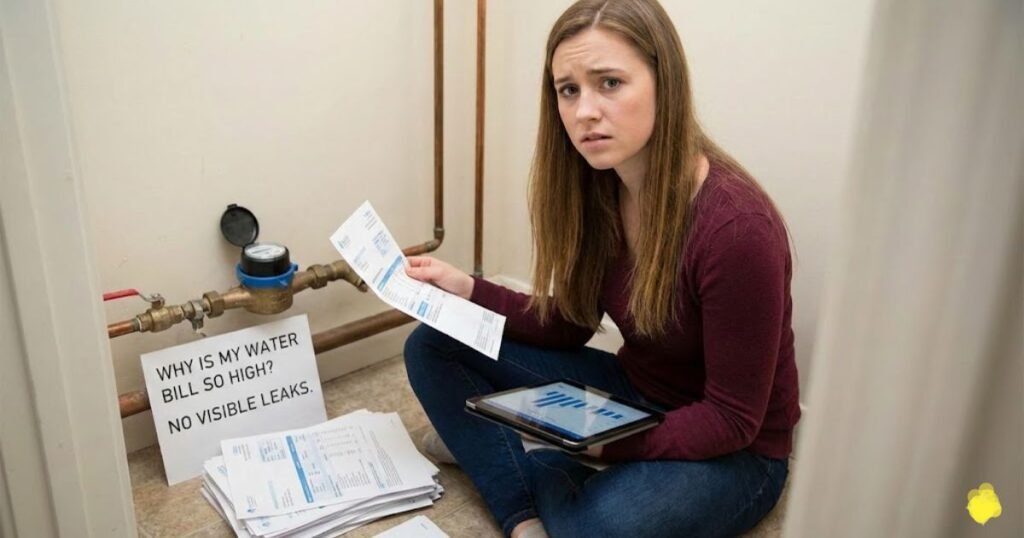
If you’re staring at a much higher water bill but can’t find dripping pipes, don’t panic, start with a meter check and a few quick DIY tests. Hidden leaks are far more common than most homeowners think: slab/service-line leaks under concrete or lawn, silent toilet flappers, irrigation systems that run at night, and leaking appliances are typical culprits. Utilities and meters can also make mistakes or apply new tiered rates and sewer fees that boost your bill without a physical leak.
This guide walks you through how water billing works, fast step-by-step checks you can do right now, the unusual causes to inspect, when to call your utility or a plumber, how pros find hidden leaks, and realistic price ranges for detection and repair so you’re not blindsided. It also includes a comparison table, a cost guide with real price ranges from industry sources, pros & cons of DIY vs hiring a pro. Lets deep dive into “Why is my water bill so high but no visible leaks (Cause, Fix & Costs)”
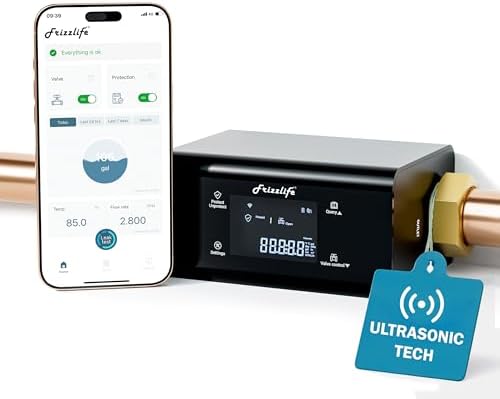
- ⭐Real-Time Leak Alerts&Notifications–Auto Shutoff–Patented Ultrasonic Micro Leak Detection–Phone Control from Anywher…
- [24/7 Real-Time Alerts&Notifications, Wherever You Are]–Stay connected and informed in the event of a leak or even a mi…
- [Ultrasonic Technology for Precise Flow Monitoring]–Upgraded ultrasonic technology, Frizzlife accurately monitors water…
How your water bill is calculated
Understanding your bill helps you tell “leak” from “rate change.” Utilities bill for three main things:
- Water usage — Measured by your meter in cubic feet or gallons; the bill multiplies usage by the utility’s unit price (often tiered higher rates after set thresholds).
- Sewer charges — Many municipalities bill sewer as a percentage of water usage or a separate flat fee; if your water use goes up, your sewer portion often follows.
- Fixed fees & taxes — Monthly service fees, infrastructure surcharges, stormwater fees, and local taxes can add $10–$50 or more regardless of use.
Meters are typically read monthly. A few billing gotchas that raise your number without a physical leak at home: seasonal tier thresholds (summer irrigation spikes you into higher tiers); recent rate increases or new surcharges; estimated readings turning into an actual reading after months of estimates (big “catch-up” bills); or a misread/malfunctioning meter. If the meter itself is stuck or the utility applied an incorrect meter read, your bill can jump even when household behavior hasn’t changed.
If your bill shows odd high usage dates, call your utility and ask for the exact read dates and whether the reading was estimated that’s often the fastest, cheapest way to confirm whether the spike is a billing problem or real water loss.

- Breakthrough 550m/1804ft Connectivity: Engineered with advanced Sub-1G long-range wireless tech, our leak detector maint…
- Multiple Reminder Methods: Our water leak sensor supports multiple remote alarm. It can instantly send SMS, APP, and Ema…
- Feature-Rich App: Receive instant push notifications. Use the “Find Device” feature to quickly trigger audible beeps to …
Analysis of Billing Components and Consumption Metrics
| Component | Purpose | Calculation Basis | Hidden Leak Impact |
| Fixed Service Charge | Infrastructure readiness | Meter size (e.g., 5/8″, 1″) | None |
| Tiered Usage Fee | Conservation incentive | Total Ccf or Gallons | Disproportionate increase if tiers are crossed |
| Sewer Volume Charge | Wastewater treatment | % of fresh water consumption | High (if leak is indoors) |
| Environmental Fee | Regulatory compliance | Units of water used | Incremental increase |
| Sewer Cap | Outdoor use adjustment | Peak summer usage limit | May limit financial impact of irrigation leaks |
READ MORE: How to Find a Hidden Water Leak in Your Wall
Step-by-step Quick checks for Why is your water bill so high
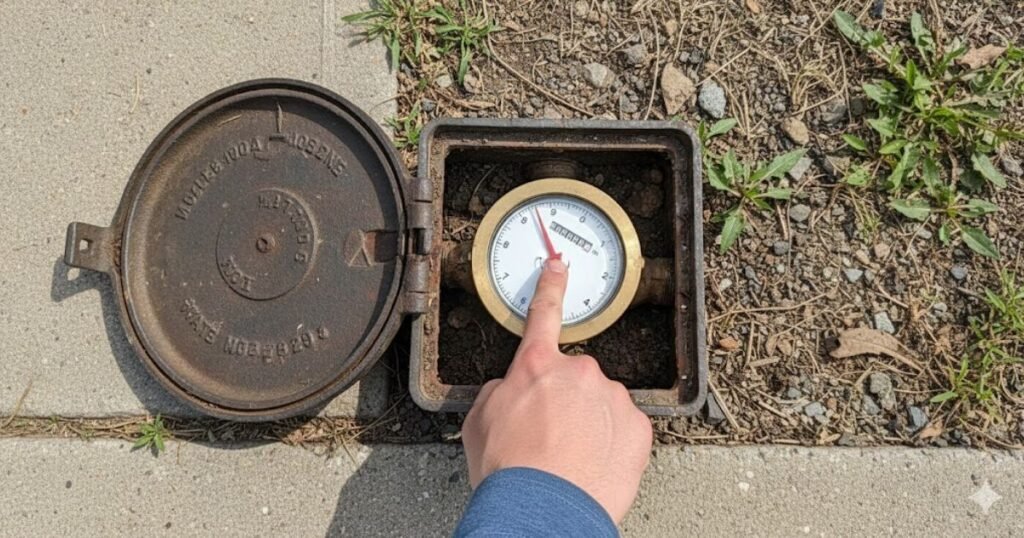
Top 3 quick checks (do these before calling a plumber):
1) Do the meter test (5–10 minutes)
- Turn off every water fixture in the house (no faucets, no appliances, no irrigation, no ice makers). Make sure nobody’s in the shower.
- Locate your water meter (usually near the street, in a box, or inside a utility closet). Note the meter number or reading
- Wait 10–20 minutes without using water, then check the meter again. If it moved, you almost certainly have a leak. If it didn’t move, the mystery might be outside the meter or a billing error.
2) Check toilets for silent leaks (2–10 minutes per toilet)
- Remove the tank lid. Add a few drops of food coloring to the tank (or use a tablet dye). Wait 10 minutes without flushing. If color appears in the bowl, the flapper or seal is leaking. Replace the flapper ($5–$20) or call a plumber if the tank components are corroded.
3) Inspect visible pipes, hose bibs, and appliances (10–20 minutes)
- Look under sinks, behind toilets, around the water heater, dishwasher, and washing machine for dampness, mineral marks, or pooling.
- Check the yard near the meter and around sprinkler heads for soggy areas, unusually green patches, or sinkholes (signs of underground leaks).
- Turn off the irrigation controller and watch the meter; many lawn systems leak quietly for hours or overnight.
4) Quick appliance checks
- Washing machine: check hoses for bulging or dampness; listen during cycles.
- Dishwasher: inspect under and behind the unit after a cycle.
- Water heater: look for puddles, rust, or failure at the pressure relief valve.
5) Look at the bill details
- Check the billed usage period and compare daily usage to your normal. If the utility’s billing period is longer or included a vacation period, the math can look worse. Also confirm whether the sewer portion is calculated differently now.

- HUMIDITY SENSOR: Our handy meter tool can quickly determine what level of remediation is needed to keep your family safe…
- WATER LEAK DETECTOR: Finding the moisture content in your wood or drywall is the first step in early prevention. Continu…
- MOISTURE READER: The mold test features large 0.3″ high digits in a backlit LCD for quick and easy detecting. Our mildew…
Printable one-page checklist
- Turn off all household water.
- Read and record meter number/reading (time/date).
- Wait 15 minutes. Re-read meter — did it move? Y / N
- Put dye in toilet tanks; check after 10 minutes.
- Check under sinks, behind appliances, water heater for moisture.
- Inspect yard, near meter, sprinkler heads for soggy spots or pooling.
- Turn off irrigation controller; monitor meter for 30–60 minutes.
- Note any unusual sounds (running water when everything off).
- Review bill for billing period, estimated reads, and tier changes.
- If meter moved or dye shows, call a licensed plumber; if meter didn’t move but bill is high, call utility to ask about meter/billing error.
(PRINT THIS PAGE — keep it near your meter or fridge.)
READ MORE: 11 Ways to Fix Water Leaking From the Top of the Water Heater
Hidden or uncommon causes of Water Leak
1. Underground/service line leaks
Why they hide: Service-line and slab leaks occur beneath concrete or soil — you won’t see dripping, only wet spots in the yard, soft or sunken soil, or higher bills. A leak between the city meter and your house may be on your side of the property line (you’re usually responsible) and can be slow but waste a lot of water.
Signs: sudden lawn saturation, bubbling soil, sinkholes, soggy areas while the rest of the lawn is dry, or the meter spinning when all water is off (do the meter test). These leaks often worsen in warm months as soil dries around them, making the saturation more visible.
Costs & detection: Finding and repairing requires specialized detection (acoustic listening, electronic ground microphones, or camera work) and may need excavation or trenchless repair. Typical water-main/service-line replacement averages around $2,000 and runs $50–$250 per linear foot depending on depth and pipe material. Full slab repairs can average $1,500–$4,500 or more in many cases.
When you should call a pro: if the meter test shows movement but you can’t find a visible leak, or if you see obvious yard damage.
2. Silent toilet leaks and flapper failure
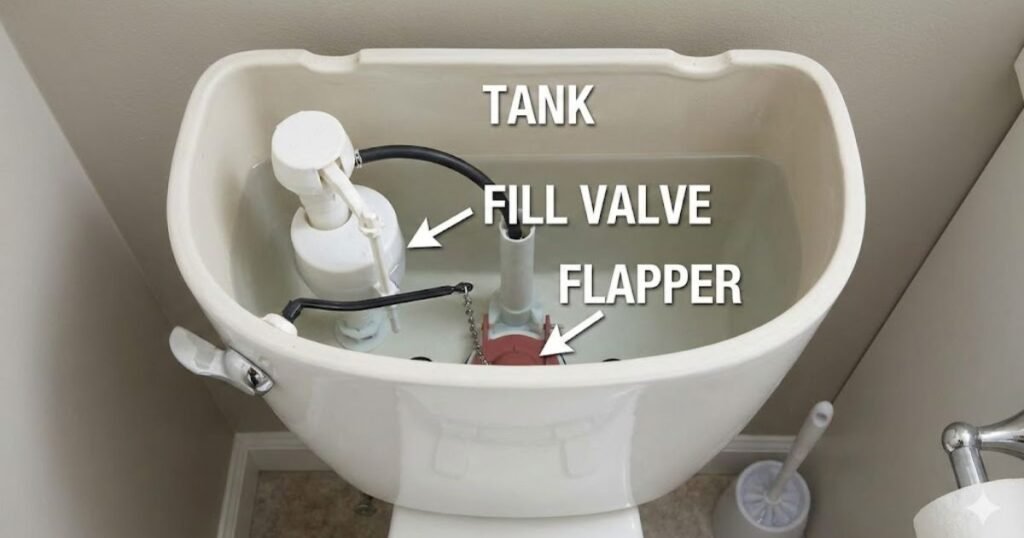
Toilets are frequently the culprit. A worn flapper or misaligned fill valve can let water slowly move from the tank to the bowl — a toilet can leak gallons per hour and you may never hear it.
How to check: use the dye test in the tank (see earlier). Fixes: replace the rubber flapper (cheap DIY part, usually under $10–$20) or call a plumber if tank internals are corroded. Hiring a pro for a running toilet repair typically costs $100–$400 depending on the repair.
3. Irrigation/sprinkler system leaks
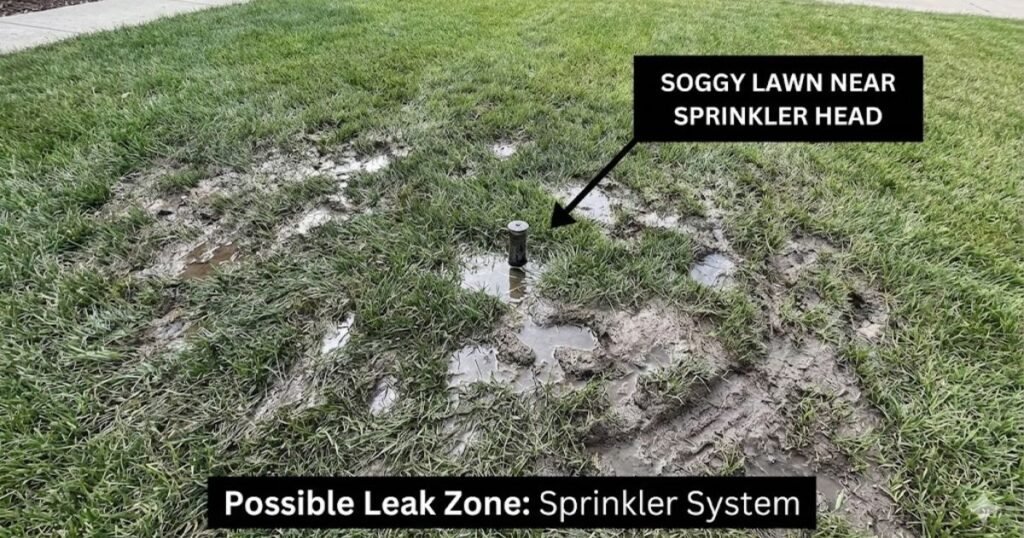
Automatic sprinkler systems hide leaks well; they operate at night or early morning and leak under the soil, wasting water slowly. Broken pipes or valves, leaking backflow devices, and cracked heads lead to constant consumption, and zones left stuck “on” can run for hours.
Check: turn the controller off and watch the water meter. Inspect visible heads for constant water or broken spray patterns. Look for lush semicircles of grass that stay greener than the rest.
Repair cost: spot repairs are modest — $130–$360 on average for sprinkler system repairs; replacing valves or major components can run higher. If your system is aging, consider a seasonal audit.

- The pure brass inlet and outlet metal thread are heavy duty and enhance durability. No hassle from frequently installs a…
- Equipped with an easy-to-read LCD screen and one-touch control push button, this water flow meter can easily display and…
- Short press the button to change the mode from FLOW / CONSUMPTION / AVERAGE / TOTAL. Flow Mode: real-time water flow rat…
4. Appliance & water heater leaks
Appliances — washing machines, dishwashers, ice makers, and water heaters can leak from hoses, fittings, or tanks. Water heater leaks (tank failure, drain valve, or pressure-relief valve) can be serious; small leaks waste water and large ones can cause damage.
Check: inspect around the base and nearby floors after cycles. For water heaters, check the pressure relief pipe and for corrosion. Repair vs replacement cost varies widely; water-heater repairs or replacement range from a few hundred to a few thousand dollars depending on whether the tank needs replacement.
5. Meter or billing errors & rate changes
Sometimes the issue isn’t water loss, it’s arithmetic. Utilities occasionally estimate reads (especially in winter or during staffing shortages). If the estimated read is low for months, a later actual read can produce a big “catch-up” bill not a leak but a corrected usage number.
Action: call your utility, ask whether last month’s read was estimated, confirm read dates, and request a meter test or historical usage printout. Utilities can test meters for accuracy; if the meter is defective they may repair/credit you.
Analysis of Water Waste Volumes by Leak Type
| Failure Type | Potential Waste (GPM) | Monthly Impact (Gallons) | Primary Identification Method |
| Pinhole Pipe Leak | 0.15 | 6,480 | Meter Static Test |
| Leaking Toilet Flapper | 0.50 | 21,600 | Dye Tablet Test |
| Stuck Fill Valve | 2.00 | 86,400 | Visual Tank Inspection |
| Sub-Slab Copper Leak | 1.00 | 43,200 | Acoustic Detection |
| Broken Sprinkler Head | 20.00 | 2,400 (per month) | Visual Operational Check |
| Stuck Irrigation Valve | 5.00 | 216,000 | Meter Observation |
READ MORE: Signs Your Pipes Need Replacing — When to Repair vs. Replace, Costs, and What Homeowners Should Know
When it’s likely the meter, your utility, or a billing error
Call your utility first when:
- The meter test shows no movement but the bill is unusually high.
- Your billed usage doesn’t match household habits (no guests, no added irrigation).
- The utility lists “estimated” reads on recent bills and then posts a sudden spike.
Ask the utility for: the exact read timestamps, whether the last read was estimated, a copy of the meter-reading photo or log, and a meter accuracy test or swap. Meter exchanges are sometimes free; meter testing policies differ by utility. If the utility confirms the meter was reading correctly and your meter moved, that’s a strong signal you have a real leak and should call a licensed plumber.

- IP67 Waterproof: The circular dial is enclosed in a 304 stainless steel case for corrosion resistance. The PRV-Tex Vent …
- Wetted Materials: lead free brass, stainless steel, and food grade silicone sealing ring. Suit for measuring potable dri…
- Compatible with water pump, drip irrigation pressure regulator, RV tank, pipe tester, outdoor spigot, hose faucet, garde…
How professionals detect hidden leaks
Pro leak detection methods:
- Acoustic listening: high-sensitivity microphones detect water escaping underground or inside walls. Good for small leaks.
- Thermal imaging: infrared cameras spot cool wet spots behind walls or under slabs.
- Pressure testing: isolates segments of piping to find pressure loss.
- Video pipe inspection (camera): small cameras are run inside pipes to find cracks or roots.
- Tracer gas: safe, non-toxic gases are introduced and detected where they escape (used for very stubborn slabs or large repairs).
What to expect during a service call: a pro will ask you to run a meter test, then use non-invasive tools (listening sticks, thermal camera) to localize the leak. If the leak is under a slab, they’ll mark the likely area to excavate or do trenchless repair. Expect detection fees; many services bundle detection and repair estimates. Basic residential leak detection often starts in the low hundreds many services list detection/starting fees around $150–$500 depending on method.
Water Leak Detection Cost guide :
The financial impact of a hidden leak is bifurcated into the “direct cost” of the wasted water and the “indirect cost” of the repair and restoration work.
Real-World Price Data (2025-2026 Projections)
Data from major home improvement and plumbing industry resources provide a baseline for typical service costs in the United States.
- Professional Leak Detection: Standard diagnostic services for residential properties typically range from $125 to $400. Specialized services involving tracer gas or complex acoustic mapping may reach $490 + VAT in high-cost metropolitan areas.
- Slab Leak Remediation: The average cost to repair a leak under a concrete foundation is approximately $2,280, with a normal range between $630 and $4,400. If the repair requires rerouting the plumbing through the walls to avoid breaking the slab, the cost can escalate to $6,000 or $10,000.
- Main Water Line Repair: Fixing a subterranean line between the meter and the house averages $750. However, if extensive excavation or landscaping restoration is required, costs often reach $1,500 to $5,000.
- Fixture Repairs: Minor repairs, such as replacing a toilet fill valve or a kitchen faucet cartridge, typically cost between $140 and $450 depending on the hourly rate of the plumber.
Summary of Repair Costs by Failure Type
| Cause of High Bill | Detection Method | Monthly Bill Impact | DIY Fix? | Ballpark Repair Cost |
| Silent Toilet Leak | Dye Tablet / Visual | $30 – $100 | Yes | $20 – $150 |
| Slab Leak | Acoustic / Thermal | $50 – $300 | No | $1,500 – $4,500 |
| Service Line Leak | Meter Test / Sniff | $100 – $500 | No | $1,000 – $3,500 |
| Irrigation Valve | Meter / Observation | $50 – $400 | Yes | $50 – $300 |
| Water Heater Valve | Visual / Moisture | $20 – $80 | No | $150 – $600 |
READ MORE: How to Clean Copper Plumbing Pipes

- MOST UNIVERSAL the High Performance Toilet Flapper is the most universal 2 inch flapper available
- TOILET FLAPPER VALVE FITS MOST POPULAR 2 inch toilet brands including, but not limited to: American Standard, Kohler, Ma…
- MADE IN USA – Toilet parts flapper is proudly made in America
Pros & cons of DIY vs hiring a pro for Water Leak
| Category | DIY Fix | Professional Plumber |
| Pros | Low cost; immediate action; personal satisfaction. | Guaranteed results; advanced leak detection; insured work. |
| Cons | Risk of improper seal; no warranty; time-consuming. | Higher upfront cost; scheduling wait times. |
| When to Choose | Toilets, faucets, showerheads, irrigation heads. | Slab leaks, wall leaks, main lines, gas lines. |
Long-term prevention for water leak
Practical steps to reduce surprises:
- Meter-check habit: glance at the meter monthly or after guests/seasonal use.
- Install a smart water monitor: devices like smart monitors and automatic shutoffs alert you to unexplained flow and can shut water off automatically prices range from modest sensors (under $50) to combined monitor+shutoff systems around $300–$1,000+ depending on brand and features (premium whole-home shutoffs cost more).
- Maintenance schedule: check toilet flappers annually; replace old rubber parts; inspect washing machine hoses every 3–5 years.
- Seasonal tune-ups: winterize irrigation and check valves in spring; flush water heater annually to remove sediment.
- Landscape awareness: design irrigation zones thoughtfully to avoid constant pressure on older pipes; keep the soil level and grade away from foundation to reduce slab stress.
- Set bill alerts: sign up for text/email usage alerts with your utility, if available.
Smart monitors are increasingly affordable and can detect small continuous flows that the human eye won’t they’re excellent for peace of mind and can pay for themselves in avoided waste.
5 FAQs
Why is my water bill so high but I don’t see any leaks?
The most likely cause is a “silent” leak, such as a toilet flapper that isn’t sealing properly or a subterranean pipe breach. These leaks discharge water directly into the sewer or the soil, meaning no puddles or damage will be visible inside the living areas of your home.
How can I tell if my water meter is faulty?
If your water meter is moving while all your faucets and appliances are turned off, you likely have a leak. To test meter accuracy, fill a 5-gallon bucket and check if the meter registers exactly 5 gallons; an error greater than 1.5% may indicate a faulty meter.
Will a running toilet double my water bill?
Yes, a single running toilet can waste over 6,000 gallons per month, adding $50 to $100 or more to your bill. Because many utilities also charge for sewage based on water usage, you are effectively billed twice for the same wasted water.
How much does a professional leak detection service cost?
A professional leak detection visit typically ranges from $125 to $400. This service uses non-invasive technology like acoustic sensors and thermal cameras to find leaks behind walls or under concrete slabs without damaging your home.
Can high water pressure cause a high bill?
High water pressure (above 80 PSI) stresses your pipes and fixtures, leading to frequent leaks and shorter appliance lifespans. It can also cause “phantom” usage as water is forced through valves and seals that would otherwise be watertight.
Conclusion
Action plan: Start with the meter test and the toilet dye test, inspect visible appliances, switch off irrigation briefly, and review your bill for estimated reads or rate changes. If the meter moved during your test or dye shows in a toilet, call a licensed plumber for leak detection; if the meter didn’t move, call the utility to check billing and meter accuracy. Keep the printable checklist handy (stick it on the fridge next to your main shut-off instructions) and consider installing a smart water monitor if you want early alerts. Quick checks cost little; early detection prevents large repairs and reduces surprise bills.

