If you’re a U.S. homeowner shopping for central heating or a hydronic solution, electric boilers are an attractive option: compact, quiet, low-maintenance, and great where natural gas isn’t available. But are they the right choice for your house and how much will they actually cost once you add installation, electrical work, and energy bills? This guide walks you through real price ranges, apples-to-apples comparisons with gas and heat-pump options, model examples from major brands, sample cost scenarios (small / medium / large homes), running-cost math you can reuse, and a practical installer checklist you can print and bring to bids.
Short version: typical installed projects run from about $2,500 to $12,500 depending on system size and complexity most homeowners see $3,000–$7,000 as a reasonable bracket for straightforward replacements, while larger or multi-zone installs push toward the higher end. (Sources and verification below.)
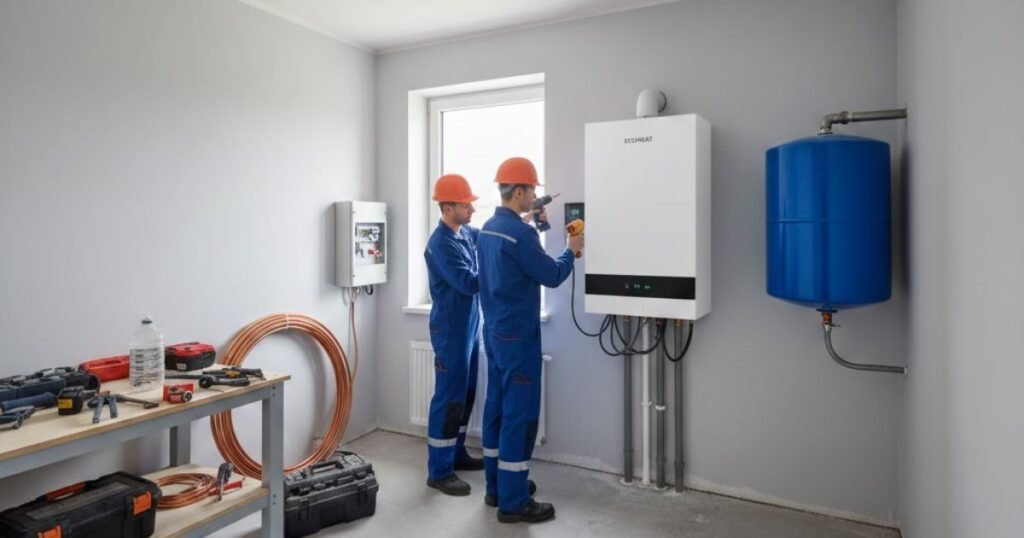
What affects the cost?
Here are the main cost drivers you’ll see on any quote:
- Equipment size (kW / BTU output) — bigger homes need higher kW units or multiple units. Electric boilers are rated in kW (and you can convert to BTU: 1 kW ≈ 3,412 BTU/hr). Higher kW units cost more and may require multi-phase wiring.
- Installation complexity — replacing a like-for-like electric boiler is cheaper than converting from gas to electric, changing piping, or adding radiant zones. Labor rates vary regionally.
- Electrical upgrades — many homes need service, meter, or panel upgrades to supply the currents an electric boiler demands (see examples below). These upgrades can be the single biggest additional cost.
- Permits & inspections — local fees and required inspections add to the invoice.
- Zone controls & accessories — thermostatic mixing, pumps, expansion tanks, manifolds and control wiring add parts + labor.
- Rebates / incentives — these can reduce net cost where available (federal, state, utility). See the incentives section.
Real price breakdown
Below I break the project into pieces, give practical ranges and cite the sources used to verify those numbers.
Typical equipment costs (brand/model examples + unit price ranges)
Representative examples (unit only prices pulled from distributor/retailer/manufacturer listings see citations):
- Stiebel Eltron — HydroShark (wall-mounted, modulating): ~$940–$1,600 for common sizes in retail listings (example: HydroShark 12kW listing ~ $940). Stiebel’s product pages show the HydroShark family and spec sheets.
- Slant/Fin — Monitron electric boilers (cast-iron / made for hydronic heating): ~$1,000–$2,800 unit prices appear in distributor listings depending on kW & style; surplus/new vendor pages show smaller 8 kW units for ~$1,078 and distributor product pages list larger units (wall mount 18 kW etc.).
- Elnur (Mattira / Mixta series): European-made modular electric boilers used in retrofit/radiant work; pricing varies by model (modulating Mattira units are commonly available in the low-to-mid-$1k range for smaller kW units on supplier sites).
- Bosch (Thermotechnology — Tronic / Tronic Heat): Bosch sells several electric tankless/point-of-use and electric boiler models; tankless Tronic series list in the $400–$1,800 range for electric tankless/water-heater style units on retail sites; Bosch also markets electric hydronic units in non-US markets with higher price points.
- Rheem / HTP / Everlast (electric storage and hybrid water-heaters used as heating or backup): electric tanks and hybrid units are frequently used where only small domestic hot water / supplemental heat is required. Example: Rheem ProTerra hybrid 50-gal listed at $2,619 on retailer pages; Everlast stainless steel electric storage tanks appear across distributors with prices ranging from a few hundred to a couple thousand depending on size.
Note: some brands sell products marketed as electric water heaters or tankless water heaters rather than “hydronic boilers.” Installers will sometimes use those products in hydronic loops or as combined solutions I label them clearly in the table below.
READ MORE: New Boilers Buying Guide for Homes and Businesses
Typical installation costs (national averages & ranges)
- National averages for installed electric boiler projects are commonly reported around $5,000 with typical homeowner totals between $2,500–$9,000 depending on scale; a few outlets put expanded/large-system totals at $6,500–$12,500. These figures come from national price guides and contractor marketplaces.
Installation line items commonly included in these quotes: labor to mount the unit, connect to existing hydronic piping, install pumps and controls, test and commission the system, obtain permits. Additional costs are charged separately for electrical service upgrades and complicated plumbing modifications.
Electrical upgrade costs (panel, wiring, permits)
If your existing service cannot deliver the amperage an electric boiler needs, expect to pay for one or more of:
- Panel upgrade (100→200A or 200→400A): typical replacement or upgrade costs range widely — $850–$2,500 is common for a 200A upgrade; higher capacities or full service changes can reach $2,000–$4,000+. Permits and local labor add to the bill.
- New dedicated circuits, conduit and wiring: $300–$1,500+ depending on distance and complexity. Large kW units may need 3–6 conductors of heavy gauge copper and multiple breakers.
Budget for electrical work early many otherwise reasonable electric-boiler installs become expensive only because the service upgrade wasn’t caught in the site visit.
Comparison table
| Brand | Representative model(s) | Rated output (kW / BTU) | Typical unit price (USD) — source | Estimated installed cost (range) | Warranty (years) | Best use / notes |
| Stiebel Eltron | HydroShark (e.g., HSEB012 / HSEB014) | 12 kW (≈40,944 BTU/hr) — 14 kW etc. | $940–$1,600 (retailer/distributor listings). | $3,000–$7,000 typical (small-medium installs), higher if multiple zones. | Manufacturer warranty varies by model (commonly 2–5 yrs for electronics/parts) — check spec sheet. | Best for compact radiant zones, small whole-house in mild climates; known for solid controls. |
| Slant/Fin (Monitron) | Monitron cast-iron / wall mount electric boilers (e.g., EH8, EH18) | 8 kW – 18 kW common (8 kW ≈ 27,296 BTU/hr) | ~$1,078–$2,700 on distributor/surplus pages depending on kW and style. | $3,500–$8,000 (cast-iron units with plumbing pumps and labor). | Warranty varies by model; check distributor paperwork (commonly 1–3 yrs). | Good for retrofit hydronic systems that want a rugged cast-iron solution; ideal when replacement needs match piping. |
| Elnur (Mattira / Mixta) | Mattira MAS / Mixta CMXi (wall-mounted modulating) | 3–18 kW modular ranges (typical residential models 3–18 kW) | ~$1,000–$2,000+ on supplier listings (EU/US distributors differ). | $3,000–$7,500 — smaller systems start low; modulating units and combo (DHW+heating) push cost up. | Typical manufacturer warranty 2–5 yrs depending on region/model. | Compact, modulating, often used in European-style retrofits or for smart modulation in radiant. |
| Bosch (Thermotechnology) | Tronic Tankless / Tronic Heat electric boiler series | Tankless water heaters: 6.5–27 kW; Tronic Heat electric boilers (EU models) 6–24 kW | Retail: $400–$1,800 for Tronic tankless retail listings; electric boiler variants priced higher in distributors/Europe. | $3,000–$8,000+ depending on whether tankless is used for DHW only or sized for hydronics. | Warranties vary: tankless Tronic often 3–5 yrs; check model. | Good option when combining domestic hot water + smaller hydronic loads; widely available service network. |
| Rheem / HTP / Everlast | Rheem ProTerra hybrid (heat pump water heater) / HTP Everlast electric tanks | Tanks/hybrids: output expressed in GPH/BTU; hybrids ~15,000–20,000 BTU/hr equivalent | Rheem ProTerra 50-gal hybrid listed at $2,619 retail (Home Depot example). Everlast tank listings vary (mini-tanks ~$300; 40–52 gal models $700–$1,900 on distributor pages). | $2,500–$7,000+ installed for water-heater style electric solutions; hybrids are pricier but more efficient. | Tanks: 6–10 yrs typical for listed warranties; hybrids often 10 yrs on certain components (check model). | Best where domestic hot water is main concern or as a supplemental/backup hydronic heat source; hybrids reduce running cost vs pure resistive tanks. |
| (Honorable mention) Other EU/commodity brands | Various small wall-mounted electric boilers (Balkan, VEN series etc.) | 6–24 kW typical | $800–$1,400 in global/online supplier listings (market varies). | N/A — depends on importer and installation. | Warranties vary widely. | Useful for budget buys or imports — check local service and certifications. |
(Table notes: “Typical installed cost” reflects equipment + straightforward installation labor but may exclude major electrical service upgrades include those budgets separately.)
READ MORE: Viessmann Boiler Review 2026 | Efficiency, Models, Pros & Cons
Pros & cons Electric Boiler — detailed, useful for homeowners
Pros of electric boilers
- Simplicity & low maintenance: no combustion, no flue or venting, fewer moving parts saves on maintenance and reduces carbon monoxide risk.
- Quiet & compact: wall-mounted units like the HydroShark are small and install cleanly in utility closets.
- High efficiency at point of use: resistive electric boilers are near-100% thermal efficient at the device (no flue loss).
- Good for homes off the gas grid: ideal in rural or all-electric neighborhoods or where gas service is not available.
- Fast turnarounds for installs in many cases (no combustion inspection for venting), and modular setups are flexible for multi-zone radiant.
Cons of electric boilers
- Electricity cost risk: running costs can be higher than gas in many U.S. regions because electricity per kWh is often costlier than gas per BTU. Use local $/kWh for the math (U.S. average residential ~17–18¢/kWh in late 2025/early 2026).
- May need major electrical upgrades: high-kW units require heavy feeder wiring and possibly a service upgrade this is a common surprise expense.
- Peak vs off-peak load management: electric boilers draw steady power; without smart controls or TOU (time-of-use) pricing, they can raise peak demand charges for commercial accounts or increase household peaks.
- Slower heat delivery on some systems: resistive hydronic boilers can feel slower to recover in extremely cold climates compared to high-BTU gas boilers or high-capacity furnaces.
Which home is an electric boiler best for?
Use the examples below as starting cost scenarios. Actual quotes will vary by region, house layout, and electrician rates.
Definitions & assumptions used in scenarios
- Climate: cold-humid continental moderate baseline if you live in climate-mild regions (South/Southwest), running costs will be lower.
- Electricity price: $0.18/kWh national average approximation (EIA/industry data late 2025–early 2026). Adjust for your state’s rate.
- Fuel: all-electric hydronic heat (radiant + baseboard). Equivalent sizing in kW approximated from typical heat loss ranges.
Small home — 800–1,000 ft² (tight, good insulation)
- Heating demand roughly 10–15 kBTU/hr per thousand ft² in mild climates ballpark requires 6–12 kW electric boiler or tankless solution for hydronic baseboards/radiant.
- Equipment cost (unit only): small HydroShark or cast-iron Monitron 8–12 kW — $900–$1,400.
- Installation labor & parts: $1,200–$3,000 (simple piping, one pump, one zone).
- Electrical work: if panel adequate, minor circuit wiring $300–$1,000; if panel needs upgrade add $1,000–$2,500.
- Estimated total installed: $2,500–$6,000.
Medium home — 1,500–2,200 ft² (typical family home)
- Heating demand ~30–50 kBTU/hr → 12–18 kW (or multiple smaller units stacked/zone).
- Equipment: larger HydroShark / Monitron / Elnur modulating unit — $1,200–$2,800 depending on model.
- Installation & hydronic accessories: $2,500–$5,000 (pumps, zone valves, mixing valves, piping tweaks).
- Electrical upgrades: likely $1,200–$3,000 (dedicated feeders; maybe a 200A panel upgrade).
- Estimated total installed: $5,000–$9,000.
Large home — 3,000+ ft² or multi-zone radiant
- Heating demand 60–120 kBTU/hr → multiple electric boilers or high-capacity units (often >30 kW total).
- Equipment: multiple Monitron / Bosch / commercial electric units — $2,500–$6,000+ for equipment depending on configuration.
- Installation & controls: $4,000–$8,000+ (multi-zone manifolds, pumps, smart controls).
- Electrical service upgrade: commonly $2,500–$6,000+ (400A service, meter work).
- Estimated total installed: $8,000–$15,000+ (large custom jobs can exceed this).
Rebates, tax credits & incentives
Energy incentives change frequently. As of verification (search date Feb 5, 2026), federal & state programs exist for electrification and efficient appliances but eligibility, amounts and implementation vary by state and utility. Always verify current programs before publishing or deciding: utility rebates, state cleaner-heating programs and federal tax credits may reduce net cost substantially. Useful places to check for current incentives are the federal energy office, state energy offices and local utility pages.
READ MORE: Air to Water Heat Pump — Complete 2026 Buyer’s Guide (costs, brands, pros & cons)
FAQs
Q1: How much does it cost to install an electric boiler in the U.S.?
A: Typical installed costs fall between $3,000 and $7,000 for small-to-medium homes, though larger systems or extensive electrical upgrades can push projects to $6,500–$12,500 or more. National price guides report averages near $5,000.
Q2: Are electric boilers cheaper to run than gas?
A: It depends. Electric boilers are nearly 100% efficient at the unit, but electricity per kWh often costs more than gas per equivalent BTU in many U.S. regions. Use your local $/kWh and a seasonal heat-use estimate to compare. National residential electricity averages were roughly 17–18¢/kWh in late 2025/early 2026, so do the math with your utility rate.
Q3: Do I need an electrical panel upgrade for an electric boiler?
A: Possibly. Many electric boilers require significant amperage and dedicated feeders. If your panel or service is undersized, a panel replacement or service upgrade may be required costs commonly range from $850 to $3,000+ depending on the work. Ask your contractor to confirm after a site visit.
Q4: What brands of electric boilers are reliable, and how much do they cost?
A: Reliable brands commonly used in U.S. installs include Stiebel Eltron (HydroShark), Slant/Fin (Monitron), Elnur (Mattira/Mixta), Bosch (Tronic family) and Rheem/HTP/Everlast for electric tanks and hybrids. Unit prices in verified retail/distributor listings ranged from ~$900 for small Stiebel units up to $2,500+ for larger distributor Monitron units installed costs vary per job.
Q5: Can an electric boiler work with radiant floor heating?
A: Yes — electric boilers are commonly used for radiant hydronic systems. Modulating wall-mounted units (e.g., Stiebel Eltron, Elnur Mattira) are a good match for radiant because of precise temperature control and zone options. Ensure the unit is sized and controlled for the specific radiant manifold and floor construction.
Final recommendation & buy checklist
If you’re deciding whether to go electric, ask yourself:
- Do you have reliable, relatively low electricity costs in your area (or access to low-cost off-peak rates / solar)? If not, estimate running cost carefully.
- Is your home off-grid or off natural gas, or would conversion to gas be costly? Electric becomes more attractive when gas access is limited.
- Can you tolerate the possibility of a panel upgrade to avoid an underpowered system? Factor this in.
Buy checklist (what to bring to the installer and what to have in the quote):
- Heat-loss report or approximate square footage + insulation quality.
- Desired comfort zones & whether you want DHW integrated.
- Exact model numbers and spec sheets on the proposed equipment.
- Itemized quote: equipment / installation / electrical / permits / taxes.
- Start/finish dates, labor warranty length, parts warranty and service response times.
- Confirmation of required permits and who pulls them.
- Payment schedule and change-order policy.
Conclusion
An electric boiler can be a smart, clean, and low-maintenance heating solution for the right home especially in all-electric houses, smaller or well-insulated properties, and situations where natural gas isn’t available. Upfront costs typically land in the mid-range compared to other central heating systems, but the real deciding factor is long-term operating cost and whether your home’s electrical system can support the load without major upgrades. Before committing, compare installed prices from multiple licensed installers, confirm electrical requirements early, and run the numbers using your local electricity rates. When properly sized and installed, an electric boiler delivers quiet, reliable comfort but it’s a choice that works best when the math and the home both line up.


Pingback: Best 5 Navien Combi Boiler: Review, Comparison & Cost - Plumbing Guider
Pingback: Best Bosch Boiler Review 2026: Greenstar Models Rated - Plumbing Guider