Nothing ruins a morning like stepping into a cold shower. If you’ve got “no hot water in the house” (or just a single stubborn cold faucet), this guide will walk you through safe, fast troubleshooting, sensible DIY fixes, and realistic cost expectations so you can decide whether to repair or replace. Think of this as a friendly neighbor (and licensed plumber in a baseball cap) walking you through it. Lets deep dive into “No Hot Water in the House? Quick Fixes & Troubleshooting Tips”
First things first: Safety checklist (read before you touch anything)
Why: water + electricity + gas is a dangerous mix. Slow down, be safe, and when in doubt call a pro.
- Turn off electricity to the water heater at the breaker if you smell burning or see sparks.
- If you smell gas (rotten-egg odor) or suspect a gas leak, leave the house immediately and call your gas utility or 911 from a safe location.
- If the floor around the heater is wet or the heater is visibly leaking, shut off the cold-water supply to the tank and call a plumber leaking tanks often need urgent attention.
- Don’t try to repair gas lines, burners, or internal wiring yourself. Those are licensed-pro jobs.
Gas smell or suspected leak — what to do immediately
- Leave the building, avoid any flame or switch, and call your gas company or 911. Don’t re-enter until the utility says it’s safe.
Electrical hazards
- If the breaker for the water heater keeps tripping, or you see scorch marks, shut off the breaker and don’t attempt more electrical work — call an electrician or plumber.
Check this & Get Discount here-

- 【Tankless Heater Clean Kit】This cleaning kit comes with everything you need to maintain your water heating system. Helps…
- 【Submersible Sump Pump】1/6HP energy-efficient motor with thermal overload protection, has the ability to deliver water t…
- 【Easy to Use】This kit includes 3 gallons bucket with a bucket lid opener, 1/6HP utility pump with 2 adapters and 2pcs 6’…
Quick checks you can do right now (1–10 minutes each)
These are fast, safe checks to help you narrow down the problem before calling someone.
1) Is it one faucet or the whole house? (1–2 min)
- Turn on a hot tap in the kitchen, a bathroom sink, and the shower.
- Only one fixture is cold: problem is local (valve, mixing valve, or dip tube issue).
- Whole house is cold: problem is the water heater or its fuel/electrical supply.
2) Electric water heater — check the breaker (1–2 min)
- Find your electrical panel and look for the water-heater breaker. Flip it fully off, wait 5 seconds, then back on.
- If it trips again immediately, don’t keep resetting that’s a sign of a short or failed heating element; call a pro.
3) Gas water heater — check the pilot/ignition (2–5 min)
- Many gas tanks use a standing pilot or an electronic ignition. If the pilot is out, the burner won’t light and you’ll have no hot water. Follow the instructions on the heater label — if relighting fails, call a plumber or your gas utility.
- If you smell gas at any point, leave and call for help.
4) Check the thermostat/temp and reset buttons (1–3 min)
- On electric units, there’s often a reset (high-limit) button behind a panel. Pressing it may restore function if it tripped but if it trips repeatedly, something deeper is wrong.
- Set temperature to ~120°F for safety and consistent hot water.
Check this & Get Discount here-

- 【ONE YEAR WARRANTY】Z Turn-up Kit Includes (2) 4500W 240V COPPER Water Heater Element, Insert Length: 13-9/16″. 3500W@208…
- 【ONE YEAR WARRANTY】Includes (1) Upper Water Heater Thermostat, (1) Lower Water Heater Thermostat, 120V ~ 480V
- 【Interchangeable】Therm-O-Disc Type Thermostat, Can interchange with APCOM type.
5) Quick visual checks (2–5 min)
- Any puddles under/around the tank? Rust on the tank? Hissing noises? These indicate leaks or imminent tank failure call a plumber.
READ MORE: Gas Water Heater Replacement Cost (2026) — What Homeowners Pay & Why
Common causes explained (homeowner-friendly)
Understanding the “why” helps you decide whether to DIY or call a pro.
1. No hot water at one faucet only
Possible causes: faucet mixing valve failed, a clogged cartridge, or a broken dip tube (for tanks) that causes cold water to mix into the hot line. If only one fixture is affected, start at that fixture replacement cartridges or valves are often inexpensive.
2. No hot water in the whole house
Main causes:
- Power/gas supply issue — tripped breaker, blown fuse, or gas valve closed.
- Pilot/ignition failure on gas units.
- Failed thermostat or heating element on electric units.
- Control board/valve failure on tankless units. These tend to be more expensive to repair.
3. Intermittent hot water
Causes include a failing element/thermostat, a dip tube that’s disintegrating, a partially clogged pipe, or cross-connection (a cold-water line feeding into hot due to plumbing that’s been modified incorrectly).
4. Lukewarm or brief hot then cold
Often a failed heating element (electric tanks have two elements; if one dies you’ll get reduced or flaky heat) or a broken dip tube that draws cold water into the top of the tank.
5. Leaks or rusty tank (when replacement is needed)
A rusty tank or ongoing leaks usually mean the inner liner has corroded. Repairing a leaking tank is rarely cost-effective; replacement is typically the only safe route.
“If your water heater is over 10–15 years old, replacing it often makes more sense than repeatedly paying for repairs you’ll save on surprise fixes and energy bills.” — Jeff, Sunset Plumbing (Bend, OR).
(Useful baseline: many manufacturers and plumber guides treat 10–15 years as the expected life for a tank water heater. If your unit is in that window and trouble starts, replacement is a realistic option.)
Check this & Get Discount here-
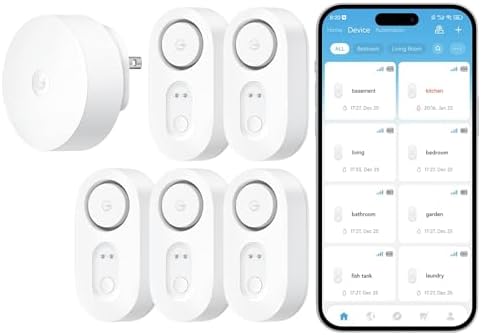
- Breakthrough 550m/1804ft Connectivity: Engineered with advanced Sub-1G long-range wireless tech, our leak detector maint…
- Multiple Reminder Methods: Our water leak sensor supports multiple remote alarm. It can instantly send SMS, APP, and Ema…
- Feature-Rich App: Receive instant push notifications. Use the “Find Device” feature to quickly trigger audible beeps to …
DIY fixes you can try (what’s safe & effective)
These are low-risk steps most homeowners can do. If you’re not comfortable, stop and call a pro.
Reset breaker (electric)
- Turn the breaker fully off and on. If it trips again, stop this suggests a failed element or wiring issue.
Relight pilot (gas) — only if you’re comfortable and smell no gas
- Follow the label on the heater. If it will not stay lit, the thermocouple or gas control valve may need repair; call a plumber.
Check and reset the high-limit/reset button (electric)
- Pop off the access panel, press the reset (usually red). If it trips again, don’t continue — call a pro.
Adjust thermostat
- Make sure temperature is set to ~120°F. Don’t crank it too high — scald risk.
Flush the tank (safe if you follow instructions)
- Sediment reduces heater efficiency and can cause element failure. Flushing a tank can be a good maintenance task; many pros recommend flushing yearly if you have hard water. (If you’re unsure how, have a plumber show you or do it for you.)
When not to DIY: anything involving gas lines, major electrical work, replacing heating elements (unless you’re experienced with wiring), or replacing the tank.
Check this & Get Discount here-

- Durable Construction: Made from thick, forged Lead Free brass for strength and leak prevention. Each valve set is factor…
- All-in-One Kit: Includes hot and cold isolation valves (500WOG) , a pressure relief valve (rated150 PSI / 200,000 BTU), …
- Wide Compatibility: Fits standard 3/4 inch IPS connections and is compatible with major tankless water heater brands, in…
READ MORE: Heat Exchangers Explained | Types, Uses, Efficiency & Benefits
When to call a plumber
Call a pro today if you see:
- Visible leaking from the tank (even a drip).
- Rust-coloured water or metallic smell.
- Gas odor or you cannot relight the pilot safely.
- Repeated tripped breakers or burning/electrical smell.
- Unit age >10–15 years with signs of corrosion or repeated problems.
Emergency situations (call immediately): flooding from the heater, strong gas odor, or any electrical sparking.
Signs replacement is likely: leaking tank, heavy corrosion, multiple failed components, or frequent repairs especially if the unit is older than 10 years.
Check this & Get Discount here-
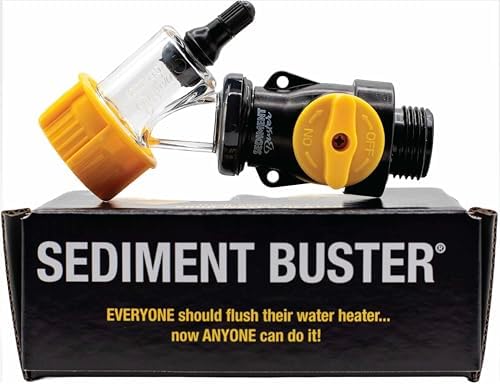
- UL Verified V699054 for heat & pressure: Verified for safety and reliability under high temperature and pressure conditi…
- Adapts to any standard air source including CO2 gas cartridge, air compressor or hand / bicycle pump (sold separately)
- Easy to use with instructions & videos: Comes with comprehensive instructions and video tutorials
Repair vs Replace: costs, pros & cons, and ROI
Should you fix that element or buy new? Short answer: it depends on the part, the unit age, and long-term energy goals. Below are realistic price ranges (U.S., recent figures) and practical guidance.
Common repair costs (2025–2026 estimates):
- Heating element replacement (electric): $150–$350 (parts + labor).
- Thermostat replacement: $100–$300.
- Anode rod replacement: $100–$300.
- Minor service / tank flush: $100–$200.
Replacement costs (installed, typical ranges 2025–2026):
- Standard tank water heater (installed): $600–$2,500 depending on size and complexity. (Lower end for basic electric tanks; higher end for big gas units with tricky installation.)
- Tankless whole-house system (installed): $1,000–$3,500+ (unit + installation can be more if gas venting or electrical upgrades are needed).
- Hybrid/heat-pump water heater (installed): $1,200–$3,500+, though federal/local incentives (through 2025 in some programs) may reduce net cost.
How to choose:
- If the part is cheap and the unit is <8–10 years: repairing (element, thermostat, valve) usually makes sense.
- If the unit is 10–15+ years or has a leaking/corroded tank: plan to replace — ongoing repairs are money down the drain.
Tank vs Tankless vs Hybrid — quick pros & cons
- Tank (traditional) — Pros: lower upfront cost, simple installation. Cons: limited hot-water capacity, shorter lifespan (10–15 years).
- Tankless (on-demand) — Pros: endless hot water, smaller footprint, longer life (15–20 years). Cons: higher upfront cost, potential need for gas line/venting or electrical upgrades; flow limits for large simultaneous demand.
- Hybrid / Heat pump — Pros: very energy efficient (lower operating cost), good for high energy-cost areas and for owners looking to reduce bills. Cons: higher upfront cost; requires space and may not be ideal in very cold garages.
Energy incentive note: Some federal tax credits and local rebates for heat pump water heaters were available through 2025; check current programs before you buy (they can change year-to-year).
READ MORE: How to Test a Water Heater Thermostat
How to get an accurate quote
To speed quotes and avoid surprise fees, send your plumber:
- A photo of the nameplate on the water heater (brand, model, serial).
- A photo of the surrounding area (clearance, venting, gas/electrical access).
- Note the age of the unit (if you know it) and any symptoms (e.g., “no hot water since breaker trip” or “tank leaking at base”).
Ask the plumber explicitly:
- Does the quote include disposal of the old unit and any permit fees? (Some areas require permits.)
- Will additional work be needed (new venting, new gas line, electrical upgrades), and what are those estimated costs?
- Is labor a flat rate or hourly, and is there an emergency/after-hours surcharge?
A good pro will give a written estimate and explain warranty options for parts and labor.
Maintenance tips to avoid another outage
Small regular steps extend life and reduce emergency calls.
- Flush the tank yearly (or as recommended) to remove sediment. If you have very hard water, consider doing this more often.
- Inspect and replace the anode rod every 3–5 years (more often in hard water). It’s cheap compared to tank replacement.
- Test the pressure relief valve once a year.
- If you have hard water, consider a water softener or more frequent maintenance mineral buildup shortens heater life.
- Keep the area around the heater clear for airflow and service access.
READ MORE: Programmable Thermostat: The Complete 2026 Buyer’s Guide (Costs, Best Models & Installation)
FAQs
Why do I have no hot water after a power outage?
Electric heaters may trip breakers or reset controls during outages. Check your breaker and the heater’s reset button. If the breaker trips repeatedly, call a pro.
Why is there no hot water in one faucet only?
Usually a local fixture issue (mixing valve, cartridge) or a cross-connection. Test other fixtures if they’re hot, fix the faucet.
How long does a water heater last?
Typical tank heaters last about 10–15 years; tankless units can often last 15–20 years with maintenance. If yours is older and acting up, replacement is reasonable.
Can I replace a heating element myself?
If you’re comfortable with wiring and have the correct parts, it’s possible but many homeowners prefer a licensed pro because of wiring and wiring-protection issues. Replacing elements incorrectly can cause further damage or safety hazards.
What’s the cheapest way to get hot water now?
A temporary fix is a point-of-use electric heater under a sink or using the stove for warm water. For the whole house, a quick repair (element or thermostat) by a plumber is often cheaper than replacement but if the tank is old/leaking, replacement is the better investment.