Tree roots in a sewer line are one of those problems that starts small (slow drains) and can become very expensive quickly (collapsing pipes, sewage backups). Roots find moisture and tiny cracks or loose joints, then grow into the pipe, creating a choke point that leads to recurring clogs, foul odors, soggy yard spots even structural damage if left long enough. Lets deep dive into “Tree roots in sewer line — removal & repair cost (2026 guide)”
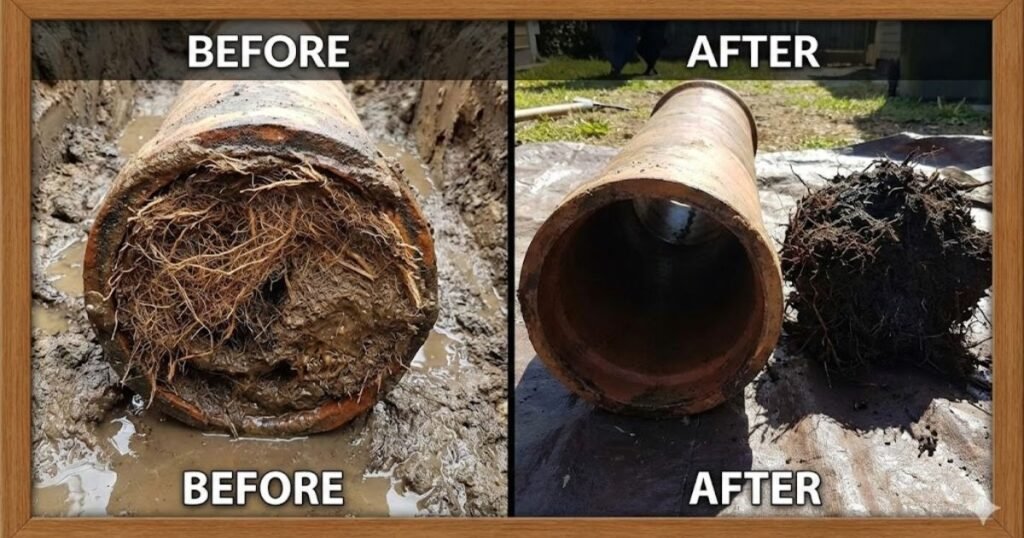
Good news first: many root problems are fixable without tearing up your whole yard. Short-term options (snaking/mechanical cutting, hydro-jetting) are fast and inexpensive; longer-term options (trenchless lining, pipe bursting, full excavation) are pricier but more permanent.
This guide walks through how roots get in, how plumbers diagnose the issue, what each repair option costs and why (with national averages and local callouts), and practical steps homeowners can take today while you line up inspections and quotes.
Before paying $300–$500 for inspection, consider a home sewer camera-

- 【𝐄𝐱𝐭𝐞𝐧𝐝𝐞𝐝 𝐑𝐞𝐚𝐜𝐡 𝐰𝐢𝐭𝐡 𝟓𝟎𝐟𝐭 𝐒𝐞𝐰𝐞𝐫 𝐂𝐚𝐦𝐞𝐫𝐚 𝐂𝐚𝐛𝐥𝐞】The semi-rigid 50-foot plumbing camera snake cable allows you to insert the…
- 【𝐈𝐧𝐧𝐨𝐯𝐚𝐭𝐢𝐯𝐞 𝟏𝟎𝟖𝟎𝐏 𝐇𝐃 𝐓𝐫𝐢𝐩𝐥𝐞 𝐋𝐞𝐧𝐬 𝐒𝐲𝐬𝐭𝐞𝐦】Transform your inspection tasks with our cutting-edge triple lens borescope came…
- 【𝐒𝐭𝐮𝐧𝐧𝐢𝐧𝐠 𝐂𝐥𝐚𝐫𝐢𝐭𝐲 𝐢𝐧 𝐄𝐯𝐞𝐫𝐲 𝐃𝐞𝐭𝐚𝐢𝐥】The 5-inch IPS screen delivers vibrant colors and sharp images, ensuring every detail …
Table 1: National Cost Snapshot for Sewer Root Services (2026)
| Service Type | Typical Cost Range (U.S.) | Average Project Cost | Cost Metric |
| Sewer Camera Inspection | $150 – $350 | $275 | Per Visit |
| Mechanical Snaking/Root Cutting | $100 – $500 | $250 | Per Service Call |
| Hydro-jetting (Standard) | $350 – $600 | $475 | Per Service Call |
| Hydro-jetting (Heavy Root Work) | $600 – $1,200 | $900 | Per Service Call |
| Trenchless Pipe Lining (CIPP) | $1,900 – $6,000 | $2,900 | $135–$250 per ft |
| Pipe Bursting Replacement | $4,000 – $12,000 | $6,500 | $60–$200 per ft |
| Full Excavation & Replacement | $3,000 – $10,000+ | $6,000 | $50–$250 per ft |
How tree roots get into sewer lines
Roots don’t usually attack intact, modern piping. They’re opportunists searching for moisture and nutrients. Two common ways roots find their way in:
- Through joints or weak seals. Older clay, cast-iron or poorly joined pipe sections have tiny gaps at the joints. Roots sense moisture and exploit the seam, entering the pipe and then branching inside where there’s a constant water source.
- Through cracks or breaks. A shifted pipe, freeze/thaw damage, soil settling, or a previous repair can crack the pipe wall. Roots grow toward the leak, then push through and expand inside.
Biology quick take: roots grow where they can access water. Once a small root enters, it thickens, sending out more rootlets that quickly form a dense, fibrous mass that traps waste and reduces flow. A single access point can mean root growth for many feet of pipe over a few seasons.
Pipes most at risk: older clay or cast-iron lines, joints that have become offset after settling, and sewers under large trees or aggressive species (willow, maple, poplar, silver maple, mulberry). Recurrent clogs especially after snaking are a red flag that roots may be re-invading, not a one-off grease clog.
Because root growth marks underlying pipe damage, simply cutting the roots (snaking) can be a temporary solution; it removes the symptom but not the cause. That’s why a camera inspection is the next step in most good repair plans.
READ MORE: The Modern Solution: Trenchless Sewer Line Replacement
Tree roots in sewer line: Confirming root intrusion
Common homeowner signs
- Slow drains in multiple fixtures (kitchen, tubs, toilets).
- Toilets that gurgle or back up when other plumbing runs.
- Wet or unusually green patches in the yard above the sewer run.
- Foul sewage odors outside or inside the house.
- Recurrence: you snake one day, clog returns in weeks/months.
How a pro confirms it
- Camera (sewer scope) — a professional CCTV camera is fed through the pipe to record the condition and location of the roots (and any cracks, offsets, bellies). This is the gold standard for diagnosis. Standard camera inspections commonly cost $125–$500 (some high-tech or long runs cost more).
- Service call + snaking — sometimes a tech will attempt snaking first; if roots are found or conditions are unclear, they follow with a camera. Routine snaking service runs $100–$500 in many areas.
Why camera first? Without the camera you’re guessing at whether roots are the only issue or whether the pipe is cracked/collapsed and that guess can cost you thousands if you pick the wrong repair. A camera lets you target a spot repair, trenchless lining, or full replacement with better confidence. (Also: ask the contractor to record the camera video and explain what you’re seeing a reputable company will show you the footage.)
For minor root blockage, Drain Auger may cost under $50 compared to $2,000+ pipe replacement-check this;
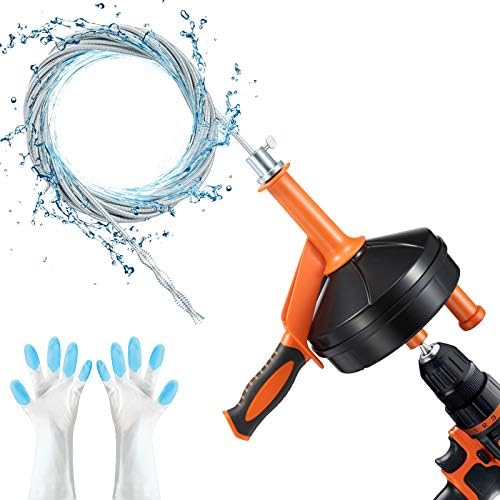
- Professional: This professional plumbers snake comes complete with 25 ft Steel, more than enough for most household clog…
- Easy to Use: The sewer snake spring is both flexible and tough to enable you to easily take tight bends, and the large c…
- Multiple Uses for Tackling Clogs: This snake drain clog remover is professional using for various drains such as kitchen…
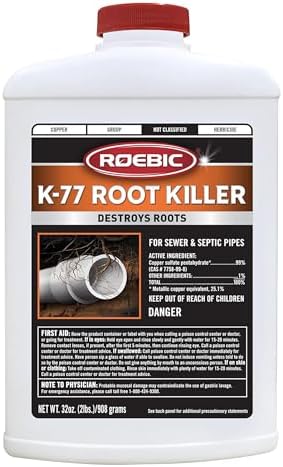
- KILLS ROOTS IN SEWER AND SEPTIC PIPES: Roebic K-77 Root Killer clears existing roots and stops new growth fast from sewe…
- PREVENTS RE-GROWTH: The K-77 copper formula chemically kills roots at the point of entry into pipes to prevent re-growth…
- SAFE FOR ALL PLUMBING: Root Killer is non-corrosive and safe for all types of plumbing and will not harm surrounding tre…
Table 2: Diagnostic Costs and Inspection Features (2026 Data)
| Inspection Type | Average Cost (U.S.) | Best For | Typical Features |
| Standard Camera Inspection | $150 – $350 | Basic clogs | Visual check of blockage |
| HD Recording & Report | $300 – $600 | Insurance/Real Estate | High-res video with digital storage |
| Specialty/Large Line Camera | $600 – $1,500 | Complex runs | Self-leveling, 360-degree pan |
| Line Locating/Sonde | $40 – $100 (Add-on) | Future digging | Marking depth and path on surface |
As noted by Carter of Carter’s My Plumber, “Ultimately, the best way for homeowners to assess the cost is to call a local plumbing company for a video camera inspection, which helps plumbers visually confirm the location and condition of the clog”. This diagnostic step is critical because it prevents the misdiagnosis of a collapsed pipe as a simple root clog, ensuring that the homeowner does not waste money on temporary snaking when a full replacement is required.
READ MORE: What is Sewer Gas in Kitchen Plumbing?
Table 3: Regional Cost Variance for Camera Inspections (2026)
| Region/City | Average Cost vs. National | Labor Rate (Hourly) |
| National Average | $275 | $75 – $150 |
| Los Angeles, CA | $350 – $500 (+30%) | $100 – $200 |
| Dallas, TX | $250 – $350 (-10%) | $60 – $120 |
| Tampa, FL | $200 – $400 (On Par) | $45 – $200 |
Tree roots in sewer line: Removal & Repair Options
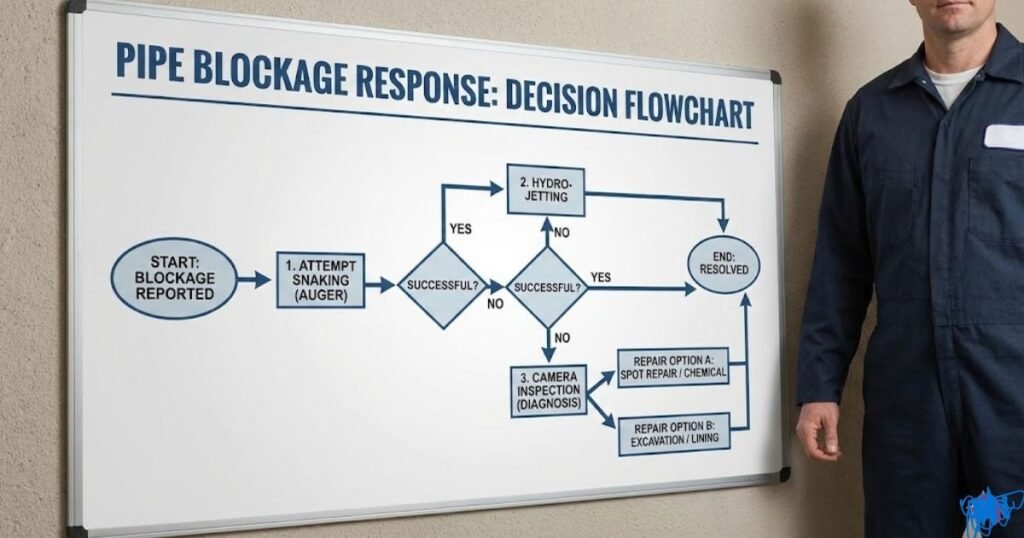
The landscape of sewer repair has shifted dramatically in favor of “trenchless” methods, which minimize property disruption and long-term restoration costs. However, the choice of method is largely dictated by the severity of the root intrusion and the structural integrity of the existing pipe.
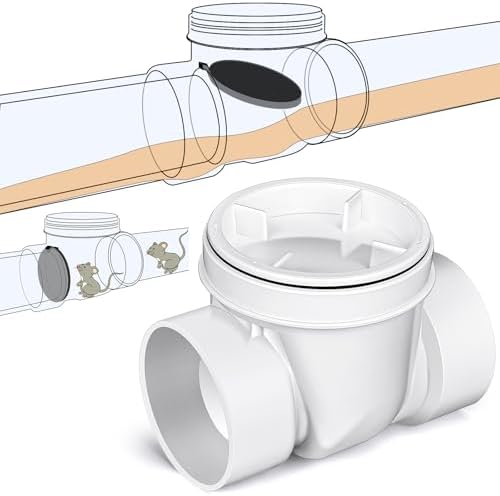
- Layered Protection Against Sewage Backflow: this PVC backwater valve is an effective backflow preventer valve that speci…
- Easy to Use: backwater valves are generally simple in design, easy to install and require no additional maintenance; Aft…
- Sturdy Durable Construction: our backwater preventer valve is crafted from quality PVC material; This solid PVC backwate…
Mechanical root cutting and snaking
For many homeowners facing a sudden backup, a mechanical drain snake is the first line of defense. This involves a heavy-duty flexible steel cable with a specialized cutting blade, often a C-cutter or a spade bit that is rotated through the line by a motor.
- Cost: $100–$500 for a service call and basic snaking.
- Best For: Clearing immediate blockages in pipes that are structurally sound.
- Pros: Fast, affordable, and widely available.
- Cons: Temporary solution; does not fix the cracks where roots enter; roots often return within 6–12 months; can damage very old, fragile pipes.
Hydro-jetting: High-pressure restoration
Hydro-jetting is increasingly the preferred method for root removal because it provides a more comprehensive cleaning of the pipe interior. The system uses water pressurized between 1,500 and 4,000 PSI, delivered through a multi-directional nozzle that scours grease, scale, and tree roots from the pipe walls.
- Cost: Averages $475 nationwide; heavy root work typically falls between $600 and $1,200.
- Pros: Extremely effective at removing stubborn root mats; clears grease that snaking misses; eco-friendly (no chemicals).
- Cons: Higher cost than snaking; requires specialized expertise; can exacerbate existing structural damage in crumbling pipes.
In Los Angeles, where tree species like Ficus and Eucalyptus are common, hydro-jetting costs typically range from $346 to $498, with the service often recommended as a routine maintenance item for older properties with high vegetation.

- 【New Family Set 6 Heads Sewer Jetter Kit】We’ve included a variety of accessories you might use to make it easy for you t…
- 【Stronger And More Durable 5800PSI】Our hoses are universal with many gas-powered and electric pressure washers up to 580…
- 【4 Efficient Sewer Jetter Nozzles】 Orifice 4.0 Side port to blast at corners where hose cannot navigate. Ideal for clean…
Chemical root treatments: The maintenance tool
Chemical root killers are generally used as a follow-up to mechanical or hydro-jet cleaning. These products, typically containing copper sulfate or metam-sodium, are designed to kill remaining root fibers and inhibit regrowth.
- Cost: $50–$200 for professional application or bulk product purchase [User Query].
- Pros: Low cost; can reach areas that blades might miss.
- Cons: Environmental concerns; prohibited in several jurisdictions; only a temporary deterrent.
It is important to note that environmental regulations vary by state. For example, California prohibits the sale and use of copper sulfate for root control in nine specific San Francisco Bay Area counties due to its toxicity to aquatic shellfish.
READ MORE: Best drain snake for home use

- ★ 【Material】: The main parts are made of solid brass which is durable and corrosion resistant.The gaskets are made of mo…
- ★ 【SIZE】: 4-F 4″ Float Model Flood-Guard for 4-inch Flood Drains! Please check the size of drain tube before buying!
- ★ 【Introduction】: Flood-Guard operates like a check valve to seal off water back-up caused by overloaded sewers. Water f…
Trenchless pipe lining (CIPP)
Cured-in-Place Pipe (CIPP) lining is arguably the most transformative technology in modern plumbing. It involves inserting a flexible, resin-saturated liner into the damaged pipe. Once inflated and cured (hardened), it forms a seamless, jointless “pipe within a pipe” that is virtually impervious to root penetration because it has no joints for roots to exploit.
- Cost: $1,900–$6,000 for a typical project; often quoted at $135–$250 per linear foot.
- Pros: No excavation required; preserves landscaping and driveways; adds 50+ years of lifespan to the system.
- Cons: Cannot fix pipes that have already collapsed or are severely misaligned; slightly reduces the inner diameter of the pipe.
Pipe bursting: Full replacement without the trench
Pipe bursting is the preferred trenchless method when the existing pipe is too damaged to be lined. A hydraulic machine pulls a large conical “bursting head” through the old pipe, fracturing it and pushing the fragments into the soil while simultaneously pulling a new high-density polyethylene (HDPE) pipe into its place.
- Cost: $60–$200 per linear foot; total project costs often range from $4,000 to $12,000.
- Pros: Provides a brand-new pipe; can increase pipe diameter; extremely durable (100+ year lifespan).
- Cons: Requires two small access pits; can cause ground displacement that may affect nearby service lines.
Full excavation and replacement
Despite the rise of trenchless tech, traditional excavation remains necessary for pipes that are “bellied” (improperly sloped), fully collapsed, or located in areas with extremely rocky soil that prohibits bursting.
- Cost: National averages range from $3,200 to $3,500, though deep lines or those under concrete can exceed $10,000–$25,000.
- Pros: Permanent fix for any structural or grading issue; allows for full visibility of the repair.
- Cons: Most disruptive to property; requires significant restoration (sod, concrete, landscaping).
Table 4: Comprehensive Comparison of Repair Methods (2026)
| Method | Cost Range (Project) | Disruption & Time | Lifespan | Best For |
| Snaking | $100 – $500 | Low; 1–3 hours | 6 – 12 mo | Small clogs, emergency |
| Hydro-jetting | $350 – $1,200 | Moderate; 1 day | 1 – 3 yrs | Maturing roots, grease |
| CIPP Lining | $1,900 – $6,000 | Low; 1–3 days | 50+ yrs | Cracks/roots, good slope |
| Pipe Bursting | $4,000 – $12,000 | Moderate; 1 day | 100 yrs | Collapsed pipes |
| Excavation | $3,000 – $10,000+ | High; 3–5 days | 100 yrs | Grading issues, collapse |
READ MORE: Why Does My Laundry Room Smell Like Sewage Gas?
Tree roots in sewer line: Choosing the right repair — DIY vs Pro
Short answer: call a pro for diagnosis. Roots in a sewer main are usually a structural issue; a camera inspection is worth the cost because it prevents wasted money on temporary fixes.
Internal Checklist: If you suspect roots — do this first
If multiple drains are backing up or you hear gurgling, follow these steps immediately to mitigate damage:
- Stop All Water Use: Do not flush toilets, run the dishwasher, or use the laundry machine. Any water sent down the drain will likely back up into the lowest point of your home.
- Locate Your Cleanout: Find the sewer cleanout (usually a white or black cap in your yard or near the foundation). This allows a plumber immediate access for inspection.
- Check Your Lowest Drains: Monitor floor drains in the basement or the lowest-level shower. If water is pooling there, you have a mainline blockage.
- Call for a Camera Inspection: Do not authorize a “blind” snaking. Insist on seeing the footage to understand what you are paying for.
- Verify Insurance: Check if you have “Service Line Coverage” or a similar endorsement on your homeowner’s policy.
When you can DIY:
- If you have a completely blocked sink or small branch clog (not the main), you can try a homeowner auger or enzyme cleaners. But don’t hydro-jet yourself — it’s professional equipment.
When to call a plumber immediately:
- Multiple fixtures slow or back up.
- Sewage smell or wet yard spots.
- Recurring clogs that come back after snaking.
Choosing a pro: get 2–3 local quotes, insist on a camera inspection and ask for the recorded video. Ask each contractor: “Do you recommend camera today?”, “If we only snake, will roots return?”, and “What warranty do you offer on the repair?” A reputable company will discuss trenchless options when appropriate and will show you the camera footage. National cost guides and local reviews are a good starting point but rely on the on-site diagnosis for accurate quotes.
Plumber quote: “Unless you have new Schedule 40 PVC, you should really be updating your home’s sewer pipes every 50 years. If not, you definitely need to have your pipes inspected more frequently,” says Mother’s Master Plumber Steven Smith, Master Plumber, Dallas.
Cost-saving tips, insurance & warranties
- Always get a camera inspection first. It often costs far less than the wrong repair. (Typical range $125–$500.)
- Shop 2–3 local quotes. Pricing varies by city — for example, main-line unclogging and snaking runs higher in big coastal cities (San Francisco area estimates for main sewer unclogging are commonly higher than national averages).
- Ask about warranties. Trenchless lining vendors often offer multi-year warranties; insist on a written warranty and get warranty terms in the quote.
- Preventive maintenance. For properties with trees near the lateral, an annual or biennial hydro-jet or root-killer treatment plus keeping cleanouts accessible can reduce recurrence.
- Check insurance and municipality rules. Some homeowner policies cover sudden damage; others exclude long-term neglect. If a city tree caused the damage, municipal responsibility rules vary — document everything (camera footage, dates, contractor reports).
- Landscaping restoration: Factor yard/driveway restoration into full-dig quotes — trenchless options often save money here.
Conclusion
Tree roots in a sewer line are common and solvable. Start with a camera inspection, compare 2–3 local quotes, and match the repair to your pipe condition: snaking or hydro-jetting for cleaning, trenchless lining for cracked but aligned pipes, and bursting or full replacement for collapsed or heavily damaged lines. Don’t let a quick cheap fix become an expensive repeat problem — get the camera video, ask about warranties, and confirm the proposed method is the most durable solution for your yard and budget.
FAQs
How much does it cost to remove tree roots from a sewer line?
It depends — simple snaking can be $100–$500, hydro-jetting commonly averages around $475 (can be $600–$1,200 for heavy root jobs), while trenchless fixes or replacements range from $1,900 up to $6,000+ or several thousand for full replacement. Always get a camera inspection first.
Will snaking get rid of tree roots permanently?
No — snaking/cutting removes roots inside the pipe but doesn’t repair cracks where roots enter. If the pipe is damaged, roots will likely return; consider lining or replacement for a permanent fix.
Is hydro-jetting safe for old pipes?
Usually yes for most pipes — hydro-jetting is effective at blasting roots and buildup, but extremely old or fragile pipes could be damaged; a camera inspection helps decide.
What’s the difference between trenchless lining and pipe bursting?
Lining (CIPP) inserts a resin sleeve to seal cracks — less disruptive and often $135–$250/ft or $1,900–$6,000 per job. Pipe bursting breaks out the old pipe while pulling in a new one typically $60–$200/ft but depends on site conditions. Choose bursting for collapsed pipes and lining for cracks/roots where alignment is OK.
Should I call my insurer or get multiple quotes?
Get at least 2–3 local quotes and check your homeowner policy some damage may be covered (or partially covered) depending on cause and policy. Always document damage and ask contractors about warranties. (Local quote recommended.)


Pingback: Sewer Line Camera Inspection Cost (Cost Guide 2026) - Plumbing Guider
Pingback: How to Repair a Toilet that Keeps Running: Step by Step - Plumbing Guider
Pingback: How to fix leaking PVC Joint Without Cutting: Step by Step DIY Guide - Plumbing Guider
Pingback: Emergency Sewer Backup: Immediate Steps, Real Costs, and Pro Solutions - Plumbing Guider