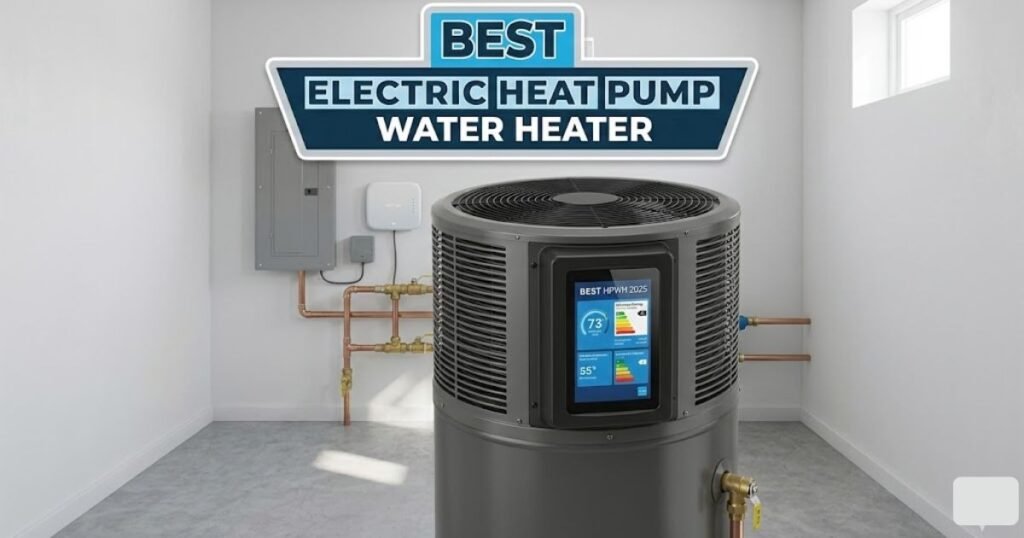
Electric heat pump water heaters are getting a lot more attention in U.S. homes. That makes sense. They can use far less energy than standard electric resistance models, and many homeowners like the lower utility bills, better efficiency, and newer smart controls. The basic idea is simple: instead of making heat directly, they move heat from the surrounding air into the water tank.
For many families, that makes them a smart long-term upgrade. They are especially appealing if you want a water heater that feels modern, efficient, and built for everyday use. ENERGY STAR describes heat pump water heaters as the same “hybrid electric” category many shoppers already know, and notes that certified models are designed to save energy and protect the environment. Lets deep dive into “Best Electric Heat Pump Water Heater: Reviews, Comparison, and Buying Guide”
READ MORE: Best Tankless Electric Water Heaters 2026: Top 5 Models for U.S. Homes
What Is an Electric Heat Pump Water Heater?
Think about your refrigerator. It pulls heat from the inside of the fridge and pushes it out into your kitchen to keep your food cold. A heat pump water heater does the exact same thing, just in reverse.
It doesn’t “create” heat using a red-hot electric coil (though most have those as a backup). Instead, it pulls heat from the surrounding air and moves it into the water tank. Even if your garage or basement feels cool, there is still enough heat in the air for the pump to work.
Because it moves heat instead of creating it, it uses a fraction of the electricity. This is why they are often called “Hybrid” heaters. They can use the heat pump for efficiency, but they can also switch to standard electric heating if you have a house full of guests and need hot water fast.
Why Homeowners Choose Heat Pump Water Heaters
1. Massive Energy Savings
This is the biggest reason. A standard electric water heater is often the second-biggest energy user in a home, right after the HVAC system. A heat pump model can be two to three times more efficient. For an average family, this means saving $300 to $500 a year on electric bills.
2. Environmentally Friendly
Since they use less electricity, they reduce your home’s carbon footprint. If you are looking to “electrify” your home and move away from gas, this is a cornerstone upgrade.
3. Dehumidification
Heat pumps pull moisture out of the air as they work. If you have a damp basement, a heat pump water heater actually helps dry it out. It’s like getting a free dehumidifier with your water heater.
4. Smart Features
Most modern hybrid units come with Wi-Fi. You can track your energy use on your phone, set it to “Vacation Mode” while you’re away, and get alerts if the unit detects a leak.
READ MORE: Best Heat Pump Hot Water System (2026) — Buyer’s Guide
Best Electric Heat Pump Water Heater Picks
Choosing the right brand can be tough. Here are the top models currently available for U.S. homeowners.
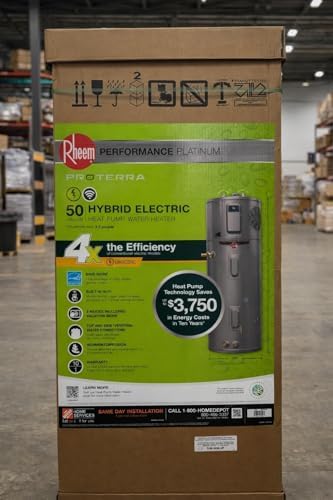
1. Rheem 50 Gal. Smart High Efficiency Hybrid Heat Pump Water Heater
Rheem is a household name for a reason. Their Performance Platinum series is arguably the most popular hybrid heater in the country. It is widely available at big-box stores and is known for being very “smart.”
Key Features:
- Built-in EcoNet Wi-Fi: Allows for remote control and monitoring.
- LeakGuard Detection: An integrated system that can shut off the water if it senses a leak.
- High Efficiency: Boasts a 3.75 UEF (Uniform Energy Factor), which is incredibly high.
- Five Operating Modes: Includes Energy Saver, Heat Pump, High Demand, Electric, and Vacation.
- Quiet Operation: Rated at roughly 49 decibels, which is about the level of a quiet conversation.
Pros:
- Excellent mobile app for tracking energy costs.
- Available at most Home Depot locations for easy DIY pickup.
- The LeakGuard system provides massive peace of mind.
Cons:
- The fan can be a bit noisy if installed near a bedroom.
Best For: Homeowners who love technology and want the best leak protection available.
- It must be wired into your home’s electrical system and will typically require a dedicated electrical circuit (similar t…
2. Rinnai REHP50 Electric Heat Pump Water Heater – 50 Gallon
Rinnai is famous for tankless gas heaters, but they have entered the heat pump market with a very high-quality tank model. The REHP50 is built with the same precision Rinnai is known for.
Key Features:
- Multiple Operating Modes: You can prioritize efficiency or speed.
- Durable Build: Designed to handle the rigors of high-demand households.
- Space-Saving Design: Slightly more compact than some competitors.
- Energy Star Certified: Qualifies for most federal and local rebates.
- Quiet Compressor: Engineered to minimize vibration.
Pros:
- Very reliable brand reputation.
- Excellent warranty support through a large network of plumbers.
- Simple control panel that isn’t over-complicated.
Cons:
- Harder to find in stock at local hardware stores compared to Rheem.
Best For: Homeowners who prioritize brand reliability and professional-grade components.

READ MORE: Best 80-Gallon Electric Water Heaters of 2026 | Reviews & Deals
3. ACiQ Electric Residential Hybrid Hot Water Heater – 50 Gallon
ACiQ is a rising star in the HVAC world. They are known for making high-efficiency equipment that doesn’t break the bank. This 50-gallon hybrid model is designed to be a direct competitor to the big names. It offers similar performance at a price that often makes homeowners do a double-take. It is a rugged, straightforward unit built for one thing: saving you money.
Key Features:
- Advanced Heat Pump Technology: Pulls heat from the surrounding air very efficiently to slash your power bill.
- User-Friendly Control Panel: Features an easy-to-read digital display for quick temperature and mode adjustments.
- Four Operating Modes: You can switch between Auto, Heat Pump, High Demand, and Vacation settings.
- Energy Star Certified: This unit is tested and proven to meet the highest U.S. efficiency standards.
- Standard Footprint: Designed to fit in the same space as your old, inefficient electric tank for easier installation.
Pros:
- Excellent price-to-performance ratio compared to more “famous” brands.
- High recovery rate, meaning it can keep up with the demands of a busy morning.
- Qualifies for the same massive federal tax credits and local rebates as the expensive models.
Cons:
- It can be harder to find local service technicians who are specifically familiar with the ACiQ brand compared to Rheem or Rinnai.
Best For: Homeowners looking for the absolute best value and high efficiency without paying a premium for a big-name brand.

- CERTIFIED ACiQ SELLERS: Everything you need for reliable HVAC solutions!
- INDOOR INSTALLATION: It performs best in stable indoor temperatures and should not be installed in unheated spaces below…
- PERFECT LOCATION: Ideal for basements or garages, this 50 gallon hot water heater electric unit requires 700–1,000 cubic…
4. Accelera 300 E Heat Pump Water Heater
Made by Stiebel Eltron, the Accelera 300 E is a bit of a beast. This is German engineering at its finest. It is a larger unit (around 80 gallons), designed to provide massive amounts of hot water using only the heat pump.
Key Features:
- Large Tank Capacity: 80-gallon nominal capacity.
- Single Heating Element: Designed to use the heat pump almost exclusively.
- Superior Insulation: Keeps water hot for days with minimal heat loss.
- Top-Mounted Connections: Makes it easier to install in certain tight spots.
- Impressive Warranty: Known for having one of the best tank warranties in the business.
Pros:
- Can supply a huge amount of hot water without switching to “expensive” electric mode.
- Extremely high build quality.
- Very thick insulation makes it one of the most efficient on the market.
Cons:
- The unit is very tall and heavy; it may not fit in low-ceiling basements.
Best For: Large families with high hot water needs who want the absolute lowest operating cost.
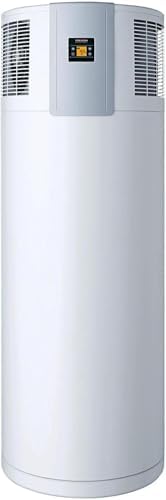
- Large 80-gallon storage tank: supplies up to 74.2 gal first-hour hot water, ideal for family or multi-bathroom homes
- Heat-pump efficiency: 650 W compressor/fan with 1700 W heating output
- Dual heating options: efficient heat pump operation plus 1500 W booster for high-demand periods
READ MORE: Weil‑McLain Boiler Reviews (2026) — Models, Costs, Pros & Cons
5. Electrolux EE66WP30PS Energy Star Electric Hybrid Heat-Pump
Electrolux offers a very solid hybrid option that focuses on ease of use. It is designed to be a “drop-in” replacement for standard electric heaters.
Key Features:
- 66-Gallon Capacity: A great middle-ground size for medium to large families.
- Intuitive LED Display: Easy to read and adjust.
- Energy Star Rated: Meets all strict federal efficiency guidelines.
- Four Operation Modes: Tailors performance to your daily routine.
- Clean Design: Looks modern and fits well in finished utility rooms.
Pros:
- The 66-gallon size is perfect for families who find 50 gallons too small but 80 gallons too big.
- Very straightforward installation process.
- Good balance of price and performance.
Cons:
- Customer support can be slower compared to Rheem or Rinnai.
Best For: The “Goldilocks” household that needs a little more water than a standard 50-gallon tank provides.

- Recirculation compatible
- Condensate overflow drain (connection size: 3/4 in. threaded)
- Exhaust vent diameter: 6 Inch
Electric Heat Pump Water Heater Comparison Table
| Brand / Model | Tank Size | Energy Efficiency (UEF) | Smart Features | Noise Level | Best Use Case | Main Advantage | Main Drawback |
| Rheem Smart Hybrid | 50 Gal | 3.75 – 4.0 | High (Wi-Fi/App) | Low (49dB) | Tech-savvy homes | LeakGuard protection | Fan can be noisy |
| Rinnai REHP50 | 50 Gal | 3.6 – 3.8 | Moderate | Very Low | General residential | Pro-grade reliability | Harder to find locally |
| ACiQ Residential | 50 Gal | 3.4 – 3.5 | Basic | Moderate | Budget-conscious | Incredible value/price | Fewer service techs |
| Accelera 300 E | 80 Gal | 3.05 | Basic | Moderate | Large families | Massive hot water storage | Very tall and heavy |
| Electrolux Hybrid | 66 Gal | 3.4 – 3.5 | Basic | Moderate | Mid-size families | Perfect “in-between” size | Slower customer support |
READ MORE: Carrier Heat Pump Reviews (2026) — Models, Costs, Pros & Cons
How to Choose the Right One
Buying a water heater isn’t like buying a toaster. You’re going to live with this decision for 10 to 15 years. Here is what you should check before you swipe your card.
1. Household Size
A 50-gallon heat pump heater doesn’t always behave like a 50-gallon standard heater. Because the heat pump recovers (reheats) slower than electric coils, you might want to “size up.” If you have a family of four, a 66-gallon or even an 80-gallon unit might be safer to ensure you never have a cold shower.
2. The “First Hour Rating” (FHR)
Look at the yellow EnergyGuide tag. The FHR tells you how many gallons of hot water the unit can deliver in one hour of heavy use. Make sure this number matches your household’s peak demand (like morning showers + the dishwasher running).
3. Installation Space
Heat pump water heaters need “breathable” air. They pull heat from the air around them. Most manufacturers require about 750 to 1,000 cubic feet of space. That’s roughly a 10′ x 10′ room. If you are putting it in a tiny closet, you will need to install louvered doors or duct the air in and out.
4. Noise
These units have a fan and a compressor, similar to a window AC unit. They aren’t loud, but they aren’t silent. If your water heater is right next to a bedroom wall, look for a model with a low decibel (dB) rating.
5. Local Climate
Heat pumps love warm air. They work incredibly well in the South. If you live in a very cold climate and keep your heater in an unheated garage, the unit will have to work harder. It will still work, but you won’t save as much money in the dead of winter.
6. Rebates and Incentives
This is huge. Thanks to the Inflation Reduction Act, many U.S. homeowners can get a federal tax credit of up to $2,000 for installing a heat pump water heater. Many local utility companies also offer “instant rebates” of $500 to $1,000. Sometimes, the rebates make the heat pump model cheaper than a standard one!
READ MORE: Air to Water Heat Pump — Complete 2026 Buyer’s Guide (costs, brands, pros & cons)
Installation and Maintenance Tips
Where Do They Work Best?
The ideal spot is an interior basement or a garage in a warmer climate. Basements stay a relatively steady temperature year-round, which heat pumps love. Avoid cramped, unventilated closets unless you can vent the air properly.
What to Know Before Installation
- Condensate Drain: Unlike standard heaters, these units create “condensation” (water) as they pull moisture from the air. You will need a drain nearby or a small “condensate pump” to move that water outside or to a sink.
- Electrical: Most units require a 240V / 30-amp circuit. If you already have an electric water heater, you’re likely good to go. If you are switching from gas, you will need an electrician to run a new line.
Simple Maintenance
- Clean the Filter: Most hybrid heaters have a small air filter on top. Every few months, pull it out and rinse off the dust. It takes 30 seconds and keeps the unit efficient.
- Flush the Tank: Just like a regular heater, sediment can build up at the bottom. Drain a few gallons out of the bottom valve once a year to keep it clear.
- Check the Anode Rod: This rod prevents the tank from rusting. Check it every 3–5 years to see if it needs replacing.
Energy Savings and Long-Term Value
Let’s talk about “Sticker Shock.” A standard electric water heater might cost $600 to $800. A heat pump model might cost $1,500 to $2,500.
At first glance, that looks expensive. But look at the math:
- Standard Electric: Costs about $500–$600 a year to run.
- Heat Pump Hybrid: Costs about $120–$150 a year to run.
You are saving roughly $400 a year. In less than three or four years, the unit has paid for the price difference. Over the 10-to-15-year life of the unit, you could save $4,000 to $6,000. That’s like getting a free vacation just for choosing a better water heater.
Plus, if you get a $2,000 tax credit, the unit pays for itself almost immediately. It is one of the smartest financial moves a homeowner can make.
READ MORE: Heat Pump Installation Cost in 2026 (Real Prices, Examples & Savings)
Final Recommendation
So, which one should you buy?
- If you want the smartest tech: Go with the Rheem Performance Platinum. The leak detection is the best in the business, and the app is very polished.
- If you have a big family: Choose the Accelera 300 E or the Electrolux 66-gallon. That extra storage prevents “cold shower anxiety.”
- If you want pure reliability: The Rinnai REHP50 is a workhorse. It’s a simple, well-built machine from a company that knows water heating.
- If you are on a budget: Look for whichever model has the best local utility rebate. Often, your local power company will “subsidize” one specific brand, making it the clear winner for your wallet.
FAQ Section
Are heat pump water heaters worth it?
Yes, absolutely. For most U.S. homeowners, the energy savings are so high that the unit pays for itself in just a few years. When you factor in federal tax credits (up to $2,000), they are often the most financial-friendly choice you can make for your home.
How long do electric heat pump water heaters last?
Most models are designed to last between 10 and 15 years. This is similar to a standard tank heater. However, because they are “premium” products, they often have better warranties (usually 10 years on the tank and parts).
What size heat pump water heater do I need?
If you currently have a 50-gallon standard electric tank, you might want to consider a 65-gallon or 80-gallon hybrid. Heat pumps heat water more slowly. Moving up one size ensures you have plenty of hot water even when the unit is in its most efficient “Heat Pump Only” mode.
Do heat pump water heaters work in cold climates?
Yes, but they work a bit differently. In the winter, if the air is too cold, the unit will switch to “standard electric” mode to heat the water. You won’t save as much money during those cold months, but you will still have hot water. For the rest of the year, you’ll see big savings.
How much does it cost to install one?
Professional installation usually costs between $1,000 and $2,500, depending on your home’s setup. If you need to add a condensate drain or run new electrical wires, the cost can be on the higher end. However, many homeowners find that rebates cover a large portion of this cost.


Pingback: Electric Water Heater Not Working? Causes, Fixes & Troubleshooting Tips - Plumbing Guider