Water leaking from a ceiling vent is one of the most alarming home maintenance issues a property owner can face. It threatens your drywall, damages flooring, ruins furniture, and creates a breeding ground for toxic mold. However, before you let panic take over, it helps to understand that this is a relatively common residential issue.
Whether you are dealing with water dripping from a ceiling vent, moisture pooling from an AC vent dripping water, or a mysterious leak appearing around your water leaking from HVAC vent assembly, tracking down the root cause is the key to a permanent fix.
Ignoring the problem is never an option. Even a slow, intermittent drip can saturate your ceiling insulation, rot wooden attic framing, and weaken drywall until the ceiling collapses. In this comprehensive guide, drawn from years of residential HVAC and home maintenance experience, we will break down why water comes out of ceiling vents, how to trace the source, what you can safely do yourself, when to call a professional, and how much repairs typically cost. Lets deep dive into “Water Leaking From Vent in Ceiling: Causes & Fixes”
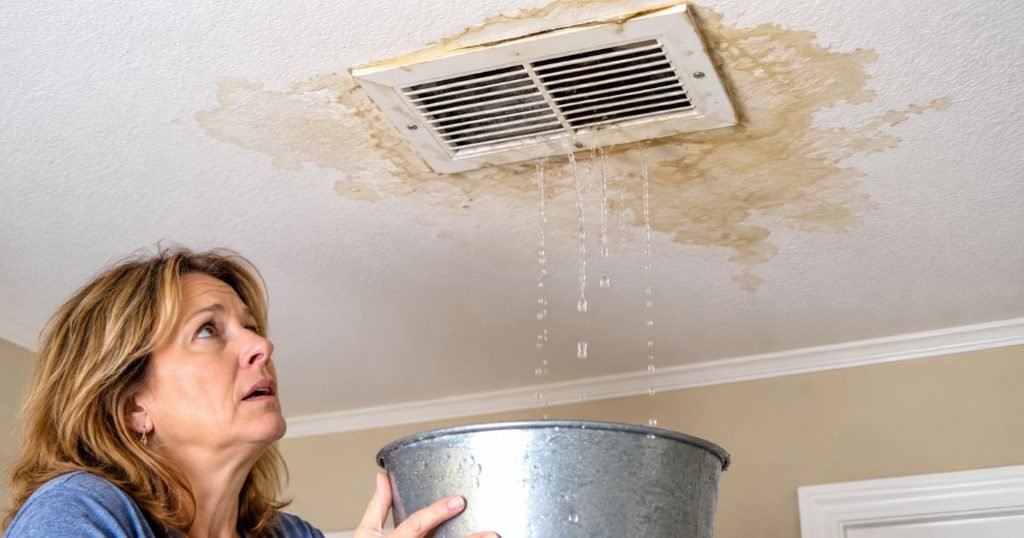
Why Is Water Leaking From a Vent in the Ceiling?
To fix a leak, you must first understand how water manages to reach your ceiling vents. Air conditioning and heating systems rely on an extensive network of ducts running through unconditioned spaces like attics, crawlspaces, and wall cavities. When something goes wrong within this system or when external moisture finds a pathway into your ductwork gravity pulls the resulting water downward until it finds the lowest exit point, which is almost always your ceiling supply or return vents.
Before diving into troubleshooting, it is essential to identify the exact type of vent you are dealing with:
- Supply Vents: These are the registers where conditioned (cooled or heated) air blows into your living spaces. Leaks here usually indicate HVAC condensation issues, clogged drain lines, or duct sweat.
- Return Vents: These grilles pull air out of your home back to the HVAC unit. Water here often points to high indoor humidity, poorly sealed attic penetrations, or roof leaks tracking along the duct exterior.
- Bathroom Exhaust Vents: Vents in bathrooms that expel moisture outside. Leaks here are frequently caused by condensation buildup inside uninsulated exhaust ducts during cold weather.
Identifying your vent type helps narrow down whether the issue originates from your cooling system, your roof, or your plumbing network.
READ MORE: How to Identify a Plumbing Vent Pipe Blockage by Sound
8 Common Causes of Water Leaking From a Ceiling Vent
Every ceiling vent leak tells a story. Let’s examine the eight most common culprits behind residential ceiling vent leaks, along with their warning signs and professional repair requirements.
1. Clogged AC Condensate Drain Line
Your air conditioner naturally pulls moisture out of your indoor air as it cools your home. This moisture condenses on the evaporator coil and drips into a drain pan, which then flows through a PVC pipe (the condensate drain line) to the outside of your house. Over time, algae, mold, dust, and slime accumulate in this narrow pipe, creating a stubborn clog.
- Why it happens: Algae and debris block the water’s exit route, causing water to back up into the drain pan.
- Warning signs: Water overflowing from the indoor unit, musty odors, and a humid house.
- How to identify: If your AC is running continuously and water drips from nearby ceiling supply vents, check your indoor air handler or furnace drain pan.
- Safety & Repair: Clearing a minor clog with a wet/dry shop vac or vinegar flush is safe for handy homeowners. Persistent clogs require professional servicing with specialized clearing tools.
2. Frozen Air Conditioner Evaporator Coil
When airflow across your indoor evaporator coil is severely restricted usually due to a filthy air filter or blocked return vents the refrigerant inside the coil becomes extremely cold, freezing any condensation on its surface into solid ice.
- Why it happens: As the ice eventually melts (often when the thermostat is adjusted or the unit cycles off), a massive wave of water overwhelms the condensate drain pan faster than it can drain.
- Warning signs: Weak airflow from vents, frost or ice visible on the refrigerant lines outside or the indoor unit, and sudden heavy leaking.
- How to identify: Turn off your AC and inspect the indoor unit. If copper lines are frosted over or the coil is encased in ice, you have a frozen coil.
- Safety & Repair: Turn the system off immediately and switch the fan setting to “ON” to thaw the ice. Replace a dirty filter. Never chip ice off with tools, as you can puncture the delicate aluminum coils. Call an HVAC technician if icing persists after filter replacement.
3. Damaged or Overflowing HVAC Condensate Drain Pan
Beneath your indoor air handler sits a primary auxiliary drain pan designed to catch normal condensation. Underneath that, building codes often require a secondary auxiliary pan.
- Why it happens: Metal pans rust through over time, plastic pans crack, or the pan shifts out of alignment, causing water to miss the drain opening entirely.
- Warning signs: Rust stains on the floor around the air handler, water damage on attic subflooring, and ceiling leaks directly beneath the HVAC unit.
- How to identify: Inspect the attic or utility closet housing your air handler using a flashlight. Check if water is sitting outside the pan.
- Safety & Repair: Replacing a cracked or rusted drain pan requires shutting down power to the HVAC system, disconnecting PVC fittings, and lifting heavy equipment. This is strictly a job for a licensed HVAC technician.
4. Poorly Insulated or Sweating Air Conditioning Ducts
In hot, humid summer climates, unconditioned attics can easily reach temperatures exceeding 130°F. When freezing cold air (around 55°F) travels through metal or flexible ductwork passing through this scorching attic, thermal shock occurs.
- Why it happens: If the fiberglass insulation around the ductwork is torn, compressed, or missing, warm attic air hits the cold duct surface, causing heavy condensation (“duct sweat”) to form on the outside of the duct. This moisture accumulates and pools inside the vent boot, eventually dripping through your ceiling register.
- Warning signs: Leaks that only occur during peak heat waves when the AC runs constantly; no evidence of clogs in the drain pan.
- How to identify: Inspect attic ductwork. If you see damp, sagging insulation or water beading on the outside of flexible ducts, sweating is your culprit.
- Safety & Repair: Homeowners can patch minor duct insulation tears with foil tape. However, re-insulating extensive duct runs or replacing damaged ductwork is best left to HVAC professionals.
5. Roof Leaks Around Roof Penetrations or Flashing
Your roof features numerous penetrations, including plumbing vent stacks, chimney flashing, skylights, and HVAC exhaust or intake pipes.
- Why it happens: Rubber boots crack under UV exposure, storm winds lift metal flashing, or sealant degrades over time, allowing rainwater to enter the attic.
- Warning signs: Leaks that occur exclusively during or immediately following heavy rainfall, regardless of whether the AC is running.
- How to identify: Trace the attic framing above the leaking vent. If you see water trails running down roof rafters or dripping onto ductwork from above, it is a roof leak.
- Safety & Repair: Never climb onto a wet or steep roof yourself. Hire a licensed roofing contractor to inspect and repair flashing or roof penetrations.
6. Leaking Plumbing Pipes Above the Ceiling
Multi-story homes feature supply water lines and drain waste vent (DWV) pipes running through floor joists and ceiling cavities.
- Why it happens: Pinholes in copper pipes, loose PVC fittings, corroding cast iron joints, or a leaking toilet wax ring can release water directly into ceiling spaces.
- Warning signs: Continuous dripping, discoloration, or leaks that worsen when an upstairs bathroom sink, shower, or toilet is used.
- How to identify: Note the location of bathrooms or laundry rooms directly above the ceiling vent. If the water has an odor or appears discolored, suspect plumbing.
- Safety & Repair: Minor PVC sink trap leaks can be DIY-friendly, but pressurized supply pipe leaks require a licensed plumber immediately.
7. Bathroom Exhaust Fan Condensation or Improperly Vented Ductwork
Bathroom exhaust fans remove moist air during showers. However, if the exhaust duct in the attic is uninsulated, unsealed, or improperly vented out the roof/soffit, warm shower moisture cools inside the pipe.
- Why it happens: Water pools inside the duct and flows backward out through the bathroom ceiling grille.
- Warning signs: Dripping water immediately after someone takes a hot shower, particularly during freezing winter weather.
- How to identify: Check the bathroom ceiling exhaust grille after a shower. If water is pooling inside the housing, condensation is occurring.
- Safety & Repair: Insulate attic exhaust ducting and ensure the duct slopes slightly downward toward the exterior vent flap so moisture escapes outside.
8. Excessive Indoor Humidity and Condensation
Sometimes, a leak isn’t a mechanical failure at all, but a consequence of high indoor relative humidity (RH) colliding with cold metal vent registers.
- Why it happens: When indoor humidity exceeds 60%, moisture in the room air condenses rapidly upon touching cold aluminum or steel HVAC registers.
- Warning signs: Water droplets pooling on the rim of ceiling vents, peeling paint around the register, and damp drywall edges.
- How to identify: Check your thermostat or a hygrometer. If indoor humidity is high and water collects only around the edges of the vent faceplate, it is ambient condensation.
- Safety & Repair: Adjust your AC fan setting from “ON” (continuous) to “AUTO” (runs only when cooling), use whole-home dehumidifiers, and clean or replace your air filter.
READ MORE: How to Unclog Plumbing Vent: Step by Step DIY Guide
How to Identify Where the Water Is Coming From
Pinpointing the exact source of a ceiling vent leak can feel like detective work. Use the diagnostic clues below to narrow down your search before calling a professional.
| Potential Source | Common Symptoms & Clues | Professional to Contact |
| HVAC Condensate Clog | Water drips only when AC runs; drain line outside is dry or trickling slowly. | Licensed HVAC Technician |
| Frozen Evaporator Coil | Sudden heavy surge of water; weak airflow; frost on indoor unit or lines. | Licensed HVAC Technician |
| Duct Condensation (Sweat) | Occurs on very hot, humid days; duct insulation in attic is wet or compressed. | HVAC Insulation Specialist |
| Roof Leak / Flashing | Water drips during or right after rain storms; unrelated to AC operation. | Licensed Roofing Contractor |
| Plumbing Leak | Leaks worsen when upstairs fixtures are used; water may be discolored or odorous. | Licensed Plumber |
| Bathroom Exhaust Duct | Water drips after showers, especially in winter; moisture inside exhaust housing. | HVAC Tech or Handyman |
What to Do Immediately When Water Leaks From a Ceiling Vent
When water starts pouring or dripping from your ceiling vent, quick, calm action minimizes structural damage and safety hazards. Follow this emergency checklist:
- Turn Off Your HVAC System: If you suspect an AC problem (clogged drain, frozen coils), shut off your HVAC system immediately at the thermostat and the circuit breaker to prevent the unit from pumping more water into the attic.
- Keep People and Pets Away: Clear the area beneath the leak to prevent slips and falls on wet flooring.
- Place a Bucket and Towels: Position a large bucket or sturdy plastic bin directly under the dripping vent. Lay down towels to protect wood flooring or carpeting.
- Protect Valuables and Furniture: Move electronics, rugs, artwork, and furniture away from the path of the water.
- Exercise Extreme Electrical Caution: If water is leaking near ceiling light fixtures, smoke detectors, or electrical outlets, turn off the power to that room at the main electrical panel immediately. Never touch wet electrical switches or remove vent covers if electrical components are wet.
- Document the Damage: Take clear photographs and videos of the active leak, pooling water, and ceiling stains. You will need these for homeowners insurance claims.
- Watch for Sagging Drywall: If your ceiling is bulging or sagging like a water balloon, do not puncture it yourself. A sagging ceiling holds gallons of water; piercing it can cause an uncontrolled collapse that drops heavy, wet drywall and insulation onto your head. Instead, place a large trash can underneath, and gently pierce the lowest point with a screwdriver only if necessary to relieve immense pressure, while standing safely to the side.
READ MORE: How to Clean Plumbing Vent Pipe Safely (Step-by-Step Guide)
How to Fix Water Leaking From A Ceiling Vent
Once the emergency is contained, you can evaluate repair options. It is vital to separate safe DIY tasks from professional work.
Safe Homeowner Maintenance
- Change the Air Filter: A dirty filter is the #1 cause of frozen coils and poor airflow. Replace your filter every 30 to 90 days.
- Clear Accessible Condensate Drain Lines: If your condensate drain line has an exterior cleanout tee (usually a PVC pipe outside near your AC condenser), you can remove the cap and carefully pour a cup of distilled white vinegar down the line to dissolve algae buildup.
- Inspect Visible Duct Insulation: If you can safely access your attic and spot a torn piece of duct insulation wrap, you can secure it with UL-181 approved foil tape.
When to Call Professionals
Do not attempt the following repairs yourself:
- Handling Refrigerant: Federal law (EPA Section 608) requires technician certification to handle, add, or recover HVAC refrigerants.
- Electrical Work: Wiring repairs, replacing water-damaged light fixtures, or servicing blower motors carry severe electrocution and fire risks.
- Roof Climbing: Walking on residential roofs involves major fall hazards, especially when moisture is present.
- Plumbing Repairs: Soldering copper pipes or replacing pressurized supply lines requires specialized plumbing tools and expertise.
Who Should You Call for Water Leaking From a Ceiling Vent?
Choosing the right professional saves you time and prevents wasted diagnostic fees:
- HVAC Technician: Call if the leak occurs when the AC runs, if you notice frozen coils, or if drain lines are backed up.
- Licensed Plumber: Call if water is discolored, smells like sewage, or leaks continuously regardless of HVAC operation due to pipe failures.
- Roofing Contractor: Call if leaks align with rainstorms or if you notice missing shingles or damaged flashing in the attic.
- Electrician: Call immediately if water has infiltrated electrical fixtures, ceiling fans, or circuit panels.
- Water Damage Restoration Professional: Call for major leaks that saturate extensive drywall, insulation, or subflooring to prevent mold outbreaks using industrial dehumidifiers and air movers.
How Much Cost Is Involved in Repairing a Ceiling Vent Leak?
Repair costs vary widely based on your geographic location, labor rates, the severity of the damage, and parts required. Below is a realistic US price estimate guide for common repairs:
| Service / Repair Type | Estimated US Cost Range | Primary Cost Factors |
| AC Condensate Drain Line Cleaning | $150 – $300 | Severity of clog, accessibility of cleanout. |
| Condensate Drain Pan Replacement | $300 – $600 | Labor time, pan type (primary vs. secondary). |
| HVAC Duct Insulation Repair / Sealing | $200 – $700 | Linear footage of ductwork needing wrap. |
| Evaporator Coil Thawing & Leak Repair | $400 – $1,500+ | Refrigerant recharge costs, leak location. |
| Plumbing Pipe Repair | $250 – $800 | Accessibility of pipe (drywall cutting required?). |
| Roof Flashing Repair | $300 – $900 | Pitch of roof, extent of flashing damage. |
| Ceiling Drywall Patch & Repaint | $250 – $750 | Size of hole, texture matching, painting. |
| Water Damage Restoration & Drying | $1,000 – $4,000+ | Square footage affected, mold remediation needs. |
Disclaimer: These figures represent general US averages and can vary significantly depending on local market rates.
READ MORE: Which Plumbing Device Helps Prevent a Backflow?
Can Water Leaking From a Ceiling Vent Cause Mold?
Yes. One of the greatest dangers of a ceiling vent leak is hidden mold growth. When water saturates porous building materials like fiberglass insulation, wood framing, and drywall, mold spores can germinate within 24 to 48 hours, according to the U.S. Environmental Protection Agency (EPA).
Warm, dark attic spaces combined with trapped moisture create an ideal incubator for mold colonies. Musty odors lingering in your home after a leak is a classic warning sign of hidden mold growth inside your ceiling cavity. To prevent health hazards and structural decay, all wet insulation and saturated drywall must be thoroughly dried or replaced promptly after stopping the water source. Extensive mold contamination should always be handled by certified mold remediation specialists.
How to Prevent Water From Leaking Through Ceiling Vents
Proactive maintenance prevents unexpected ceiling floods. Implement these preventative habits:
- Schedule Bi-Annual HVAC Tune-Ups: Have a licensed technician service your heating in the fall and cooling in the spring.
- Change Air Filters Regularly: Set a calendar reminder to check and replace air filters every 1 to 3 months.
- Flush Condensate Drains Seasonally: Pour white vinegar down your AC condensate cleanout line twice a year to prevent algae clogs.
- Inspect Attic Ductwork Annually: Check that flexible duct insulation is intact and not compressed or sagging.
- Maintain Roofs and Gutters: Inspect your roof annually, clear gutters and downspouts of debris, and check roof flashing seals.
- Control Indoor Humidity: Keep indoor humidity levels between 30% and 50% using air conditioners and dehumidifiers.
- Ensure Proper Bathroom Ventilation: Verify that bathroom exhaust fans vent completely outside your home rather than dumping moist air directly into the attic.
When Is Water Leaking From a Ceiling Vent an Emergency?
While any leak is stressful, certain scenarios constitute an immediate emergency:
- Rapid, Heavy Water Flow: Water is gushing or pouring steadily rather than slow dripping.
- Sagging or Bulging Ceilings: The drywall is bowed downward, signaling imminent collapse.
- Water Near Electrical Fixtures: Water is dripping into light sockets, ceiling fans, or electrical panels.
- Contaminated Water: Water smells foul or sewage-like, indicating a broken waste pipe.
In these emergency situations, evacuate the immediate area, shut off utilities (electricity and water main if necessary), and contact emergency residential services immediately.
Frequently Asked Questions
Why is my ceiling vent dripping water when the AC is on?
When your AC runs, it removes humidity from the air. If the condensate drain line is clogged, the drain pan overflows, or uninsulated ductwork sweats due to temperature differences in the attic, water will collect inside the duct system and drip out of your supply vents.
Can a clogged AC drain line cause water to leak through the ceiling vent?
Yes. A clogged AC condensate drain line is the most frequent cause of water leaking from ceiling AC vents. When algae or debris blocks the drain pipe, water backs up into the indoor air handler pan, overflows, and finds its way into the nearest ceiling duct opening.
Is water leaking from an air conditioning vent dangerous?
While the water itself is generally clean condensation, the leak presents significant secondary dangers. It can cause electrical shorts in ceiling lights, trigger toxic mold growth within 24 to 48 hours, and weaken drywall until the ceiling structure collapses.
Should I turn off my AC if water is leaking from the ceiling vent?
Yes. You should immediately turn off your air conditioner at the thermostat and the circuit breaker. Running the AC will continue to generate condensation, worsening the leak, fueling mold growth, and potentially damaging your HVAC blower motor.
Who should I call when water is coming out of my ceiling vent?
Start by calling a licensed HVAC technician if the leak occurs while your AC is running. If the leak happens during rainstorms, call a roofing contractor. If the water is discolored or leaks when using upstairs plumbing, call a licensed plumber.
Final Thoughts
Dealing with water leaking from a ceiling vent is stressful, but understanding the underlying causes puts you back in control. Whether the issue stems from a simple clogged AC condensate drain line, uninsulated ductwork, a roof leak, or plumbing failure, identifying the exact source is critical. Prioritize your safety by keeping away from sagging ceilings and wet electrical fixtures, perform safe basic maintenance like changing your air filters, and never hesitate to call licensed HVAC, plumbing, or roofing professionals when a problem exceeds DIY limits. Addressing leaks promptly protects your home’s structural integrity, prevents costly repairs, and keeps your family safe and dry.
Sources & References
- U.S. Environmental Protection Agency (EPA) – Mold Remediation in Schools and Commercial Buildings: Moisture Control and Mold Prevention.
- Centers for Disease Control and Prevention (CDC) – Basic Facts About Mold and Dampness.
- Air Conditioning Contractors of America (ACCA) – Residential HVAC Installation and Maintenance Guidelines.
- National Association of Home Builders (NAHB) – Residential Construction and Water Damage Prevention Standards.

