If you have spotted green corrosion around a joint in your basement or discovered a mysterious water stain spreading across your ceiling, you are likely facing a plumbing repair or replacement. Understanding the cost to replace copper pipes is essential before calling a contractor, especially since copper remains one of the most expensive residential plumbing materials on the market.
While copper has been the gold standard for American water supply lines for decades, aging systems eventually succumb to water chemistry, friction, and natural wear. Knowing the difference between a localized fix and a full system overhaul along with what drives labor and material charges will help you budget accurately, compare plumber quotes fairly, and avoid paying for unnecessary work. Lets deep dive into “Cost to Replace Copper Pipes: Homeowner Price Guide (2026)”
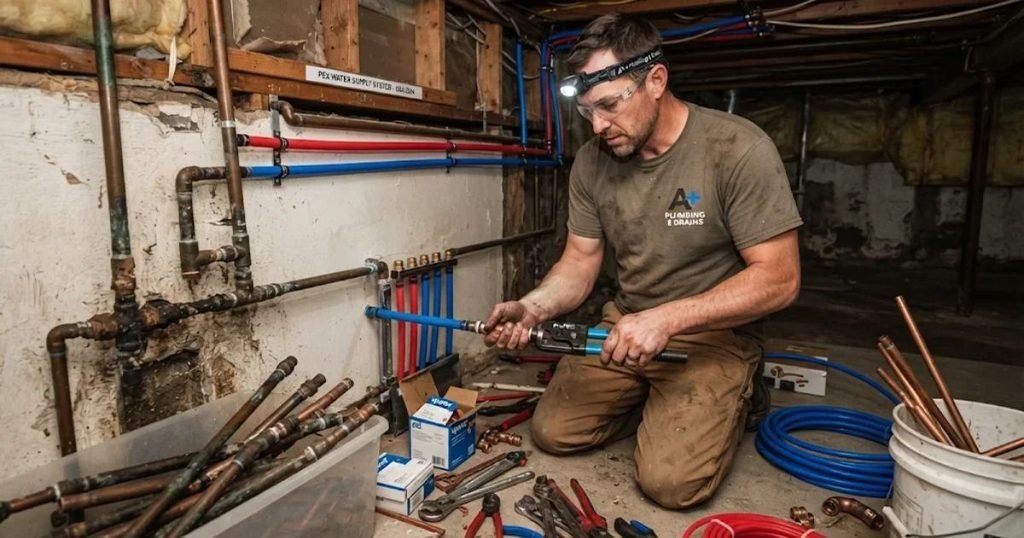
How Much Does It Cost to Replace Copper Pipes?
In the United States, the national average copper pipe replacement cost varies dramatically depending on whether you are patching a single leak or replacing every supply line in your home.
For minor, localized repairs such as cutting out a corroded two-foot section of pipe under a sink or in an accessible basement ceiling homeowners generally spend $200 to $650. On the other hand, the whole house copper repiping cost for an average single-family home falls between $4,500 and $15,000, though large luxury properties or homes built on concrete slabs can exceed $20,000.
When contractors estimate larger jobs, they often calculate the copper pipe replacement cost per linear foot. Expect to pay between $8 and $20 per linear foot installed, which includes the copper tubing, fittings, solder, flux, and professional labor. By comparison, material-only prices for copper tubing at a hardware or plumbing supply store run roughly $2 to $6 per linear foot for standard residential sizes (1/2-inch and 3/4-inch), meaning labor accounts for the bulk of your final bill.
| Scope of Work | Estimated Total Cost | Cost Per Linear Foot (Installed) | Typical Timeline |
| Material Only (DIY Supply) | $20 – $1,500+ | $2 – $6 | N/A |
| Small Section Repair (1–5 ft) | $200 – $650 | $50 – $150+ (due to minimum trip fees) | 1 – 3 hours |
| Single Room / Fixture Line | $500 – $2,000 | $12 – $25 | Half day – 1 day |
| Partial Repipe (Main Trunk or Basement) | $1,500 – $4,500 | $10 – $20 | 1 – 2 days |
| Whole-House Copper Repipe | $4,500 – $15,000+ | $8 – $20 | 2 – 5 days |
Keep in mind that these figures represent realistic national averages. Plumbers in high-cost-of-living metro areas like New York, San Francisco, or Boston routinely charge 25% to 50% more than contractors in the Midwest or South. Pipe accessibility, local permit fees, and whether walls need to be opened will also shift your final price.
READ MORE: How to Clean Copper Plumbing Pipes
Copper Pipe Replacement Cost by Project Type
Not every corroded pipe requires tearing out your entire plumbing network. Below is how copper plumbing replacement cost breaks down across the most common residential projects.
Replacing a Small Leaking Copper Pipe Section
When a single pinhole leak develops in an exposed basement or utility room pipe, a plumber can shut off the water, cut out the damaged section, and solder in a new piece with slip couplings. Because most licensed plumbers charge a minimum service call fee plus one to two hours of labor, this straightforward repair usually runs $200 to $650.
Replacing Copper Pipes Under a Kitchen Sink
Kitchen sinks experience heavy daily use and frequent exposure to hot water, which accelerates internal wear on supply risers and shutoff valves. Replacing the hot and cold copper stubs, angle stops, and immediate branch lines beneath a kitchen sink typically costs $300 to $850, assuming the cabinetry allows reasonable access.
Replacing Bathroom Copper Plumbing
Bathrooms pack multiple water supply lines for the sink, toilet, shower, and tub into a tight footprint. Replacing the copper plumbing inside a single bathroom usually costs $1,000 to $3,000. Costs climb toward the higher end if plumbers must remove tile or cut into a tiled shower wall to reach the mixing valve and risers.
Replacing Copper Water Supply Lines
Your main water service line brings municipal water from the street meter into your home. Replacing a damaged exterior or basement main water supply line with heavy-duty copper typically costs $1,500 to $5,000+. Trenching through yard soil, navigating tree roots, or boring beneath a driveway adds significant excavation labor.
Replacing Copper Pipes Throughout an Entire House
A full residential repiping project replaces every hot and cold distribution line from the main shutoff valve to every fixture in the house. Depending on the number of stories and bathrooms, the cost to repipe a house with copper generally ranges from $4,500 to $15,000+, excluding drywall restoration and painting.
| Project Type | Estimated Cost Range | Primary Cost Drivers |
| Small Leaking Section | $200 – $650 | Plumber minimum service fee, pipe diameter, ease of shutting off water |
| Under Kitchen Sink | $300 – $850 | Cabinet clearance, condition of existing shutoff valves, solder vs. compression fittings |
| Single Bathroom Plumbing | $1,000 – $3,000 | Number of fixtures, tile vs. drywall access, shower valve replacement |
| Main Water Supply Line | $1,500 – $5,000+ | Trench depth, distance from street to house, soil type, landscaping/concrete obstacles |
| Whole-House Repiping | $4,500 – $15,000+ | Total square footage, number of bathrooms, number of stories, foundation type |
READ MORE: PEX vs Copper Piping: Which Is Better for Your Home?
Cost to Replace Copper Pipes by Home Size
Estimators often use square footage as a starting baseline for whole-house repiping, as larger homes naturally require more linear feet of copper tubing. However, square footage alone never tells the whole story. A 2,000-square-foot ranch home with two bathrooms and an open basement ceiling is far faster and cheaper to repipe than a 2,000-square-foot two-story home with three bathrooms built on a concrete slab.
Fixture count is just as important as floor area. Every sink, toilet, shower, washing machine, refrigerator ice maker, water heater, and exterior hose bib requires dedicated supply branches, shutoff valves, and fittings.
| Home Size (Sq. Ft.) | Typical Bathroom Count | Estimated Copper Repipe Cost | Estimated Pipe Length |
| 1,000 sq. ft. | 1 – 1.5 Baths | $4,000 – $6,500 | 150 – 250 linear ft. |
| 1,500 sq. ft. | 2 Baths | $5,500 – $8,500 | 250 – 350 linear ft. |
| 2,000 sq. ft. | 2 – 2.5 Baths | $7,000 – $11,000 | 350 – 450 linear ft. |
| 2,500 sq. ft. | 2.5 – 3 Baths | $8,500 – $13,500 | 450 – 550 linear ft. |
| 3,000+ sq. ft. | 3 – 4+ Baths | $10,500 – $18,000+ | 550 – 750+ linear ft. |
What Factors Affect Copper Pipe Replacement Costs?
Two homeowners on the same street can receive vastly different quotes for copper pipe installation cost. Understanding the seven core variables behind plumbing estimates helps explain why prices fluctuate.
Type and Quality of Copper Pipes
Not all copper plumbing tubing has the same wall thickness. U.S. plumbing codes categorize rigid copper pipe into three main grades, color-coded for easy identification:
- Type M (Red lettering): The thinnest wall grade approved for residential use. It is the least expensive option and is commonly used for interior branch lines in areas where local codes permit it, though its thinner walls make it slightly more vulnerable to erosion over decades.
- Type L (Blue lettering): Medium wall thickness and the most widely recommended standard for residential interior water supply lines. Type L copper pipes cost roughly 20% to 35% more than Type M, offering superior durability and resistance to high water pressure.
- Type K (Green lettering): The thickest, heaviest, and most expensive copper grade. It is primarily used for underground main water service lines buried beneath soil or concrete, where external pressure and soil acidity demand maximum wall strength.
Labor Costs
Plumbing is a skilled trade, and plumbing labor costs in the U.S. typically run between $75 and $150 per hour per licensed plumber, with master plumbers in major cities charging up to $200 per hour. Installing copper requires precision: technicians must measure, cut, ream, clean, apply flux, and torch-solder (sweat) dozens or hundreds of copper elbows, tees, and couplings, followed by pressurized leak testing.
Pipe Accessibility
Where your pipes live directly dictates how many hours a crew spends on-site:
- Open Basements and Crawl Spaces: Exposed joists allow plumbers to run new lines quickly with minimal demolition.
- Behind Drywall and Ceilings: Multi-story homes require cutting access holes in drywall and fishing vertical risers through wall cavities, slowing down installation.
- Under Concrete Slabs: Homes built on slab-on-grade foundations often have copper lines buried beneath concrete. Rather than jackhammering the floor, plumbers frequently reroute new copper lines overhead through the attic and drop them down through interior walls, adding pipe length and labor.
Home Size and Plumbing Layout
Homes with centralized plumbing such as bathrooms stacked directly above a kitchen require shorter pipe runs and fewer fittings. Spread-out floor plans with an isolated laundry room, wet bar, or distant primary suite bathroom demand longer runs of 3/4-inch trunk lines and extra labor.
Old Pipe Removal
In many whole-house repipes, plumbers abandon old, drained copper lines inside closed wall cavities to save you thousands of dollars in demolition. However, when accessible old copper is removed, contractors must cut it out and haul it away. Because copper has high scrap value, some plumbers factor scrap recovery into their pricing, while others include haul-away time in their labor estimate.
Local Permits and Inspections
Most municipalities require plumbing permits for major pipe replacements or whole-house repiping. Permit fees generally range from $100 to $500, depending on your city or county. A licensed plumber will schedule a municipal rough-in and pressure inspection to verify that pipe sizing, hangers, and backflow preventers meet local building codes.
Drywall, Ceiling, and Flooring Repairs
Plumbers specialize in pipes, not finish carpentry. Unless your contract explicitly states otherwise, patching drywall cutouts, texturing ceilings, repainting walls, or replacing bathroom tile is billed separately. Homeowners often spend an additional $500 to $2,500+ on drywall and paint restoration after a whole-house repipe.
READ MORE: Signs Your Pipes Need Replacing — When to Repair vs. Replace & Costs
Copper Pipe Replacement Cost: Material vs. Labor
When reviewing an estimate to replace old copper pipes, it helps to see how each dollar is allocated across a typical $9,000 whole-house repiping project.
| Expense Category | Estimated Cost Range | Share of Total Budget | What It Covers |
| Plumbing Labor | $3,500 – $8,500 | 50% – 60% | Measuring, cutting, soldering, routing, system flushing, and pressure testing |
| Copper Pipes & Fittings | $1,200 – $3,500 | 20% – 25% | Type L/M copper tubing, elbows, tees, couplings, shutoff valves, hangers, solder |
| Drywall & Surface Repairs | $500 – $2,500 | 10% – 15% | Patching access holes in walls and ceilings (often performed by a subcontractor) |
| Permits & Inspections | $100 – $500 | 2% – 5% | Municipal building permit fees and code compliance inspections |
| Old Pipe Removal & Disposal | $200 – $800 | 3% – 5% | Cutting out accessible old pipes and clearing debris |
| Contingency / Unexpected Fixes | $300 – $1,000 | 5% – 10% | Replacing seized main shutoff valves, pressure-reducing valves (PRVs), or rotten subflooring |
Labor represents the largest portion of any copper repiping cost because rigid copper cannot simply be bent around corners like flexible plastic tubing. Every change in direction requires a separate fitting that must be cleaned, fluxed, and soldered by hand in tight spaces without scorching nearby framing.
READ MORE: Best Practices to Prevent Frozen Pipes
Copper vs. PEX vs. CPVC: Which Is More Affordable?
If you are facing a major repipe, you do not necessarily have to replace old copper with new copper. Comparing copper vs PEX repiping cost as well as CPVC can reveal substantial savings depending on your budget and local building codes.
| Feature | Copper (Type L / M) | PEX (Cross-Linked Polyethylene) | CPVC (Chlorinated PVC) |
| Material Cost (Per Linear Ft.) | $2.00 – $6.00 | $0.50 – $2.00 | $0.50 – $1.50 |
| Installed Cost (Whole House) | $4,500 – $15,000+ | $2,500 – $8,500 | $3,000 – $9,000 |
| Expected Lifespan | 50 – 70+ years | 40 – 50+ years | 40 – 50 years |
| Corrosion Resistance | Susceptible to acidic water & pitting | Immune to corrosion and scale | Immune to corrosion |
| Freeze Resistance | Rigid; bursts easily when frozen | Flexible; expands slightly before bursting | Rigid; cracks easily when frozen |
| UV / Sunlight Tolerance | Excellent (approved for outdoor use) | Poor (degrades in direct sunlight) | Poor (becomes brittle in sunlight) |
| Installation Speed | Slow (requires torch soldering) | Fast (flexible tubing, crimp/expansion rings) | Moderate (requires solvent cement curing) |
Choosing Copper vs. Alternatives
- Sticking with Copper: New Type L copper offers unmatched longevity, resists rodents, withstands high heat near water heaters, and appeals to homebuyers who view copper as a premium upgrade. However, it carries the highest upfront price and can still corrode if your home has acidic well water or high water velocity.
- Switching to PEX: PEX has become the most popular repiping material in the U.S. Because flexible PEX coils snake through walls like electrical wire, plumbers need far fewer fittings and cut fewer drywall holes, often cutting whole-house repiping costs by 30% to 50%. Follow manufacturer rules regarding UV exposure and water heater clearances (typically requiring an 18-inch copper stub-out at the heater).
- Switching to CPVC: Rigid CPVC plastic is inexpensive and resists corrosion, though it requires chemical glues that emit fumes during installation and can become brittle after several decades.
READ MORE: Does a Plumber Replace Pipes?
Signs Your Copper Pipes Need Replacement
Copper pipes rarely fail overnight. Instead, they give off clear warning signs as copper pipe corrosion progresses from the inside out:
- Green or blue discoloration around pipe connections: Chalky green or bluish-green buildup (patina) on joints and valves indicates slow oxidation or minor seepage reacting with oxygen and minerals.
- Pin-hole leaks: Tiny, pinpoint holes caused by pitting corrosion often triggered by acidic water, aggressive chlorine levels, or stray electrical currents are a classic sign of aging copper.
- Frequent plumbing leaks: Fixing one leak only to have another appear a few months later usually means the entire system is nearing the end of its service life.
- Reduced water pressure: Internal mineral scale and corrosion buildup narrow the inside diameter of older pipes, restricting flow to showers and faucets.
- Water stains on ceilings or walls: Yellowish-brown rings, bubbling paint, or warped baseboards point to concealed leaking copper pipes behind finished surfaces.
- Unusual changes in water appearance or taste: Blue-green water tints, metallic tastes, or rust-colored water (when old galvanized steel fittings connect to copper) signal internal pipe degradation.
If you notice a single green joint in an otherwise clean basement, a localized repair is usually all you need. However, if pinhole leaks or heavy corrosion appear across multiple rooms, schedule a whole-home plumbing inspection to evaluate the entire network.
Is It Better to Repair or Replace Copper Pipes?
Deciding between patching a leak and investing in a full replacement comes down to the age of your plumbing, the cause of the damage, and cumulative repair costs.
| Factor | Repair a Single Section | Full Copper or PEX Repipe |
| System Age | Under 30–35 years old | Over 45–50 years old |
| Leak History | First isolated leak (e.g., frozen pipe or physical dent) | Two or more pinhole leaks in the past 1–2 years |
| Pipe Condition | Surrounding copper looks bright, clean, and solid | Widespread green pitting, flaking, or corroded valves |
| Upfront Cost | Low ($200 – $650) | High ($4,500 – $15,000+) |
| Long-Term Risk | High risk of future water damage if pipes are thinning | Virtually eliminates pipe-failure leak risk for decades |
A localized repair makes financial sense when damage stems from an isolated event such as a frozen pipe near an exterior wall or an accidental nail puncture during a remodel and the rest of your copper tubing is structurally sound. Conversely, spending $400 to $600 every few months to chase recurring pinhole leaks quickly adds up, and a single hidden leak behind a wall can cause thousands of dollars in mold and drywall damage.
How to Save Money on Copper Pipe Replacement
You should never cut corners on plumbing safety, proper pipe sizing, or municipal permits, as subpar work leads to catastrophic water damage. However, you can keep your cost to replace copper pipes under control with a few smart strategies:
- Get at least three detailed plumbing estimates: Prices vary widely between independent local plumbers and large national franchises. Gather three itemized quotes to establish a fair market rate.
- Compare the exact same project scope across quotes: Verify that every bid specifies the same pipe grade (such as Type L copper vs. Type M), fixture count, and valve replacements.
- Ask whether old pipe removal is included: Confirm whether the quote includes removing and disposing of old pipes or leaving abandoned lines in place.
- Check whether permits and inspections are included: Ensure municipal permit fees are built into the written estimate rather than tacked on as a surprise charge later.
- Compare copper and PEX options: Ask your plumber to quote both a copper repipe and a PEX repipe so you can see the exact price difference for your floor plan.
- Schedule non-emergency work when practical: Emergency weekend or after-hours plumbing rates often carry a 50% to 100% surcharge. Shutting off the water at the main valve and scheduling a weekday appointment saves money immediately.
- Ask about warranties and workmanship guarantees: Look for contractors offering at least a 1- to 5-year workmanship warranty alongside manufacturer material warranties.
- Address small leaks early: Fixing a minor drip immediately prevents secondary expenses like rotted subfloors, ruined cabinetry, and mold remediation.
Frequently Asked Questions
How much does it cost to replace copper pipes in a house?
Replacing copper pipes throughout an entire house typically costs between $4,500 and $15,000 in the U.S., with most average-sized single-family homes landing around $7,000 to $11,000. Smaller 1,000-square-foot homes may start near $4,000, while large multi-story houses or homes with concrete slab foundations can exceed $18,000, excluding drywall and painting repairs.
How much does it cost to replace copper pipes per linear foot?
The installed copper pipe replacement cost per linear foot generally ranges from $8 to $20, covering Type L or Type M copper tubing, fittings, solder, and professional labor. Material-only prices for standard 1/2-inch and 3/4-inch copper pipe run $2 to $6 per linear foot, while small repairs may cost $50+ per foot due to minimum service call fees.
Is it cheaper to replace copper pipes with PEX?
Yes, replacing old copper pipes with PEX is typically 30% to 50% cheaper than installing new copper. While a whole-house copper repipe averages $4,500 to $15,000, a comparable PEX repipe usually costs $2,500 to $8,500. PEX tubing costs less per foot and snakes flexibly through walls, drastically reducing labor hours and drywall cutouts.
How long do copper plumbing pipes last?
Properly installed copper plumbing pipes generally last 50 to 70 years, and sometimes longer under ideal conditions. Type L copper tends to last longer than thinner Type M copper. However, aggressive water chemistry such as acidic water (low pH), high mineral content, or excessive water velocity can trigger pitting corrosion and shorten pipe lifespan to 25–35 years.
Does homeowners insurance cover copper pipe replacement?
Most standard homeowners insurance policies do not cover the cost of replacing old, worn-out, or corroded copper pipes, as gradual deterioration is considered routine home maintenance. However, insurance often covers sudden and accidental water damage caused by a burst pipe such as ruined drywall, flooring, or cabinetry subject to your deductible and specific policy exclusions.
Final Thoughts:
Replacing aging or leaking copper pipes is a major home improvement expense, but delaying a failing plumbing system carries far greater financial risk. While a small localized repair may only set you back a few hundred dollars, a full-house copper repipe requires thoughtful budgeting around pipe grade, home layout, accessibility, and local labor rates.
Before committing to a major plumbing project, schedule inspections with at least three licensed local plumbers, request itemized written quotes for both copper and PEX options, and verify what is included in the scope of work. Taking the time to compare qualified professionals ensures your home gets reliable, code-compliant water supply lines built to last for decades.
Sources & Cost Disclaimer
- Sources: National residential plumbing cost data and material benchmarks referenced from Angi, HomeGuide, HomeAdvisor, Forbes Home, the Copper Development Association (CDA), and International Residential Code (IRC) standards.
- Cost Disclaimer: The prices listed in this article are national U.S. estimates for informational purposes only and do not represent a guaranteed contractor quote. Actual plumbing costs vary based on regional labor markets, copper commodity prices, home accessibility, permit requirements, and individual contractor pricing.

