If you’ve ever looked at a plumbing fitting, faucet connection, or water heater port and felt confused by abbreviations like FNPT, MNPT, FIP, or MIP, you’re not alone. Plumbing shorthand can feel like a foreign language especially for homeowners and DIY beginners trying to understand what parts they actually need.
One of the most common questions people ask is: what does FNPT mean in plumbing? You’ll see this term on fittings, product descriptions, and installation guides, yet it’s rarely explained in plain English.
In simple terms, FNPT means “Female National Pipe Thread,” and it refers to a fitting with internal tapered threads designed to connect to a matching male NPT pipe or fitting. Understanding this one term can instantly make plumbing projects easier, safer, and far less frustrating.
In this guide, we’ll break down FNPT step by step what it means, how it works, how it compares to MNPT, where it’s used, and how to avoid common mistakes using real-world examples and everyday language. Lets deep dive into “What Does FNPT Mean in Plumbing?”
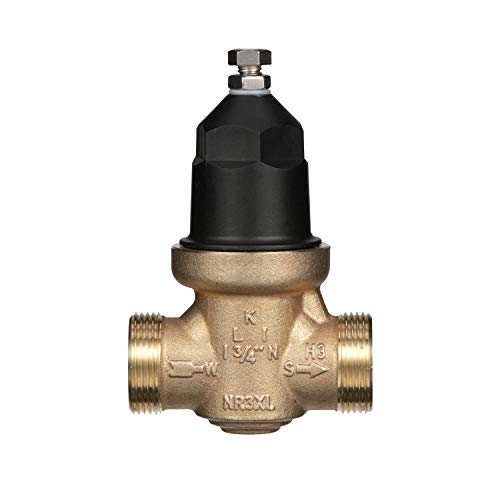
Don’t let your plumbing blow a gasket. Get the NR3XL. Check Product details below- 👇
What Does FNPT Mean in Plumbing?
FNPT stands for Female National Pipe Thread. Let’s break that down into simple pieces:
- Female: The fitting has threads on the inside
- National Pipe Thread (NPT): A U.S. standard for tapered pipe threads used in plumbing and gas systems
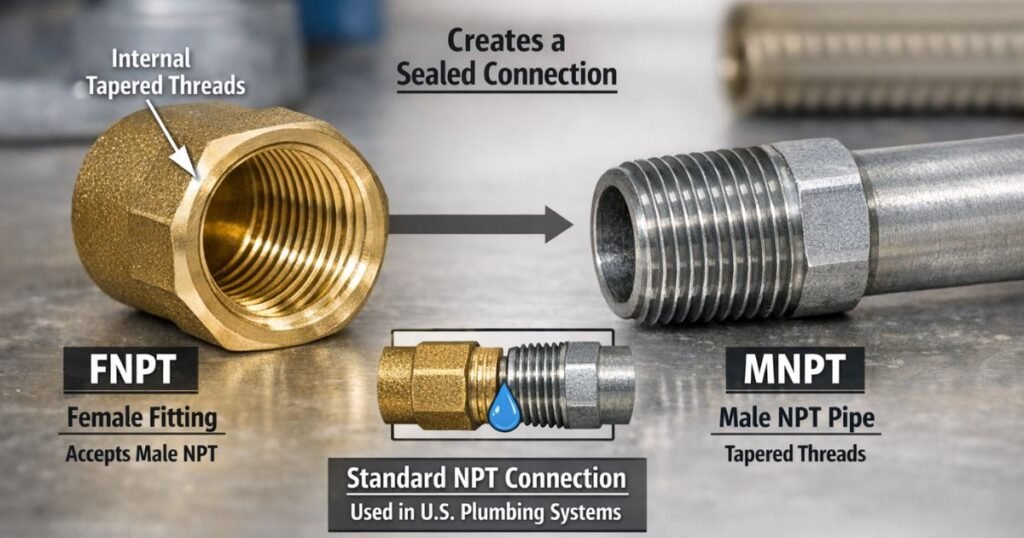
- FNPT: A female fitting designed to accept a male NPT (MNPT) connection
So when someone asks what does FNPT mean in plumbing, the short answer is:
FNPT is a plumbing fitting with internal tapered threads that screw onto a male NPT pipe or fitting to create a sealed connection.
FNPT threads are extremely common in residential plumbing throughout the United States and are regulated under ANSI (American National Standards Institute) standards.
Understanding the “Female” Side of Plumbing Threads
In plumbing, the terms male and female describe how two parts connect not anything more complicated than that.
What “Female” Means in Threaded Connections
A female threaded fitting:
- Has threads cut inside the opening
- Receives or accepts a male threaded pipe or fitting
- Is often labeled as FNPT, FIP, or female NPT fitting
You’ll find female threads on things like:
- Faucet supply inlets
- Shower valve ports
- Water heater connections
- Pipe couplings and adapters
If you can look inside the fitting and see spiral threads, you’re almost certainly dealing with a female NPT fitting.
How do FNPT threads actually work?
They’re tapered, meaning they get slightly narrower as you go deeper into the thread. This design creates a wedge-like fit when you screw in a male thread, helping to seal against leaks without needing extra gadgets. In the USA, we follow ANSI standards for NPT, which ensures everything fits consistently whether you’re in California or New York.
For homeowners, knowing about FNPT plumbing meaning can save you trips back to the store. Say you’re replacing a showerhead; the arm coming out of the wall often has FNPT threads inside, waiting for the male end of the head to screw in. It’s straightforward once you get the hang of it.
READ MORE: What is a PRV in Plumbing?
FNPT vs MNPT: What’s the Difference?
One of the most common questions I get from DIY beginners is about FNPT vs MNPT. They’re like two sides of the same coin, designed to work together, but mixing them up can lead to frustration and leaks.
- FNPT (Female National Pipe Thread): Internal threads inside the fitting. It’s the “receiver” in the connection. Common on the ends of valves, faucets, or pipe adapters where something screws into it.
- MNPT (Male National Pipe Thread): External threads on the outside. This is the “plug” that screws into the female side. You’ll see it on pipe ends, nipples, or plugs.
FNPT vs MNPT Explained Side by Side
| Feature | FNPT | MNPT |
| Full Name | Female National Pipe Thread | Male National Pipe Thread |
| Thread Location | Inside the fitting | Outside the fitting |
| Function | Receives a male thread | Screws into a female fitting |
| Common Label | FNPT or FIP | MNPT or MIP |
In simple terms:
- FNPT = inside threads
- MNPT = outside threads
When Each Type Is Used
- Use FNPT fittings when you need to accept a threaded pipe or nipple
- Use MNPT fittings when you need to screw into a port or adapter
Most plumbing systems use both, working together as a matched pair.
READ MORE: What Is a Manifold in Plumbing?
Common Homeowner Mistakes
- Buying two FNPT fittings and expecting them to connect
- Assuming thread size equals pipe diameter
- Mixing FNPT with non-NPT threads (like BSP or compression fittings)
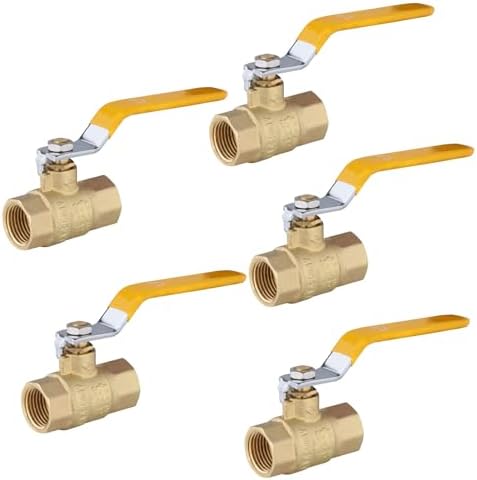
Never Run Out – Get 5 Heavy-Duty Valves in One Click. Check Product details below- 👇
Where FNPT Fittings Are Commonly Used
FNPT fittings pop up all over residential plumbing in the USA. They’re versatile, reliable, and follow those ANSI/NPT standards we rely on for everything from water to gas lines. As an experienced plumber, I’ve installed thousands of these, and they’re a go-to for their secure seal.
Let’s look at some everyday spots:
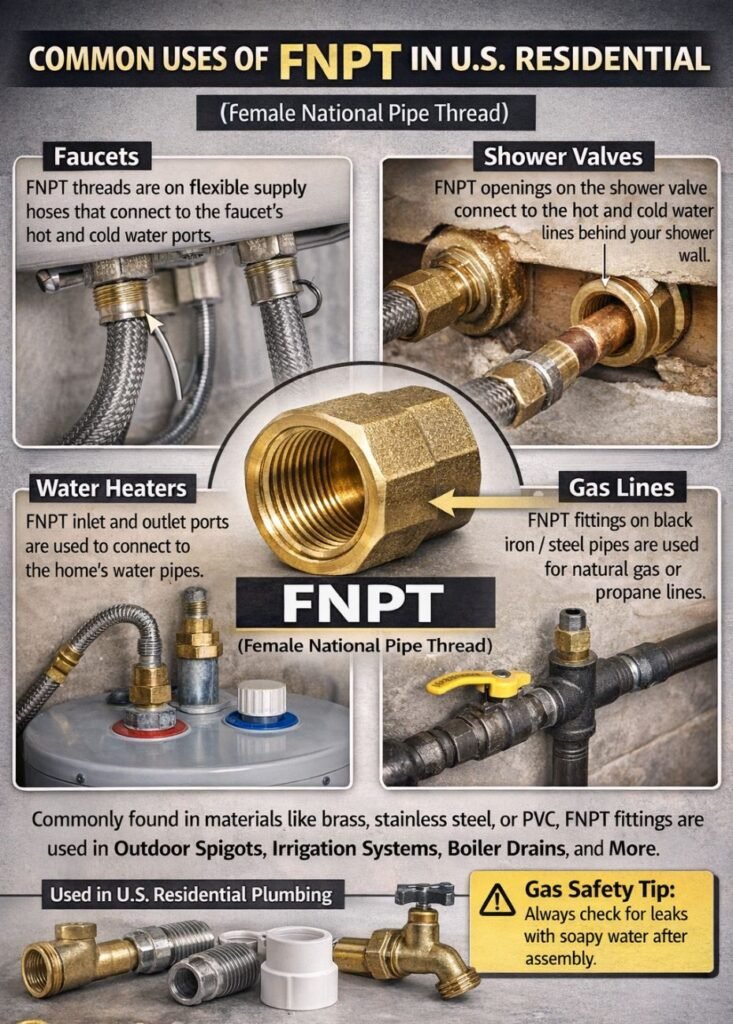
- Faucets: Your kitchen or bathroom sink faucet often has FNPT threads on the supply lines. The flexible hoses connect via male ends screwing into the faucet’s female ports. It’s why swapping a faucet is a common DIY win just match the sizes.
- Shower Valves: Inside your shower wall, the valve body usually features FNPT openings for the hot and cold water lines. When installing a new showerhead or handle, you’ll deal with these to ensure no drips.
- Water Heaters: On a typical gas or electric water heater, the inlet and outlet ports are FNPT. You screw in MNPT nipples or adapters to connect to your home’s pipes. Remember, for gas lines, use approved materials and consider calling a pro if you’re unsure leaks here can be dangerous, though FNPT itself is safe when done right.
- Gas Lines: FNPT is used in black iron or steel pipes for natural gas or propane. For example, connecting a stove or dryer often involves FNPT fittings on the appliance side. But here’s a safety note: Always test for leaks with soapy water after assembly, and never DIY if you’re not comfortable gas isn’t forgiving.
Other places? Outdoor spigots, irrigation systems, or even boiler drains. In the US, materials like brass, stainless steel, or PVC with threaded adapters are common for FNPT, depending on the application. Brass holds up well against corrosion in wet areas.
For plumbing learners, start with low-pressure water lines to practice. FNPT’s taper makes it forgiving, but always use the right tools like adjustable wrenches to avoid damaging the fitting.
READ MORE: What Is Rough-In Plumbing?
How to Identify an FNPT Fitting
Spotting an FNPT fitting is easier than you think, especially for beginners. No need for fancy tools just your eyes and maybe a ruler.
First, look for internal threads. If the threads are on the inside of the opening, it’s female. Male threads stick out externally. FNPT threads will feel smooth but tapered run your finger along them (carefully), and you’ll notice they narrow slightly toward the back.
Thread direction? Standard right-hand threads: clockwise to tighten, like most screws. Sizes are marked, but if not, measure the outside diameter (OD) of the fitting and count the threads per inch.
Tips for beginners:
- Use a thread gauge if you have one it’s like a keychain with metal teeth that match common TPI.
- Compare to known fittings: Grab a 1/2-inch FNPT from the store as a reference.
- Check for markings: Many fittings stamp “FNPT” or “NPT(F)” right on them.
In a pinch, try screwing in a known MNPT piece. If it fits snugly with a taper, bingo. Avoid guessing mismatched threads lead to leaks or stripped parts.
Don’t Run to the Store Mid-Job – Stock Your Toolbox Now. Check Product details below- 👇
FNPT Thread Sizes and Standards
Diving into FNPT thread sizes might sound technical, but it’s straightforward. In the US, we stick to NPT standards from ANSI B1.20.1, which defines the taper, angle, and pitch.
The taper is 1/16 inch per inch of length meaning the diameter decreases by 3/4 inch per foot. This creates that self-sealing wedge. Common FNPT sizes in residential plumbing:
- 1/8 inch: OD about 0.405 inches, 27 TPI. Used for small lines like air compressors.
- 1/4 inch: OD 0.540 inches, 18 TPI. Great for low-flow faucets or gauges.
- 3/8 inch: OD 0.675 inches, 18 TPI. Common in shower arms.
- 1/2 inch: OD 0.840 inches, 14 TPI. Standard for most home water lines, like sink supplies.
- 3/4 inch: OD 1.050 inches, 14 TPI. For main lines, water heaters.
- 1 inch: OD 1.315 inches, 11.5 TPI. Heavier duty, like well pumps.
Larger sizes exist, but for homes, these cover 90% of needs.
Compatibility? FNPT mates perfectly with MNPT of the same size. But watch for other types: NPS (straight) won’t taper-seal, and BSP (British) has a different angle (55 degrees vs. NPT’s 60). Stick to NPT for US plumbing.
How to Properly Seal FNPT Connections
Sealing FNPT connections is crucial for leak-free plumbing. The taper helps, but we add sealants for extra insurance.
Two main options: Teflon tape (aka plumber’s tape) or pipe dope (a paste).
- Teflon Tape: White or yellow ribbon you wrap around MNPT threads before screwing in. Wrap clockwise, 2-3 layers. It’s clean, easy for beginners, and lubricates for smooth tightening. Great for water lines.
- Pipe Dope: A brush-on paste. Apply to male threads; it fills gaps better in high-pressure or gas lines. Messier but durable some types are rated for gas.
Which to choose? Tape for most DIY water jobs; dope for gas or vibrations. Sometimes both for tough seals, but check manufacturer advice.
Importance? Leaks waste water, damage walls, or worse with gas. Hand-tighten first, then 1-2 turns with a wrench don’t overdo it.
READ MORE: What Does MIP Stand for in Plumbing?
Common FNPT Plumbing Mistakes to Avoid
Even pros slip up, but avoiding these keeps your projects smooth.
- Cross-Threading: Starting at an angle strips threads. Fix: Align straight, hand-turn until snug.
- Mixing Incompatible Thread Types: FNPT with BSP or straight threads leaks. Solution: Double-check labels.
- Over-Tightening: Cracks fittings or deforms threads. Rule: Hand-tight plus 1-2 wrench turns.
Other pitfalls: Skipping sealant (hello, drips), using damaged fittings, or ignoring material compatibility (e.g., plastic with hot water). Inspect everything first.

FAQs About FNPT
Is FNPT the same as FIP?
Pretty much FIP (Female Iron Pipe) is often used interchangeably with FNPT in the US. Both refer to female NPT threads, especially on iron or steel. But technically, FIP emphasizes the material, while FNPT is about the thread standard.
Can FNPT connect to MNPT?
Absolutely that’s what it’s designed for! Female internal threads mate with male external ones for a tapered seal.
Is FNPT used for gas and water?
Yes, for both. It’s common in water supply and gas lines, but use rated materials and sealants for gas, and always test for leaks.
What’s the difference between FNPT threads and straight threads?
FNPT is tapered for sealing; straight (like NPS) is parallel and needs O-rings or gaskets.
How do I measure FNPT pipe thread size?
Measure the OD at the end, then check against NPT charts. Count TPI with a gauge for confirmation.
Are FNPT fittings compatible with PVC pipes?
Yes, with threaded PVC adapters. But PVC threads can be brittle don’t over-tighten.
Conclusion
Wrapping up, what does FNPT mean in plumbing? It’s Female National Pipe Thread, the internal tapered threads that make secure connections in everything from faucets to water heaters. We’ve covered the basics, differences like FNPT vs MNPT, common uses, identification tips, sizes, sealing methods, and pitfalls to dodge.
As a plumber who’s seen it all, I can assure you: Grasping FNPT makes DIY plumbing way less intimidating. Next time you’re at the hardware store, you’ll grab the right FNPT fitting with ease. If a project feels overwhelming, though, pros are just a call away. Happy plumbing stay dry out there!