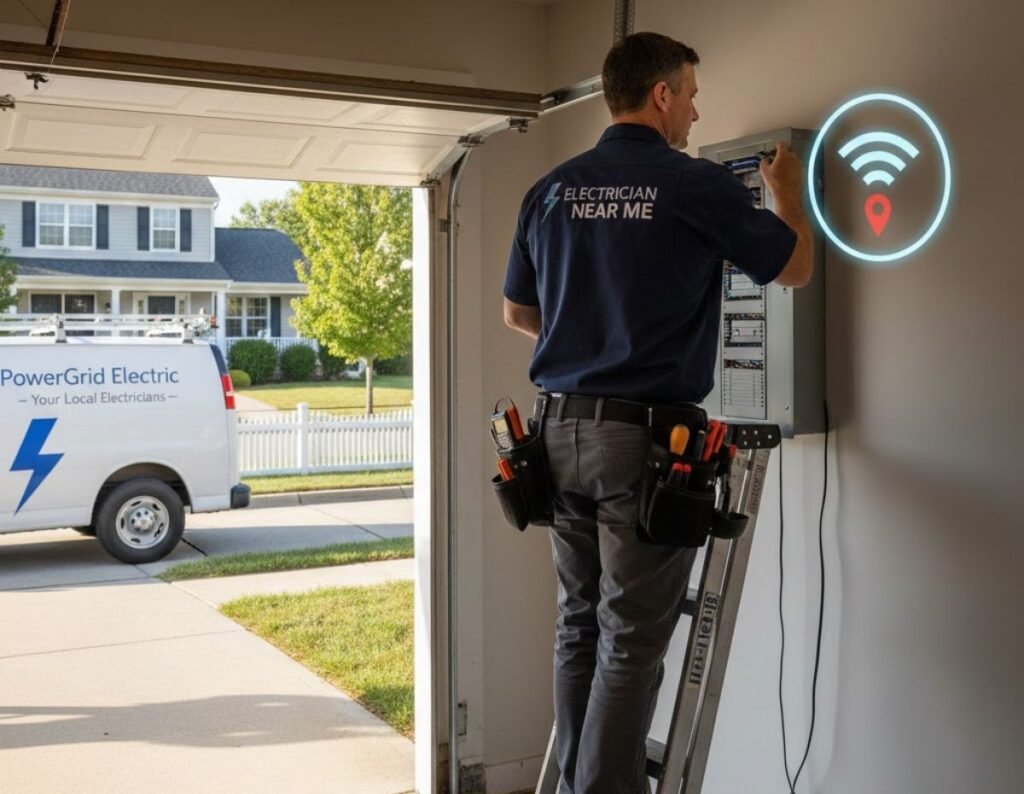
When I upgraded the electrical service in my old ranch-style house to handle a new workshop and a couple of EV chargers, what surprised me most was how smoothly everything went once I understood the basics no major hiccups, just a solid plan and the right pros. If you’re staring at flickering lights during peak hours or planning a big addition, a 400 amp service panel might be on your radar. It’s a beefy upgrade that powers modern homes without breaking a sweat.
In this guide, we’ll break down everything U.S. homeowners need to know about a 400 amp service panel. From figuring out if it’s right for your setup to diving into the 400 amp panel cost in the USA, the installation process, and even NEC requirements for 400 amp service, you’ll get the straight talk. We’ll cover timelines, when a service upgrade to 400 amp makes sense over sticking with 200 amp, and practical tips to avoid surprises. Whether you’re a DIY-savvy homeowner chatting with contractors or a property manager budgeting for rentals, this’ll prep you for those conversations and help you decide if it’s time to pull the trigger. Lets deep dive into “400 Amp Service Panel: What U.S. Homeowners Need to Know”
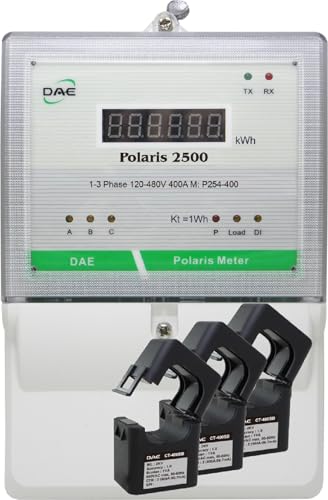
“Bridge the Data Gap. Get the RS485-Enabled 400A Smart Meter.” See below-
What is a 400 Amp Service Panel? (What we mean by “service”)
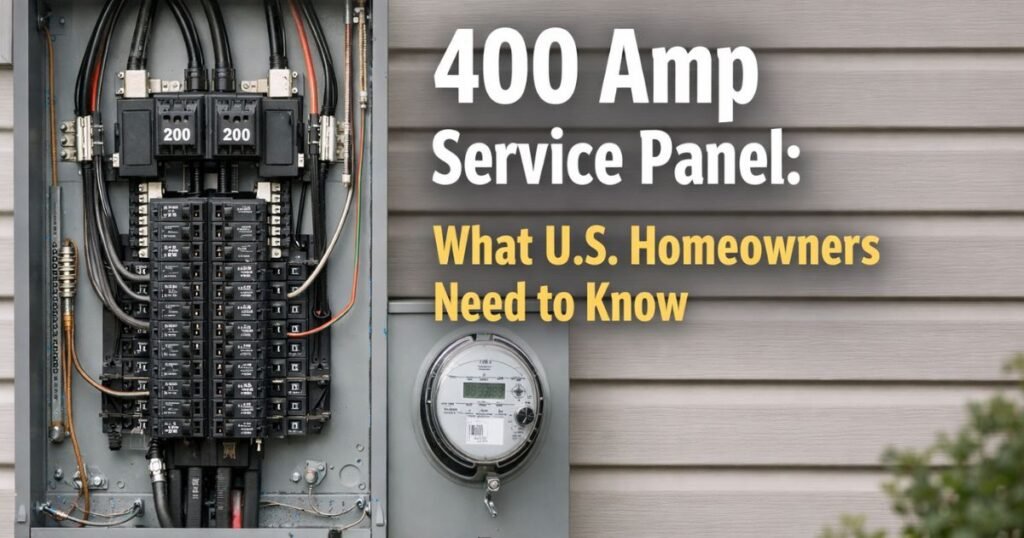
A 400 amp service panel is the main electrical service equipment sized to safely deliver up to 400 amps of available current at the service voltage (typically 120/240 V split-phase in U.S. homes). Practically, that means the meter, the service conductors from the utility, the main disconnect(s), and the distribution equipment (bus bars and breakers) are all sized so the building can draw much larger peak loads than a typical 100 A or 200 A service.
Quick distinctions homeowners should know:
- Meter — device owned by the utility (or meter socket) that records kWh usage.
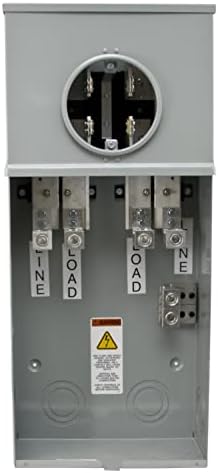
- Meter-main / Meter-socket / Meter-pan — physical equipment where the meter sits; sometimes the meter and main breaker are combined into a meter-main assembly.
- Main breaker / panel — the homeowner’s main disconnect and load distribution device (circuits, breakers, subpanels).
- Service entrance vs. subpanel — the service entrance is the utility connection into your home; subpanels are downstream distribution panels fed from the main.
Common residential configurations for 400A service include a single 400A meter-main feeding a main disconnect and multiple distribution panels, or two 200A panels tied together via a 400A rated service (sometimes called dual 200A panels). The physical gear differs (meter-main combo, separate meter socket + main, outdoor or indoor setups).
Who Needs a 400 Amp Service? (Practical triggers)
Not every home screams for a 400 amp service upgrade most get by fine on 200 amps. But if your place is pushing the limits, it’s worth considering. I remember helping a buddy with his sprawling suburban home; he had a finished basement, multiple AC units, and was adding EV chargers. His old 200 amp panel tripped constantly during summer barbecues. That’s when a 400 amp makes sense. A 400A residential service is not for every home. Typical triggers include:
- Large modern houses (commonly 3,500+ sq ft) with many electric loads.
- Multiple Level 2 EV chargers used at the same time (two or more fast chargers).
- Heavy workshop or commercial-grade equipment (large welders, compressors, CNC machines).
- Accessory dwelling units (ADUs) or rental units on the same service that consume substantial power.
- Homes planning big electrical additions: all-electric HVAC (multiple heat pumps), kitchen remodel with dual electric ranges, or large battery + solar systems sized for whole-house backup.
- Future-proofing homeowners who want plenty of headroom for unknown upgrades.
Real-world example: a family I worked with added a detached ADU plus two EV chargers and a whole-house heat-pump system. Their calculated load crossed the comfortable threshold for 200A capacity, so we recommended a 400A service to avoid multiple future upgrades.
“Maximize Your Space. Get the Narrow 400A Enclosure Today.” See Below-
READ MORE: Cost to Upgrade Electrical Panel to 200 Amps
Average 400 Amp Service Panel Cost in the USA (national picture + 2024–2026 context)
Costs vary widely by region, existing equipment, and how much utility/ground work is required. Across reputable house-service cost guides and contractor estimates, a realistic installed range for a residential 400A service upgrade falls between roughly $3,000 and $20,000+, depending on complexity — most straightforward upgrades tend to cluster in the $3,000–$12,000 band, while complicated jobs (long trenching, transformer work, extensive utility charges) can push total costs far higher.
To make this useful at a glance, break the job into three pieces:
- Device / Materials — the 400A panel or meter-main, breakers, meter socket, service cable, grounding electrodes, conduits, and hardware.
- Labor — electrician hours, utility crew time (if the utility is involved), and any subcontracted trades (excavation, concrete).
- Permits & Fees — local permit, inspection, and possibly utility upgrade fees and transformer work.
Typical national patterns observed 2024–2026: many contractors quote $3k–$8k for a straightforward upgrade where the meter/mast is nearby and no major trenching or transformer upgrades are needed; more involved jobs with long underground runs, new meter placement, or utility transformer changes commonly reach $10k–$20k+. Outliers do appear (some localized quotes as high as $20k–$26k when utilities, long distances, or complex site work are needed).
“Future-Proof Your Home. Get the Solar-Ready 400A Eaton Main.” See below-

Example Scenarios (Itemized sample budgets)
Below are three real-style example budgets to help you plan. These are representative your quote will vary by region and job details.
Example A — Simple new construction / meter-main swap (low complexity)
- Device / parts: 400A meter-main assembly, breakers, minor conduit $1,500
- Service cable & grounding materials: $600
- Labor (electrician, 8 hours @ local rate): $1,600 (rate varies)
- Permits & inspections: $200
- Utility meter set fee (typical small fee): $200
Total example A (approx): $4,100
Example B — Full upgrade on an older house (panel move + new grounding)
- Device / parts: 400A main panel, meter socket, breakers — $2,200
- Service entrance cable & conduit (overhead conversion/short underground): $1,200
- Grounding electrode system upgrades (rods, connections): $600
- Labor (licensed electrician + helper, 16 hours): $4,000
- Permits, inspections, local utility charges: $700
- Minor site work (repair drywall / siding): $500
Total example B (approx): $9,200
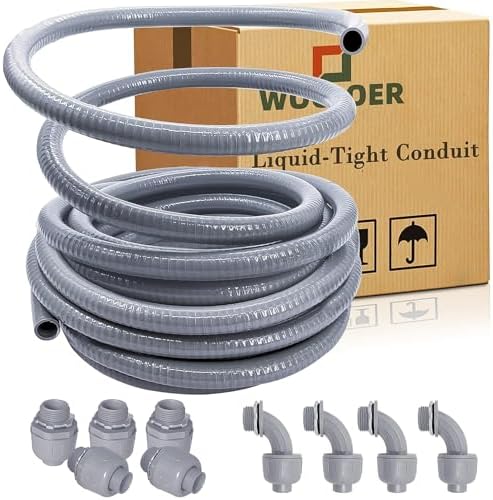
“Everything You Need in One Box. Get the Complete 50ft Conduit Kit.” See below-
Example C — Complex upgrade (underground conversion, trenching, transformer work)
- Device / parts: 400A meter + split panels, heavy service conductors — $3,000
- Underground trenching & conduit (150 ft): $3,500
- Transformer or utility service upgrade contributions: $4,000–$10,000 (varies widely)
- Labor (multi-day, electrician + utility coordination): $6,000
- Permits, meter/utility fees, inspections: $1,200
- Miscellaneous (concrete pad, landscaping restore): $1,200
Total example C (approx): $19,900 – $25,900 (high variance)
These scenarios reflect typical contractor guidance seen across the U.S. and show why quotes for a 400A upgrade can swing from a few thousand dollars to well into five figures depending on utility and site work.
“Maximum Protection for High-Voltage Arrays. Shop DIHOOL 400A.” See below-

Cost Breakdown: Parts & Components
Here’s what the main line-items usually are.
1. Panel / Meter Equipment
400A meter-main or meter socket + 400A main panel: $500–$3,000 depending on type (basic meter-main is cheaper; heavy-duty, outdoor NEMA enclosures cost more).
2. Service Entrance Cable
Overhead service conductors are usually less expensive than long runs of heavy underground cable. 400A rated conductors (copper or aluminum) cost more than 200A equivalents.
3. Disconnects, Bus Bars & Breakers
The bus and breaker hardware scale with the service rating — expect higher cost on breakers, transfer switches or 400A main disconnects versus standard 200A gear.
4. Meter Socket & Utility Hardware
Utilities sometimes provide the meter, sometimes charge for meter surgery or a new socket. If the utility owns the meter, homeowner costs vary by local practice.
5. Grounding & Bonding
Ground rods, conductor, clamps, and possible grounding electrode system upgrades are commonly required on older properties switching to a higher service. This is rarely optional proper grounding is fundamental to safety.
6. Underground vs. Overhead
Underground runs add trenching, conduit, and cable costs. Overhead is generally cheaper but may require a new mast or pole if the current one is unsuitable.
READ MORE: Whole House Surge Protector Cost in the USA (2026 Guide)
Labor & Installation Costs
Labor is one of the largest and most variable components.
1. Electrician rates & hours
Typical licensed electrician hourly ranges depend on region: many U.S. areas see $60–$120/hour for journey-level electricians; high-cost metro areas can be higher. A straight swap might take 8–12 hours; a full service upgrade with trenching, meter relocation and utility coordination can take 1–3 days of electricians’ time (or more). Expect labor to be a large share of the total on complex jobs.
2. Utility crew & fees
If the utility must replace or upgrade a transformer, set a new pole, or change a meter location, they may charge separate fees and schedule a crew sometimes this cost is billed to the customer (or absorbed by the utility depending on policy).
3. Excavation / Trenching
Underground service requires trenching and conduit installation. The cost depends on linear feet, soil conditions, and whether concrete cutting is necessary.
4. Other trades
Masonry or concrete pad for an outdoor transformer or meter bank, drywall repair for interior panel moves, or landscaping restoration are common extra costs.
5. Permit & inspection fees
These vary city to city; typical ranges run from $50 to $1,000+ depending on project valuation and jurisdiction. Always budget for local permitting.
Factors That Affect Total Cost (what adds or subtracts thousands)
- Local labor market: urban high-cost regions charge more hourly than rural areas.
- Existing service condition: if the old equipment is code-compliant and conveniently located, costs stay lower. Extensive rewiring or grounding fixes add cost.
- Meter/mast location & elevation: moving a meter or converting from overhead to underground will raise costs.
- Utility requirements: in some cases the utility requires you to pay for transformer upgrades or other infrastructure to serve the higher load. Those fees are highly variable by utility.
- NEC & code compliance: bringing an older setup up to current code (bonding, grounding, arc-fault / GFCI requirements on circuits) can add to the bill.
- Site obstacles: paved driveways, long distances, or rocky soil escalate trenching costs.
400 Amp vs 200 Amp: When Upgrade Makes Sense
Capacity comparison (simple):
- A 200A at 240V service can deliver up to 48,000 VA (200 × 240).
- A 400A at 240V service can deliver up to 96,000 VA (400 × 240).
Those are theoretical maximums actual usable load depends on load calculations and diversity factors. But in practical terms, 400A doubles the available capacity and gives far more headroom for simultaneous high-draw equipment.
Illustrative load math (explicit and simple):
- Typical modern electric range: ~8,000–12,000 W (8–12 kW).
- Level 2 EV charger (single-phase 40A @240V): 9,600 W (0.04 × 240 × 1000 = 9.6 kW).
- Heat pump or electric furnace: 3,000–12,000 W depending on size.
If you add two EV chargers (≈9.6 kW × 2 = 19.2 kW) plus an electric range (10 kW) and HVAC (6 kW), those peak demands can easily approach or exceed what a single 200A service can support comfortably without aggressive load management. This is why households planning multiple simultaneous high-draw loads often choose 400A.
Pros & Cons
- Pros: future-proofing, ability to run multiple EV chargers, more comfortable headroom for growth.
- Cons: higher upfront cost, more disruption during install, possible utility charges and need for bigger transformer capacity.
If you can meet your needs with a 200A service coupled with smart load management (e.g., staggered EV charging or a smart panel), that may be a lower-cost alternative.
READ MORE: Rewiring a House: Costs, Process, Permits, and What Homeowners Should Expect
Installation Process: Step-by-Step (what to expect on and before the workday)
Pre-installation planning
- Load study / site visit: licensed electrician evaluates your existing service, proposed loads (EVs, HVAC, shop), and utility access.
- Permit application: contractor pulls permit with the local Authority Having Jurisdiction (AHJ). Contractor or homeowner obtains required paperwork.
- Utility coordination: electrician schedules with the utility if the meter or transformer needs changes.
Day-of steps (typical)
- Temporary power plan: discuss if temporary power is needed for long jobs you might have temporary power feeds.
- Utility disconnect: utility may disconnect power for a short window to allow safe changeover.
- Remove old equipment & prepare mounting: electrician removes the old panel/meter and preps new mounting or pad.
- Set new equipment: install meter-socket, main panel(s), breakers, and run service conductors.
- Grounding & bonding: upgrade or connect grounding electrodes and bond per code requirements.
- Inspections: electrical inspector reviews the work; utility sets the meter and restores power once inspection and utility checks are clear.
Typical timeline: a simple swap can be done in a day plus scheduling of inspection. A full service upgrade often takes 2–5 business days including utility scheduling, trenching, and inspections again, site and permit schedules drive the calendar.
Safety tip: always expect temporary outages and plan for critical loads (freezers, medical equipment). Ask the contractor about temporary power options if needed.
NEC & Utility Considerations (plain language summary)
- The National Electrical Code (NEC) sets rules for safe service sizing, grounding electrode systems, and equipment installation. For service sizing, the NEC requires a load calculation (based on appliances, HVAC, and certain demand factors) to determine whether a larger service is justified. You don’t need to memorize code numbers your electrician will perform the load calc and advise on required equipment.
- Utility companies control the equipment up to the meter and determine transformer capacity and interconnection rules. If a larger transformer or other utility work is required to support 400A, you may be billed or scheduled for work that can add time and cost. Always include utility coordination in your plan.
Maintenance, Lifespan & Troubleshooting
Lifespan: modern service equipment commonly lasts 25–40 years depending on environment and usage. Outdoor enclosures and connections exposed to moisture or salt air may need earlier attention.
Routine maintenance: check for corrosion at outdoor connections, ensure breakers are not hot to the touch under load, and inspect grounding connections visually during scheduled home maintenance. A licensed electrician should perform testing or replacement of suspect equipment.
Common issues after upgrades:
- Loose connections causing heat or nuisance trips.
- Improperly sized subpanels leading to overloaded circuits.
- Utility coordination hiccups (e.g., meter is installed but transformer not sized to handle full simultaneous load).
If you see burning smell, visible arcing, melted insulation, or repeated breaker trips, shut off affected circuits and call a licensed electrician immediately.
Permits, Inspections & Hiring an Electrician
Permits matter. They’re required not just to follow the law but to protect safety and resale value. Work without a permit can cause insurance or sale issues later.
How to vet electricians:
- Verify license and insurance (general liability + workers’ comp).
- Ask for references and photos of similar jobs.
- Get itemized written quotes showing parts, labor hours, permit fees, and expected utility charges.
- Confirm who will coordinate the utility call (your electrician typically does this).
- Discuss warranty and post-install support.
What to ask on the first call:
- “Do you have experience with 400A residential upgrades in my area?”
- “Will you perform a load calculation and include that in the written estimate?”
- “Who pulls permits and coordinates with the utility?”
- “Do you have references or photos of similar installs?”
A good quote should clearly list the new equipment, labor estimate, permit costs, and any assumptions (no long trenching, utility covers pole change, etc.).
READ MORE: Temporary Power Pole: Cost, Requirements & Installation Guide
Cost-Saving Tips & Alternatives
- Staged upgrades: install a heavy-duty subpanel and defer full service upgrade until necessary.
- Two 200A panels vs single 400A: sometimes two 200A panels fed from a 400A service (or two 200A services) can be more cost-effective for distribution, but the utility still needs to supply the higher service if your demand requires it.
- Load management: smart panels or load-management systems can let you keep a 200A service while safely running high-draw devices by preventing simultaneous operation. This can be far cheaper than a full 400A upgrade.
- Utility incentives: ask your utility if they offer incentives for upgrades tied to EV programs or demand management policies vary widely.
- Negotiate scope: get multiple quotes and ask contractors to split quotes into “must-do” and “nice-to-have” so you can stage work.
When a 200A service with good load management and a smart charging schedule covers your needs, it’s often the cost-effective short-term choice.

Frequently Asked Questions (FAQ)
How much does a 400 amp panel cost?
Installed costs typically range $3,000–$12,000 for most residential installs; complex jobs can be more. Exact cost depends on site work and utility needs.
Can I install a 400A panel myself?
No. Service upgrade work involves coordination with the utility, permit requirements, and high-voltage connections only licensed electricians should perform this work.
How long does a 400 amp panel installation take?
A simple swap may be done in 1 day; a full upgrade with trenching and utility coordination typically spans 2–5 business days plus permit/inspection scheduling.
Will a 400A upgrade increase my property value?
It can improve appeal for buyers needing heavy electrical loads (EVs, ADUs, workshop), but value uplift varies by market it’s more a functional benefit than a guaranteed resale premium.
Do I need a new transformer?
Possibly. If the local transformer cannot support the new load, the utility may require an upgrade or additional transformer capacity this can add significant cost and schedule time.
How do I know if I really need 400A?
Start with a licensed electrician for a load study. If your peak loads (EV chargers, HVAC, ranges, shop equipment) exceed what a 200A service can comfortably supply, an upgrade is reasonable.
Final Thoughts
Upgrading to a 400 amp service panel is a big, sometimes expensive, decision but for homeowners planning multiple EV chargers, large HVAC or shop loads, or multi-unit dwellings, the investment removes a major bottleneck and reduces the chance of future disruptive upgrades. The right move is based on a careful load calculation, honest contractor quotes, and clear coordination with your utility.