Air-to-water (a.k.a. hydronic) heat pumps move heat from outside air into water that runs your home’s radiators, baseboards, or best of all radiant floors. They can also preheat domestic hot water. For U.S. homeowners thinking about swapping an oil or propane boiler (or planning a high-efficiency new build), they’re an elegant electrification option. Typical installed costs for a residential air-to-water / hydronic heat-pump system in the U.S. usually fall in the $10,000–$30,000 range depending on size and how much plumbing or radiant work you need with averages around $15k–$18k reported by industry aggregators. Lets deep dive into “Air to Water Heat Pump — Complete 2026 Buyer’s Guide (costs, brands, pros & cons)”
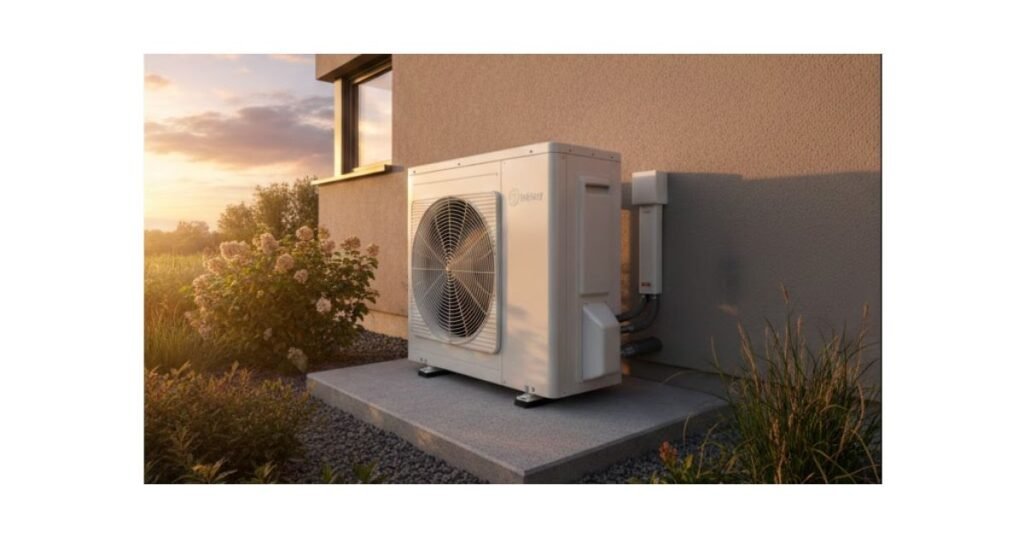
How an air-to-water heat pump works (simple, non-technical)
Think of it as “a refrigerator in reverse” that heats water instead of cooling food.
- An outdoor unit extracts heat from the outside air using a refrigerant loop.
- That heat is moved (via a compressor and heat exchanger) into water in a hydronic circuit.
- The heated water is pumped to floor loops, radiators, or a domestic hot-water tank.
- A buffer tank, mixing valves, and controls smooth operation and make the system play nicely with low-temperature emitters (radiant floors) and DHW tanks.
A common layout is a split or monobloc outdoor unit connected to an indoor hydro-station or buffer tank + manifold that distributes water to the house. For readers who like diagrams: NREL and JLC have good technical sketches of monobloc vs split hydronic systems.
Ready to simplify your radiant heating setup?
Get the Hydronic Radiant Heat Control Panel 1-Zone with all the key components already assembled for faster installation and reliable performance. Ideal for heated floors, snow melt, and radiant heat applications. Order now and upgrade your system with confidence. See Product below-

Why choose air-to-water over a boiler or ducted heat pump?
1. Efficiency & running cost.
Heat pumps can deliver 2–5× the heat per kWh of electricity used (COPs commonly 2.5–4.5 depending on temperatures and system design). That translates to major fuel savings if you’re replacing oil/propane or electric resistance.
2. Comfort.
Hydronic systems (radiant floors, low-temp radiators, convectors) give steady, draft-free heat and work very well with low-flow temperatures perfect for maximizing heat-pump COP. Research projects in the U.S. show air-to-water + radiant combinations perform well in low-load homes.
3. Domestic hot water (DHW).
Some air-to-water systems include or pair with indirect storage tanks for hot water a single hydronic system can handle both space heating and DHW. Viessmann’s Vitocal 100-AW is an example of an “all-in-one” kit built for that.
4. Emissions & future-proofing.
If your electricity is low-carbon (or you add solar), switching away from fossil boiler fuels cuts home CO₂ drastically.
When they aren’t ideal. Very poorly insulated homes or those that need very high water temperatures (old small-panel radiators sized for 180°F boiler water) may demand oversized or hybrid solutions or require radiator upsizing or underfloor retrofit to get the best efficiency.
Take control of two heating zones with one complete panel.
The Hydronic Radiant Heat Control Panel 2-Zone comes fully assembled with the key components you need for radiant floors, snow melt, and hydronic heating. Built for efficiency, reliability, and easier installation. Order yours today. See Product Below-

READ MORE: Heat Pump Installation Cost in 2026 (Real Prices, Examples & Savings)
Where air-to-water heat pumps shine
- New builds designed for low-temperature hydronics (radiant floors).
- Retrofitting oil or propane heated homes where replacing the boiler and piping is already on the table.
- Homes committed to radiant heating or large hydronic emitter areas (panel radiators sized for low flow temps).
- Owners who want integrated DHW without a second appliance.
Public research and DOE pilot studies show AWHPs perform very well in low-load, well-insulated homes pay special attention to emitter sizing and controls during a retrofit.
Typical costs in the U.S. (equipment vs installed)
Quick headline numbers:
- Equipment-only (typical residential air-to-water unit): $4,000–$12,000 (varies by brand, capacity and country of purchase). (Manufacturer/distributor listings for common brands show domestic and EU retail prices in that rough band.)
- Installed (equipment + labor + hydronic work + radiant/delivery): $10,000–$30,000+ for a typical single-family home, with an average often cited near $15k–$18k after common state/local incentives. High-complexity retrofits (multiple zones, new underfloor heating) can go higher.
Local averages (EnergySage data example): California ~$18.6k; Massachusetts ~$21.7k; New York ~$19.4k show large regional variation driven by labor, incentives, and local HVAC market.
Comparison table: Bosch vs Daikin vs Mitsubishi vs NIBE vs Viessmann
Table uses representative model examples and real listing prices where available (currency noted). Installed price estimates are typical US ranges based on EnergySage + industry guides. Always get local quotes.
| Brand (model) | Capacity (example) | Unit price (real listing) | Typical installed price (US est.) | Best for |
| Viessmann — Vitocal 100-AW | 6–16 kW (≈0.5–1.3 ton range example) | Kit — product listing (no MSRP) — system kits; distributor page describes packaged pricing/kit. | $12k–$30k (depends on tank/manifold/retrofit) | All-in-one DHW + hydronic kit for mid-size homes |
| NIBE — F2040 (monobloc) | e.g., F2040-12 (~12 kW) | Example listing: €8,392 (European distributor) ≈ $9k (EUR price cited). | $10k–$25k (installed) | Cold-climate capable monobloc, robust COP |
| Mitsubishi — Ecodan (hydrobox + tank) | 7.5 kW example | Distributor sale listing: €8,384.57 (example EU listing). | $12k–$28k installed (hydrobox + tank + controls) | Well-supported installer network, integrated hydrotank options |
| Daikin — Altherma | 8–16 kW examples | Retail UK listing: £2,031–£2,437 (example low-end indoor unit listing; full kit higher). | $12k–$30k installed depending on options | High-quality components, good for cold-climate setups |
| Bosch — Compress 3000 AW | Packaged AW heat pump (DHW focus) | Product listing for hot-water heat pumps; retail varies by region. | $10k–$25k+ installed depending on tank and hydronics | DHW-focused, European market pedigree |
Notes: many AWHP units are sold through trade distributors and pricing varies by region, import tariff, and dealer markup. The examples above use real distributor listings (Europe/UK) where transparent online prices exist U.S. MSRP for AWHPs is often dealer-quoted; expect higher installed costs when you add buffer tanks, manifolds, radiant retrofit, and electrical upgrades.
Make installation simpler and performance stronger.
The Hydronic Radiant Heat Control Panel 3-Zone gives you an all-in-one hydronic solution for smooth operation across three zones. Get the assembled panel you need for your next project. See Product Below-

READ MORE: Radiant Floor Heating: Types, Costs & My Installation Experience
Pros & cons of Air-to-Water Heat Pump
Pros
- Very efficient for hydronic/radiant systems (high COP at low water temps).
- Can handle space heat + domestic hot water in one system (with indirect tank).
- Excellent comfort with radiant floors and quiet operation.
- Eligible for federal tax credits (see incentives section) and many state/utility rebates.
Cons
- Higher upfront install costs than a simple air-to-air split system.
- In older homes you may need emitter upgrades (bigger radiators, install radiant) to maintain efficiency.
- Fewer U.S. installers experienced with AWHPs vs air-to-air mini-splits vet installers carefully.
How to size an air-to-water system
Rules of thumb are dangerous always ask for a professional Manual J / heat-loss calculation but:
- Roughly 30–40 BTU per square foot is often used for older, leaky U.S. homes; modern low-load homes will be much lower (10–25 BTU/ft²).
- For radiant floors, designers often size for lower supply temps (30–45°C / 86–113°F), which lets the heat pump run at higher COP that usually reduces required capacity versus high-temp radiators.
- A proper design includes load calc, emitter sizing, pipe sizing, buffer tank sizing, and controls. If you’re getting a quote, ask for the heat-loss report and emitter sizing. DOE/NREL and industry guides strongly recommend professional load calculations for AWHP systems.

Installation considerations
- Buffer tanks & hydraulics. AWHPs usually pair with a buffer tank (to reduce short-cycling) and a hydraulic station (pumps, valves, mixing). Many manufacturers sell indoor hydro-stations or combine the unit with an indoor module.
- Emitter compatibility. Radiant floors are ideal for low-temperature AWHP operation. Older small radiators often need upsizing or mixing valves to keep comfort.
- Controls & zoning. Smart controls and proper thermostatic control of manifold zones make big differences in performance and comfort. Ask about modulation, outdoor reset, and DHW priorities.
- Electrical service. Large AWHPs and associated pumps may need upgraded electrical panels/ breakers. Carrier and installers remind homeowners to check panel capacity when quoting.
- Backup heat. In very cold climates some homeowners keep a small electric resistance or fossil-fuel backup for peak cold spells, though modern cold-climate AWHPs reduce that need.
Running costs & efficiency metrics
- COP (Coefficient of Performance) is an instantaneous efficiency measure (heat output / electricity input). Typical air-source pump COPs range ~2.5–4.5 under favorable conditions (higher at milder outside temps).
- HSPF2 / SEER2 / SCOP are seasonal metrics that reflect performance over a season HSPF2 is the updated heating seasonal metric used in the U.S. (HSPF2 replaced older HSPF following the SEER2/HSPF2 testing updates). Higher numbers = better seasonal efficiency.
- What to compare on quotes: look for rated COP at realistic source/sink temps, HSPF2/SEER2 numbers, and manufacturer-published seasonal performance. Real world will vary with home tightness, emitter temps, and installer tune-up.
READ MORE: Ductless Heat Pump
Incentives, rebates & tax credits
Federal (short summary):
Through 2025 the Energy Efficient Home Improvement Credit / Section 25C provided tax credits for qualifying heat pumps generally 30% of costs up to $2,000 for heat pumps (various rules and tier requirements apply; Form 5695 guidance). These programs have been changing; check IRS/EnergyStar guidance for the year you install.
State & major programs (examples):
- Massachusetts (Mass Save): Large rebates for whole-home and partial heat-pump systems (Mass Save program lists per-ton rebates; whole-home rebates reached $8,500+ in recent cycles).
- New York (NYSERDA / NYS Clean Heat): Rebates and contractor programs under NYS Clean Heat / NYSERDA with incentives that can reach several thousand dollars depending on system type and income qualification.
- California (TECH Clean California & local programs): California has statewide initiatives (TECH Clean) and utility programs offering HEEHRA and other rebates; some income-qualified homes can receive $5k–$8k+ via layered programs.
Important: Incentive programs change stepwise and often require certified installers, specific product tiers (e.g., CEE / ENERGY STAR), and pre-approval. Always confirm current availability and stacking rules with your installer and the program administrator.
Real buyer examples / mini case studies
Case study A — New build (low-load home, Tucson / CA pilot): DOE/NREL technology-solutions projects examined AWHPs with radiant distribution in low-load new builds and found AWHPs can be a comfortable and efficient choice when systems are sized and emitters designed for low flow temperatures. (Project monitoring and technical notes available in DOE/NREL reports.)
Case study B — Retrofit (Efficiency Maine monitoring): Efficiency Maine documented cases where heat pumps (including one AWHP + radiant retrofit) reduced fossil fuel use and satisfied heating demands in Maine homes but outcomes depended strongly on installer design, emitter sizing, and weatherization measures. That monitoring shows AWHPs can replace boilers, but attention to whole-house measures is critical.
How to choose an installer
- Experience with air-to-water/hydronic heat pumps. Ask how many AWHPs they’ve done and request references.
- Load calc & emitter sizing. Insist on a Manual J / heat-loss calc and radiator/loop sizing (don’t accept ‘rule-of-thumb’ sizing).
- Buffer tank & controls expertise. AWHPs require hydraulic design — ask about buffer tank sizing and control strategy.
- Certifications & warranty support. Look for NATE, manufacturer certification, and clear warranty/ labor terms.
- Incentive support. Good contractors assist with paperwork for federal, state and utility rebates.
- Written proposal & breakdown. Get equipment, labor, electrical/upgrades, and warranty in writing.
- Ask for a commissioning plan. Proper commissioning and seasonal tune-up are essential for efficiency.
READ MORE: Heat Exchangers Explained | Types, Uses, Efficiency & Benefits
FAQs
How much does an air-to-water heat pump cost to install in the U.S.?
Expect $10k–$30k+ for a typical single-family home depending on capacity, whether you add radiant or replace radiators, electrical upgrades, and local labor — many homeowners report averages near $15k–$18k (after common rebates). Get 2–3 detailed quotes and ask for heat-loss calculations.
Can an air-to-water heat pump handle domestic hot water?
Yes — many AWHP systems are paired with indirect DHW tanks or have integrated hydrotanks; Viessmann’s Vitocal 100-AW is an example of an all-in-one kit designed for space heat + DHW. Proper sizing and a priority control for DHW are required.
Do air-to-water heat pumps work in cold climates?
Modern cold-climate AWHPs can work well, but efficiency decreases as ambient temperatures fall. For very cold areas, pair with low-temperature emitters (radiant floors) and consider backup heat or a hybrid setup. Research projects and manufacturers report good performance when systems are properly designed.
How do I size radiators or radiant floors for a heat pump?
Use a professional heat-loss calculation (Manual J) to determine heat load, then size emitters for low supply temps (30–45°C for radiant). Radiant needs lots of surface area but allows much higher COPs for the heat pump. Don’t skip emitter sizing it’s the key to comfort and efficiency.
What federal or state rebates are available for heat pumps in 2026?
Federal credits through 2025 offered up to 30% (capped at $2,000 for qualifying heat pumps); many states (MA, NY, CA) have additional rebates and whole-home programs that can add several thousand dollars. Program rules change often confirm current offerings with IRS/EnergyStar and your local utility.
Conclusion
Air-to-water heat pumps are a powerful electrification choice especially if your home can take advantage of low-temperature hydronic emitters like radiant floors. They’re especially compelling for homeowners replacing oil or propane boilers or building efficient new homes. Your next steps: get 2–3 local installer quotes (ask for a Manual J, emitter sizing, and a commissioning plan), compare total installed costs after rebates, and factor in long-term savings and decarbonization goals.