Installing an attic fan could be the game-changer you need if you’re a homeowner in the USA battling with hot summers or increasing energy bills. Attic fans are basic yet powerful machines that assist ventilate your home’s topmost space, sucking out hot air and moisture to keep things cooler and more efficient.
Whether you live in the arid Southwest, the humid Southeast, or somewhere in between, adequate attic ventilation can save air conditioning expenses, prolong the life of your roof, and even stop the spread of mold. In this comprehensive tutorial, we’ll lead you through everything from choosing the correct type of attic fan to a complete DIY installation process, safety tips, and more. By the end, you’ll feel confident tackling this project or hiring a pro if needed.
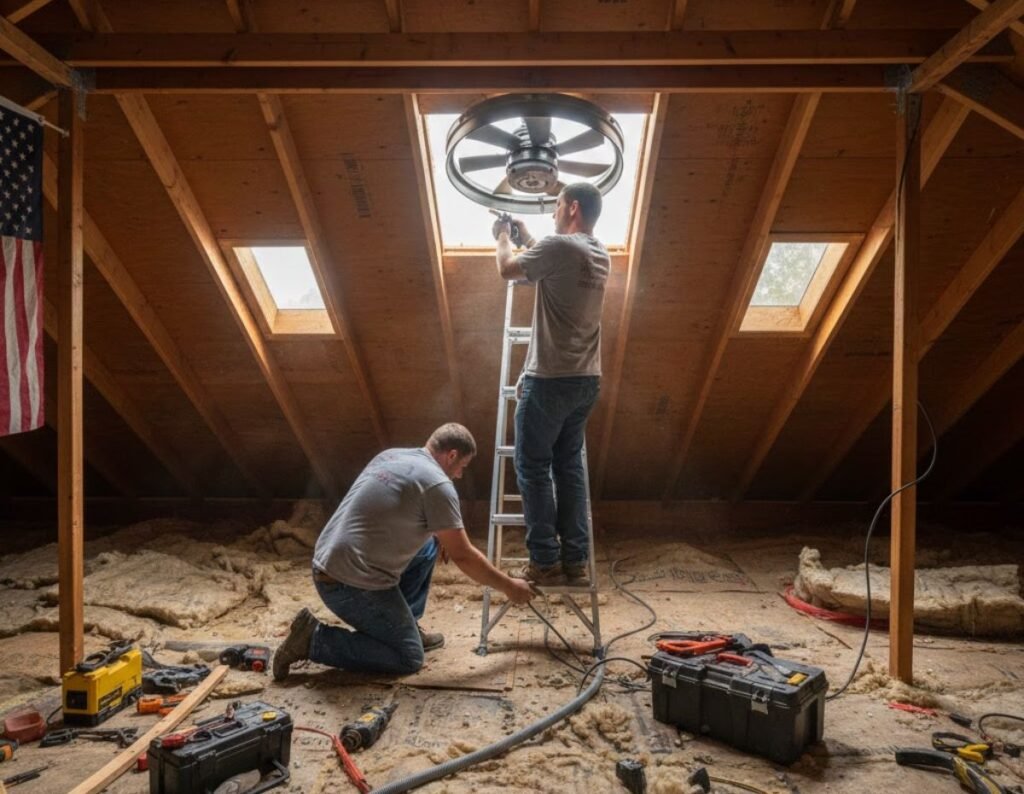
Attic fans aren’t a new invention they’ve been around for decades but with rising energy costs and a focus on sustainable living, they’re more popular than ever. According to the U.S. Department of Energy, proper attic ventilation can lower cooling costs by up to 20% in hot climates.
That’s huge savings for households throughout states like Texas, Florida, and California, where attics can touch 150°F or more on a sunny day. However, installation is more than just putting a fan up there; it calls for preparation, the appropriate equipment, and knowledge of regional building regulations. We’ll cover all that here, ensuring your attic fan installation is safe, functional, and compatible with USA requirements.
Do you really need an attic fan? Benefits for Homes
Before we get into the nuts and bolts of attic fan installation, let’s talk about why it’s worth the effort. In the USA, where climate varies wildly from region to region, an attic fan can address multiple issues tied to poor ventilation. Hot air trapped in your attic doesn’t just stay there it seeps into living spaces, forcing your AC to work overtime. Plus, excess moisture from rain, snow, or humidity can lead to structural damage over time.
Here are some eye-catching benefits of installing an attic fan:
- Slash Energy Bills: By expelling hot air, your home stays cooler naturally, reducing reliance on air conditioning. Homeowners in sunny states like Arizona report savings of $50–$100 per month during peak summer.
- Extend Roof Lifespan: Heat causes shingles to warp and crack. Proper ventilation can add years to your roof, potentially saving thousands in repairs—crucial in hail-prone areas like the Midwest.
- Prevent Mold and Mildew: Moisture buildup is a silent killer in attics. Fans help dry things out, especially in humid regions like the Gulf Coast, where mold can spread quickly.
- Improve Indoor Air Quality: Circulating fresh air reduces allergens and pollutants that might filter down from the attic.
- Eco-Friendly Option: Solar-powered models harness the sun’s energy, aligning with green initiatives in states like California, which offers rebates for energy-efficient upgrades.
- Boost Home Value: A well-ventilated attic is a selling point. Real estate experts note that energy-efficient features can increase resale value by 1–3%.
Of course, not every home needs an attic fan. If your attic already has adequate passive ventilation (like ridge vents or soffit vents), adding a powered fan might be overkill. But for older homes or those in extreme climates, it’s a smart upgrade. The key is assessing your attic’s current setup—measure square footage, check existing vents, and calculate airflow needs using the 1:150 rule (one square foot of ventilation per 150 square feet of attic space).
In colder USA regions like the Northeast, attic fans can also help in winter by removing moist air that causes ice dams. Just remember to winterize them to prevent heat loss. Overall, the return on investment is quick, often paying for itself in 2–3 years through energy savings.
Types of Attic Fans: Which One Suits Your Home?
Choosing the right attic fan is crucial for effective installation. In the USA, options abound, from budget-friendly electric models to high-tech solar versions. Factors like your roof type, attic size, and local weather play a big role. Let’s break down the main types.
Electric Attic Fans
These are the workhorses of attic ventilation. Powered by your home’s electricity, they come in roof-mounted, gable-mounted, or whole-house varieties. Roof-mounted fans sit on the roof and exhaust air directly upward, while gable fans install on the side wall for easier access. Whole-house fans pull air through the entire home, creating a breeze.
Pros: Reliable performance, thermostat-controlled for automatic operation.
Cons: Ongoing electricity costs, potential noise.
Ideal for: Large attics in hot, dry areas like the Southwest.
Solar Attic Fans
Harnessing solar power, these fans use panels to operate without wiring to your electrical system. They’re eco-friendly and cost nothing to run after installation. Models like those from Remington or Attic Breeze are popular in sunny states.
Pros: Zero energy costs, easy DIY install, tax incentives in some USA areas.
Cons: Less effective on cloudy days, higher upfront cost.
Ideal for: Sun-drenched regions like Florida or Texas.
Hybrid Attic Fans
A blend of electric and solar, hybrids switch to grid power when sunlight is low. They’re versatile but pricier.
Pros: Consistent operation regardless of weather.
Cons: Complex installation, higher maintenance.
Ideal for: Variable climates like the Pacific Northwest.
Wind-Powered or Turbine Fans
These passive fans spin with wind, no power needed. They’re low-cost but depend on breezy conditions.
Pros: No operating costs, simple design.
Cons: Ineffective in calm weather, can be noisy.
Ideal for: Windy coastal areas.
When selecting, consider your attic’s CFM (cubic feet per minute) needs aim for 0.7 CFM per square foot. Check USA brands like Broan, Air Vent, or QuietCool for warranties and reviews. Local building codes, especially in seismic zones like California, may require specific mounting.
READ MORE: Electrician Near Me
Comparison Table: Solar vs. Electric vs. Hybrid Attic Fans
To help you decide, here’s a side-by-side comparison based on key factors. This table draws from industry standards and user feedback across the USA.
| Feature | Solar Attic Fan | Electric Attic Fan | Hybrid Attic Fan |
| Power Source | Solar panels | Home electricity | Solar with electric backup |
| Upfront Cost | $300–$800 | $100–$500 | $500–$1,200 |
| Operating Cost | $0 (sun-dependent) | $10–$50/month in summer | Low, only uses electricity when needed |
| Performance | 800–1,500 CFM, weather variable | 1,000–2,500 CFM, consistent | 1,000–2,000 CFM, reliable |
| Installation Difficulty | Easy DIY, no wiring | Moderate, requires electrical work | Complex, wiring + solar setup |
| Best For | Sunny climates (e.g., CA, AZ) | All climates, large attics | Variable weather (e.g., Midwest) |
| Pros | Eco-friendly, silent | Powerful, thermostat options | Versatile, energy-efficient |
| Cons | Less power on overcast days | Energy bills, potential noise | Higher cost, more maintenance |
| USA Rebates | Often available via federal tax credits | Limited to energy-efficient models | Eligible for solar incentives |
This comparison shows electric fans as the most versatile for general USA use, but solar shines (pun intended) for cost savings in high-sun areas.
Tools and Materials Needed for Attic Fan Installation
Preparation is key to a smooth installation. Gather these essentials before starting. Costs vary by region, but expect $50–$200 for tools if you don’t own them.
Essential Tools:
- Reciprocating saw or jigsaw for cutting holes.
- Drill with bits for mounting.
- Measuring tape and level for accuracy.
- Safety gear: Gloves, goggles, dust mask—attics are dusty!
- Ladder or scaffolding for access.
- Wire strippers and voltage tester if wiring is involved.
Materials:
- Attic fan unit (choose based on type).
- Mounting brackets or frame.
- Vent cover or shutter.
- Electrical wire, thermostat, and switch (for electric models).
- Roofing sealant, screws, and flashing.
- Plywood for framing if needed.
Shop at USA stores like Home Depot or Lowe’s for quality. For solar fans, ensure the panel is adjustable for optimal sun exposure.
READ MORE: HVAC Near Me
Sizing & planning: How to choose the correct fan
Proper sizing prevents over- or under-ventilation.
Step A — Determine attic square footage
Measure length × width of attic floor (exclude dormers unless they tie into attic volume).
Step B — Understand target ventilation rate
Attic fan sizing focuses on CFM (cubic feet per minute). A rough approach: supply/exhaust should provide multiple air changes per hour. Typical guidance:
- Aim for 1–2 air changes per hour for typical attics, but in hot climates you may want more aggressive exchange. Many fan models list CFM ratings (e.g., 1,000–3,000 CFM).
Rule of thumb example: A 1,500 sq ft attic with 8 ft average height = 12,000 cu ft. A 1,200 CFM fan provides 1 air change in 10 minutes → 6 air changes/hour. Adjust based on climate and roof insulation. (Use CFM × 60 / attic cubic feet = air changes per hour.)
Step C — Balance intake and exhaust
Intake vents (soffit vents) must supply equal or greater free-air area than the fan removes, otherwise the fan will pull conditioned air from the living space or create negative pressure issues. If you add a fan, evaluate whether soffit vents and ridge vents are sufficient.
If intake < exhaust: The fan may draw air from leaks in living space, reducing efficiency and possibly creating backdraft issues with combustion appliances.
Step-by-Step Guide to Installing an Attic Fan
Now, the meat of it: installation. This DIY guide assumes a basic roof-mounted electric fan, but we’ll note variations. Always check local codes permits may be required in cities like New York or Los Angeles. If you’re not comfortable with roofs or wiring, hire a licensed electrician or roofer; costs average $200–$500.
Step 1: Assess and Plan Your Attic
Start by inspecting your attic. Measure the space (length x width) to determine fan size. For a 1,500 sq ft attic, you’ll need at least 1,000 CFM.
- Turn off power at the breaker.
- Check for existing vents ensure intake vents (soffits) match exhaust capacity to avoid negative pressure.
- Decide on location: Roof for max exhaust, gable for ease.
- In USA hurricane zones (e.g., Florida), reinforce mounting for wind resistance.
Plan for 2–4 hours per fan, plus drying time for sealants.
Step 2: Prepare the Installation Site
For roof-mounted:
- From inside, mark the hole location between rafters, avoiding wires or pipes.
- Cut a pilot hole and use the saw to create a 14–18″ opening (match fan size).
- From the roof, remove shingles around the area.
For gable-mounted:
- Enlarge the existing vent opening to fit the fan.
- Build a wooden frame if needed for stability.
Pro Tip: In snowy states like Minnesota, position fans to avoid ice buildup.
Step 3: Install the Fan Unit
- Mount the fan base securely with screws.
- For electric: Run wiring from a nearby junction box to the fan. Connect to a thermostat set at 100–110°F.
- Seal all edges with roofing cement to prevent leaks critical in rainy Pacific Northwest.
- Attach the vent cover or dome.
For solar: Position the panel southward for max exposure; no wiring needed.
Step 4: Wire and Test the System
- If electric, connect wires: Black to black (hot), white to white (neutral), green to ground.
- Install a humidistat if moisture is an issue.
- Turn power on and test—listen for smooth operation.
- Check airflow: Hold a tissue near intake vents; it should suck inward.
Common pitfalls: Undersized holes or poor sealing lead to leaks. In hot USA deserts, add a timer for peak hours.
Step 5: Finish and Insulate
- Replace shingles and flash around the fan.
- Insulate any exposed wiring.
- Clean up debris to avoid fire hazards.
Variations:
- Whole-house fans require floor vents; install in hallways for best pull.
- Hybrid: Wire backup power as a secondary circuit.
If installing multiple fans (common in large USA ranches), space them evenly for balanced airflow.
READ MORE: Generator Installers Near Me
Safety Tips for Attic Fan Installation
Safety first attics are hot, cramped, and hazardous. Follow these eye-catching safety bullets:
- Wear Protective Gear: Dust and insulation can irritate; use a respirator in fiberglass-heavy attics.
- Work in Cool Hours: Avoid midday heat; dehydration hits fast in 120°F+ attics.
- Secure Ladders: Falls are common; use stable access in uneven USA terrains.
- Electrical Caution: Always test for live wires; hire pros if unsure shocks aren’t worth the savings.
- Roof Safety: Use harnesses on steep pitches, common in mountainous states like Colorado.
- Fire Prevention: Keep fans away from combustibles; USA fire codes mandate this.
If you’re in earthquake-prone areas, bolt fans securely.
Ventilation fundamentals — avoid making things worse
An attic fan only works well inside a properly ventilated system. Install a fan without adequate intake and you can:
- Pull conditioned air from living spaces through leaks, increasing energy bills.
- Cause backdrafting of combustion appliances (furnaces, water heaters) leading to dangerous CO risks.
- Create higher humidity in some climates if the fan draws moist outdoor air.
How to avoid issues
- Measure existing intake vent area (soffit vents) and compare to fan’s exhaust capacity. Ensure intake free area ≥ fan free area rating.
- Improve insulation & air sealing before mechanical ventilation block cathedral ceiling bypasses, seal attic hatch, and add weatherstripping.
- Install carbon monoxide detectors and ensure combustion appliances have enough combustion air and are properly vented.
- Use thermostats/humidistats to avoid unnecessary operation.
When not to use an attic fan: In houses with unsealed attics, homes with certain combustion appliances lacking outside combustion air, or in extremely humid climates where the fan could pull moisture into the attic when outdoor humidity is high.
Real-world buying tips
- Measure first: Don’t buy based on looks match fan CFM to attic cubic feet.
- Balance ventilation: Add or confirm adequate soffit intake before installing an exhaust fan.
- Prefer thermostat + humidistat: Controls reduce unnecessary runtime and protect attic conditions.
- Solar + battery? If you want ventilation at dawn/dusk, consider hybrid solutions or smart controllers.
- Get 3 quotes: Compare warranty, installation detail (flashing method), and total price.
- Check noise rating: Look for sone or dB figures lower is quieter.
- Ask about warranty & motor type: Brushless or permanently lubricated motors last longer.
READ MORE: Frontier Electric
Maintenance and Troubleshooting Your Attic Fan
Post-installation, regular upkeep ensures longevity. Clean blades annually, check thermostats, and lubricate motors.
- Winterize: Cover fans in cold climates to prevent drafts.
- Troubleshoot: If noisy, tighten mounts; if not running, check power or thermostat.
- Lifespan: 10–15 years; replace if efficiency drops.
In humid USA spots like Louisiana, inspect for rust quarterly.
FAQs on Attic Fan Installation
- What type of attic fan do you want to install? Options include electric, solar, or hybrid. Electric is reliable for consistent use, solar saves on bills in sunny areas, and hybrid offers the best of both. Choose based on your climate and budget electric for most USA homes.
- How much does attic fan installation cost? DIY costs $100–$800 for the fan and materials. Professional installation adds $200–$500, totaling $300–$1,300. Factors like type and location affect price; solar might qualify for USA tax credits, lowering net cost.
- When would you like your attic fan installed? Spring or fall is ideal to avoid extreme weather. In hot USA summers, install ASAP for immediate relief. Pros can do it year-round, but DIYers should avoid rainy or snowy days for safety.
- Will you provide the materials? For pros, you can buy the fan yourself to save money, or let them source it. DIYers handle everything shop online or at stores like Home Depot for compatibility.
- How many attic fans do I need? One for every 1,000–1,500 sq ft of attic space. Large USA homes might need 2–3 for even ventilation. Calculate based on CFM needs and consult local experts for oversized attics.
Conclusion:
Installing an attic fan in your USA home is a rewarding project that pays dividends in comfort and savings. From selecting the right type to mastering the steps, you’ve got the tools to succeed. Remember, if DIY feels overwhelming, local pros are a call away. Stay cool, ventilated, and energy-efficient your home (and wallet) will thank you!