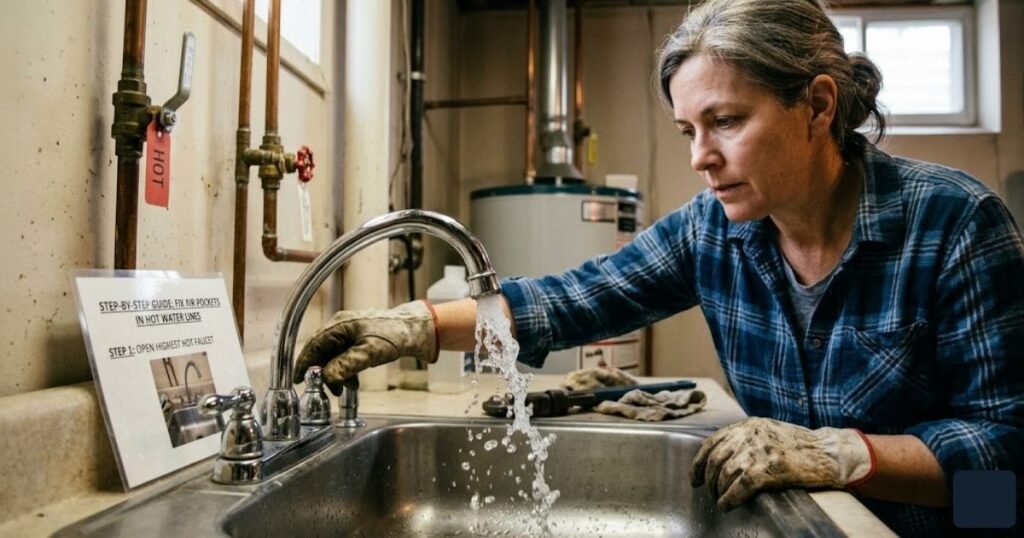
Have you ever walked over to your kitchen sink, turned on the hot water to wash some dishes, and been greeted by a loud bang or a violent “coughing” fit from your faucet? Instead of a smooth stream of water, you get a series of angry spurts and splashes that soak your shirt.
If this sounds familiar, you aren’t dealing with a ghost in your plumbing. You likely have an air pocket trapped in your hot water lines.
Air pockets often called “airlocks” are a common nuisance for homeowners. While they might seem like a minor annoyance, they can actually cause quite a bit of stress on your pipes. They can also make simple tasks, like taking a shower or filling a pot, feel like a gamble. The good news is that you don’t need to be a master plumber to fix this. In most cases, you can clear the air yourself using a few simple steps and tools you already have at home.
In this guide, we’ll walk through everything you need to know about air pockets in hot water lines, from what causes them to how you can get your water flowing smoothly again. Lets deep dive into “How to Fix Air Pockets in Hot Water Lines: Step by Step DIY Guide”
READ MORE: How to Get Air Out of Plumbing Lines: A Simple Step by Step DIY Guide
What Are Air Pockets in Hot Water Lines?
In a perfect world, your plumbing should be a “closed” system filled entirely with water. When you turn on a faucet, the pressure from the water main pushes water through the pipes and out of the tap.
An air pocket occurs when air gets trapped inside these lines. Because air is a gas, it can be compressed, whereas water cannot. When that trapped air gets stuck in a bend or a high point in your hot water pipes, it creates a blockage.
When you turn on the hot water, the water pressure tries to push past that air. The air resists, then eventually “pops” or moves through the fixture, leading to that characteristic spitting and sputtering. Think of it like a bubble in a straw; until you suck hard enough to move the bubble, you aren’t getting any soda. In your home, that “bubble” is fighting against your water pressure, causing all sorts of ruckus.
Common Signs of Air Pockets in Hot Water Lines
How do you know for sure that air is the culprit? Plumbing systems can be noisy for a lot of reasons, but air pockets usually have very specific “symptoms.” Look out for these common signs:
- Spitting or Sputtering: This is the most obvious sign. When you open the hot water tap, the water comes out in bursts rather than a steady stream.
- Vibrating Pipes: You might hear a “shuddering” sound coming from inside your walls when the hot water is running.
- Uneven Water Pressure: Your shower might start strong, then suddenly drop to a trickle, then blast you with water again.
- Strange Noises: Listen for banging, clanking, or whistling. These are often called “water hammers,” but they can also be caused by air moving through the system.
- Slow Hot Water: If the cold water flows fine but the hot water takes forever to reach full pressure, an airlock might be the gatekeeper.
- Coughing Faucets: If your faucet literally sounds like it’s gasping for air every time you turn it on, you’ve definitely got an air pocket.
READ MORE: Why Is My Water Heater Temperature Fluctuating? Causes & Fixes
What Causes Air Pockets in Hot Water Lines?
Air doesn’t just appear out of nowhere. It has to find a way into your pipes. Usually, this happens during a change in the system. Here are the most frequent causes:
1. Recent Plumbing Repairs
This is the number one cause. If you or a plumber recently replaced a faucet, fixed a leak, or installed a new dishwasher, the pipes were likely drained. When the water was turned back on, air stayed trapped in certain sections of the line.
2. Replacing the Water Heater
When you install a new water heater, the entire tank and the connecting lines are full of air. Unless the system is bled properly during installation, that air will migrate into your hot water lines.
3. Water Main Breaks or City Work
Sometimes the problem isn’t inside your house. If the city is working on the water mains in your neighborhood, they might shut off the water. This can allow air to enter the main lines, which then travels into your home once the water is turned back on.
4. Loose Fittings or Tiny Leaks
Even a tiny, “pinhole” leak that isn’t dripping much can let air into the system. As water moves through the pipe, it can create a vacuum effect that sucks air in through a loose connection or a small crack.
5. Sediment Buildup
Over time, minerals and “gunk” build up inside your water heater. This sediment can create turbulence in the water or partially block the hot water outlet, making it easier for air bubbles to get trapped.
READ MORE: How to Clean Sediment from a Water Heater
How to Fix Air Pockets in Hot Water Lines: Step by Step DIY Guide
Ready to get rid of that sputtering? Most homeowners can clear an airlock in about 20 to 30 minutes. Here are the most effective methods to restore your flow.
Method 1: The “Whole House” Flush
This is the easiest method and works about 90% of the time. The goal is to use high volume and pressure to “push” the air out of the system.
- Go to every faucet in your house. This includes sinks, tubs, showers, and even the laundry room.
- Turn on all the HOT water taps. Do not turn on the cold water yet. Start with the faucet closest to where the water enters the house (usually near the water heater) and move to the furthest one.
- Let them run. You will hear a lot of sputtering and coughing. This is good! It means the air is escaping.
- Wait for a steady stream. Keep the water running until every single faucet has a smooth, consistent flow of water with no spitting. This usually takes 2 to 5 minutes.
- Turn them off in reverse order. Start with the faucet furthest away and work your way back to the one closest to the water heater.
- Repeat with cold water. To be thorough, repeat the process with your cold water taps just to ensure the whole system is cleared.
Method 2: The “Hose Trick” (For Stubborn Airlocks)
If the simple flush doesn’t work, you might have a stubborn airlock that needs a little extra “push.” This method uses the pressure from your cold water line to force the air out of the hot water line.
- Find a faucet with a threaded end. A laundry tub or an outdoor spigot usually works best. You can also use a kitchen faucet if you have an adapter.
- Connect a garden hose. Connect one end to the hot water tap and the other end to a cold water tap (if they are separate). If you have a mixer faucet (one handle), this is harder, so try to find two separate taps.
- Turn on the hot water tap. 4. Turn on the cold water tap. The higher pressure from the cold line will push back against the hot line, forcing the trapped air bubble back toward the water heater or out through another open hot water tap.
- Let it run for 30 seconds. Then turn off the cold, then the hot.
- Check your other faucets. Go to your kitchen sink and see if the hot water is flowing normally.
Method 3: Bleeding the Water Heater
If the air seems to be coming directly from the source, you might need to bleed the lines at the water heater itself.
- Turn off the power/gas. Safety first! Turn off the electricity at the breaker or turn the gas valve to “Pilot.”
- Open a hot water tap. Open a faucet somewhere in the house to allow pressure to vent.
- Attach a hose to the drain valve. This is the valve at the bottom of your water heater.
- Open the drain valve briefly. Let some water flow out into a floor drain or a bucket. This helps clear any air trapped at the top of the tank or in the immediate outlet pipe.
- Close the valve and restore power. Once the water flows steadily from the open faucet, you can turn the heater back on.
READ MORE: How to Install Heating Element in Water Heater: Step by Step
Safety Tips Before You Start
While fixing an airlock is a DIY-friendly task, you are dealing with hot water and pressure. Keep these safety tips in mind:
- Watch the Temperature: Hot water can scald you instantly. When you are bleeding the lines or running the “whole house flush,” be mindful of steam and splashing.
- Don’t Force Old Valves: If you have an older home, the shut-off valves under your sinks might be brittle. If a valve feels stuck, don’t force it with a wrench, or you might end up with a major leak.
- Turn Off the Heater: If you have to drain a significant amount of water from the system, turn off the water heater. If the heating elements are on while the tank is empty or low, they can burn out.
- Check for Leaks: Whenever you are messing with plumbing, keep a towel handy and check your connections afterward to make sure you didn’t accidentally loosen anything.
When the Problem Is More Than an Air Pocket
Sometimes, what looks like an air pocket is actually a symptom of a bigger problem. If you’ve tried flushing the lines and the sputtering comes back the next day, it might be one of these issues:
A Failing Water Heater
If your water heater is old, the internal dip tube might be broken. This tube is responsible for sending cold water to the bottom of the tank. If it breaks, it can allow air to mix with the hot water leaving the tank, causing constant sputtering.
Mineral and Sediment Buildup
In areas with hard water, calcium and lime can build up inside your pipes and the water heater. These deposits can restrict flow and trap air. If you see white flakes in your aerators, sediment is likely your real problem.
Failing Expansion Tank
Many modern homes have a small “expansion tank” located above the water heater. It’s designed to handle the extra pressure when water heats up. If the internal bladder in this tank fails, it can lead to pressure fluctuations that feel like air pockets.
Corroded Galvanized Pipes
If your home was built before the 1960s and still has galvanized steel pipes, they might be rusting from the inside out. This rust creates a rough surface that catches air bubbles and restricts water flow.
READ MORE: How Often to Flush a Water Heater
How to Prevent Air Pockets in the Future
The best way to deal with an airlock is to make sure it doesn’t happen in the first place. Here is how to keep your plumbing “air-free”:
- Proper Refilling Technique: If you ever have to shut off your water for a repair, don’t just blast the water back on. Open a few faucets before you turn the main valve back on. This allows the air to escape gradually as the pipes fill up.
- Annual Water Heater Maintenance: Flush your water heater once a year. This removes sediment and gives you a chance to check the valves and the dip tube for signs of wear.
- Keep Your Aerators Clean: Unscrew the little screens (aerators) at the end of your faucets every few months and rinse them out. This ensures that when air does enter the system, it can escape easily without getting trapped by debris.
- Invest in a Water Softener: If sediment is a constant issue, a water softener can prevent mineral buildup that causes turbulence and trapped air.
READ MORE: Best Whole House Water Softener System for Home (2026) — Top Picks & Buyer’s Guide
DIY Fix or Call a Plumber?
Most air pockets are a 1 out of 10 on the difficulty scale. However, there are times when you should put down the wrench and call a professional.
When to DIY:
- The sputtering just started after a repair.
- You only notice it at one or two faucets.
- The “whole house flush” fixes the problem immediately.
- You are comfortable turning valves and handling a garden hose.
When to Call a Plumber:
- The problem keeps coming back. This suggests air is constantly entering the system from a leak or a failing component.
- You see visible leaks. If you find water pooling under your heater or inside your walls, call a pro immediately.
- You have no hot water at all. This is likely a heating element or gas valve issue, not just an airlock.
- Low pressure across the whole house. This could be a failing pressure-reducing valve (PRV) or a main line issue.
Conclusion
Dealing with air pockets in your hot water lines is definitely annoying, but it’s rarely a plumbing emergency. Most of the time, your pipes just need a good “burp” to get that trapped air out of the way. By following the “whole house flush” or the “hose trick,” you can usually get back to enjoying a quiet, steady stream of hot water in no time.
Remember to take it slow, be careful with the hot water temperature, and keep an eye on your water heater’s health. With a little bit of patience, you’ll have your plumbing back to normal without having to spend a fortune on a service call.
Frequently Asked Questions
How do you get air out of hot water lines?
Turn on the hot water faucets one at a time and let them run until the sputtering stops. This helps push trapped air out of the pipes.
Why is my hot water sputtering with air?
Sputtering usually means air is trapped in the line. It can happen after plumbing repairs, after the system is drained, or because of a valve, fixture, or water heater issue.
Can air in hot water lines fix itself?
Sometimes it can. If the air entered during a recent shutoff or repair, it may clear after the water runs for a while. If it keeps happening, there may be a deeper problem.
Why does my hot water pressure keep going up and down?
That can happen because of trapped air, sediment buildup, a partially closed valve, or a pressure problem in the plumbing system.
Should I call a plumber for air in hot water pipes?
Call a plumber if the problem keeps coming back, affects several fixtures, or comes with leaks, pressure problems, or water heater trouble.

