You’re sitting in your living room on a quiet evening. Suddenly, you hear a strange sound coming from the utility closet or the garage. It sounds like someone is making popcorn inside your walls. Or maybe it sounds like a low, rhythmic thumping.
If you trace that sound back to your water heater, you might start to worry. Is it going to explode? Is it broken for good? Do you need to call an emergency plumber right this second?
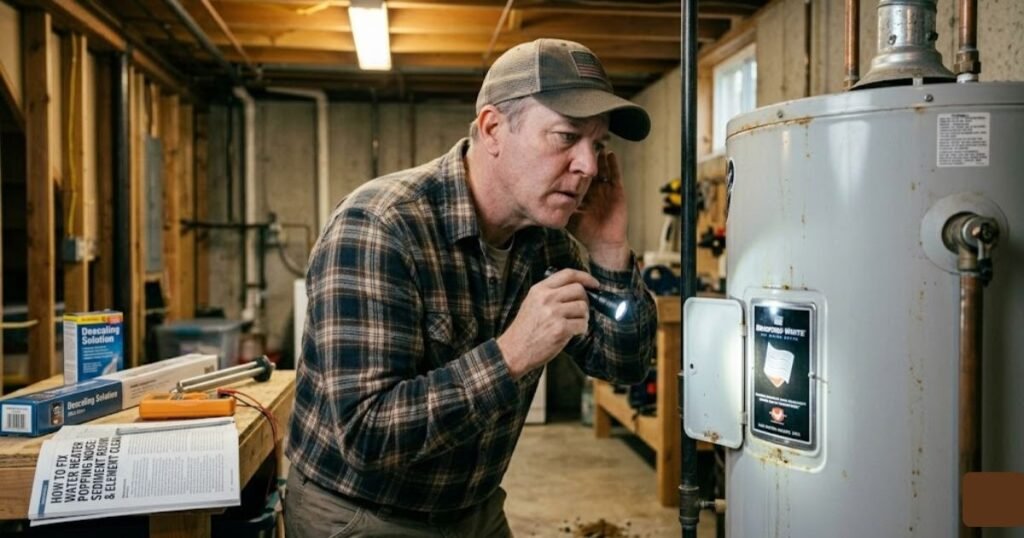
First, take a deep breath. A water heater making a popping noise is one of the most common complaints homeowners have. While it’s definitely a sign that your unit needs some TLC, it usually isn’t a sign of an immediate “total house destruction” scenario. However, you shouldn’t just ignore it. That popping sound is your water heater’s way of crying out for help.
In this guide, we’ll break down exactly why your water heater is acting up. we will look at the causes, the safety risks, and the practical steps you can take to quiet things down and keep your hot water flowing. Lets deep dive into “Why Is My Water Heater Making a Popping Noise? Causes & Fixes”
READ MORE: What Trips the Reset Button on a Hot Water Heater?
What the Popping Sound Usually Means
When you hear that distinct “pop-pop-pop” coming from your tank, professionals call it “kettling.” Think about a tea kettle on a stove. As the water boils, it creates steam and bubbles.
Inside your water heater, something very similar is happening, but it’s happening in a way that isn’t supposed to. The sound is caused by steam bubbles struggling to escape through a layer of debris at the bottom of the tank.
In most American homes, especially in areas with “hard water,” minerals like calcium and magnesium settle at the bottom of the tank. This creates a thick layer of “sediment.” This sediment acts like a thermal blanket. It traps water underneath it, right next to the heating element or the gas burner.
As the burner heats up the tank, that trapped water turns into steam. The steam bubbles then “pop” as they burst through the sediment layer to reach the rest of the water. That is the noise you are hearing. It is literally the sound of mini-explosions of steam pushing through a layer of sand or rock at the bottom of your heater.
Common Reasons: Why Is My Water Heater Making a Popping Noise? Causes & Fixes
While sediment is the main villain, there are several factors that contribute to the noise. Understanding these will help you figure out how to fix it.
1. Sediment Buildup
This is the number one cause. Over time, every water heater collects sediment. If you live in a state like Arizona, Texas, or Florida, where the water is naturally mineral-rich, this happens much faster. The minerals precipitate out of the water as it is heated and sink to the bottom. Over several years, this can create a layer several inches thick.
READ MORE: How to Clean Sediment from a Water Heater
2. Water Trapped Under Sediment
As mentioned above, the sediment creates a barrier. Because the heat source (the burner or element) is at the bottom, the water at the very bottom gets much hotter than the water at the top. It reaches the boiling point, creates a bubble, and pop—it forces its way through the “crust” of minerals.
3. Hard Water Issues
“Hard water” simply means your water has a high mineral content. If you notice white crusty spots on your faucets or showerheads, you have hard water. This hard water accelerates the popping sound because it provides a constant supply of minerals to feed that sediment layer at the bottom of your tank.
READ MORE: Best Whole House Water Softener System for Home (2026) — Top Picks & Buyer’s Guide
4. Overheating
If your thermostat is set too high, the water at the bottom will turn into steam much faster. Most manufacturers recommend setting your water heater to 120 degrees Fahrenheit. If yours is cranked up to 140 or higher, you’re more likely to hear popping noises. It also increases the risk of scalding.
5. Tank Aging
As a water heater gets older, the interior lining can start to degrade. Flakes of the glass lining or bits of the “anode rod” (a metal rod that prevents rust) can fall to the bottom and add to the sediment pile. If your heater is over 10 years old, the noise is often a sign of general wear and tear.
6. Pressure Problems
High pressure in your home’s plumbing system can make any noise sound louder. If your thermal expansion tank is failing or if your pressure-reducing valve is broken, the extra stress on the tank can cause various banging and popping sounds as the metal expands and contracts.
7. Delayed Maintenance
Most homeowners don’t realize that water heaters need an “oil change” just like a car. In the plumbing world, this is a tank flush. If you haven’t flushed your tank in three or four years, the sediment has likely hardened into a solid mass, making the popping sounds much louder and more frequent.
Is a Popping Water Heater Dangerous?
The short answer is: Not usually, but it can be.
A popping sound doesn’t mean your house is going to blow up tomorrow. However, it does indicate that the unit is under a lot of stress. Here is why you should take it seriously:
- Efficiency Loss: The sediment acts as insulation. Your burner has to run much longer and hotter to heat the water through that layer of “rock.” This leads to much higher energy bills.
- Tank Damage: The extra heat required to get through the sediment can cause the bottom of the tank to overheat. This can weaken the steel and lead to a leak.
- The T&P Valve: If the popping is accompanied by excessive pressure, your Temperature and Pressure (T&P) Relief Valve might start leaking. This valve is a safety device. If it fails and the tank overpressurizes, that is a dangerous situation.
Signs you should call a plumber immediately:
- You see water leaking from the bottom of the tank.
- The T&P valve is constantly dripping or spraying water.
- You smell gas (for gas heaters).
- The popping sound is accompanied by a vibrating tank.
How to Fix a Popping Water Heater
The good news is that you can often fix this yourself without spending a fortune. Here is how to tackle a noisy water heater.
1. Flush the Tank
This is the most effective fix. Flushing the tank removes the loose sediment and minerals.
- Turn off the power: Switch off the circuit breaker for electric heaters or turn the gas valve to “Pilot.”
- Connect a hose: Attach a standard garden hose to the drain valve at the bottom of the tank.
- Drain the water: Run the other end of the hose to a floor drain or outside. Open the drain valve.
- Agitate the sediment: Open the cold water inlet for a few seconds to stir up the “gunk” at the bottom, then let it drain again.
- Refill: Once the water runs clear, close the drain valve, remove the hose, and turn the power/gas back on. Note: Make sure the tank is full of water before turning the power back on, or you will burn out the heating elements!
2. Check the Temperature Setting
Look at your thermostat. If it’s set above 120°F, turn it down. This reduces the “boiling” effect at the bottom of the tank and saves you money on your gas or electric bill.
3. Inspect the Pressure Relief Valve
Lift the lever on the T&P valve briefly to make sure water comes out and then stops when you let go. If it keeps dripping, the valve needs to be replaced. A faulty valve can’t properly regulate the internal environment of the tank, which can contribute to noise.
4. Look for Hard Water Problems
If you flush your tank and the noise comes back within a month, your water is likely too hard. In this case, no amount of flushing will solve the problem long-term. You might need to look into a whole-home solution.
5. Calling a Plumber
If the sediment has hardened into a solid “plate” at the bottom of the tank, a simple flush won’t work. A plumber might need to use a special descaling chemical or a more powerful vacuum system to clean it out. If the tank is already leaking, a plumber will be needed to install a new unit.
READ MORE: How to Adjust the Temperature on a Water Heater: Step by Step
How to Prevent the Popping Noise Problem from Coming Back
Prevention is always cheaper than a repair. If you want to keep your water heater quiet for the next decade, follow these simple tips.
- Flush the tank once a year: Mark it on your calendar. Every autumn, give your water heater a quick flush. It takes 20 minutes and can double the life of your unit.
- Install a water softener: This is the ultimate “fix” for hard water. A softener removes the minerals before they get to your heater. This keeps the tank clean and your hair and skin feeling better, too.
- Check the Anode Rod: This is a long metal rod inside the tank that attracts corrosive elements so the tank doesn’t rust. Check it every 3 years. If it’s eaten away, replace it for about $50. It’s the cheapest way to prevent a tank failure.
- Install an Expansion Tank: If you don’t have one, ask a plumber about it. These small tanks sit above your water heater and absorb the extra pressure created when water heats up. This reduces stress on the main tank.
When to Replace the Water Heater
Sometimes, a water heater making a popping noise is just at the end of its life. Here are the signs that it’s time to shop for a new one:
- Age: Most tank-style water heaters last 8 to 12 years. If yours is 15 years old and popping loudly, it’s a ticking time bomb.
- Rusty Water: If your hot water looks brown or rusty, the inside of the tank is corroding. No amount of flushing will fix a rusted-out tank.
- Active Leaks: If you see a puddle under the heater that isn’t coming from a pipe or a valve, the tank itself has likely cracked. This cannot be repaired.
- The “Pop” is a “Thud”: If the noise has moved from a light popping to a heavy, metallic thumping, the internal structure may be compromised.
READ MORE: Why Is My Gas Water Heater Pilot Light Yellow? Causes & Fixes
Cost Considerations for Popping Noise Water Heater
Dealing with a noisy water heater involves different price points depending on how far you let the problem go.
- DIY Flush: Almost free. You just need a garden hose and about 30 minutes of your time.
- Professional Flush: In the U.S., a plumber will typically charge between $150 and $300 to perform a professional flush and safety inspection. This is a great investment if you aren’t comfortable doing it yourself.
- Part Replacements: Replacing a T&P valve or an anode rod usually costs between $200 and $500 (parts and labor).
- Water Softener Installation: A whole-house system can range from $1,000 to $3,000, but it protects all your appliances, including your dishwasher and washing machine.
- New Water Heater: Replacing a standard 40 or 50-gallon tank usually costs between $1,200 and $2,500, including the unit and professional installation. If you upgrade to a tankless model, you might be looking at $3,500 or more.
Final Thoughts
A popping water heater is a nuisance, but it’s also a helpful warning. It’s your home’s way of telling you that sediment is building up and your energy efficiency is dropping.
Don’t wait until you wake up to a flooded basement or a cold shower. Most of the time, a simple afternoon spent flushing the tank is all it takes to get things back to normal. If you’re uncomfortable working with gas or electricity, don’t hesitate to call a local pro. Taking care of your water heater today will save you a lot of money and stress down the road.
Frequently Asked Questions
Why does my water heater make a popping noise?
Most of the time, the sound comes from sediment buildup at the bottom of the tank. Water gets trapped under that layer and pops as it heats up.
Is a popping water heater dangerous?
Not always. In many cases, it is a maintenance issue. But if the noise is loud or comes with leaks, pressure issues, or rusty water, it can become a safety concern.
How do I stop my water heater from making noise?
Start by flushing the tank, checking the temperature setting, and inspecting the pressure relief valve. If the noise keeps coming back, call a plumber.
Does sediment buildup cause popping sounds?
Yes. Sediment buildup is the most common reason for a popping sound in water heater tanks. It traps water and causes bubbling or popping as the heater runs.
When should I call a plumber for a noisy water heater?
Call a plumber if the noise gets louder, the heater leaks, the water looks rusty, the unit is very old, or you are not comfortable flushing the tank yourself.

