Choosing a new water heater can be heavy. Between gas, electric, tanks and tankless models, prices vary widely and before considering installation costs. If you are in the market for a new water heater, understanding the price difference can help you make a smart, budget -friendly decision without renouncing the performance.
In this guide, we’ll break down water heater prices comparison by type, brand, size, and installation cost, so you can easily compare and choose the best option for your home. Lets deep dive into “Water Heater Price Comparison Guide (2026 Costs)”

Types of water heaters
1. Conventional storage tank (electric / gas)
A ready supply of hot water heated by a gas burner or an electric element is stored in an insulated tank. Common, easy setup. Advantages: inexpensive initial cost; simple installation and maintenance; reliable hot water supply for average homes. Cons: limited hot water supply (may run out); large footprint; standby heat loss (wastes energy keeping water hot). Typical lifespan: 8 to 15 years (gas tanks may last significantly less if poorly maintained; electric tanks typically last toward the higher end).
2. Tankless (on-demand) — electric and gas variants
Water is only heated when a tap is running; there is no storage. Both gas and electric units are available (gas usually has a higher flow capacity). Advantages include nearly infinite hot water, compact wall-mounted units, extended useable life, and much improved energy efficiency for many households. Cons include greater initial costs and more complicated installation (which may require updated electrical or a venting/gas line); flow-rate restrictions when several fixtures are operating; and the requirement for regular descaling in hard-water environments. Lifespan: 15–25 years on average (many manufacturers rate ~20 years, with sporadic component service).
3. Heat pump / hybrid water heaters
Rather than directly producing heat, it uses electricity to transfer heat from the surrounding air into the water, frequently with a backup electric element. Advantages: excellent energy efficiency (may reduce operating costs compared to traditional tanks); eligible for rebates; suitable for moderate-to-warm settings. Cons: more expensive up front; requires adequate surrounding air and space (and performs less well in cold, unheated environments); takes longer to recover; may be noisy. Ten to fifteen years is the typical lifespan (equivalent to tanks but with more effective functioning).
4. Solar water-heating systems (active / passive)
Solar collectors, often known as solar panels, use sunlight to heat a fluid that either stores heat directly or transmits it to a storage tank. Passive systems rely on thermosiphon, while active systems require pumps and controllers. Advantages: passive systems are straightforward and dependable; they are renewable, allowing for significant energy use savings; and they have very low operating costs once implemented. Cons: expensive initial cost; temperature and sun exposure affect effectiveness; often requires a traditional backup heater during cloudy or cold weather; more complicated upkeep for active systems. Collectors normally have a lifespan of 15–25 years, while systems as a whole typically have a lifespan of 15–20 years (storage tanks and ancillary components may need to be replaced earlier).
5. Point-of-use units (single-sink)
To provide hot water instantly and minimize wait times and heat loss, small water heaters (tankless or small tank) are placed close to a single fixture. Advantages: immediate hot water at the fixture; less heat loss from pipes; suitable for isolated sinks and remote bathrooms; small size. Cons: small tanks require routine maintenance; many units raise costs; only serves one fixture (not a whole-house solution). Small storage POUs typically last 10–15 years, while tankless POUs often last 15–20 years (depending on usage and water quality).

READ MORE: How Much Does a New Water Heater Cost?
Average Cost of Water Heaters
The price of a water heater depends on whether it’s tank-style or tankless, the fuel type (gas, electric, hybrid, or solar), and the capacity. Below is a quick overview:
| Type of Water Heater | Unit Price Range | Installed Price Range | Best For |
| Tank (Gas/Electric) | $400 – $1,200 | $900 – $2,500 | Most homes needing affordable hot water |
| Tankless (Gas/Electric) | $800 – $3,500 | $1,800 – $4,800 | Endless hot water, energy savings |
| Hybrid (Heat Pump) | $1,200 – $3,000 | $2,000 – $5,000 | Energy efficiency, eco-conscious homes |
| Solar Water Heater | $2,000 – $6,000 | $3,000 – $8,000+ | Homes in sunny regions with long-term savings |
Check this & Get Discount-

READ MORE: Cheapest 50-Gallon Electric Water Heater — Quick Buyer’s Guide (2026)
Tank vs. Tankless: Price Breakdown
Tank Water Heaters
- Cost: $400 – $1,200 (unit only)
- Installation: $500 – $1,300
- Pros: Lower upfront cost, simple installation, widely available.
- Cons: Limited hot water supply, higher energy bills over time.
Tankless Water Heaters
- Cost: $800 – $3,500 (unit only)
- Installation: $1,000 – $1,500 (can be higher if upgrades needed)
- Pros: Endless hot water, energy savings, compact design.
- Cons: Higher upfront price, may require electrical or gas line upgrades.
👉 If the budget is tight, a tank model is cheaper. If long -term savings and performance matters the most, a tank -free system may be worth investment.
Check This Low Budget Beast-

READ MORE: A.O. Smith Water Heater Age
Gas vs. Electric: Price Comparison
| Fuel Type | Unit Price Range | Annual Operating Cost | Notes |
| Gas | $500 – $2,000 | $250 – $500 | Heats faster, cheaper energy in many areas |
| Electric | $400 – $1,800 | $400 – $700 | Easier installation, higher operating costs |
| Hybrid (Heat Pump) | $1,200 – $3,000 | $150 – $300 | Uses less energy, higher initial cost |
| Solar | $2,000 – $6,000 | $100 – $200 | Very low operating cost but expensive upfront |
Verdict:
- Gas heaters are more cost-effective in the long run (if you have natural gas access).
- Electric models are easier to install and better for smaller households.
- Hybrids & solar are best for energy efficiency and eco-friendly homeowners.
Water Heater Brand Price Comparison
Here’s what you can expect from popular water heater brands:
| Brand | Tank Price Range | Tankless Price Range | Reputation |
| A.O. Smith | $500 – $1,500 | $700 – $3,500 | Reliable, wide selection |
| Rheem | $400 – $1,400 | $400 – $3,200 | Affordable, strong warranty |
| Bradford White | $400 – $1,800 | $1,200 – $3,800 | High-quality, installer exclusive |
| Navien (Tankless) | N/A | $1,500 – $4,000 | Premium tankless brand |
| Bosch | $200 – $1,200 | $200 – $3,500 | Great European brand |
| EcoSmart (Tankless Electric) | $160 – 900 | $300 – $900 | Budget-friendly option |
Try this Smart Water Heater-

READ MORE: 40 Gallon Water Heater Buying Guide
Side-by-Side Comparison: Tank vs. Tankless vs. Hybrid vs. Solar
Here’s a quick look at the pros and cons of each type of water heater:
| Type | Pros | Cons | Best For |
| Tank (Gas/Electric) | Low upfront cost, simple installation, reliable | Limited hot water, higher energy bills, bulkier | Budget-conscious households |
| Tankless (Gas/Electric) | Endless hot water, energy-efficient, space-saving | Higher upfront cost, requires upgrades, slower for multiple taps | Larger families, modern homes |
| Hybrid (Heat Pump) | Very energy-efficient, eco-friendly, long-term savings | Expensive upfront, needs more space | Eco-conscious homeowners |
| Solar | Nearly free hot water after installation, best for sunny regions | Very high upfront cost, weather dependent | Green energy users, long-term planners |
👉 This comparison makes it clear: Tank heaters win for affordability, while tankless, hybrid, and solar models shine for efficiency and long-term savings.
How Household Size Affects Water Heater Price
The size of your household plays a major role in what water heater you should buy.
- 1–2 people: A 30–40 gallon tank or a small tankless unit is usually enough.
- 3–4 people: A 40–50 gallon tank or medium tankless system works well.
- 5+ people: A 50–80 gallon tank or large tankless system ensures everyone gets hot water.
The cost of larger units is high, but prevent rains from getting out of warm water during rain, laundry and dishwashing.
Check this Under Sink Water Heater-

READ MORE: Free Water Heater Disposal Near Me
Maintenance Costs by Water Heater Type
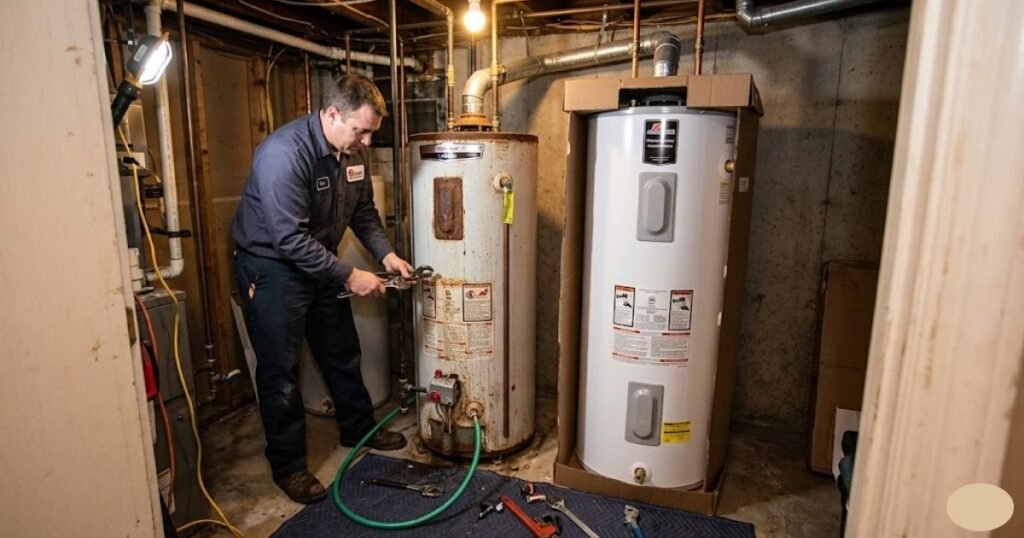
It’s not just the purchase price, maintenance also affects long-term cost.
| Type | Yearly Maintenance Cost | Maintenance Needed |
| Tank | $100 – $150 | Flushing tank, checking anode rod |
| Tankless | $120 – $200 | Annual descaling, filter cleaning |
| Hybrid | $150 – $250 | Filter changes, annual inspection |
| Solar | $200 – $300 | Panel cleaning, pump/valve checks |
Tip: Skipping maintenance shortens lifespan and raises energy bills. For example, flushing a tank water heater removes sediment that makes it less efficient.
How Long Different Water Heaters Last
Price is only part of the equation, lifespan matters too.
- Tank (Gas/Electric): 8–12 years
- Tankless: 15–20 years
- Hybrid: 10–15 years
- Solar: 15–20 years (panels may last 25+ years)
👉 While tank heaters are cheap, tankless and solar options can last about twice long, balance their higher advance costs.
READ MORE: Gas Water Heater Replacement Cost (2026) — What Homeowners Pay & Why
Regional Price Differences in Water Heaters
Believe it or not, where you live has a big impact on water heater costs.
- Urban areas: Labor costs are higher, so installation may cost 20–30% more.
- Rural areas: Units may be slightly cheaper, but availability can be limited, which could mean higher delivery fees.
- Colder climates: Larger or more powerful units are needed to heat cold groundwater, increasing costs.
- Southern states: Solar water heaters are more affordable in sunny regions due to rebates and incentives.
👉 For example, a 50-chalan tank water heater can cost a $ 1,200 installed in Texas, but due to high labor rates, New York City is $ 1,600- $ 1,800.
Hidden Costs to Watch Out For
When budgeting for a new water heater, it’s important to consider extra expenses that aren’t always advertised:
- Permits and inspections: $50 – $300, depending on your city.
- Disposal fees: Old water heater removal may cost $50 – $150.
- Upgrades to electrical/gas lines: $200 – $1,000 if your new unit requires it.
- Expansion tank (for tank models): $100 – $400 installed.
- Water softener (if hard water is an issue): $500 – $2,500, extending heater life.
👉 These costs can add up fast, so always request a detailed written estimate before installation.
Tips to Save Money on Your Water Heater Purchase
If you’re shopping for a water heater, here are some proven ways to cut costs:
- Compare multiple quotes: Always get at least 3 estimates from local plumbers.
- Buy during promotions: Retailers like Home Depot and Lowe’s often run seasonal discounts.
- Ask about rebates: Many utility companies offer cash-back incentives.
- Choose the right size: Overseized units ruined money; Undexed units stress your system.
- Consider long-term energy savings: Spending more upfront for a hybrid or tankless can save thousands over its lifespan.
- Bundle installation services: Some plumbers offer discounts if you also replace fixtures or pipes during the job.
READ MORE: How Long Does a Water Heater Take to Heat Up?
Rebates and Tax Incentives
One often-overlooked factor is rebates. Many states and utility companies offer rebates for energy-efficient water heaters.
- Hybrid and solar water heaters may qualify for federal tax credits of up to 30% of the installation cost.
- Utility companies sometimes offer rebates for Energy Star-certified models.
Checking for incentives before buying can save you hundreds (or even thousands) of dollars.
Installation Cost Comparison
Water heater installation costs can vary depending on:
- Labor rates in your area
- Whether you’re switching from tank to tankless
- Gas line or electrical upgrades
- Permits and disposal fees
Average installation costs:
- Tank heaters: $500 – $1,300
- Tankless heaters: $1,000 – $2,500
- Hybrid heaters: $1,000 – $2,800
- Solar heaters: $2,500 – $5,000+
Conclusion
When comparing water heater prices, the right choice depends on your budget, household size, and long-term energy goals.
- On a tight budget? Go with a standard tank water heater.
- Want endless hot water? Choose a tankless system.
- Looking for efficiency? A hybrid or solar model is the best bet.
Investing a little more upfront can often save you money (and headaches) in the long run.
FAQs
What is the cheapest type of water heater?
Standard electric tank water heaters are the cheapest upfront.
Is a tankless water heater worth the higher price?
Yes, for larger families or long-term energy savings, tankless is worth the investment.
Do hybrid water heaters really save money?
Yes, they use up to 70% less energy compared to standard models.
Which brand offers the best value?
Rheem and A.O. Smith are great for affordability and reliability, while Navien is excellent for high-end tankless systems.
Can I install a water heater myself to save money?
DIY installation is risky and may void your warranty. Professional installation is strongly recommended.
Do tankless water heaters increase home value?
Yes many homebuyers view tankless systems as a premium upgrade.
How much does it cost to switch from tank to tankless?
Expect $2,000–$5,000, depending on gas line or electrical upgrades.