If you’re replacing an old boiler or buying one for a newly renovated house, Weil-McLain is a name that will show up on many contractor quotes. This long-form guide walks U.S. homeowners, DIY-aware readers, and property managers through Weil-McLain’s current residential lineup in 2026, comparing models, real retail prices, installation considerations, and when a Weil-McLain makes sense versus other brands.
One-sentence verdict: Weil-McLain makes a broad range of boilers — from cast-iron, high-efficiency models that emphasize longevity (GV90+) to compact wall-mounted condensing units (WM97+ and Evergreen) — and homeowners choose them for durability, extensive dealer networks, and solid warranty coverage.
What you’ll learn: model-by-model mini-reviews (specs, pros/cons, best use case), an at-a-glance brand comparison, a realistic cost/installed price breakdown, maintenance & warranty details, and a simple checklist to choose the right boiler for your home. Lets deep dive into “Weil‑McLain Boiler Reviews (2026) — Models, Costs, Pros & Cons”
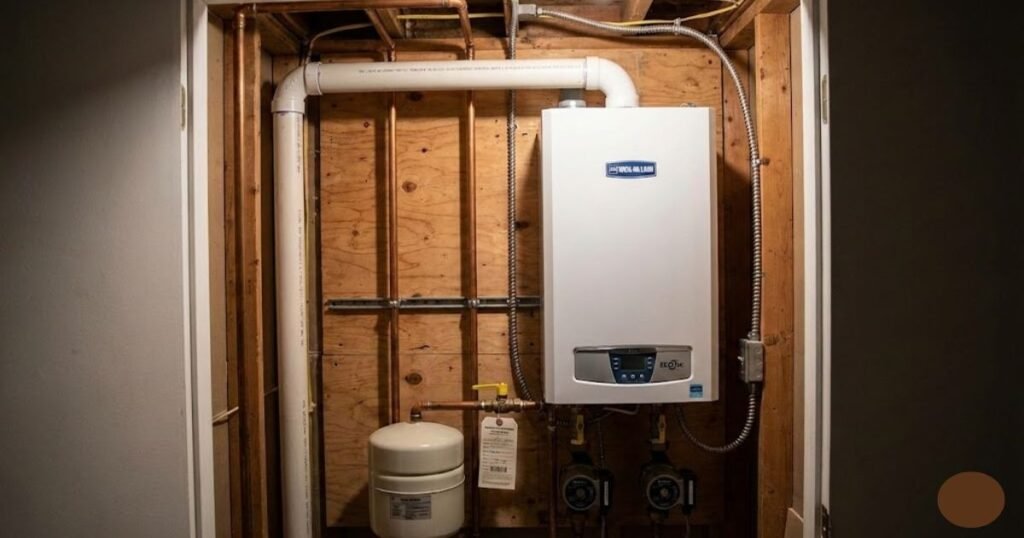
Why brand & model choice matters
Buying a boiler isn’t only about AFUE or the sticker price. The right brand and model affect:
- Efficiency (AFUE): Higher AFUE cuts fuel use but may increase venting/condensate requirements and upfront cost.
- Longevity and serviceability: Cast-iron heat exchangers can last decades and often tolerate “dirtier” hydronic systems; stainless or copper condensing exchangers offer very high efficiency but can be sensitive to water chemistry.
- Installation complexity: Wall-mounted condensing combi boilers save space but often require PVC venting and condensate neutralizers; cast-iron floor models may fit older piping with fewer changes.
- Fuel type and capacity: Make sure the model supports natural gas or propane as needed, and that BTU output matches your heat load (not just square footage).
- Warranty & parts network: A longer heat-exchanger warranty and good local distributor support reduce risk and service hassle.
Choosing the wrong type (e.g., a compact wall-hung condensing boiler for a large home with old, corroded iron piping) invites frequent service calls and higher lifecycle cost. This guide balances real retail price checks, manufacturer specs, and owner/tech feedback so you can pick the smart option for your house.
READ MORE: Viessmann Boiler Review 2026 | Efficiency, Models, Pros & Cons
Weil-McLain vs Viessmann vs Bosch vs Navien vs Bradford White vs Lochinvar
| Brand | Typical Model Examples | Typical AFUE Range | BTU Range (residential) | Boiler Type | Typical Installed Cost Range (USA) | Best for | Warranty snapshot |
| Weil‑McLain | GV90+, WM97+, Evergreen | 91–95% (varies by model) | ~70k–300k+ | Cast-iron + condensing secondary; wall & floor condensing | $4,000–$12,000 installed (varies by model/region) | Single-family → large multi-unit | 10–12 yr HX* / 1–2 yr parts (model dependent). |
| Viessmann | Vitodens 200 | 93–95% | ~8k–199k (wall) | Wall-mounted condensing | $6,000–$15,000 installed | High-efficiency wall-hung for efficient homes | Long HX warranty; premium service network. |
| Bosch | Greenstar | 92–95% | ~24k–151k | Wall & floor condensing | $5,000–$12,000 installed | Quiet, compact wall-hung installs | 10–12 yr HX typical on premium models. |
| Navien | NCB combi / NFB condensing | 92–95% | ~80k–240k (space heating) | Wall-mounted condensing/combi | $4,000–$10,000 installed | Small footprint; combi DHW + heat | 10–12 yr HX on many models; tech network strong. |
| Lochinvar | Knight, Crest | 95% (some models) | ~55k–399k | Wall & floor condensing | $5,000–$14,000 installed | Larger homes, variable capacity | Robust commercial warranty options. |
| Bradford White | Brute FT | 95% | ~50k–100k (wall) | Wall-hung condensing | $4,000–$9,000 installed | Value wall-hung condensing options | Typical HX warranty ~10–12 yrs on premium lines. |
*Standouts (one-line): Weil-McLain: wide range from durable cast-iron to modern condensing; Viessmann & Bosch: premium wall-hung tech and feature sets; Navien: strong combi options; Lochinvar: heavy-duty high-capacity units; Bradford White: value wall-hangs.
Look up at Best Weil-McLain Model Reviews
1. GV90+4 — 84,000 BTU (Net) High-Efficiency Gas Boiler
The GV90+ series is Weil-McLain’s high-efficiency cast-iron primary boiler with a stainless steel condensing secondary exchanger. The GV90+4 model has ~105 MBH input and ~84,000 BTU net output (IBR), with an AFUE around 91% (series spec). This model is designed for homeowners who want the robustness of cast-iron heat exchange (long life, tolerates older hydronic systems) with improved efficiency thanks to the secondary condensing section. Manufacturer specs highlight wide waterways that resist sludge buildup and multiple venting options including PVC direct venting.
Where it fits: Best for single-family homes that value durability and want a step-up in efficiency from older cast-iron boilers without shifting entirely to a fragile mod-con design. Works well with baseboard or radiators and is often a “drop-in” for older systems with minimal repiping.
Venting & install notes: Floor-standing physical footprint; venting options include direct exhaust and concentric; conversion to LP available with kit. Installation can be simpler than a pure mod-con in that piping and combustion access are familiar to many HVAC pros, but weight and size may require two techs.
Pros: Durable cast-iron primary, easier serviceability for traditional techs, fewer water-quality headaches than some all-stainless condensing boilers.
Cons: Heavier and larger than wall-hung units; higher upfront cost than simplest non-condensing boilers.
Who should buy: Homeowner with older radiators or baseboards who wants efficiency gains but prioritizes longevity and serviceability. check product-

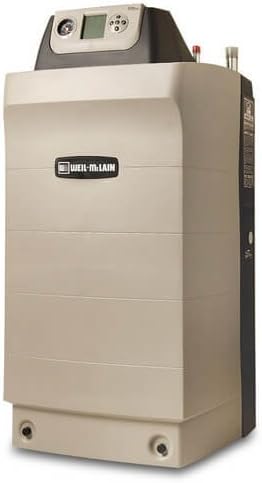
2. Ultra 80 — 62,000 BTU Output High-Efficiency Boiler (Propane)
The Ultra 80 is Weil-McLain’s compact, high-efficiency residential boiler family; the Ultra 80 model listed here has a net output around 62,000 BTU and is commonly sold for propane or natural gas depending on SKU. AFUE ratings on Ultra series models commonly sit in the low-to-mid 90s for condensing units.
Where it fits: Ideal for small single-family homes, cottages, or condos that need a floor-standing but modest-capacity boiler. It’s a practical choice where space is limited but you want better efficiency than an old non-condensing unit.
Venting & install notes: Typically condensing, so PVC venting allowed, condensate neutralizer recommended if local codes require; footprint smaller than classic cast-iron units and easier to move. Installation is straightforward for a licensed tech; recommend checking combustion air and condensate disposal.
Pros: Small footprint, good efficiency, easier retrofit for modest heat loads.
Cons: Not suitable for larger homes.
Who should buy: Owners of smaller homes (single-family or large condo) replacing similarly sized equipment. check product-
3. WM97+ 110 CT Series 2 — 88,000 BTU Output Wall-Mounted Boiler
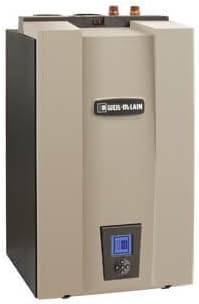
The WM97+ is Weil-McLain’s wall-mounted modulating condensing boiler (95%+ AFUE on many SKUs). The 110 CT variant listed has ~88,000 BTU net output and is designed to be compact while delivering high AFUE and good modulation for tight temperature control. Specs emphasize quiet operation, integrated controls, and multiple venting options (PVC/CPVC/PP).
Where it fits: Perfect for small-to-medium homes where space is tight (utility closet or mechanical room) and when homeowners want a clean wall-hung install vs. a bulky floor boiler. Also good where domestic hot water integration or rapid zone control is desired.
Venting & install notes: Wall-hung (saves floor space), requires Category IV venting (PVC/CPVC/PP or stainless per manual). Installer must manage condensate neutralizer and ensure fan/air intake placement meets code. Installation is often faster for a competent mod-con installer but requires attention to primary/secondary piping and pump sizing.
Pros: High AFUE, small footprint, modern controls and easy zoning.
Cons: some service parts are more specialized.
Who should buy: Owners of 1,000–2,500 sq ft homes who want high efficiency and a compact unit. check Boiler-
4. GV90+5 — 113,000 BTU High-Efficiency Gas Boiler
Another GV90+ model with higher input/output scaling — the GV90+5 is rated around 140 MBH input and ~113,000 BTU net output and retains the cast-iron primary with stainless condensing secondary design and ~91% AFUE series rating. It’s a natural step up for larger single-family homes.
Where it fits: Medium to larger single-family homes with higher heat loads, or homes planning to add space where future load cushion is desirable. Works well with baseboard or radiator systems.
Venting & install notes: Floor-standing, heavier unit; venting options include PVC/direct exhaust; conversion to LP available. Installer should confirm flue/combustion air clearances and that existing pumps / piping will handle higher MBH.
Pros: Strong output for homes with higher loads; cast-iron durability with modern efficiency.
Cons: typically higher installation cost (bigger venting, possibly larger gas service).
Who should buy: Homeowners with heat loads above ~80k BTU net who prefer cast-iron durability. check boiler-
5. EVG 299 — 243,000 BTU Output Evergreen High-Efficiency Condensing Gas Boiler
The Evergreen (EVG) Pro series is Weil-McLain’s large, stainless-firetube modulating condensing platform for heavy residential or light commercial use. The EVG-299 (input ≈299 MBH, net output ≈243k BTU) is intended for very large homes, duplexes, or small multi-unit buildings. AFUE specs are in the mid-90s for the Evergreen Pro.
Where it fits: Large single-family homes with substantial heat loads, multi-unit dwellings, or hydronic systems that need high capacity and zone stacking (Evergreen supports many zone outputs and lead/lag boiler control).
Venting & install notes: Floor-standing; capable of PVC/PP/CPVC or stainless venting over long runs; 10:1 turndown on many Evergreen models reduces cycling. Condensing operation requires proper condensate handling and neutralization; installers should plan for a heavier footprint, multiple pump outputs, and advanced controls.
Pros: High capacity, modern controls, suitable for multiple zones and large systems; modulating to reduce cycling.
Cons: Higher unit cost and and some time higher installation cost
Who should buy: Owners of large properties, landlords with multi-unit buildings, or contractors specifying a high-capacity, modular hydronic plant. check Boiler-

Head-to-head Weil Mclain features comparison
When evaluating Weil-McLain against international competitors like Viessmann or Navien, the analysis typically centers on the tension between “peak theoretical efficiency” and “real-world serviceability.” European and Asian brands often lead in technical miniaturization and achieve slightly higher $AFUE$ ratings (up to 98%), but Weil-McLain remains the market leader in the U.S. due to its versatile model range and installer familiarity.
Weil-McLain’s primary competitive advantage is the availability of high-efficiency cast-iron hybrids (GV90+) and a well-established fire-tube condensing line (WM97+ and Evergreen). In contrast, Navien dominates the compact, wall-hung market with its NFB-H and NCB-H series, which are preferred for small condos or combined heating and water needs. Lochinvar competes at the premium end with the Knight series, which technicians often prefer for its code-free diagnostic interface and massive turndown ratios.
READ MORE: Electric Boiler Cost (2026) — Real Prices, Installation & Buying Guide
Where Weil-McLain Typically Outperforms Competitors:
- Retrofit into Old Piping: The wide waterways of the GV90+ series handle older radiator systems better than the narrow passages found in many compact European designs.
- Parts Accessibility: Replacement components for Weil-McLain are standard stock items at most U.S. supply houses, whereas parts for some European brands may require special orders.
- Ease of Control: The plain-English LCD displays on the WM97+ and Ultra series are more intuitive for homeowners than the icon-based or numeric code systems used by some budget brands.
- Zoning Simplicity: “ZoneStacking” on the Evergreen series eliminates the need for external relays, which are still required by many competing manufacturers.
Where Competitors May Have the Edge:
- Space Savings: Navien and Bosch wall-hung units are generally more compact than floor-standing Weil-McLain models, making them better for urban apartments.
- Peak AFUE: Brands like Viessmann can achieve up to 98% efficiency, which may provide marginal fuel savings over Weil-McLain’s 95% units in extreme cold climates.
Integrated Smart Features: Some Navien models include Wi-Fi connectivity as a standard, factory-integrated feature, whereas it is often an add-on for Weil-McLain systems.
READ MORE: Plate Heat Exchanger Spare Parts: The U.S. Homeowner’s Guide
Weil Mclain Boiler Cost breakdown and real-world pricing
The total cost of a boiler replacement is rarely just the price of the unit itself. In 2026, the retail price of the boiler typically represents only 40% to 60% of the total project cost. The remainder is consumed by specialized labor, venting materials, and system upgrades required to meet modern safety and efficiency codes.
Retail vs. Installed Pricing (2026 Estimates)
| Model | Retail Unit Price (Estimate) | Estimated Installed Cost (Range) |
| GV90+4 | $6874 | $6,700 – $9,200 |
| Ultra 80 | $7124 | $6,200 – $8,700 |
| WM97+ 110 | $8124 | $6,800 – $9,800 |
| GV90+5 | $8898 | $7,600 – $10,600 |
| EVG 299 | $14,949 | $12,000 – $16,500 |
Note: Unit prices are based on supplier retail data from amazon, and US Supply as of February 2026. Installation ranges are conservative U.S. averages including labor, standard venting, and basic ancillary parts. High-cost regions like the Northeast or West Coast may see prices at the top of these ranges.
Weil Mclain Boiler Pros & cons (Overall brand analysis)
Evaluating Weil-McLain as a brand requires looking beyond individual models to the overall ecosystem of support, engineering philosophy, and long-term track record.
Overall Pros:
- Reliability & Durability: The continued production of cast-iron hybrid options (GV90+) provides a uniquely durable path to high efficiency that many other modern brands have abandoned.
- Massive Support Network: Most U.S. HVAC contractors are trained on Weil-McLain, and parts are widely available, reducing the risk of being left without heat during parts shortages.
- Advanced Control Logic: Features like “ZoneStacking” and the “U-Control” platform simplify complex residential installations and improve ease of use for the homeowner.
- Diverse Product Line: From small wall-mounts for condos to massive 399 $MBH$ units for estates, there is a Weil-McLain for nearly every residential heating load.
Overall Cons:
- Premium Initial Cost: Weil-McLain is generally more expensive than budget-focused brands like Peerless or Crown, particularly in the high-efficiency condensing categories.
- Weight and Size: Many models, especially the GV series, are significantly heavier and have a larger footprint than compact European wall-hung units.
- Maintenance Sensitivity: High-efficiency mod-con units require strict annual maintenance (cleaning exchangers, testing water pH) to reach their expected lifespan of 15–20 years.
Discontinued Models: As the company innovates, older product lines are eventually phased out, which can make sourcing proprietary electronic boards for 25-year-old units a challenge.
READ MORE: New Boilers Buying Guide for Homes and Businesses
How to choose the right boiler for your home
Use this quick checklist and decision flow to narrow choices:
Checklist (practical steps):
- Calculate heat load (MBH) — get a Manual J / heat-loss calculation from a qualified pro or use reliable online tools as a starting point. Don’t size by square footage alone.
- Confirm fuel availability — natural gas, LP, or conversion options. Ensure your gas meter/regulator can support peak input.
- Match BTU to heat load + cushion — pick a boiler with modulation and low-fire settings to avoid short cycling; typical cushion ~10–20%.
- Assess piping & venting — existing cast-iron boilers often have piping suited to cast-iron replacements; condensing wall-hung installs may need new vents and condensate lines.
- Set a budget for installed cost — include permits, piping, venting, condensate neutralizer, and removal of the old boiler.
- Check warranty & registration — register your product with the manufacturer after installation; verify heat-exchanger warranty lengths.
- Ask for local references — choose an installer with experience with the specific model and ask to see prior installs.
Quick Decision Flow:
- Small Home / Condo (under 1,500 sq ft): Choose a wall-mounted model like the WM97+ 70 or Ultra 80 to save space.
- Medium-Sized Family Home (1,800 – 3,000 sq ft): The GV90+4 or GV90+5 provides the best balance of efficiency and “traditional” durability.
- Large Estates or Multi-Unit Buildings: The Evergreen 220 or 299 offers the output and advanced zoning control needed for high heating loads.
Final installation tips: Always hire a licensed hydronic installer. Confirm primary/secondary piping practices, pump sizing, and that your local inspector accepts the venting material and condensate neutralizer approach. A proper start-up and system flush will dramatically reduce service calls later.
Weil Mclain Boiler Maintenance, warranty & real-world reliability
Routine maintenance (what to expect):
- Annual inspection by a qualified technician: burner, combustion, venting, and controls.
- Every 1–3 years: check and flush the condensate trap and neutralizer (condensing units).
- Hydronic system care: periodic system flush and dirt/dirt separator cleaning extends heat-exchanger life. Cast-iron systems are more tolerant, but rust/scale still matters.
- Parts & controls: replace the ignition control, pressure relief valves, and circulator per manufacturer life-expectancy and as failures occur.
Warranty notes (summary):
Weil-McLain commonly provides heat-exchanger coverage of 10–12 years on many residential lines (check paperwork for each model), and parts coverage from 1–2 years depending on the model and commercial vs. residential designation. Labor is typically not covered. Always register your product and keep proof of professional installation to preserve warranty rights.
Real-world reliability signals: Specialist forums and tech communities show generally positive feedback for GV90 and Evergreen lines (durability, reliable heat), while wall-hung mod-con users sometimes note more specialized maintenance for components like circulation pumps or integrated electronics this is typical across manufacturers. Read local forum threads and ask local contractors about service frequency in your area before deciding.
FAQs
How much does a Weil-McLain boiler cost to buy and install?
Unit retail prices vary by model — expect $5,600–$15,200+ for the unit (examples above) and $5,000–$25,000+ installed depending on model, venting, and plumbing complexity. For example, the GV90+4 retail was listed at $4,350 and estimated installed at $7k–$11k (supplier checks 2026-02-25); always get 2–3 local installer quotes.
Which Weil-McLain model is best for a 2,000 sq ft house?
It depends on heat loss, insulation, and climate. Many 2,000 sq ft U.S. homes fall into the GV90+ (mid models) or a WM97+ wall-hung if heat load is moderate and space is tight. Get a heat-loss calculation (MBH) and match that to a modulating model with appropriate low-fire capacity.
Are Weil-McLain boilers reliable and easy to repair?
Yes — Weil-McLain has a long track record. Cast-iron GV90 units are often praised for durability and are repairable by many local techs; condensing models require attention to condensate and controls. Local installer experience matters a lot check local forums and ask contractors for references.
What is the difference between GV90+ and WM97+?
GV90+ is a floor-standing cast-iron primary with condensing secondary (designed for longevity and higher ruggedness, ~91% AFUE); WM97+ is a wall-mounted mod-con with higher AFUE potential (≈95% on some SKUs), smaller footprint, and Category IV venting. Choose GV90+ for durability/legacy systems and WM97+ for compact, high-efficiency installs.
Can I replace an old boiler with a Weil-McLain condensing model without changing my vents?
Not always. Condensing boilers typically use Category IV venting (plastic PVC/CPVC/PP) and produce condensate that needs neutralizing. Some modern cast-iron hybrid designs (like GV90+) support multiple venting options, but you should confirm with the installer and local code plan for possible vent replacements.
Conclusion
Weil-McLain remains a sensible choice for many U.S. homeowners because it spans both traditional cast-iron durability and modern condensing efficiency. If you have an older system and value longevity or live where local techs are familiar with cast-iron repairs the GV90+ models are a pragmatic choice. If you have limited space and want top AFUE and integrated controls, the WM97+ or Evergreen series may fit better.