As a licensed electrician who’s installed and replaced dozens of surge protection systems in homes across different U.S. markets, I’ll say this up front: a whole house surge protector is one of the most cost-effective pieces of electrical insurance you can buy for a modern home. In this article I’ll walk you through what a whole house surge protector is, how it works, what you should expect to pay (device + installation), and whether the cost is justified for your home. I’ll share real-world price ranges, installation realities, NEC considerations, and practical advice from jobs I’ve done no sales fluff, just trade-tested guidance.
A whole house surge protector (also called a whole home surge protector or panel surge protector) is a device installed at your electrical service entrance or main panel to block or divert damaging voltage spikes before they spread through your home wiring. Surge protection matters because modern homes are filled with sensitive electronics HVAC controls, refrigerators with microprocessors, smart thermostats, home entertainment gear, and computers. Even a small voltage spike from grid switching, a neighbor’s motor startup, or indirect lightning can shorten the life of these devices or destroy them outright.
What Is a Whole House Surge Protector?
How it works
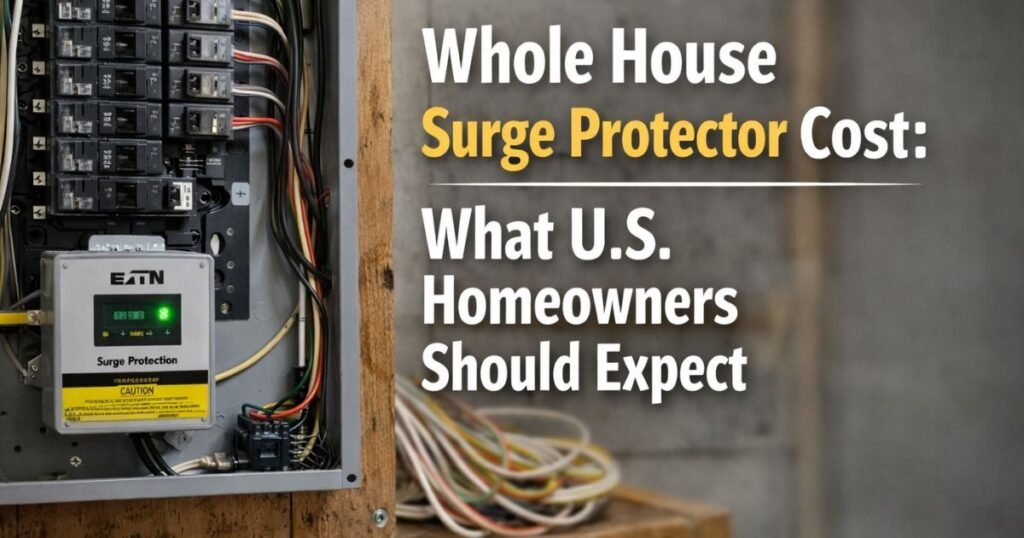
A whole house surge protector is installed at the main electrical service, typically at the service entrance or inside/adjacent to the electrical panel. It monitors voltage coming into the home and, when it detects a sudden overvoltage (surge), it redirects the excess energy to ground or neutral, clamping the voltage to a safer level for downstream circuits. Think of it as a traffic cop at the entry point that diverts dangerous power surges away from your house’s wiring.
How it differs from power strips
Power strips and point-of-use surge bars protect individual devices by absorbing or shunting small transients. They do not stop a large surge from entering the house through the main feed. Without a proper whole home surge protector and a good grounding system, point-of-use devices have to take the hit. In short: power strips are the last line of defense for individual gear; whole house surge protection is the first line of defense for the entire electrical system.
Types of surge protection devices (Type 1, Type 2, Type 3)
- Type 1: Installed between the service conductor and ground, usually outside the meter or at the service head. These are for direct lightning strikes and heavy surges.
- Type 2: Installed at the service entrance or distribution panel inside the building. These are the most common for residential panel surge protectors.
- Type 3: Point-of-use devices (outlet or power strip level). These provide additional protection for sensitive electronics after Type 1/2 devices do their work.
Note: Many residential systems use a combination Type 2 at the panel plus point-of-use Type 3 devices on especially sensitive equipment.
Where it is installed in a U.S. home
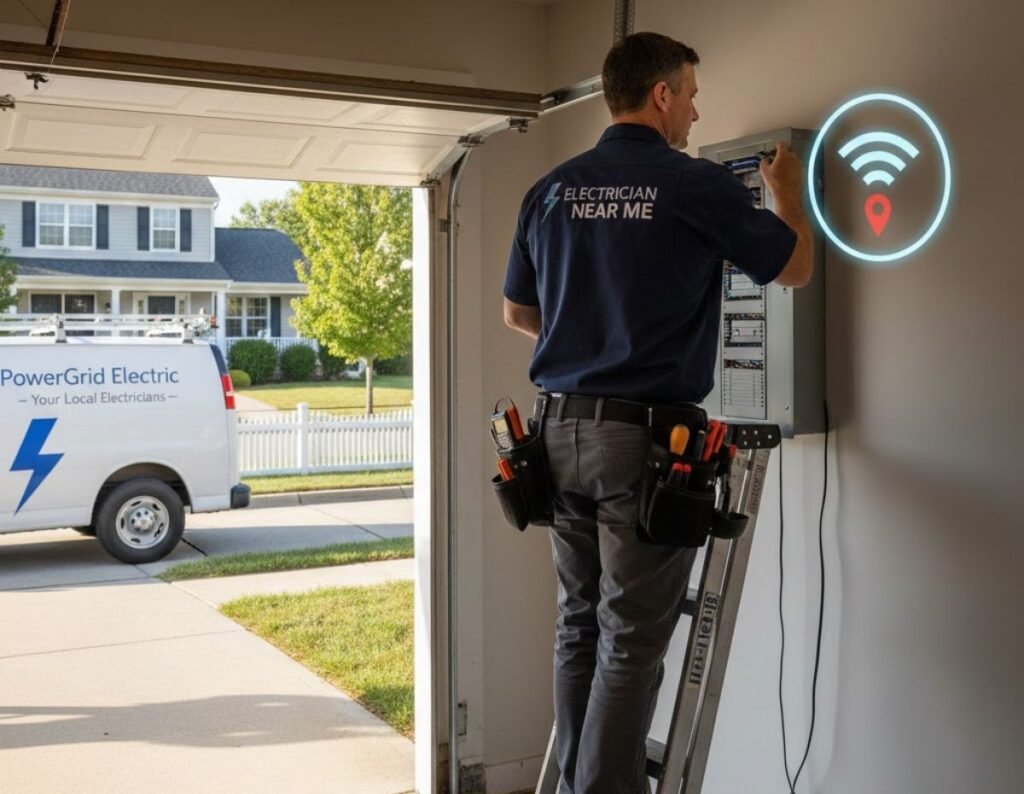
Most commonly, a whole house surge protector is mounted on or beside the main electrical panel and wired into the bus or meter side, depending on model and local code. In new construction, it can be integrated during panel installation; in existing homes, it often requires access to the panel and sometimes the meter area.
READ MORE: Temporary Power Pole: Cost, Requirements & Installation Guide
Average Whole House Surge Protector Cost in the USA
National average cost range
From my field experience and conversations with colleagues across regions, homeowners can expect a total installed cost roughly in the range of $300 to $1,200 for most residential installations. That covers the surge protector device plus electrician labor. There are outliers above and below this range depending on unit size, installation complexity, and required upgrades.
Typical price breakdown (device + labor)
- Device only (unit price): $80–$600 (basic to commercial-grade, higher if integrated with monitoring or higher joule ratings).
- Labor & materials: $200–$800 (typical residential install by a licensed electrician).
- Permits/inspection: $0–$150 (varies by jurisdiction).
So a mid-range unit + straightforward installation often falls around $450–$800 total.
Low-end vs high-end installations
- Low-end: Simple installation on a modern panel, good grounding, basic Type 2 protector $300–$450 total.
- Mid-range: Higher capacity unit, small panel work (adding bonding screw, short runs), permit $500–$900.
- High-end/complex: Old panel replacement or upgrades (e.g., if the panel is incompatible or grounding is inadequate), Type 1+2 coordinated systems, monitoring-capable devices $900–$2,000+.
Costs for new construction vs existing homes
- New construction: Cheaper on average because installation is coordinated with panel work—$250–$600 extra in most cases.
- Existing homes: Can be more expensive if panel access, grounding, or meter work complicate things—$400–$1,200 commonly.
Cost Breakdown by Component
Surge protector unit price
Units range widely:
- Entry-level residential: $80–$150 basic Type 2 protectors suitable for homes with good grounding and modern panels.
- Mid-range: $150–$350 higher joule ratings, better response times, surge current ratings, and warranties.
- Commercial-grade / monitored: $350–$600+ for homes with high-value electronics, monitoring features, and better coordination with utility or Type 1 devices.
Electrical panel compatibility
Older panels sometimes require adaptors or modifications. Some surge protectors clamp directly to the service conductors or to specific panel configurations; others require space in the panel and accessible bus bars. If your panel is full or obsolete (fused service, old grounding), expect added costs.
Labor costs from licensed electricians
Labor makes up a big chunk of the installed price. Typical rates vary by market:
- Hourly rate: $75–$150/hr for a licensed electrician (higher in metropolitan areas).
- Typical labor time: 1–4 hours depending on complexity.
So labor usually runs $200–$600 for standard installs.
Permit and inspection considerations (U.S. jurisdictions)
Many municipalities require a permit for service-side electrical work or panel modifications. Permit fees range from free to $150–$250 depending on the locality. Your electrician should pull permits when required this protects you and ensures the work meets local code.
READ MORE: Rewiring a House: Costs, Process, Permits, and What Homeowners Should Expect
Factors That Affect Whole House Surge Protector Cost
Home size and electrical demand
Larger homes with multi-panel systems, larger electrical service (200A+), or separate sub-panels for garage/EV chargers often require higher-capacity devices or multiple protectors. That increases both device and labor costs.
Panel type and age
If your panel is an older brand or has little space, you may need a panel upgrade or a meter-base mounted unit. Upgrading a panel can be the largest cost driver replacing a 100A panel with a 200A and providing new breakers can add $1,000–$3,000+ to the job.
Local labor rates in the U.S.
Labor in rural markets will be cheaper than urban centers. A three-hour job at $75/hr in a small town looks very different than the same job at $125/hr in a big city.
Grounding system condition
A surge protector is only as effective as your grounding. If the grounding electrode system (rod, clamp, water pipe bond) is poor or corroded, your electrician may recommend upgrades additional rods, better bonding, or replacing corroded conductors which adds cost but is essential for proper protection.
NEC code requirements
National Electrical Code (NEC) updates can influence installation methods. For instance, the NEC has tightened language about surge protective devices (SPDs) at service equipment and the main panel in recent cycles. Compliance work may add to installation requirements.
Utility-provided surge protection options
Some utilities offer service-level surge suppression or coordinated protection. In rare cases, there may be rebates or programs; in other cases, coordinated installation with the utility is necessary for the best protection. This usually won’t reduce homeowner cost much, but can change implementation.
Installation Cost: What Homeowners Really Pay
Step-by-step overview of the installation process
- Initial assessment: Electrician inspects the panel, service rating, grounding, and space.
- Device selection: Choose a unit sized for your service (e.g., 120/240V, single-phase vs three-phase).
- Permits (if required): Electrician pulls permit.
- Shutdown and safe working procedures: The crew de-energizes the service or works on the neutral/ground side depending on the unit. For meter-side installs, the utility may need to disconnect power.
- Mount and wire device: Connected to the service lugs or bus, with short runs and proper bonding to ground.
- Testing and labeling: Verify functionality, check grounding resistance if needed, and label the panel.
- Inspection: Municipal inspection where required.
Time required for installation
A standard residential install typically takes 1–3 hours (after assessment). Complex installs (meter-side, panel upgrades, grounding work) can take a day or more.
What typically increases installation costs
- Unsafe/old panels that require replacement.
- Poor or inadequate grounding requiring remediation.
- Meter-base work requiring utility coordination (often requires scheduled utility outage).
- Multi-panel homes or long conductor runs.
- Installation at difficult-to-access meter locations.
- Need for Type 1 solutions for direct lightning risk.
Real-world cost examples from homeowner experiences
- Simple retrofit: Home with modern 200A panel, good grounding unit $180 + labor 2 hours at $95/hr = ~$370 total.
- Mid-level install with permit: Midrange unit $260 + labor 3 hours at $125/hr + $75 permit = ~$700 total.
- Panel upgrade + surge protection: Old 100A panel replaced by 200A panel ($1,800) + high-end surge unit $400 + labor = ~$2,600–$3,300.
READ MORE: Cost to Upgrade Electrical Panel to 200 Amps
Is a Whole House Surge Protector Worth the Cost?
Short answer: Almost always yes especially in homes with mid-to-high value electronics, smart appliances, and HVAC systems.
Cost vs potential damage savings
A single control board for a high-efficiency furnace or air handler can cost $600–$2,500 to replace (parts + labor). High-end TVs, home theaters, or smart appliances carry similar repair/replacement bills. When you add up potential losses from even one big surge, the cost of a protector often pays for itself in the first prevented failure.
Protection for HVAC systems, electronics, appliances
Major appliances and HVAC systems contain sensitive electronics that are expensive to replace. Surge protection greatly reduces the risk of needing these costly repairs. In many installs I’ve done, clients avoid at least one major service call within five years sometimes more.
Insurance and resale value considerations
Some homeowner insurance policies may offer small discounts for documented whole-house surge protection (check your carrier). For resale, offering an upgraded electrical protection system can be a selling point, especially for tech-forward buyers.
Long-term financial benefits
Because whole house surge protectors are relatively low-maintenance and long-lived (see next section), the long-term ROI usually favors installation especially when combined with point-of-use protection for high-value items.
Whole House Surge Protector vs Point-of-Use Surge Protectors
Cost comparison
- Whole house protector: $300–$1,200 installed (covers the whole system).
- Point-of-use strips: $10–$100 each (protect individual devices only).
Relying only on power strips can become costly if you need many and they still won’t stop upstream surges.
Protection level differences
Whole house protectors handle large upstream surges by diverting them at the entry point. Point-of-use devices reduce small transients and provide local clamping and EMI/RFI filtering. They’re complementary, not interchangeable.
Best use cases for each
- Whole-house: First-line defense for appliances, HVAC, and entire circuits.
- Point-of-use: Final protection for expensive electronics (computers, home theaters) and devices with sensitive data.
Why many U.S. homeowners use both
A layered approach Type 2 panel protector + Type 3 point-of-use strips gives the best overall protection. The panel device takes the big hits; power strips capture the last small transients and protect individual equipment and data.
NEC Code & Surge Protection Requirements in the USA
Overview of NEC surge protection rules
The NEC has increasingly recognized SPDs. Recent cycles have included language encouraging or requiring surge protection at service equipment for certain installations (for example, in some NEC editions, new dwelling services may require surge protective devices). Local adoption and enforcement vary by jurisdiction, so it’s important to follow local code.
How code impacts installation cost
When code requires or recommends SPDs, inspectors may ask for specific device types, labeling, and coordination. Meeting code can mean paying for higher-rated units, better grounding, or more precise installation. Working with a licensed electrician who understands NEC requirements avoids rework and failed inspections.
What homeowners need to know when upgrading panels
If an inspector requires or recommends SPDs during a renovation or panel upgrade, factor the cost into the project budget. Your electrician can advise on the best SPD type and placement to meet NEC guidance and local jurisdiction requirements.
READ MORE: Electrical Panels
Maintenance, Lifespan & Replacement Costs
Average lifespan of a whole house surge protector
A well-chosen, properly installed whole house surge protector typically lasts 5–15 years, depending on the number and size of surges it absorbs. Higher-quality units and industrial-grade devices tend toward the upper end of that range.
Signs it needs replacement
- Visible indicator lights on the device showing failure.
- Single events (e.g., known nearby lightning) followed by electronics acting strangely.
- Device age if it’s 10+ years old, evaluate replacement.
- If an electrician notes degraded clamping components or corrosion.
Most modern SPDs have an indicator window or remote monitoring that shows when the device has been spent and needs replacement.
Maintenance costs (if any)
Maintenance is minimal visual inspections during other electrical service visits are usually enough. If the device fails, replacement devices cost $100–$600, and replacement labor tends to be 1–2 hours.
Long-term ownership costs
Factor in replacement every 5–15 years depending on exposure and device rating. Compared to the replacement cost of a single major appliance, this is usually modest.
Common Mistakes Homeowners Make
- Choosing the cheapest unit: Low-cost units may lack capacity or monitoring and have shorter lifespans. Buy from reputable manufacturers with clear specifications.
- Skipping professional installation: DIY installs risk improper wiring or grounding and may void warranties or fail inspection.
- Ignoring grounding issues: A poor grounding system negates a surge protector’s effectiveness. Fix grounding first.
- Assuming power strips are enough: Socket strips help, but they’re not a substitute for a panel-level SPD.
- Not coordinating SPD type with utility: In certain areas, utility-level coordination matters missing this can reduce protection effectiveness.
How to Choose the Right Whole House Surge Protector
Rating and capacity considerations
- Surge current rating (kA): Look at surge current handling higher is better for homes prone to heavy surges.
- Clamping voltage (V): Lower clamping voltage means better protection for downstream devices.
- Joule rating: While more common for point-of-use devices, joule rating still indicates energy absorption capacity.
- Response time: Faster is better. Most quality SPDs act in nanoseconds.
Brand reliability
Stick with manufacturers that supply clear specifications, warranties (some offer connected equipment warranties), and replacement parts. Ask your electrician which brands they’ve had reliable performance with over years of installs.
Panel compatibility
Make sure the SPD is rated for your service type (e.g., 120/240V single-phase residential). If you have split services, multiple panels, or a separately metered structure, you may need coordinated devices.
Professional recommendations
Consult a licensed electrician for an on-site assessment. They’ll check panel condition, grounding, and recommend the right device and placement. Ask for written quotes that break down device cost, labor, permit, and contingency for grounding or panel work.
READ MORE: Low Voltage Electrician
Frequently Asked Questions (FAQ)
How much does a whole house surge protector cost in the USA?
Typical installed costs range from $300 to $1,200, with many common installs falling around $450–$800. Costs depend on the unit selected, panel condition, grounding, and labor rates.
Can I install a whole house surge protector myself?
No. This work is done on live service equipment and should be performed by a licensed electrician. DIY installation is against code and can void warranties. Industry sources warn it risks shock, fires, and even voiding your homeowner’s insurance if a surge causes damage. For safety and code compliance, always hire a professional.
Does a whole house surge protector protect against lightning?
It protects against surges caused by lightning, such as a nearby strike inducing a voltage spike on the power lines. However, it is not a lightning rod. A very close or direct lightning strike can overwhelm any protector. The SPD greatly reduces the risk and impact of lightning-related surges on your electrical system, but it cannot stop a direct lightning hit to an ungrounded conductor. Proper grounding and, if needed, additional lightning rods are other measures for direct strikes.
Will installing a surge protector lower my home insurance?
Some insurance companies offer discounts or credits for whole-house surge protection, since it reduces fire and equipment-damage claims. For instance, one source notes homeowners “may be eligible for a break on your homeowner’s insurance after installing” an SPD. You should check with your insurer; it’s not guaranteed, but it’s common enough that some people offset part of the cost this way.
How long does installation take?
Standard installs usually take 1–3 hours. Complex scenarios (panel replacement, grounding upgrades, meter work) can take a full day or more.
Final Thoughts
From the trenches: installing whole house surge protection is one of the clearest upgrades I recommend to homeowners who value their electronics and HVAC equipment. The cost usually a few hundred dollars to under a thousand for most homes is small compared with the potential replacement or repair bills from a major surge event. The best strategy is a layered one: install a Type 2 panel surge protector installed by a licensed electrician, verify and upgrade your grounding if necessary, and use high-quality point-of-use protectors on your most valuable electronics.
If you’re planning a panel upgrade, new construction, or you just moved into a home with older electrical gear, factor in surge protection now integrating it during other electrical work saves money and gives the whole system better coordination. When shopping, ask for clear device specs (surge current rating, clamping voltage, type), warranty terms, and whether the installer will test grounding as part of the job.