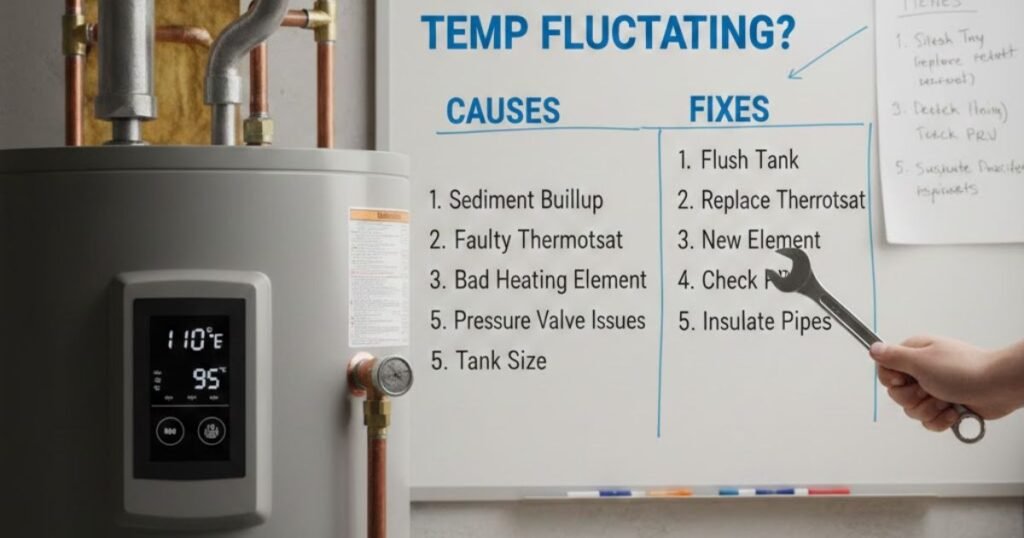
Fluctuating hot water usually comes from either demand (someone else uses hot water), a failing control component (thermostat, element, burner), or plumbing issues (mixing valve, cross-connection, sediment). This article helps U.S. homeowners diagnose the common causes, run a few safe checks, know when to call a pro, and decide between repair vs replacement.
You’ll get:
- a plain-English explanation of how water heaters keep temperatures steady;
- the top 8 causes of temperature swings (what you’ll see, how to check, how serious);
- homeowner checks and safety steps;
- a clear repair-vs-replace checklist, realistic U.S. price ranges, a comparison table, and 5 SEO-style FAQs.
How a Water Heater Normally Keeps Water Temperature Stable
A typical home water heater whether electric, gas, hybrid, or tankless uses controls and parts that work together to hold a set temperature:
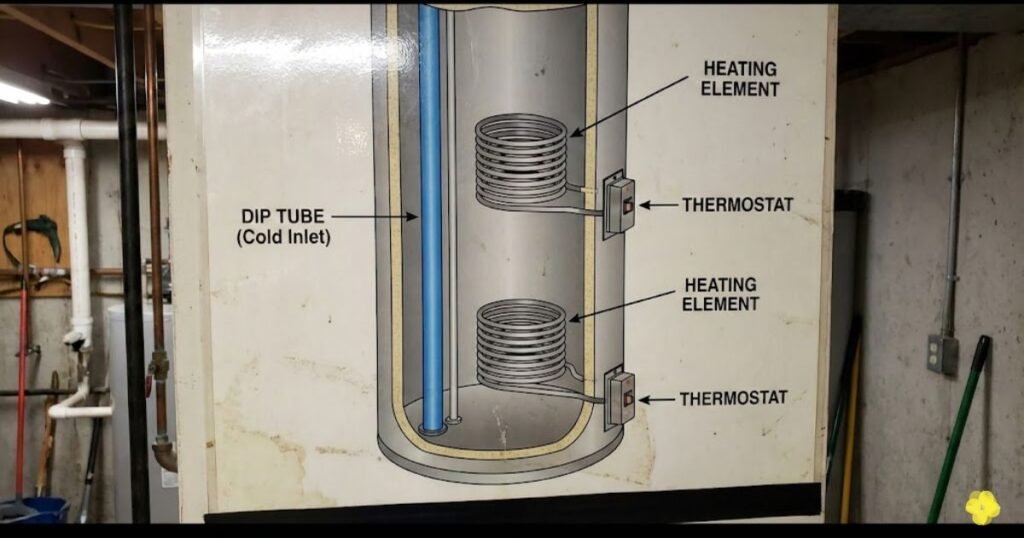
- Thermostat(s): electric tank heaters usually have two thermostats (upper and lower) that tell heating elements when to power on/off. Gas tanks use a gas control valve/thermostat that regulates burner flame. Faulty or mis-set thermostats are a common cause of temperature swings.
- Heating elements / burner: on electric tanks there are one or two heating elements; on gas units a burner and pilot or electronic ignitor provide heat. If an element or burner fails, the heater can only partly heat the tank and temperatures will be inconsistent.
- Dip tube: inside tank systems the dip tube drops incoming cold water to the bottom so it’s heated fully. A broken dip tube can mix cold water with hot water at the top, causing rapid cooling.
- Mixing / anti-scald valve: many homes have a thermostatic mixing valve (TMV) near the heater to blend hot and cold and prevent scalding. If the mixing valve fails, you can get alternating scalding and cold flows at fixtures.
- Plumbing & piping: cross-connections, single-handle faucet cartridges, or recirculation pumps can bring cold into hot lines intermittently. Pipe diameter and pressure changes during simultaneous use affect flow and feel of temperature.
Top 8 Causes of Fluctuating Water Temperature
Below are the usual suspects, how to safely check them, likely repair scope, and cost range if you need a pro.
1) Other simultaneous hot-water demand (appliance or faucet use)
What you’ll see: Temperature drops when washer/dishwasher runs or someone starts another shower.
How to check: Turn off other hot appliances and run only one fixture; does the problem stop? If yes, it’s demand, not the heater.
Fix & cost: Stagger use, or upgrade to a larger tank / tankless system or install a priority loop mostly no cost for diagnosis; upgrades range widely. Severity: low.
2) Faulty thermostat(s) or thermostat calibration drift
What you’ll see: Water cycles between warm and too hot or not hot at all; electric tanks often show one element not heating.
How to check: For electric units: with power off and after cooling, test thermostats with a multimeter or observe whether upper/lower elements heat by running only one faucet. (If you’re not comfortable with electrical testing, call a pro.)
Fix & cost: Thermostat replacement typically $150–$200 installed. Severity: moderate — easy to repair but unsafe to work on if unsure.
3) Failing heating element(s) (electric) or burner issues (gas)
What you’ll see: Reduced or inconsistent hot water, sometimes rumbling or odd noises. Electric units with two elements may heat only part of tank.
How to check: Power off, test element continuity or listen for burner cycling problems. If elements are coated with sediment they can fail prematurely.
Fix & cost: Element replacement runs about $150–$350 (parts + labor). Gas burner clean/repair costs vary; minor burner tuning is usually cheaper than full replacement. Severity: moderate.
4) Sediment buildup in the tank reducing heating capacity
What you’ll see: Rumbling or popping noises, less available hot water, sporadic temperature dips. Sediment creates cold pockets and insulates heating elements.
How to check: Drain a few gallons from the drain valve into a bucket discolored water or grit = sediment. (See safe flush steps below.)
Fix & cost: Tank flush or professional descaling. Flush is a low-cost DIY; pro flush or acid descaling may cost $100–$300. If the tank is heavily corroded, replacement is likely. Severity: varies from low (easy maintenance) to high (if corrosion/scale has damaged the tank).
Plumber insight (short quote): “Sediment accumulation can reduce heating capacity, trigger strange noises, and eventually corrode the tank.” — Josh Mitchell, Owner, PlumbingLab.com.
5) Malfunctioning mixing / anti-scald valve
What you’ll see: Water starts hot then suddenly goes cold (or vice versa) at one or several fixtures. Often feels like a valve is “sticking.”
How to check: Note whether the issue affects all fixtures or just one. If it’s the whole house, suspect the mixing valve near the heater. If one fixture, that fixture’s cartridge may be the culprit.
Fix & cost: Repair or replace TMV: typically $150–$400 depending on valve type and accessibility. Severity: moderate can create scald risk.
6) Cross-connection with cold-water line (failed check valve or cartridge)
What you’ll see: Hot water becomes unexpectedly cold, sometimes cold shows at the cold tap. Single-handle faucets and failed check valves often cause crossover.
How to check: Close the hot-water shutoff for the heater and open a hot tap — if water flows, there’s a cross-connection. (If unsure, call a pro.)
Fix & cost: Fixing a faulty faucet cartridge or check valve is usually $100–$300; complex cross-connection repairs cost more. Severity: moderate to high can waste energy and create scalding/cross-contamination risks.
7) Oversized or undersized unit for household demand
What you’ll see: Frequent temperature drops during peak use (undersized) or short cycling. Oversized units waste energy but usually don’t fluctuate as much.
How to check: Compare household hot-water draw (showers, appliances) to heater capacity; run only one fixture to test if the issue persists.
Fix & cost: Upgrade to a larger tank or tankless system if demand exceeds capacity. Typical replacement: $1,200–$3,000+ installed for conventional tanks (see cost section). Severity: depends on household needs.
8) Age-related decline or internal tank corrosion (time to replace)
What you’ll see: Frequent failures, rusty water, leaks, noisy tank, or repeated part replacements. Temperature swings may be the earliest symptom.
How to check: Check the unit’s age (manufacture date on the label) most tanks last 8–12 years; tankless units last longer. If ≥10 years and problems compound, replacement is often the economical choice.
READ MORE: How to Test a Water Heater Thermostat
Quick homeowner checks you can do safely against Water Heater Temperature Fluctuation
Quick Fix (do this first) — safe, non-technical checks to try now:
- Check other hot water use. Ask household members to pause dishwashers/washers; run only one hot tap and observe.
- Verify your setpoint. Look at the thermostat control (or gas control dial) and confirm it’s at your usual setting (120–125°F is common). Don’t crank above 140°F scald risk.
- Check breakers / pilot. For electric heaters, check the breaker and the high-limit reset; for gas units, confirm the pilot or electronic ignitor is working. If a breaker is tripped, turn it off and back on only once. If it trips again, stop and call a pro.
- Run a single fixture test. Run the kitchen sink hot for 5 minutes does temperature hold steady? If yes, the problem may be simultaneous demand or recirculation.
- Drain a few gallons to test for sediment. Turn off power/gas and the cold-water inlet; attach a hose to the drain valve and open into a bucket if the water is gritty or discolored, you have sediment. Don’t fully flush a hot tank unless comfortable with the procedure; if you are unsure, call a plumber.
Safety note: Always shut off electricity at the breaker for electrical work and the gas supply for gas water heaters. If you smell gas, leave the area and call your gas utility/emergency services.
When it’s a simple DIY fix vs when to call a plumber
Good DIY candidates:
- resetting a tripped breaker, checking for other hot-water uses, confirming thermostat setpoint, or draining a small amount to inspect for sediment (after turning off power/gas).
Call a licensed plumber (or electrician) if:
- the job involves electrical testing or wiring inside the heater;
- you have a gas appliance (pilot/burner/pressure work);
- the tank leaks, shows corrosion, or you suspect internal cracks;
- the mixing valve or cross-connection diagnosis requires shutoffs or re-piping;
- you can’t safely access valves or the drain valve is stuck.
Decision flow (short):
- If only demand causes the issue → schedule usage changes or upgrade.
- If only a single fixture → inspect fixture cartridge or faucet.
- If thermostats/elements suspected and you’re comfortable with safe electrical isolation → DIY replacement possible; otherwise call a pro.
| Call a Pro If… |
| Popping Noises: Loud “kettling” sounds indicate deep sediment that a standard flush won’t fix. |
| Visible Leaks: Water dripping from the tank itself or a safety valve indicates internal pressure issues. |
| Gas Odor: If you smell rotten eggs, evacuate immediately and call the gas company. |
| Age: If your unit is over 10 years old, performance swings are often signs of terminal failure. |
READ MORE: How to Clean Sediment from a Water Heater
Repair vs Replace — how to decide
Short rule of thumb: if the unit is older than 8–12 years, leaking, corroded, or requires repeated major repairs (repairs >50% of replacement cost), replace it.
Considerations:
- Age & condition: Tanks typically last 8–12 years; tankless units often last 15–20+ years. If your unit is in the upper range and beginning to fail, replacement avoids near-term repeat service.
- Cost of repair vs replacement: a thermostat or element replacement (often $150–$350) makes sense for an otherwise healthy unit. If you’re facing expensive repairs (heat exchanger, tank corrosion, repeated burner failures) that approach 40–60% of a new unit cost, replacement is usually the better investment. Typical full replacement ranges $1,200–$3,000+ depending on type and region.
- Energy efficiency & operating cost: newer high-efficiency tanks, heat pump water heaters, or tankless units use less energy and can save money over time. Factor in available federal tax credits (e.g., up to $2,000 for qualifying heat pump water heaters through the Energy-Efficient Home Improvement Credit, expiring 12/31/2025) when calculating payback.
- Household needs & space: upgrading to a larger tank or a tankless model may solve capacity and consistency issues; tankless units give steady temps but require proper flow rates and often higher upfront cost.
| Replacement Decision Checklist |
| Unit Age: Is the heater 10 years or older? (Yes = Replace) |
| Repair Cost: Is the estimate > 50% of a new unit? (Yes = Replace) |
| Frequency: Have you had more than two repairs in the last year? (Yes = Replace) |
| Energy Goals: Are you looking to lower utility bills via high-efficiency tech? (Yes = Replace) |
Comparison Table: Causes, Symptoms, and Fixes against Water Heater Temperature Fluctuation
| Most likely cause | What you’ll see | Typical fix & estimated cost |
| Other simultaneous hot-water demand | Temp drops when multiple fixtures run | Stagger use or upgrade capacity; low/zero diagnosis cost; upgrade $1,200–$3,000+. |
| Faulty thermostat(s) | Cycling temps; one element not heating | Replace thermostat(s) — $150–$200 installed. |
| Failed heating element / burner | Reduced or uneven hot water; noises | Replace element or service burner — $150–$350 (element) or variable for burner. |
| Sediment buildup | Rumbling, less hot water, gritty drain water | Flush tank / professional descaling — $0–$300 (DIY flush low; pro higher). |
| Faulty mixing/anti-scald valve | Sudden hot → cold at fixtures | Replace valve — $150–$400 installed. |
| Cross-connection / failed check valve | Cold water in hot line; whole-house effects | Repair/replace valve or faucet cartridge — $100–$300+. |
| Wrong unit size | Runs out of hot water quickly | Upgrade unit or add point-of-use/heater — replacement costs $1,200–$3,000+ depending on type. |
| Age / corrosion | Frequent failures, rusty water, leaks | Replace unit — $1,200–$3,000+; older tanks often not worth major repair. |
READ MORE: What Causes Low Water Pressure in One Faucet — Easy Fixes, Costs & When to Call a Plumber
Pros & Cons of Repair vs. Replacement against Water Heater Temperature Fluctuation
Homeowners must weigh the immediate financial outlay against the long-term reliability of their hot water system.
Repairing a Component
- Pros: Significantly lower upfront cost; extends the life of a relatively new unit (under 6 years); maintains existing plumbing and gas connections.
- Cons: Does not stop the clock on tank corrosion; provides no improvement in energy efficiency; multiple small repairs can eventually exceed the cost of a new unit.
Replacing the Entire Unit
- Pros: Restores full system reliability; includes a new manufacturer warranty; provides an opportunity to upgrade to high-efficiency or tankless technology.
- Cons: High initial investment; may require code-mandated upgrades to venting or electrical circuits; can involve a multi-day installation process if converting fuel types.
Typical U.S. costs
Short summary of typical installed costs (U.S., 2025 estimates):
- Thermostat replacement: $150–$200 (installed).
- Heating element replacement: $150–$350 (parts + labor).
- Professional tank flush / descaling: $100–$300 depending on severity and region.
- Mixing valve replacement: $150–$400.
- Full water heater replacement (installed): $1,200–$3,000+ for conventional tanks; tankless and heat pump units cost more up front but may be eligible for federal credits up to $2,000 for qualifying heat pump models through 12/31/2025.
What affects price: unit size/type (gas vs electric vs heat pump vs tankless), labor rates, permits, accessibility, removal/disposal, and whether venting or gas/electric upgrades are needed. Emergency/after-hours service can add 20–100% to labor.
Preventive maintenance checklist
- Flush the tank once a year (or every 6 months in hard-water areas) to remove sediment.
- Check the anode rod every 2–3 years and replace if heavily corroded.
- Test the T&P relief valve annually for movement and proper discharge.
- Set temperature to ~120°F to balance comfort, energy use, and scald risk.
- Insulate older tanks and pipes to reduce heat loss.
- Check for leaks and rust around fittings and the tank.
- Schedule a pro tune-up every 2–3 years (gas burner cleaning, electrical checks).
- Keep records of model, serial number, and service history for fast diagnosis.
READ MORE: Why is my water bill so high but no visible leaks (Cause, Fix & Costs)
5 Google-Search FAQs
Q1: Why is my water heater temperature fluctuating when the shower runs?
Often caused by other simultaneous hot-water draws, a faulty mixing valve, or failing thermostats/elements. Try running only one fixture and note whether the problem continues; if it does, suspect the heater or mixing valve.
Q2: Can sediment in my water heater cause hot water to go cold?
Yes. Sediment creates “cold pockets” and insulates heating elements, causing noise, reduced capacity, and uneven temps. Flushing the tank often fixes it unless corrosion is severe.
Q3: How much does it cost to replace a water heater thermostat?
Thermostat replacement usually runs about $150–$200 installed for typical electric tank heaters. If you’re uncomfortable with electrical work, hire a licensed pro.
Q4: Is inconsistent hot water a sign I need a new water heater?
Not always — sometimes it’s a simple part like a thermostat, valve, or sediment. But if the heater is ≥8–12 years old, rusting, leaking, or repeatedly needing repairs, replacement is often the better choice.
Q5: Will a tankless water heater stop temperature swings?
Tankless units deliver continuous hot water and can reduce capacity-related swings, but they require correct sizing and proper water pressure. Mineral buildup and flow changes can still cause issues. Consider whole-house needs before switching.
Conclusion
fluctuating water temperature is usually caused by demand, thermostats/elements, sediment, mixing valves, or plumbing cross-connections. Do the safe checks above first; many fixes are inexpensive. If you tried these steps or your unit is over 8–10 years old, contact a licensed plumber and keep your heater’s model and age handy to speed service.

