Installing a new gas line is a major project for homes or businesses. Gas line installation cost can vary widely based on many factors. Typically in the USA, running a new gas pipe costs anywhere from $500 to $2,000 on average. This includes both materials and labor. Costs depend on pipe length, material, and local labor rates, so prices can range from a few hundred to several thousand dollars.
For example, extending a short run of existing gas pipe (10–25 feet) may cost only a few hundred dollars, but a long installation from the street meter can approach $5,000. In the sections below, we break down these costs by project type, material, labor, and other fees, for both residential and commercial scenarios. Lets deep dive into “How Much Does Gas Line Installation Cost? Full Pricing & Factors”
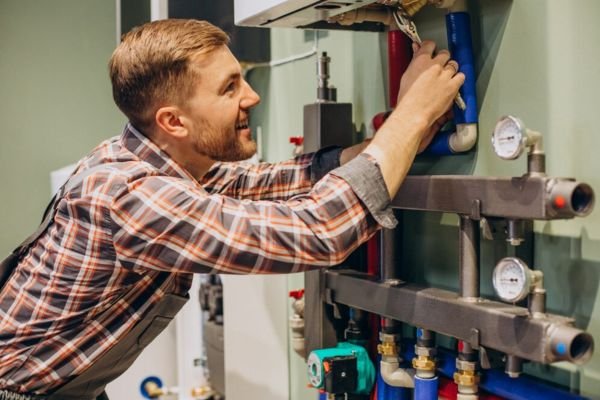
Residential vs Commercial Gas Line Installation Costs
Residential projects tend to be simpler and cheaper than commercial installations. A typical home installation (about 25 feet to a furnace) runs around $500–$2,000, with most homeowners paying about $800 on average. By contrast, commercial gas line installation often involves larger pipes and more complex layouts. Super Brothers reports that commercial gas line installs can run from about $1,500 to $4,000. In general, commercial gas line installation costs are higher because businesses usually need higher flow rates and multiple appliances. For example, a restaurant or gas-powered manufacturing facility will require heavier piping and additional connections, driving up labor and material needs. In short, a residential home’s gas line might cost under $1,000, while similar work at a business or multi-unit building can easily double or triple that amount.
READ MORE: Best Tankless Gas Water Heater Reviews & Comparison — 2026 buying guide
Gas Line Installation Cost Breakdown by Material
The type of pipe used greatly affects the total cost. Below are common materials and their price ranges. Generally, polyethylene (HDPE) is cheapest and widely used, while copper and specialty pipes cost more.
The pipe material plays a big role in cost and durability. High-Density Polyethylene (HDPE) pipes (often yellow) are commonly used for underground gas lines. They are lightweight, corrosion-resistant, and inexpensive. HDPE lines cost only about $10–$15 per linear foot installed. Because of these benefits, HDPE is the preferred choice for most new installations (over 90% use it outdoors).
Corrugated Stainless Steel Tubing (CSST)
Is a flexible metal pipe used indoors. CSST is easy to bend around obstacles and requires fewer joints. Installation cost for CSST is roughly $11–$20 per foot installed. This flexibility makes it popular in homes, but it is more expensive per foot than HDPE.
Copper
pipe was once common for gas, but it’s now rarely used for fuel due to cost and corrosion concerns. Copper gas lines installed run about $11–$21 per foot. Its material cost is low (around $1–$3/ft raw), but installation is heavy labor. In many areas, local codes discourage or ban copper for gas due to metallic impurities that can corrode with sulfur in gas.
Black iron (galvanized steel)
pipe is traditional for gas. It is sturdy and reliable for both indoor and outdoor lines. However, black iron is heavy and labor-intensive to install. Costs average around $15–$30 per linear foot installed. Its material cost ($5–$10/ft raw) is higher than plastic or copper. Despite this, black steel is still used for large commercial lines or where durability is paramount.
In summary, HDPE is the least expensive material option, while copper and black iron are pricier. The table below (from Fixr) shows typical installed costs:
- HDPE: $10–$15 per ft
- CSST: $11–$20 per ft
- Copper: $11–$21 per ft
- Black Iron: $15–$30 per ft
Choosing the right material means balancing budget with building code and longevity. A plumber can advise which pipe type meets local regulations and your needs.
READ MORE: Gas Water Heater Replacement Cost (2026) — What Homeowners Pay & Why
High-Density Polyethylene (HDPE)
HDPE is a plastic pipe often used for underground supply lines. It’s very corrosion-resistant and suited for outdoors. HDPE materials cost only about $1–$2 per foot (material only), and with installation about $10–$15 per foot. Because it’s easy to join and handle, HDPE usually keeps costs lower. Many new homes and businesses use HDPE for their exterior gas mains.
Corrugated Stainless Steel Tubing (CSST)
CSST is a flexible stainless steel pipe coated in plastic. It’s used inside buildings where bending around studs or through walls is needed. The cost for CSST material is roughly $2–$4 per foot, and installed cost is about $11–$20 per foot. CSST is convenient and resists earthquakes (flexible), but it requires special fittings. It may be slightly more expensive per foot than rigid pipe, but labor is reduced.
Copper Gas Pipes
Copper was once the go-to for gas lines, but many codes now limit its use. Copper materials cost about $1–$3 per foot, while installed cost is in the $11–$21 range. Copper is highly durable but reacts with certain impurities in gas, which is why it’s often avoided today. Unless local regulations specifically allow it, plumbers usually recommend alternatives.
Black Iron (Galvanized Steel)
Black iron (galvanized steel) is the heavy-duty standard for gas piping. It costs about $3–$8 per foot for the pipe, but due to welding and fittings, labor pushes the installed cost up to $15–$30 per foot. Black iron can handle high pressures and is ideal for large commercial systems, but it adds significant weight to the budget. In general, using galvanized steel is more expensive than using plastic or CSST, but it may be required for long outdoor runs or high-capacity mains.
READ MORE: How to Get Air Out of Plumbing Lines: A Simple Step by Step DIY Guide
Labor and Permit Fees
While the pipes themselves are a line item, the real cost of a gas line installation lives in the labor and the “red tape.” In 2026, professional expertise and legal compliance are where the bulk of your budget will go.
Here is a breakdown of the additional costs you should anticipate:
1. Service and Call-Out Fees ($50–$150):
Many pros charge a flat “trip fee” to cover fuel and the initial safety assessment. This is standard, but it’s especially common for emergency or after-hours appointments.
2. Professional Labor ($45–$200/hr):
This is the most variable cost. Rates depend on your local market and the plumber’s expertise. Keep in mind that “hidden” work—like threading pipe through tight crawlspaces or around complex obstacles—will add significant billable hours.
3. Permits and Legal Fees ($100–$900):
You can’t skip the paperwork.
4. Residential Permits:
Typically $100–$300 to ensure the work is inspected and up to code.
5. Meter Hookup Fees:
Your local utility may charge $300–$600 to connect your new line to the main grid.
6. Excavation and Trenching ($4–$12/ft):
If the line is going underground, you have to pay for the dirt to move. Costs spike if the crew has to navigate under driveways, through rocky soil, or around existing utility lines.
Pro Tip: Always ask for a “flat rate” vs. “hourly” breakdown in your initial quote. Knowing whether that $150 service fee is deducted from the final labor total can save you a surprise bill at the end of the project.
Regional Cost Differences Across the USA
Where you live is often the biggest variable in your plumbing budget. From local labor demand to state-specific building codes, the “where” matters just as much as the “what.”
- State-to-State Variation: Geography sets the baseline. Homeowners in Nevada or North Carolina typically see averages around $500–$550, while those in high-cost regions like California should expect quotes closer to $950.
- The “City Tax”: Urban projects are almost always pricier. Tight streets, complex logistics, and mountain-high regulations in cities like San Francisco slow work down. Conversely, rural installations tend to be faster and more budget-friendly due to simpler access and leaner codes.
- Market Demand: In high-growth “boom” areas, contractor scarcity can drive bids up. You’ll often find more competitive pricing in stable markets or during the local “off-season.”
While the national average hovers between $10–$25 per linear foot, these figures are just starting points. To get an accurate estimate, search for local averages in your specific city and always compare at least three professional quotes.
READ MORE: How Does a Gas Water Heater Work?
Emergency vs Scheduled Installations
When it comes to gas lines, patience pays. The difference between a planned upgrade and a midnight emergency can double your bill.
The Standard Window:
Booking a scheduled installation during normal business hours (ideally weekday mornings) keeps you within standard labor brackets. You avoid overtime fees and give yourself the leverage to compare multiple bids.
The “Emergency Tax”:
If you need a line run on short notice or a leak fixed after-hours, expect to pay a premium. Emergency services often trigger 1.5× to 2× the standard hourly rate, plus flat “urgent-call” surcharges.
New Construction vs Retrofit Installations
The state of your home significantly impacts the final invoice. Whether you are building from scratch or upgrading an older property determines how much “unseen” labor you’ll pay for.
Retrofitting (The Costlier Upgrade): Adding gas to an existing home is a “surgical” process. Plumbers must cut into finished drywall, pull up floorboards, or trench through established landscaping. You aren’t just paying for the pipe—you’re paying for the demolition and the subsequent repairs (patching, painting, and refinishing) required to restore your home.
New Construction (The Budget-Friendly Option): Installing lines during the framing stage is seamless. Plumbers can run pipes through open studs, attics, or basements before walls are closed. Because the gas meter is typically placed during foundation work, the process is straightforward and minimizes billable hours.
READ MORE: How to Plumb a Refrigerator Water Line: Step by Step
Gas Appliance Hookup Fees and Valve Installation
The job isn’t finished once the main line reaches your home; connecting individual appliances carries its own set of costs for labor, piping, and essential safety components.
- Connection & Valve Costs: Every gas appliance (stove, dryer, water heater) requires a dedicated shut-off valve for safety and maintenance. Budget roughly $220–$350 for the connections and an additional $210–$500 for the valves when hooking up 3–4 appliances.
- The “Per Foot” Rule: Many contractors charge approximately $20 per linear foot for appliance runs.
- Kitchen Range (30ft run): ~$600
- Clothes Dryer (10ft run): ~$200
- The Main Line Entry: Bringing the primary line from the meter into the house to serve multiple units typically ranges from $1,250 to $1,600.
Expect to add $300–$500 to your total estimate for a standard pair of appliances. Always check your quote to see if these hookups are bundled or itemized as separate “per-drop” fees.
Inspection and Safety Testing Requirements
Before a single flame is lit, your new gas line must pass rigorous safety benchmarks. These steps are legally required and ensure your home is protected from leaks.
Permit Totals: Between the pressure test and the required municipal filings, budget roughly $100–$300 for the full certification process.
The Pressure Test ($75–$150): A licensed plumber will pressurize the system with air to monitor for even the slightest drop. While standard tests are affordable, specialized long-duration tests (12–24 hours) can run up to $500.
Municipal Inspections ($50–$75): Once the work is done, a city or utility inspector must verify that the installation meets local building codes. This visit is mandatory; without a signed-off inspection, you cannot legally turn on the gas.
READ MORE: How to Tell if Water Heater is Gas or Electric
Maintenance and Repair Cost Overview
Gas lines are generally “set it and forget it,” but proactive care is the best way to avoid the high cost of emergency failures.
- Routine Safety Inspections (~$150): An annual check-up is the gold standard. A professional will look for early signs of corrosion or joint fatigue, catching minor issues before they become hazardous leaks.
- The Cost of Repairs: If a section of pipe fails, expect to pay the standard installation rate ($15–$25/ft) plus an additional $6–$7 per foot for the removal of the old, damaged material.
- Decommissioning & Capping ($75–$150): Switching to electric? A plumber can safely cap an unused gas line in about 30 minutes, ensuring the system remains airtight and compliant with local codes.
Pro Tip: If your home uses black iron or galvanized steel pipes older than 40 years, schedule an inspection immediately. Corrosion in these older materials is the leading cause of “slow leaks” that drive up utility bills and safety risks.
READ MORE: Best Tankless Water Heater 2026 — Top Picks, Costs & Buyer’s Guide
How to Choose a Reliable Gas Installer (Near Me)
Finding the right contractor is crucial for a safe installation. Here are key tips:
- Verify Licenses and Insurance: Ensure the plumber holds the proper gas-fitting license for your area. This is non-negotiable. Also check that the contractor has liability insurance.
- Check Experience: Ask how long they’ve been installing gas lines. Have they done projects like yours before (residential or commercial)? An experienced gas fitter will know local codes and common pitfalls.
- Ask for References: Request names of past clients or look for online reviews. Did other customers praise their punctuality and workmanship? Consistent positive feedback is a good sign. Beware if you see many unresolved complaints.
- Compare Quotes: Get written estimates from at least three reputable local contractors. Make sure each quote covers the same scope of work (materials, labor, permits, inspections). Don’t simply pick the cheapest – weigh reputation and thoroughness.
- Evaluate Communication: A reliable installer will explain the steps, costs, and timeline clearly. They should be willing to discuss materials and show proof of permits pulled. Good communication is a hallmark of a professional operation.
By following these steps, you greatly reduce risk. Remember: installing a gas line involves safety. It’s worth investing in a skilled, local professional.
Cost-Saving Tips for Gas Line Installation
You don’t have to sacrifice safety to save money. By being strategic with your timing and project scope, you can significantly lower your final bill.
Tie-In vs. New Build:
Ask your plumber if they can safely extend an existing line rather than running a brand-new one from the meter. Even a short extension is significantly cheaper than a full-scale installation.
Shop the Market:
Never settle for the first estimate. Get at least three quotes to compare labor rates and proposed methods. Mentioning competitive bids can often lead to better pricing.
Utilize “Trenchless” Tech:
For outdoor lines, ask about directional boring. It avoids the high cost of destroying and restoring your landscaping, driveways, or patios.
Optimize Your Timing:
Avoid “emergency” surges by booking during the off-season (late winter/early spring) and scheduling work for mid-week.
Bundle & Prep:
If you’re already remodeling, install the gas line simultaneously to save on “trip fees.” You can also lower labor costs by clearing the workspace or removing obstacles yourself before the plumber arrives.
READ MORE: What is Sewer Gas in Kitchen Plumbing?
Frequently Asked Questions
How much does gas line installation cost on average?
Most homeowners can expect gas line installation to cost about $300 to $900, but larger or more complex projects can run higher. Labor, materials, permits, and the distance of the line all affect the final price. Interior work and long runs usually cost more.
What factors affect gas line installation cost the most?
The biggest cost factors are labor, pipe material, trenching, permits, and inspection fees. Labor can range from $45 to $200 per hour, while materials often cost $1 to $10 per foot. Hard-to-reach areas and deeper trenching usually raise the total bill.
How much does it cost per linear foot to run a gas line?
Gas line installation usually costs around $15 to $25 per linear foot. That range typically includes materials and labor, though permits and testing may be extra. Shorter, simpler runs cost less, while longer routes with turns, walls, or excavation cost more.
Do I need a permit for gas line installation?
Yes, most gas line jobs require a permit to meet local safety codes. Permit costs often fall between $50 and $300+, depending on the city and project scope. Many installations also need an inspection and pressure test to confirm the system is safe.
Is it cheaper to install, move, or repair a gas line?
Repairing a gas line is usually cheaper than installing or moving one. Moving a gas line often costs about $375 to $750, while repairs may be lower depending on the damage. If the job involves excavation, wall access, or code upgrades, the price can rise quickly.
Conclusion
Gas line installation cost varies widely across residential and commercial projects in the USA. On average, homeowners pay roughly $500–$2,000 for basic installations, while commercial setups often range from $1,500 up. The total cost depends on factors like length of pipe, material, labor, and local fees. HDPE plastic is the cheapest material ($10–$15/ft), whereas copper and heavy steel are pricier. Labor can cost $45–$200 per hour, and permits add a few hundred dollars. Regions differ too: for example, Californians see higher averages (~$950) than some other states.
Whether installing gas for a new home or a business, always hire a licensed professional and plan for permits and inspections. By understanding the cost components – materials, labor, permits – and comparing quotes, you can budget accurately. Use the cost-saving strategies above to keep your project affordable without cutting corners. With careful planning and a good plumber, your gas line installation will be safe, efficient, and worth the investment.

