Hot night, higher-than-usual electric bill, or a weird smell coming from the vents? If any of that sounds familiar, your air conditioner might be asking for attention. This guide walks U.S. homeowners through everything useful about aircon servicing: why it matters, how often to service different types of systems, what a professional visit includes, realistic cost expectations, DIY tasks you can safely do, and how to pick a reputable technician or service plan.
Read it like advice from a knowledgeable neighbor practical, no-nonsense, and focused on keeping your home cool and your repair bills sensible. Lets deep dive into “Aircon Servicing: The Complete U.S. Homeowner’s Guide”
READ MORE: AC Not Blowing Cold Air? Causes, DIY Fixes & When to Call a Pro
Why aircon servicing matters
A working air conditioner is more than just comfort. Regular servicing keeps your system running safely, efficiently, and reliably and that translates to lower energy bills, fewer emergency repairs, and a longer system life. Here are the main benefits:
- Better efficiency = lower utility bills. A clean, well-tuned system uses less electricity to produce the same cooling.
- Longer equipment life. Small problems discovered during routine servicing are cheaper to fix than big failures that force an early replacement.
- Improved indoor air quality. Proper filter care, condensate-drain checks, and clean coils reduce dust, mold risk, and allergens in the home.
- Safety and warranty compliance. Many warranties require regular professional maintenance; also, professional checks reduce electrical and drainage risks.
- Fewer emergencies. Preventative checks catch worn components (fans, belts, capacitors) before they fail in the heat of summer.
Industry organizations and standards exist to define what good maintenance looks like this helps homeowners know what to expect and spot shortcuts or scams. Following an established maintenance standard also helps you compare service proposals fairly.
How often should you service your aircon?
Short answer: At least once a year, and in many cases twice typically before the cooling season and, for heat-pump systems, once before heating season as well. Timing and frequency depend on the system type and how you use it.
System-by-system guidance
- Central split systems (central AC / heat pumps): Annual professional tune-ups are standard. A spring visit before heavy summer use is ideal. If your home has heavy dust, pets, or a pool, consider twice-yearly checks.
- Ductless mini-splits: These often need the same annual attention as central systems, with additional focus on indoor-head cleaning and condensate drains. If indoor units are used heavily or in dusty rooms, bump to twice yearly.
- Window & portable units: These are lower-cost systems and need simpler maintenance: filter cleaning after every few weeks of use and a basic inspection each season. A professional check is useful if performance drops or unusual noises/odors occur.
- Older systems (10–15+ years): Older equipment benefits from more frequent checks because wear is more likely to develop into unexpected failures.
READ MORE: Emergency AC Service Near Me: How to Get Fast, Trusted Help
Seasonal timing & signs you need service sooner
- Best timing: Spring (March–May) for cooling systems schedule before heat waves. For heat pumps used in winter, fall service is sensible.
- Service sooner if you notice: reduced cooling, higher bills, strange noises, frequent cycling (on/off), unpleasant smells, water around the indoor unit, or poor airflow.
Many homeowners opt for a spring tune-up and an autumn check for peace of mind. Industry guidance and technician checklists recommend annual inspections as the baseline; additional visits are justified for high usage, older equipment, or environments with dust/pet hair.
What a professional aircon service/maintenance visit includes
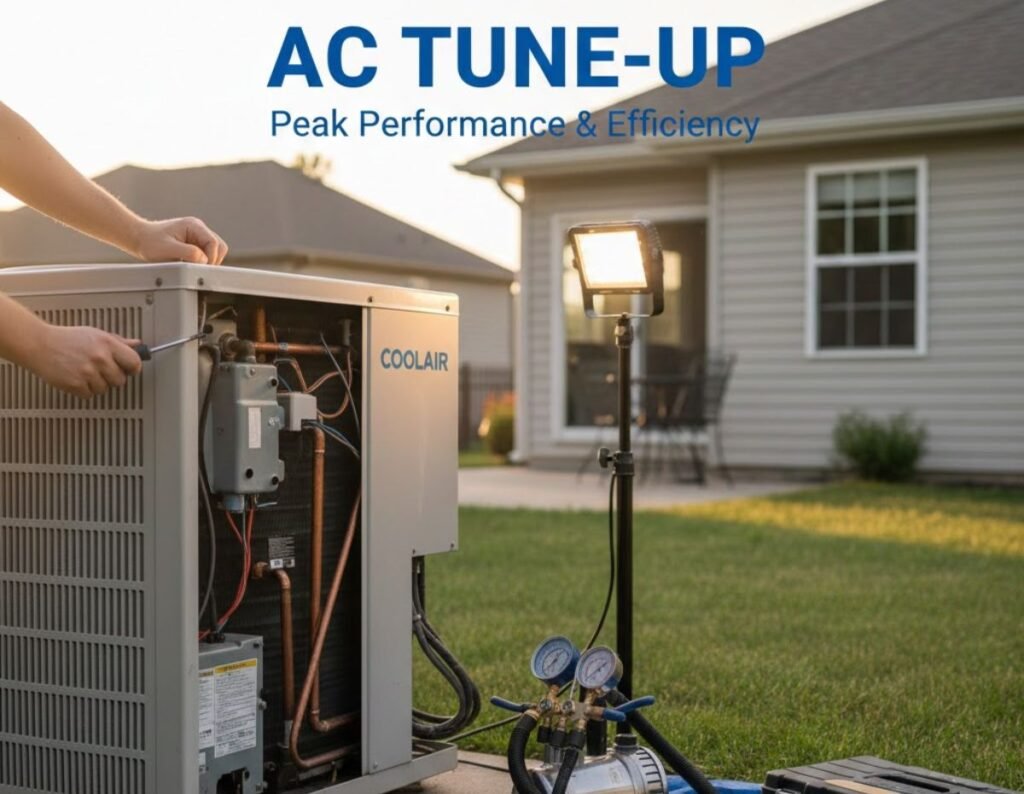
Service providers use different names “tune-up,” “maintenance,” or “precision check.” A reputable professional will follow a checklist that inspects, cleans, and tests the system. Here’s a detailed, homeowner-friendly step-by-step of what to expect:
Visual and safety inspection
- Inspect the outdoor condenser for debris, bent fins, or obvious damage.
- Check indoor evaporator coil access, the air handler cabinet, and duct boots for visible issues.
- Verify condensate pan and drain condition to prevent leaks or mold.
Filters & airflow
- Check filter type and condition; replace or clean as needed (filter replacement may be extra if not included).
- Measure airflow qualitatively is airflow weaker than it should be? Blocked ducts or dirty blower wheels can reduce cooling.
READ MORE: Heat Pump Making Noise Outside Unit: Causes, Fixes & When to Call a Pro
Coils & fins
- Inspect evaporator and condenser coils. Dirty coils reduce heat transfer and efficiency; pros will clean mildly dirty coils and recommend deeper cleaning if necessary.
- Straighten and clean condenser fins if bent or clogged.
Refrigerant system (diagnostic only unless repair agreed)
- Check refrigerant charge by measuring temperatures and pressures. (Certified technicians handle refrigerants homeowners should not attempt refrigerant work.)
- Confirm there are no obvious leaks (repair estimate provided if leak is found). Note: refrigerant availability (and cost) can affect repair decisions, especially for older R-22 systems.
Electrical & mechanical checks
- Inspect and tighten electrical connections, check contactor operation, and test capacitors.
- Measure motor amp draw and compare with nameplate ratings.
- Test safety controls and switches (high-pressure, low-pressure, float switch).
Blower and motor
- Inspect blower wheel and motor; clean if dirty and check belts (if present). Measure motor performance and listen for abnormal noises.
Thermostat & controls
- Verify thermostat calibration and proper operation, including fan modes and programmable settings.
Condensate management
- Inspect and clear condensate drain and trap; flush if needed and check secondary drain and safety float.
System performance & calibration
- Measure supply/return temperatures and calculate temperature split to see if system cools properly. Test run performance and listen during the run.
Clean-up & recommendations
- Technician should leave a written checklist or report listing findings, recommended repairs, part prices, and labor estimate for any issues discovered. Good contractors will point out items that are optional vs. safety/efficiency priorities. ACCA outlines industry-recognized maintenance tasks so homeowners can compare proposals.
READ MORE: Heat Pump Running but Not Cooling: Causes, Fixes & When to Call a Pro
Distinguish “tune-up” vs “diagnostic/repair.”
- Tune-up / preventive maintenance: inspection, cleaning, basic adjustments, and small safety checks. Typically priced lower and done on schedule.
- Diagnostic / repair: deeper troubleshooting to find and fix a specific problem (e.g., refrigerant leak, compressor failure). Diagnostics and parts / labor are usually billed separately from a tune-up.
DIY maintenance homeowners can (and shouldn’t) do
Many useful maintenance tasks are safe for homeowners; others are dangerous or illegal (refrigerant handling) and must be left to professionals.
Safe DIY tasks
- Change/clean filters regularly. Replace disposable filters every 1–3 months depending on use, pets, and dust. Clean reusable filters per manufacturer instructions.
- Keep outdoor unit clear. Remove vegetation, leaves, and debris within 2–3 feet of the condenser. Trim back plants to allow airflow.
- Clear drain lines. From accessible locations, you can flush the condensate drain with a little water. If you see overflow or consistent moisture, call a pro.
- Vacuum accessible vents and clean returns. Dusty registers and return grilles reduce airflow and indoor air quality.
- Inspect for obvious issues. Look for pooled water, ice on refrigerant lines, or frayed insulation these are signs to call a technician.
Tasks you should NOT do
- Don’t touch refrigerant lines or attempt refrigerant charging/recovery. Only EPA Section 608-certified technicians may legally handle refrigerant. Venting is illegal.
- Avoid electrical repairs. If you aren’t a qualified electrician/HVAC pro, don’t remove panels or attempt wiring fixes.
- Don’t deep-clean coils with strong chemicals unless instructed. Coils are delicate and improper cleaning can damage fins or the coil itself.
- Don’t attempt compressor or sealed-system work. These require specialized tools and certification.
When in doubt, take a photo of the issue and send it to your contractor or ask for a diagnostic visit better safe than sorry.
READ MORE: Best Cold Climate Heat Pump Review 2026: Top Picks & Buying Guide
Comparison table: service types at a glance
Below is a quick look to compare common service types so you can decide what you need at a glance.
| Service Type | Typical Tasks Included | Typical Cost Range (estimate) | Recommended Frequency | Best for / Notes |
| Basic Tune-Up | Visual inspection, filter check, basic cleaning, thermostat check | $75–$150 | Annually (spring) | Good for well-maintained, newer systems |
| Standard Maintenance Visit | Tune-up + coils/condensate check, tighten electrical, measure performance | $150–$300 | Annually (or twice/year if heavy use) | Most homeowners’ standard choice |
| Premium Tune-Up / Precision Maintenance | Full inspection, detailed cleaning, performance testing, minor adjustments | $200–$400 | Annually or biannually | Best for high-efficiency or older systems needing attention |
| Diagnostic / Repair Visit | Troubleshooting, isolating faults; parts billed extra | $100–$400 (diagnostic) + parts/labor | As needed | Used when you have a symptom (no cool, leaks, noises) |
| Maintenance Plan (annual contract) | 1–2 tune-ups/year, priority service, discounts on repairs | $150–$350/year | Ongoing | Good for predictable costs and priority scheduling |
These ranges reflect national averages; local labor rates, system size, and included tasks affect final price. For typical visit cost data and national averages, see industry cost guides.
READ MORE: Emergency Heat Pump Repair: Signs, Costs & What to Do
Cost expectations & pricing factors
Prices vary a lot across the U.S., but homeowners benefit from understanding the factors that shape the bill.
Typical estimates (national guidance)
- Basic tune-up: $75–$150.
- Standard maintenance visit: $150–$300.
- Premium tune-up / full inspection: $200–$400.
- Diagnostic call / service visit fee: $75–$200 (applies if you call for a problem; repairs billed separately).
- Maintenance plan (annual contract): $150–$350 per year for 1–2 visits plus benefits like priority scheduling.
What affects the price
- System type and size. A large multi-stage system, heat pump, or systems with multiple indoor units (multi-split) cost more to inspect.
- Age & condition. Older systems often require more labor, so labor time and cost can increase.
- Region & seasonal demand. Spring and fall are busy for HVAC; emergency summer calls cost more. Labor rates are also higher in metro areas.
- Scope of the visit. A “visual tune-up” is cheaper than a performance test with measured pressures and electrical diagnostics.
- Warranty or service plan. Some manufacturer warranties require documented annual maintenance; service plans can offer lower per-visit pricing and include discounts on repairs.
- Parts & refrigerant costs. If repairs are needed, parts and certain refrigerants (especially legacy R-22) can be expensive. R-22 is largely phased out and replacement or major repairs on systems using it can be pricey or impractical.
Money-saving tips
- Book off-peak: Schedule tune-ups in early spring or late fall to avoid emergency premiums.
- Combine services: If you need ductwork or indoor-air upgrades, bundle them with maintenance during a scheduled visit for potential savings.
- Compare written estimates: Ask for a clear list of tasks included in the visit so you’re comparing apples to apples. ACCA’s maintenance checklist can help you evaluate contractor offerings.
READ MORE: Why Is My Heat Pump Blowing Warm Air? Causes, Fix, and Costs
How to choose a reputable HVAC technician or service plan
Picking the right company matters more than saving a few bucks. Here’s a homeowner-friendly checklist to help you choose:
Licensing, certification & insurance
- Licensing: Most states require HVAC contractors to be licensed; check your state’s contractor licensing board. A license means the contractor meets state minimums.
- Certifications: Look for NATE-certified technicians; it’s a widely recognized industry certification indicating tested competency. NATE resources for homeowners explain what the certification covers.
- EPA Section 608: Any tech working on refrigerant must hold Section 608 certification ask to see proof for refrigerant work. Venting refrigerant is illegal.
- Insurance: Ask for proof of general liability and workers’ compensation insurance. If a tech is injured in your home, you don’t want liability risk.
Reputation & transparency
- Local reputation: Read recent reviews (not just star ratings read the details). Ask neighbors, community groups, or local Facebook groups for referrals.
- Written estimates: Get written quotes that list tasks, parts, labor rates, and a clear diagnostic fee policy. Beware of vague “we’ll see” pricing.
- Maintenance agreements: If you want peace of mind, consider a maintenance plan that provides scheduled visits, priority service, and repair discounts. Make sure the contract spelling out included services and cancellation terms.
- Workmanship warranty: Ask about guarantees on work and parts; good companies stand behind their service.
Red flags
- High-pressure sales to replace a system without documented testing.
- No paperwork or unwillingness to provide a written scope.
- Very low price for “complete” work it may be a bait to upsell or cut corners.
- Unwillingness to show credentials or IDs.
Using ACCA’s recommended maintenance checklist while comparing proposals helps ensure the scope is fair and consistent.
READ MORE: AC Tune-Up
When to repair vs replace
Deciding between fixing a worn system and replacing it depends on age, cost to repair, efficiency loss, and refrigerant availability.
Quick rules of thumb
- Age rule: If a central AC is under 10 years, repairs are usually worth it. Between 10–15, evaluate cumulative repair costs. Over 15–20 years, replacement is often the smarter long-term choice.
- Repair cost rule: If a single repair costs more than 50% of a reasonable replacement (after rebates), replacement usually makes sense.
- Efficiency & savings: New high-efficiency systems can cut energy use and may qualify for rebates. Calculate payback realistically replace for comfort and long-term savings, not just small fixes.
- Refrigerant constraints: Older systems using R-22 may face very high refrigerant costs or limited availability; major sealed-system failures might push toward replacement rather than repair. The EPA restricts refrigerant handling and sale for phased-out refrigerants.
Always get a written estimate for major repairs and compare it with a replacement quote that includes expected efficiency gains and warranties.
Checklist & seasonal maintenance timeline
Print and keep this quick timeline in your home binder.
Spring (before cooling season):
- Replace filter.
- Clear debris from outdoor unit; trim plants 2–3 ft away.
- Schedule professional tune-up (inspect coils, refrigerant check, electrical).
Mid-season (summer):
- Check filters monthly; replace as needed.
- Listen for unusual noises; note any rise in bills or reduced cooling.
Fall (before heating season, if applicable):
- Schedule heat-pump check if you use one.
- Reverse ceiling fans (if used) and inspect thermostat.
As needed:
- Call pro for water leaks, ice on lines, strong odors, or repeated cycling.
- Keep records: dates, company, what was done (helps warranty and resale).
READ MORE: What Size Heat Pump Do I Need? Homeowner Sizing Guide
FAQs
How much does an aircon servicing cost?
Typical tune-ups range from about $75–$400 depending on scope, region, and system type. Basic visits are cheaper; premium or diagnostic visits cost more. Maintenance plans often run $150–$350/year and include 1–2 visits and perks like priority scheduling. Always ask for a written list of included tasks so you can compare bids fairly.
How often should I service my central AC?
At minimum, have a professional tune-up once per year (spring). For heavy use, pets, high dust, or older units, consider twice a year. Regular filter changes (every 1–3 months) between visits make a big difference.
What’s included in an aircon maintenance checklist?
A full checklist usually covers filter inspection/replacement, coil and condenser checks, electrical inspections, refrigerant charge diagnostics, airflow checks, thermostat calibration, condensate drain clearing, and a written report with recommendations. ACCA publishes standards for what professional maintenance should include.
Can I service my aircon myself?
You can do safe tasks: change/clean filters, clear debris around the outdoor unit, and keep vents clean. Don’t attempt refrigerant or electrical work refrigerant handling requires EPA certification and venting is illegal. Call a certified technician for sealed-system or electrical work.
Is a maintenance plan worth it?
If you want predictable costs, priority scheduling during peak season, and discounts on repairs, a maintenance plan can be worth it especially for older systems or homes where comfort is critical. Compare what each plan includes and any fine print on repair discounts or cancellation.
Conclusion
Regular aircon servicing protects comfort, cuts surprises, and saves money over time. Start with a spring tune-up, clean or replace filters regularly, and look for NATE-certified, EPA-qualified technicians who provide a written checklist and estimate. If your system is older or uses phased-out refrigerants, ask the technician about long-term options and replacement costs. Schedule a professional inspection if you notice reduced cooling, higher bills, odd noises, or any leaking written estimates and clear scopes of work make it easier to choose the smart option. Want a printable checklist or a short email template to request quotes from local contractors? I can make one for you.