Thinking of a new heat pump or replacing an old system, Carrier is almost always on the shortlist. Carrier makes everything from budget single-stage units to high-end variable-speed models with Greenspeed intelligence, and dealers are widely available across the U.S. This long-form guide walks through how Carrier heat pumps work, the brand’s major product lines, real-world price ranges, pros and cons, and how Carrier stacks up to other top brands so you can decide if it’s the right fit for your home.
In this in-depth guide, we’ll break down real Carrier heat pump reviews based on performance data, efficiency ratings, homeowner experiences, and current pricing. You’ll learn about the top models in the Infinity, Performance, and Comfort lines, how Carrier stacks up against competitors like Trane, Lennox, Goodman, and Rheem, and exactly what to expect on costs and long-term value. We’ll cover everything from cold-climate performance to warranties, maintenance, and the questions you should ask your local dealer. Lest deep dive into “Carrier Heat Pump Reviews (2026) — Models, Costs, Pros & Cons”
By the end, you’ll know whether Carrier is worth it for your home and how to get the best system at the right price. All prices and specs reflect 2025–2026 national averages from manufacturer data, dealer reports, and industry sources; actual costs vary by location, home size, and installer.
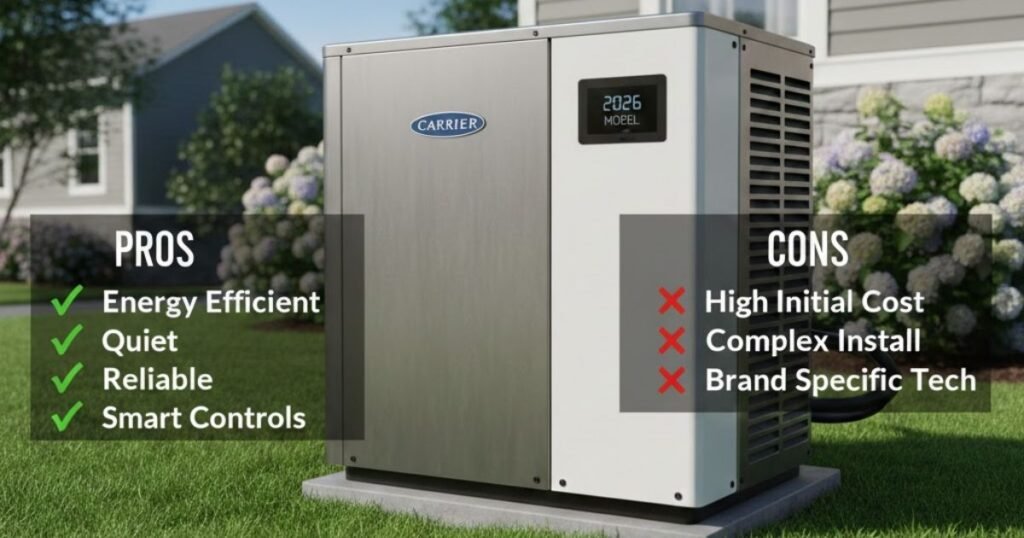
Quick Verdict: Who Should Choose Carrier?
Carrier heat pumps earn strong marks for quiet operation, excellent energy efficiency, advanced technology, and reliable comfort—especially if you want a premium system that can handle both scorching summers and freezing winters. The Infinity series with Greenspeed Intelligence stands out for variable-speed performance that keeps temperatures even, pulls out more humidity, and runs ultra-quiet.
Choose Carrier if:
- You prioritize long-term energy savings and comfort
- Your home is in a cold climate (Northeast, Midwest, or mountain states) where you want efficient heating down to very low temperatures
- You’re willing to invest upfront for a system that can pay back over 10–15 years through lower bills and fewer repairs
Consider alternatives if:
- Budget is tight → Goodman or Rheem often deliver solid performance at 20–40% lower cost
- You want maximum durability in extreme conditions → Trane frequently edges out in long-term reliability surveys
- Ultra-quiet high-efficiency is the top priority → Lennox can compete head-to-head with Carrier’s best
For most homeowners replacing a central system, a properly installed Carrier (especially a mid-to-high Performance or Infinity model) is a safe, high-value choice when paired with a reputable local dealer.
Master Your Climate Year-Round – Focuses on the Heat Pump + AC combo. See Product Details below- 👇

READ MORE: 3-Ton Heat Pump: Cost, Sizing & Best Models
How heat pumps work
A heat pump moves heat rather than generating it with combustion. In cooling mode it pulls heat from inside your home and dumps it outside; in heating mode it runs in reverse, extracting heat from outdoor air and bringing it indoors. Modern air-source heat pumps can efficiently heat most U.S. climates year-round; cold-climate models and cold-rated minisplits extend that to colder regions.
Key efficiency terms you’ll see on specs and dealer quotes:
- SEER2 (Seasonal Energy Efficiency Ratio, version 2): measures cooling efficiency over a season — higher = better. SEER2 replaced the older SEER metric to align with updated test procedures.
- HSPF2 (Heating Seasonal Performance Factor, version 2): the heating-season efficiency metric for heat pumps. Higher HSPF2 numbers mean lower heating bills for the same output.
- COP (Coefficient of Performance): instant efficiency at a specific outdoor temperature (e.g., COP 3.5 means 3.5 units of heat delivered for every unit of electricity used). Useful when comparing cold-temperature performance.
- Single-stage vs two-stage vs variable-speed: single-stage compressors are either on or off; two-stage runs low or high; variable-speed compressors can modulate continuously, offering smoother temperatures, better humidity control, and improved efficiency but they cost more up front.
Putting it simply: higher SEER2/HSPF2 and variable-speed operation usually mean lower energy bills and better comfort at a higher purchase price. For most homeowners, the right choice balances efficiency, climate needs, and budget.
Energy Star Certified. Wallet Approved. See this Product Below- 👇

Carrier brand overview
Carrier (part of Carrier Global Corporation) is one of the oldest and most visible HVAC brands in North America. The company sells systems through an authorized dealer network and organizes its residential heat pumps into clear tiers:
1. Infinity® series
top-end systems, available with Greenspeed™ Intelligence (Carrier’s variable-speed platform) and the best SEER2/HSPF2 numbers. These are the models that target premium comfort, humidity control, and the lowest operating costs.
2. Performance™ series
midrange: a mix of two-stage and single-stage options with respectable efficiency and good balance of features vs price. Many homeowners pick Performance for a reliable upgrade without the full premium price.
3. Comfort™ series
Carrier’s value line, simpler single-stage units for budget-minded installs.
Warranty basics:
Carrier’s standard homeowner warranty policy requires timely registration for the best coverage. On eligible equipment, owners can often choose a 10-year parts limited warranty or a 5-year parts + 3-year labor limited warranty (dealer participation required for some labor plans). Always check serial-number specifics with the Carrier warranty lookup and confirm dealer participation before purchase.
Service network:
Carrier’s dealer network is extensive that’s a plus for getting local service, warranty work, and proper installation. For credibility, when possible ask dealers to show owner manuals, installation instructions, and product data sheets (the manuals show SEER2/HSPF2 test numbers and installation limits). Carrier-published specs and dealer PDFs are good primary sources for model numbers and performance.
Budget-conscious but high-capacity buyers. “Alexa, Make it 72 Degrees.” Shop the Vario Series. Check Product Details below- 👇

READ MORE: Air Source Heat Pumps
Top Carrier models to consider
Below are Carrier’s headline models/home-class examples to watch for. Specs (SEER2/HSPF2) vary by capacity I quote the top or typical ranges carriers publish.
1. Infinity 27VNA / 27VNA0 / 27VNA3 (Greenspeed variable-speed platforms)
- What it is: Carrier’s top variable-speed heat pump family with Greenspeed intelligence. Targeted at homeowners who want premium comfort and humidity control.
- Typical efficiency: up to roughly 20–23 SEER2 and ~9.0–10.5 HSPF2 depending on specific model and capacity.
- Target home size: well-suited for mid to large homes when properly sized; variable speed helps modulate for smaller loads too.
- Pros: best humidity control; smooth temperature swings; top efficiency; qualifies for high-tier rebates in many states.
- Cons: highest upfront cost; requires an authorized dealer for Greenspeed installs.
- Estimated unit price: premium single-unit sticker often $3,000–$7,000 for the outdoor section (varies by tonnage and supplier).
- Typical installed price example: $8,000–$20,000+ for full system replacement (depending on home size, indoor equipment, duct modifications, labor, and climate). Carrier’s own cost guide and dealer pricing reflect a wide range.
2. Infinity 25VNA / 25VNA8 (high-efficiency variable/two-stage)
- What it is: High-efficiency models that still deliver top SEER2/HSPF2 performance; a step down in features/pricing from the absolute top Greenspeed units.
- Typical efficiency: up to ~19–20 SEER2 / 9.0–9.5 HSPF2.
- Price & installed range: similar ballpark to other premium two-stage/variable units but slightly lower than the Greenspeed top model.
3. Performance Series (various model suffixes)
- What it is: Mid-tier heat pumps available as single-stage and two-stage units. Many Performance models feature MicroTube coil technology and transporter improvements.
- Typical efficiency: ~14.3–18.5 SEER2 and ~7.5–8.1 HSPF2 depending on model.
- Target homeowner: those wanting reliable efficiency improvements over older equipment at a moderate price.
- Typical installed price example: $6,000–12,000 for a central system replacement, depending on tonnage and labor.
4. Comfort Series (value entry models)
- What it is: Carrier’s basic heat pump models for budget installations; single-stage compressors and simpler feature sets.
- Typical efficiency: lower SEER2/HSPF2 bands (varies by model year).
- Typical installed price example: $4,000–8,000 for a basic central unit replacement (smaller homes or simple swaps).
Important: those “unit price” numbers above are approximate merchandiser/retail ranges for the outdoor condensing unit only final installed costs will depend heavily on indoor coil/air handler, ductwork condition, electrical upgrades, permitting, and labor. Always request an itemized quote. For Carrier’s own cost guidance, see their heat-pump cost guide.
Stop Overpaying for Comfort. Switch to Cooper & Hunter. See this Product Below- 👇

Comparison table: Carrier vs top competitors
| Brand | Top Model Example | Max SEER2 | Max HSPF2 | Price Tier | Noise Level | Cold Climate Strength | Best For | Reliability Notes |
| Carrier | Infinity 24/27VNA | ~23 | 10.5–13+ | Premium | Very quiet (~51 dB) | Excellent (Greenspeed) | Efficiency + comfort | Strong when properly installed |
| Trane | XV20i / XR series | ~21.5 | ~10 | Premium | Quiet | Very good | Long-term durability | Often tops reliability surveys |
| Lennox | SL25XPV | ~24–26 | High | Premium | Extremely quiet | Strong | Maximum efficiency & quiet | Excellent but can be pricier |
| Goodman | Various GSZ series | ~16–18 | 8–9.5 | Budget/Value | Moderate | Good with proper sizing | Best bang for the buck | Solid value, simpler technology |
| Rheem | Classic / Prestige | ~18–20 | 9–10 | Mid-range | Quiet | Good | Balanced performance & features | Reliable, good warranty options |
Carrier usually wins on advanced comfort features and quiet operation. Trane often feels more “bulletproof” to many techs. Lennox can edge out on peak efficiency numbers. Goodman and Rheem deliver the best value when budgets are tighter.
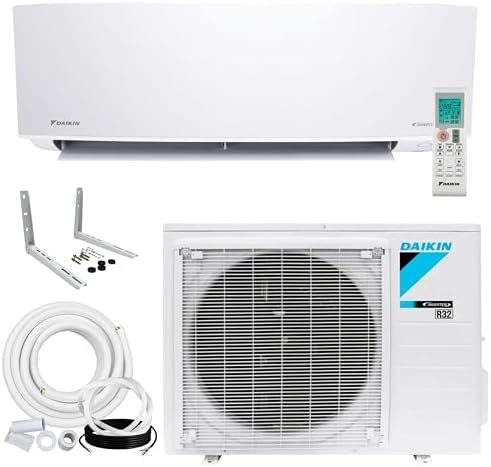
Skip the Hardware Store—Our Maxwell Kit Has It All. See Product Below- 👇
READ MORE: Air to Water Heat Pump — Complete 2026 Buyer’s Guide (costs, brands, pros & cons)
Real-world costs of Carrier Heat Pump & what affects price
What Carrier (and other sources) say about costs:
Carrier’s own cost guide lists very wide installed ranges because of the many installation variables — typical full replacement projects often range $6,000 to $25,000 depending on system complexity and options. External cost guides and contractor estimates show outdoor unit + installation can be $4,500–$20,000+ depending on tonnage, minisplit zones, ductwork, and upgrades.
Major price drivers:
- Unit efficiency & technology: variable-speed/Greenspeed units cost more than single-stage units. Higher SEER2/HSPF2 ups the equipment price.
- Indoor equipment: matching air handler or coil, or replacing a furnace for a packaged heat pump, affects cost. A new air handler or ECM blower adds to material and labor.
- Ductwork condition: if ducts need sealing, new runs, or resizing, that can add thousands. A “like-for-like” swap where ductwork is good is cheapest.
- Permits & local labor rates: labor varies widely across metro areas — urban labor and permitting can raise costs substantially.
- Electrical upgrades: older homes may need 200-amp panel work or dedicated circuits.
- Optional upgrades: smart thermostats, variable-speed indoor units, zoning sheets, or advanced filtration.
- Minisplits vs central: ductless multisplits can be cheaper for small, zone-based installs (common range $2,000–$14,000 depending on zones), but a multi-zone high-capacity setup can reach the price of a central system.
Sample installed cost ranges (national ballpark):
- Basic central heat pump swap (single-stage, small home): $4,000–$8,000.
- Midrange Performance system (typical 2–3 ton home): $6,000–$12,000.
- Premium Infinity variable-speed full system (larger home, Greenspeed): $8,000–$20,000+ (upgrades, new ductwork, and labor push higher).
- Ductless minisplit (1–3 zones): $2,000–$10,000+ depending on zones and installation complexity.
Tip: Always ask for an itemized quote: unit cost, indoor equipment, labor hours, allowances for ductwork, permitting fees, and any required electrical work. Compare at least three quotes and make sure each includes the same task list so you’re comparing apples to apples.
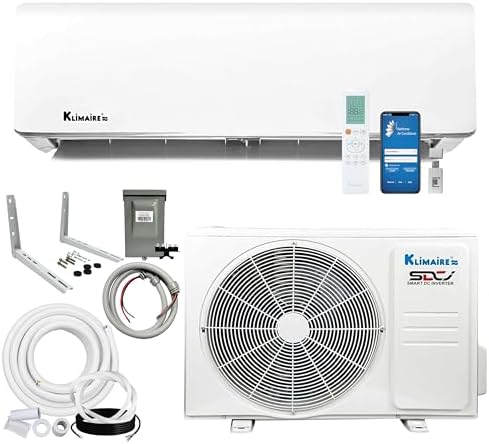
- 𝐄𝐗𝐂𝐄𝐏𝐓𝐈𝐎𝐍𝐀𝐋 𝐄𝐅𝐅𝐈𝐂𝐈𝐄𝐍𝐂𝐘: The 12,000 BTU KSIV (115V) system offers an impressive energy rating of up to 20.8 SEER2, 8.7 HS…
- 𝐏𝐄𝐑𝐅𝐎𝐑𝐌𝐀𝐍𝐂𝐄 𝐅𝐄𝐀𝐓𝐔𝐑𝐄𝐒: The KSIV Series offers standard features like cooling and heating for year-round comfort but is al…
- 𝐖𝐇𝐈𝐒𝐏𝐄𝐑-𝐐𝐔𝐈𝐄𝐓: Experience tranquility with the indoor unit operating as low as 28 dB (A). This whisper-quiet operation m…
Pros & cons of Carrier Heat Pump
Pros
- Strong product ladder: clear choices from value to premium (Comfort → Performance → Infinity).
- Top-tier variable-speed options (Greenspeed) for humidity control and quiet operation.
- Large dealer/service network and established warranty processes.
- Good availability of replacement parts and documented manuals/data sheets (helps EEAT when vetting installers).
Cons
- Premium models can be expensive compared with value brands (e.g., Goodman).
- Cold-climate performance may lag specialized cold-rated models from some competitors unless you pick the right Carrier model or pair with supplemental heat.
- Dealer experience varies a poor installation undermines performance regardless of brand.

- SOFT START FOR AC & HEAT PUMPS: Designed for both air conditioners and heat pump systems, including units that provide h…
- REDUCES STARTUP SURGE: Soft start technology gently ramps compressor startup, lowering inrush current and reducing elect…
- YEAR-ROUND HEAT PUMP COMPATIBILITY: Fully compatible with heat pumps in both summer cooling and winter heating modes wit…
How to Choose the Right Carrier Heat Pump for Your Home
Use this checklist when talking to dealers:
- Get a proper Manual J load calculation — Never accept a “rule of thumb” size.
- Match efficiency to your climate and usage — Colder areas benefit more from high HSPF2; hot-humid zones from high SEER2 and dehumidification.
- Decide on variable-speed vs. two-stage — Variable is worth it if comfort and bills are top priorities.
- Check dealer credentials — Look for NATE-certified techs and strong local reviews.
- Understand full warranty — Confirm parts and labor coverage.
- Ask about incentives — Have them calculate net cost after rebates and tax credits.
Key questions to ask:
- “Will you perform a Manual J calculation?”
- “What labor warranty do you offer?”
- “Can you show me references from similar homes in my area?”
- “How do you handle ductwork assessment and sealing?”
- “What’s the expected payback period for this efficiency level in my climate?”
READ MORE: Heat Pump Installation Cost in 2026 (Real Prices, Examples & Savings)

- This is a Brand New OEM Replacement Heat Pump Defrost Sensor
- Top Qualty OEM Replacement Part!
Maintenance, lifespan & troubleshooting
Expected lifespan: modern heat pumps typically last 12–18 years with good maintenance; premium models can approach 20 years when well serviced. Carrier systems fall in that same range when installed and maintained properly.
Regular maintenance tasks
- Annual or biannual professional tune-up (clean coils, check refrigerant charge, electrical connections).
- Change or clean filters every 1–3 months depending on filter type and home conditions.
- Keep outdoor unit clear of debris and plants.
- Check thermostat and airflow proper airflow is crucial for efficiency.
Common trouble signs
- Reduced airflow → clogged filter or blower issue.
- Short cycling → improper sized unit or refrigerant issue.
- Higher electric bills → failing components or poor charge/airflow.
- If your unit needs frequent repairs and it’s over 12–15 years old, compare repair cost vs replacement.
5 FAQs
Are Carrier heat pumps reliable?
Carrier is considered a reliable, mainstream brand with a wide dealer network and good parts availability. Reliability in the field depends heavily on proper sizing and installation; a well-installed midrange Carrier often outperforms a poorly installed premium unit.
How much do Carrier heat pumps cost to install?
Installed costs vary widely. Carrier’s own cost guide and contractor surveys show full replacement projects generally run $6,000 to $25,000 depending on system tier (Comfort → Performance → Infinity), home size, ductwork, and upgrades.
What’s the difference between Carrier Infinity and Performance?
Infinity is Carrier’s premium line — variable-speed compressors (Greenspeed), higher SEER2/HSPF2, and advanced comfort controls. Performance is midrange, offering single- and two-stage options that balance efficiency and price.
Does Carrier offer a good warranty?
Carrier offers competitive factory warranties, but top coverage (e.g., 10-year parts) usually requires timely registration and sometimes dealer participation for labor coverage. Always verify warranty terms for the exact model and confirm dealer participation.
Are Carrier heat pumps good for cold climates?
Carrier makes cold-rated models, but some competitors (and specialized ductless brands) claim advantages at very low outdoor temperatures. For consistently cold climates, ask dealers for low-ambient performance specs (COP at X°F) and consider staging/backup heat strategies.
Conclusion
Carrier is a solid, mainstream choice with options that cover most homeowners’ needs from budget Comfort series units to top-end Infinity variable-speed systems with Greenspeed intelligence. The key decision points are: (1) how important is maximum efficiency and humidity control to you, (2) how cold is your climate, and (3) what’s your budget for equipment plus honest installation work.
Final practical steps: get at least three detailed, itemized quotes; insist on a Manual J load calculation; confirm exact SEER2/HSPF2 numbers and warranty registration requirements; and ask your dealer to show product data sheets (so you can verify the specs yourself). If you want, I can help you draft a short templated email to send to Carrier dealers to request quotes and the Manual J say the word and I’ll write it for you.


Pingback: Heat Pump vs Tankless Water Heater: Which Is Better? - Plumbing Guider
Pingback: Best Eemax Water Heater: Top 5 Reviewed & Compared (2026 Guide) - Plumbing Guider
Pingback: Tankless Water Heater Installation Near Me USA (2026 Guide) - Plumbing Guider
Pingback: How to Choose the Right Water Heater Size for Your Home - Plumbing Guider
Pingback: American Standard Heat Pump: Models, Costs & Buying Guide - Plumbing Guider
Pingback: Condensing vs Non-Condensing Tankless Water Heater - Plumbing Guider