Winter in rural and cold-climate regions across the United States brings a familiar dread: opening soaring utility bills, managing multiple space heaters, or hauling constant firewood for an outdated indoor stove that leaves half the house cold. For homeowners seeking a cleaner, more efficient, and whole-house heating alternative, outdoor wood and biomass furnaces offer a compelling solution. However, investing in an outdoor heating system is not an off-the-shelf retail purchase. It is a major mechanical installation that requires professional guidance, precise sizing, underground plumbing, and adherence to local codes. That journey starts with finding a trusted Central Boiler Dealer Near Me.
The closest business on a map is not always the right partner. When searching for a reliable Central Boiler Dealer Near Me, you want more than a storefront; you want an authorized specialist who understands local climate demands, offers comprehensive installation services, stocks genuine replacement parts, and provides dependable post-installation support when sub-zero temperatures hit.
This guide walks you through how to locate an authorized dealer, evaluate their services, understand equipment and installation costs, navigate permits, and choose the ideal heating system for your property. Lets deep dive into “{Finding the Right Central Boiler Dealer Near Me”
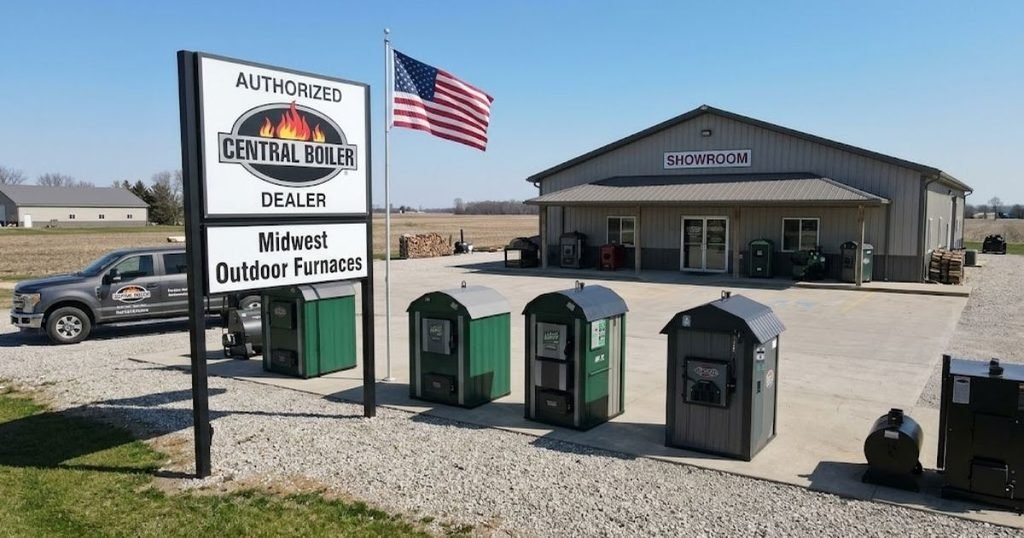
What Is Central Boiler?
Understanding the manufacturer helps clarify why working with an authorized specialist matters. Central Boiler is a leading North American manufacturer of outdoor wood and biomass heating systems. Headquartered in Greenbush, Minnesota, the company designs outdoor furnaces engineered to heat entire homes, domestic hot water, outbuildings, workshops, and agricultural facilities.
Unlike conventional indoor boilers or forced-air furnaces that take up valuable living space and introduce smoke, ash, or fire risks indoors, Central Boiler outdoor furnaces operate outside the primary living structure.
How Outdoor Hydronic Heating Works
- Combustion and Heat Transfer: Wood or wood pellets are burned inside a specialized, high-efficiency firebox surrounded by a water jacket. The fire heats thousands of pounds of water contained within the boiler.
- Underground Distribution: Heated water is pumped from the outdoor furnace to the home or outbuilding through insulated underground supply and return lines. These specialized PEX pipes are heavily insulated and protected from ground moisture to minimize heat loss.
- Indoor Heat Exchange: Inside the building, the heat from the water is transferred into your existing distribution network—such as forced-air ductwork via a water-to-air heat exchanger, radiant in-floor heating loops, or traditional baseboard radiators.
- Domestic Hot Water: Many systems can also be configured to supply domestic hot water, significantly reducing or eliminating water-heating utility expenses.
Modern units, such as the Central Boiler Classic Edge HDX series, incorporate advanced features like the FireStar combustion controller, titanium-enhanced stainless steel fireboxes, and automated air-charge tubes that optimize combustion efficiency. These systems differ fundamentally from ordinary indoor gas boilers or industrial steam boilers, requiring specialized expertise that only an authorized dealer or trained outdoor wood boiler installer can provide.
READ MORE: Weil‑McLain Boiler Reviews — Models, Costs, Pros & Cons
How to Find an Authorized Central Boiler Dealer Near Me
Finding an authorized dealer requires a structured approach to ensure you receive genuine factory support, valid warranty coverage, and expert installation. Here is how to conduct your search efficiently.
1. Start With the Official Dealer Locator
The most reliable way to connect with factory-trained professionals is through the manufacturer’s resource network.
- Navigate to the official Central Boiler dealer locator webpage at centralboiler.com/dealer-locator/.
- Enter your home ZIP code or city and state.
- Review the list of authorized dealers serving your radius. Each listing typically outlines available service indicators, business hours, and direct contact phone numbers.
- Reach out to multiple listed providers to confirm their current service coverage, delivery capabilities, and scheduling availability.
Note: If the digital locator tool is temporarily unavailable, you can contact Central Boiler directly via their corporate headquarters in Greenbush, Minnesota, or through their official contact portal to request regional dealer recommendations.
2. Search Online for Local Specialists
When supplementing your search using engines, use specific, targeted phrases rather than vague terms. Effective queries include:
- Authorized Central Boiler dealer near me
- Central Boiler outdoor wood furnace dealer [City, State]
- Outdoor wood boiler installer near me
- Central Boiler repair and parts service near me
When reviewing local business websites, look for explicit statements confirming factory authorization. Be cautious of general heating contractors who claim they can service “any brand” but lack access to proprietary manufacturer software, electrical components, or factory-direct replacement parts.
3. Verify Authorization Directly
Before signing a purchase agreement or putting down a deposit, verify that the business is an active authorized Central Boiler dealer. Authorized status guarantees that the technicians have undergone specialized training, that the equipment is brand-new and factory-backed, and that your manufacturer warranty will remain fully valid.
READ MORE: Carrier Heat Pump Reviews— Models, Costs, Pros & Cons
What Services Does a Central Boiler Dealer Offer?
Authorized Central Boiler dealers are independent businesses, meaning their exact menu of services varies. While one dealer might provide a complete turnkey package from excavation to indoor plumbing, another might focus on equipment sales, parts, and technical consulting. Clarifying these services upfront prevents costly miscommunications.
Equipment Sales and Model Selection
A knowledgeable dealer evaluates your total heating load, building insulation levels, local winter climate extremes, and the number of structures you want to heat. They match your property profile with the correct furnace model and fuel type, ensuring you neither under-buy nor over-buy.
Professional Installation Services
Proper installation is critical for safety, efficiency, and longevity. Comprehensive dealer installation often includes:
- Site assessment, zoning compliance review, and pad preparation.
- Setting the outdoor furnace on a non-combustible foundation (such as concrete or crushed rock).
- Trenching and laying insulated underground supply and return lines.
- Installing circulator pumps, expansion tanks, and safety valves.
- Making safe electrical and plumbing connections.
- Integrating the system with your existing indoor heating infrastructure.
Repairs, Troubleshooting, and Maintenance
Even the most rugged heating systems require periodic servicing. An authorized dealer provides specialized diagnostics for combustion controllers, pump failures, sensor errors, and water quality testing. They also supply approved water treatment chemicals (such as Central Boiler’s Moxall or inhibitor solutions) to prevent internal corrosion.
Replacement Parts and Accessories
Using generic parts on an advanced gasification outdoor furnace can compromise performance or void warranties. A local dealer stocks or quickly procures genuine factory parts, including door gaskets, solenoid valves, combustion blowers, replacement firebrick, and Wi-Fi control modules.
How Much Does a Central Boiler Furnace and Installation Cost?
Because every property layout, climate zone, and heating demand is unique, there is no single “one-size-fits-all” price tag for an outdoor furnace system. Total project costs depend heavily on equipment selection, trenching distance, indoor plumbing modifications, and local labor rates.
The table below breaks down the primary cost factors and the vital questions you should ask your dealer before committing.
Central Boiler System Cost Breakdown
| Cost Factor | What Affects the Cost | What Homeowners Should Ask |
| Furnace Equipment | Model size (e.g., smaller residential units vs. large multi-building commercial models) and fuel configuration. | What is the exact retail price of the specific model recommended for my home? |
| Site Preparation | Concrete pad pouring, grading, tree clearing, and equipment access paths. | Is site grading and foundation construction included in the installation quote? |
| Underground Piping | Distance between the outdoor furnace and the heated building(s), trenching depth, and grade of insulated PEX piping. | How many feet of underground piping are required, and what type of insulation is used? |
| Indoor Connections | Compatibility with existing oil, gas, electric, or forced-air systems; addition of heat exchangers or indoor buffer tanks. | What specific indoor plumbing or ductwork modifications are necessary? |
| Labor & Trade Work | Scope of installation labor, local contractor rates, and specialized trade requirements. | Is installation labor fully itemized, or is it lumped into a vague estimate? |
| Electrical & Plumbing | Electrical trenching, dedicated sub-panels, high-capacity wiring, and water supply lines. | Are licensed electricians and plumbers handling the utility hookups? |
| Permits & Inspections | Municipal, county, or state building, zoning, plumbing, and environmental permit fees. | Which local permits are required, and who is responsible for pulling them? |
| Accessories & Controls | Wi-Fi remote modules, LED lighting kits, backup heating elements, and water testing kits. | Which optional accessories are included in the baseline price? |
| Routine Maintenance | Annual water treatment chemicals, chimney cleaning brushes, and routine wear items. | What are the anticipated annual upkeep and consumable costs? |
Tip: Always request itemized, written estimates from at least two authorized dealers when feasible. Be wary of verbal quotes or contractors who refuse to separate equipment costs from labor and trenching expenses.
READ MORE: AO Smith vs. Rheem Water Heaters: Comparison & Expert Reviews
How to Choose the Best Central Boiler Dealer
Selecting the right dealer is just as important as selecting the right furnace model. Use the practical evaluation checklist below when interviewing local providers.
Local Provider Evaluation Checklist
- [ ] Confirmed Authorization: Verified active status through Central Boiler.
- [ ] Model Expertise: Proven experience with the specific furnace series you are considering.
- [ ] Site Assessment Capability: Willingness to visit your property to evaluate slopes, prevailing winds, and building layouts.
- [ ] Regulatory Knowledge: Deep understanding of local zoning setbacks, chimney height rules, and EPA emissions guidelines.
- [ ] Transparent Pricing: Provision of clear, itemized written quotes.
- [ ] Parts Inventory: Local stock or rapid access to authorized replacement components.
- [ ] Winter Service Availability: Guaranteed emergency repair response times during freezing weather.
- [ ] Warranty Support: Clear procedures for handling manufacturer warranty claims and labor guarantees.
- [ ] Customer References: Willingness to provide contact info for recent local installations.
- [ ] Owner Training: Commitment to training you on daily operation, ash removal, and water maintenance.
10 Essential Questions to Ask Before Signing a Contract
- Are you an officially authorized Central Boiler dealer and installer?
- Which specific furnace model do you recommend for my square footage and climate, and why?
- Will you conduct an on-site visit before generating a final price quote?
- Is your estimate fully itemized, separating equipment, piping, labor, and electrical work?
- Who pulls the required local building, electrical, and zoning permits?
- What warranty coverage applies to the equipment, and what warranty covers your installation labor?
- Do you stock routine maintenance items and replacement parts locally?
- What is your emergency service policy if my furnace experiences an issue during a winter cold snap?
- What exact daily, weekly, and annual maintenance tasks will I be responsible for performing?
- Can you provide references from two or three homeowners in my region with similar setups?
Which Central Boiler Model Is Right for My Property?
Central Boiler offers engineered heating solutions tailored to diverse residential, agricultural, and commercial demands. Working with an authorized dealer ensures you choose a model sized precisely for your heat loss profile.
Primary Product Families
- Classic Edge HDX Series: Widely recognized as a flagship outdoor wood furnace line, models like the Classic Edge 360 HDX, 560 HDX, 760 HDX, and 960 HDX feature titanium-enhanced stainless steel fireboxes, advanced staging combustion chambers, and standard FireStar digital controllers with onboard Wi-Fi connectivity. They are designed to burn wood cleanly while delivering high thermal output.
- Maxim Outdoor Wood-Pellet Furnace: Ideal for homeowners who want the convenience of automated pellet feeding without manual firewood splitting, loading, and stacking, while keeping the combustion process completely outdoors.
Wood-Fired vs. Wood-Pellet Systems at a Glance
| Consideration | Wood-Fired Outdoor Furnaces (e.g., Classic Edge HDX) | Wood-Pellet Outdoor Furnaces (e.g., Maxim) |
| Fuel Sourcing | Cordwood, split logs; often sourced locally or harvested independently. | Manufactured wood pellets purchased by the bag or bulk pallet. |
| User Interaction | Manual loading once or twice daily depending on heating load and firebox size. | Automated auger feeding; hopper loading required every few days. |
| Ash Management | Periodic ash removal from firebox and cleanout doors. | Automated or semi-automated ash collection depending on model specifications. |
| Storage Requirements | Covered outdoor wood shed or stacking area protected from rain/snow. | Dry, indoor or sealed pallet storage to protect pellets from humidity. |
| Ideal User Profile | Rural property owners with access to affordable or self-harvested wood. | Homeowners seeking automated biomass heating with minimal manual wood handling. |
READ MORE: Best 5 High Efficiency Condensing Boiler: Review, Cost & Comparison
Installation, Permits, and Safety Considerations
Placing an outdoor furnace requires careful planning regarding property geography, prevailing winds, and municipal rules. Never rush the site-selection phase.
- Clearances and Setbacks: Manufacturers specify mandatory minimum clearances from combustible structures, property lines, and windows. Local zoning laws often enforce specific setback distances.
- Chimney Height and Smoke Management: Proper chimney height ensures adequate draft and disperses combustion gases away from living areas and neighboring properties. Your dealer must verify that your installation complies with local smoke and air-quality ordinances.
- Underground Trenching: Insulated PEX pipes must be buried below the local frost line and protected from crushing loads or sharp rocks.
- Electrical and Plumbing Safety: Hooking into domestic water supplies and electrical panels requires adherence to National Electrical Code (NEC) standards and local plumbing codes. Always rely on qualified professionals for utility tie-ins.
Is a Central Boiler Outdoor Furnace Worth It?
A transparent evaluation weighs the significant upfront investment against long-term operational goals.
Potential Advantages
- Reduced Fossil Fuel Dependence: Substantially lowers or eliminates reliance on propane, heating oil, or electric resistance heating when economical wood fuel is accessible.
- Whole-House and Multi-Building Heat: Capable of heating a primary home, detached garage, workshop, greenhouse, or barn from a single outdoor appliance.
- No Indoor Mess: Smoke, sparks, ash, and wood debris remain entirely outside your living quarters.
- Zoned Comfort: Delivers steady, even hydronic heat that avoids the dry, drafty air currents typical of forced-air systems.
Potential Disadvantages
- High Initial Investment: Equipment, trenching, piping, and professional installation represent a substantial capital expenditure.
- Labor Intensity: Wood-fired models require ongoing physical effort for cutting, splitting, seasoning, stacking, and loading wood.
- Routine Maintenance: Regular ash removal, chimney sweeping, and annual water testing are non-negotiable for system longevity.
- Zoning Restrictions: Certain suburban or densely populated municipalities restrict outdoor solid-fuel burning appliances entirely.
Central Boiler Dealer vs. Independent Heating Contractor
When planning an installation, homeowners often weigh whether to hire an authorized Central Boiler dealer or an independent local HVAC contractor.
| Evaluation Metric | Authorized Central Boiler Dealer | Independent Heating Contractor |
| Factory Authorization | Certified directly by the manufacturer; full access to factory bulletins and technical support. | May lack official manufacturer backing or specialized factory training. |
| Product Knowledge | Deep, model-specific expertise on Central Boiler combustion mechanics and controllers. | General hydronic heating knowledge, but potentially unfamiliar with outdoor gasification specifics. |
| Model Availability | Direct line to factory inventory, specialty sizing, and complete accessory packages. | Dependent on third-party distributors or wholesalers for equipment procurement. |
| Installation Capability | Turnkey experience managing underground trenching, plumbing, and electrical integration. | Varies widely; some specialize in indoor HVAC and struggle with outdoor trenching and pads. |
| Parts Access | Direct access to OEM replacement parts and approved water treatment chemicals. | May rely on aftermarket universal parts that could affect system performance. |
| Warranty Assistance | Streamlined manufacturer warranty claims and direct labor backing. | Warranty claims may require navigating third-party channels or manufacturer disputes. |
While an authorized dealer is almost always the preferred choice for purchasing and installing a specialized outdoor furnace, a qualified independent contractor can sometimes assist with indoor plumbing tie-ins under the guidance of your dealer.
Common Mistakes to Avoid When Hiring a Dealer
- Skipping Authorization Verification: Assuming any local plumbing contractor selling wood boilers is factory-authorized. Solution: Always check the official dealer locator and ask for proof of certification.
- Buying Before Calculating Heat Load: Purchasing a furnace based on guesswork rather than a professional heat-loss calculation. Solution: Have your dealer perform a detailed energy audit of your buildings.
- Comparing Equipment Price Over Installed Cost: Focusing solely on the sticker price of the boiler while ignoring underground piping, trenching, and electrical labor. Solution: Always demand a comprehensive, all-inclusive written quote.
- Ignoring Local Regulations: Failing to check municipal zoning, fire codes, and EPA rules before site preparation. Solution: Make dealer familiarity with local permitting a mandatory hiring criterion.
- Overlooking Winter Service Support: Failing to establish what happens if your unit malfunctions during a sub-zero blizzard. Solution: Clarify emergency repair response times in writing before signing.
- Assuming All Dealers Offer Turnkey Installation: Buying equipment from a dealer who only drops off the crate in your driveway. Solution: Confirm whether the dealer provides full installation or if you need to hire secondary contractors.
FAQs
How do I find a Central Boiler dealer near me?
The fastest and most reliable way is to visit the official Central Boiler dealer locator on their website, enter your ZIP code, and review authorized regional providers. You can also search online for authorized dealers in your state or county, then contact them directly to verify their service radius, installation capabilities, and current product availability.
How much does a Central Boiler outdoor furnace cost?
Total costs vary widely depending on the chosen model size, the distance of underground trenching, indoor heating system modifications, local labor rates, and electrical requirements. Because prices fluctuate based on site specifics, always request a detailed, itemized written estimate from at least two local authorized dealers rather than relying on generalized online price estimates.
Does every Central Boiler dealer offer installation?
No. Dealer capabilities vary significantly. Some authorized dealers provide complete turnkey installation from excavation and concrete pad placement to plumbing and electrical hookups while others operate strictly as equipment and parts distributors. Always ask prospective dealers upfront whether they handle full installation or if they require you to coordinate with independent trade professionals.
How do I know if a Central Boiler dealer is authorized?
You can confirm authorization by checking the official Central Boiler online dealer directory or by contacting the manufacturer’s customer service department directly. Authorized dealers receive specialized factory training, have access to genuine OEM replacement parts, and ensure that your manufacturer warranty remains fully valid upon professional installation.
Can a Central Boiler dealer repair and service my existing furnace?
Yes, if you own a Central Boiler model, an authorized local dealer is your best resource for troubleshooting, diagnostics, and repairs. Be sure to provide them with your exact furnace model and serial number when calling so they can verify parts availability, check error codes on digital controllers, and schedule a service technician to visit your property.
Conclusion
Investing in an outdoor biomass heating system is a fantastic way to achieve reliable, comfortable warmth while taking control of your energy expenses. However, the success of your heating setup depends heavily on the expertise, guidance, and support of the professionals you choose to work with.
Ready to explore an outdoor heating system for your property? Start by locating an authorized Central Boiler dealer in your area, then compare installation options and request a detailed quote based on your home’s heating needs.
Sources Consulted & Verification Note
- Central Boiler Official Resources: Dealer locator, product specifications for the Classic Edge HDX series, and manufacturer FAQs.
- Regulatory Guidance: U.S. Environmental Protection Agency (EPA) wood-heating certification standards and regional municipal zoning guidelines.
- Industry Standards: National Electrical Code (NEC) and hydronic heating installation best practices.
Verification Note: Product pricing, specific dealer service offerings, model availability, and local building codes change over time. Always verify current pricing, warranty conditions, and municipal regulations directly with an authorized Central Boiler dealer and your local building department before purchasing equipment or breaking ground.

