An aging or failing heating system forces an urgent decision: do you repair an old unit that is steadily losing efficiency, or is it time to invest in a complete replacement? When researching reliable options, many homeowners come across the Tempstar furnace lineup. Manufactured by International Comfort Products (ICP) a subsidiary of Carrier Global Corporation Tempstar has established a solid reputation across the United States for providing dependable home-heating equipment across various price points and efficiency levels.
Choosing a new heating system is not a decision to rush. The right furnace for your household depends heavily on your home’s specific heating load, local climate, available fuel sources, professional installation quality, upfront budget, and manufacturer warranty terms. This comprehensive guide breaks down everything you need to know about Tempstar gas furnaces, including product series, efficiency ratings, installation costs, real-world pros and cons, warranty protection. Lets deep dive into “Tempstar Furnace Review: Models, Prices & Efficiency”
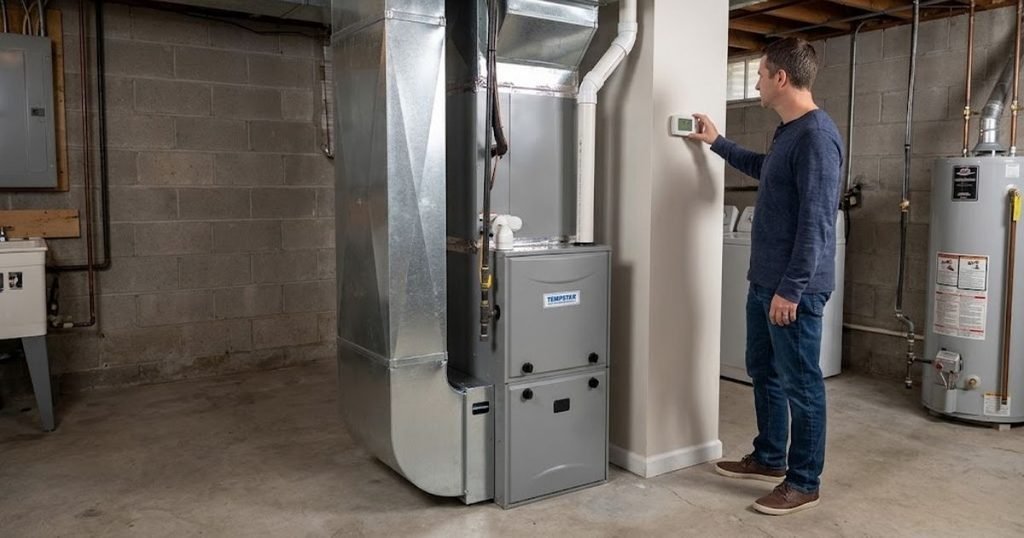
What Is a Tempstar Furnace?
Tempstar furnaces are residential heating appliances engineered to warm homes during cold weather by burning fuel most commonly natural gas or heating oil and distributing the resulting heat through a network of ductwork and indoor supply registers. Operating in tandem with your home thermostat and central air conditioning system, a modern gas furnace acts as the central heart of your home’s forced-air climate control setup.
Understanding how these systems operate helps clarify why equipment selection matters so much. A standard gas furnace draws in air from the home, passes it over a heat exchanger warmed by gas burners, and uses a blower motor to push the heated air back into the living spaces.
However, buying a heating system is vastly different from purchasing a standard household appliance. A furnace is only as good as its installation. Even a top-tier heating system will underperform, waste energy, or experience premature component failure if it is improperly sized, poorly vented, or incorrectly wired. Furthermore, homeowners must distinguish between the equipment price (the raw cost of the physical unit itself) and the total installed cost, which encompasses labor, structural modifications, permits, and safety checks performed by a licensed HVAC contractor.
READ MORE: Carrier Heat Pump Reviews — Models, Costs, Pros & Cons
Tempstar Furnace Models and Product Series
Tempstar organizes its residential gas furnace lineup into distinct product series, allowing homeowners to select a model that balances their comfort preferences, efficiency targets, and budget constraints.
1. Ion Series
Positioned as Tempstar’s premium tier, the Ion Series represents the brand’s most advanced heating technology. These models are designed for homeowners who prioritize ultra-consistent indoor temperatures, whisper-quiet operation, and maximum energy efficiency. Many Ion Series models feature modulating or two-stage gas valves combined with variable-speed blower motors. When paired with a compatible communicating wall control, the system dynamically adjusts its heating output in tiny increments rather than simply blasting on and off at full capacity.
2. QuietComfort Series
The QuietComfort Series occupies the mid-range tier of the lineup. These models strike a practical balance between advanced comfort features and moderate pricing. While they may not include every advanced communication protocol found in the Ion line, many QuietComfort models offer multi-stage heating operation and efficient blower motors designed to eliminate harsh temperature swings and reduce operational noise during cold winter nights.
3. Performance Series
The Performance Series is Tempstar’s budget-conscious product tier, engineered for reliability, straightforward operation, and cost-effective heating. These models typically feature single-stage operation or fixed-speed/multi-speed blower motors. While they lack the sophisticated modulation of premium units, they provide dependable heating performance for homeowners focused primarily on upfront value and reliable baseline operation. A representative example in this family is the N96VSN Performance 96 gas furnace, which offers high-efficiency condensing performance in a streamlined, compact cabinet.
| Series | General Positioning | Features to Compare | Best Suited For |
| Ion Series | Premium positioning | Communicating technology, modulating/two-stage valves, variable-speed blowers | Homeowners prioritizing advanced comfort, zoning, and maximum efficiency |
| QuietComfort Series | Mid-range positioning | Multi-stage operation, quiet sound ratings, enhanced airflow options | Homeowners balancing high comfort, quiet operation, and moderate cost |
| Performance Series | Budget-conscious positioning | Single-stage or basic two-stage operation, fixed/multi-speed blowers | Buyers prioritizing dependable baseline heat and lower upfront installation costs |
Note: Feature availability varies depending on the specific model number, production year, and regional energy efficiency standards mandated across different parts of the United States.
Tempstar Furnace Efficiency and AFUE Ratings
When evaluating any heating system, understanding energy efficiency is critical to managing your annual winter utility bills. Furnace efficiency is measured using Annual Fuel Utilization Efficiency (AFUE), expressed as a percentage.
What AFUE Ratings Mean
AFUE measures how effectively a furnace converts fuel into usable heat over the course of a typical heating season:
- 80% AFUE Units: These standard-efficiency non-condensing furnaces convert 80% of the fuel into heat, while the remaining 20% escapes up the chimney or flue pipe. They are often chosen for mild climates or situations where installing PVC venting for a high-efficiency condensing unit is structurally difficult.
- 90% to 98% AFUE Units: These high-efficiency condensing furnaces capture a significant portion of the heat that would normally escape, extracting extra warmth through a secondary heat exchanger. For example, a 96% AFUE furnace converts 96% of its consumed fuel directly into home heating.
Factors Beyond the AFUE Rating
While a higher AFUE rating means less wasted fuel, it does not automatically guarantee the lowest total cost of ownership. Your actual fuel consumption and heating costs depend heavily on several external variables:
- Local Climate: Homeowners in northern states running their heating systems for six to eight months a year benefit far more from a 97% AFUE unit than homeowners in mild southern regions.
- Fuel Prices: Fluctuating local utility rates for natural gas or propane directly impact monthly operating costs.
- Home Insulation and Sealing: A well-insulated, airtight home retains heat much longer, reducing overall runtime regardless of the furnace rating.
- Proper Maintenance: Routine filter changes and annual tune-ups keep burners clean and combustion efficiency high.
READ MORE: Weil‑McLain Boiler Reviews — Models, Costs, Pros & Cons
How Much Does a Tempstar Furnace Cost?
Because heating systems are custom-installed to fit your home’s unique layout, pricing varies considerably based on geographic location, equipment capacity (measured in BTUs), efficiency tier, and labor market rates.
Understanding the Total Installed Cost
When budgeting for a new heating system, it is vital to look beyond the price tag of the physical metal cabinet. A complete installation estimate typically includes several distinct components:
| Cost Component | What Homeowners Should Know |
| Furnace Unit | Varies by model tier, heating capacity (BTUs), and AFUE efficiency rating. |
| Installation Labor | Depends on local contractor rates, job complexity, and crew time. |
| Removal & Disposal | Hauling away and responsibly disposing of your old, outdated furnace. |
| Venting & Drainage | Upgrading metal flues to PVC piping for high-efficiency condensing units, plus adding a condensate drain line. |
| Thermostat & Controls | Upgrading to communicating thermostats or smart controls if required by the model. |
| Permits & Inspections | Local municipal fees required to ensure code compliance and safety. |
National Price Range Estimates
On average across the United States, purchasing and installing a new Tempstar gas furnace typically ranges between $3,000 and $6,800, including standard professional installation labor and basic venting modifications. Entry-level Performance Series 80% AFUE models lean toward the lower end of this spectrum, while top-tier Ion Series modulating units with complex multi-stage setups and custom duct transitions can push total project costs toward the higher end or beyond.
Recommendation: Always obtain at least three itemized quotes from licensed, insured local HVAC contractors. Ensure each quote explicitly details equipment model numbers, labor warranties, and exact installation scope.
Tempstar Furnace Reviews: Pros and Cons
Reviewing any HVAC brand objectively requires looking past marketing promises and examining verifiable hardware specifications, warranty terms, and practical installation realities.
Potential Advantages
- Diverse Product Lineup: Tempstar offers a comprehensive range of models spanning basic single-stage 80% units to ultra-efficient 97% modulating systems, accommodating various budgets.
- Flexible Blower Options: Many models support multi-speed and variable-speed blower motors, which improve indoor air mixing, reduce hot/cold spots, and integrate smoothly with central air conditioning or heat pump systems.
- Smart Home Compatibility: The premium Ion Series supports advanced communicating thermostats, giving homeowners granular control over humidity, staging, and system diagnostics.
- Solid Manufacturer Warranty: When properly registered within the required timeframe, Tempstar backs its equipment with competitive parts and heat exchanger warranties.
Potential Disadvantages and Limitations
- Dealer Network Variability: Tempstar equipment is sold and installed through independent HVAC contractors. The quality of your overall experience depends heavily on the specific dealer you hire, not just the brand logo on the box.
- Upfront Cost of Premium Features: High-efficiency condensing units, variable-speed motors, and communicating controls require a higher initial investment compared to basic builder-grade models.
- Warranty Registration Mandates: Failing to register your equipment within the manufacturer’s specified window (typically 90 days from installation) can significantly reduce the duration of your parts warranty.
- Installation Dependency: Poor sizing, improper gas pressure tuning, or restricted ductwork will degrade the performance of even the best-engineered furnace.
READ MORE: Best 5 High Efficiency Condensing Boiler: Review, Cost & Comparison
Tempstar Furnace Warranty Explained
Understanding your warranty coverage provides valuable peace of mind when investing in a new heating system. Tempstar offers competitive warranty protection, though coverage terms vary depending on the product series and whether the equipment is registered on time.
Key Warranty Components
- Parts Limited Warranty: Most Tempstar furnaces come with a standard 10-year parts limited warranty provided the equipment is registered online within 90 days of original installation. If registration is not completed, the parts warranty often defaults to a shorter period (typically 5 years) under state-specific laws.
- Heat Exchanger Limited Warranty: Because the heat exchanger is the most critical and expensive component of a gas furnace, Tempstar covers it with an extended warranty. Many models feature a 20-year heat exchanger limited warranty, while top-tier Ion and select QuietComfort models frequently include a Lifetime Heat Exchanger Limited Warranty for the original registered homeowner.
- No Hassle Replacement™ Limited Warranty: Select premium Tempstar models include a unique replacement pledge. If the primary heat exchanger fails within the specified No Hassle period (often 1 to 10 years depending on the model tier), Tempstar will provide an entire replacement unit rather than merely swapping out the failed part.
Important Warranty Exclusions
- Labor Costs Are Not Included: Standard manufacturer warranties cover replacement parts only. They do not cover contractor labor fees, diagnostic service charges, refrigerant, shipping fees, or incidental damage. Homeowners should ask their contractor about optional labor warranty extensions.
- Original Owner and Maintenance Requirements: Warranties generally apply to the original homeowner at the original installation site. Neglecting annual professional maintenance or failing to change air filters regularly can void warranty coverage if component failure is attributed to neglect.
Tempstar vs. Carrier Furnace: What Is the Difference?
Because Tempstar is manufactured by International Comfort Products (ICP) a wholly-owned subsidiary of Carrier Global Corporation homeowners frequently ask how Tempstar furnaces compare to Carrier-branded furnaces.
While both brands share corporate parentage and utilize similar engineering philosophies, component sourcing, and manufacturing facilities, they are marketed and distributed through different dealer networks.
Key Comparison Points
- Component Sharing: Many internal mechanical components, electronic boards, and gas valves are identical or closely related across both brands.
- Cabinet Design and Aesthetics: Carrier units often feature distinct exterior casing designs, branding badges, and proprietary thermostat interfaces (such as the Carrier Infinity control versus the Tempstar Ion control).
- Pricing and Dealer Pricing Structures: Because Tempstar is often positioned as a value-oriented alternative to flagship brands, equipment wholesale costs and contractor pricing can sometimes be slightly more competitive, though final installed prices depend primarily on the individual contractor’s overhead and bidding practices.
- Warranty Terms: Both brands offer robust 10-year parts warranties upon timely registration and long-term heat exchanger protection, though exact terms must be verified against specific model certificates.
| Comparison Area | Tempstar Furnace | Carrier Furnace |
| Parent Company | International Comfort Products (ICP / Carrier subsidiary) | Carrier Global Corporation |
| Product Tiering | Ion, QuietComfort, Performance | Comfort, Comfort/Performance, Infinity |
| Control Systems | Ion communicating controls | Infinity communicating controls |
| Warranty Protection | 10-year parts (with registration) | 10-year parts (with registration) |
| Dealer Network | Independent local HVAC contractors | Authorized Carrier factory-authorized dealers |
Verdict: Do not choose a furnace based on the brand name alone. Compare the exact model specifications, efficiency ratings, contractor reputation, and total itemized installation proposals side by side.
READ MORE: Best 5 Lochinvar Water Heater Review: Cost & Comparison
How to Choose the Right Tempstar Furnace for Your Home
Selecting the ideal heating system requires a structured approach. Use this practical 9-point buyer’s checklist when evaluating options with your HVAC contractor:
- Home Size and Heating Load: Insist that your contractor perform a formal Manual J load calculation rather than sizing the furnace by square footage alone. An oversized furnace short-cycles, wasting energy and wearing out components prematurely.
- Local Climate Conditions: Factor in your geographic region’s winter severity to determine whether an 80% AFUE unit or a high-efficiency 96%+ condensing model makes the most economic sense.
- Fuel Availability: Verify whether your home has access to municipal natural gas or if you require a propane conversion kit for liquid petroleum gas.
- Efficiency vs. Upfront Cost: Weigh the higher initial equipment cost of high-efficiency models against your projected long-term utility savings.
- Comfort Preferences: Decide whether you prefer basic single-stage heating or if you want the enhanced temperature blending and quiet operation of a two-stage or modulating variable-speed unit.
- Thermostat Compatibility: Ensure your existing wall thermostat can support the advanced features of your chosen furnace model, or budget for a compatible control upgrade.
- Installation Quality and Credentials: Verify that your chosen contractor is fully licensed, insured, pulls required municipal permits, and follows proper combustion setup procedures.
- Warranty Documentation: Confirm registration requirements and ask whether the contractor offers an extended labor warranty to complement the manufacturer’s parts coverage.
- Long-Term Maintenance Expenses: Discuss routine service requirements and filter replacement schedules with your installer to protect your investment.
Tempstar Furnace Installation and Maintenance
Proper installation and ongoing maintenance are the twin pillars of a long-lasting, efficient heating system.
Why Professional Installation Matters
A gas furnace handles combustible fuel and electrical current, making professional installation mandatory. A qualified HVAC technician will properly size the unit, calculate gas line sizing and pressure, install safe venting, configure blower speeds, and perform combustion safety testing (including carbon monoxide checks) during system startup.
Homeowner Maintenance Best Practices
- Inspect and Replace Air Filters: Check your air filter every 30 to 90 days depending on household conditions (pets, allergies, dust). A clogged filter restricts airflow, forcing the furnace to work harder and driving up energy bills.
- Keep Vents Clear: Ensure that indoor supply registers and return-air grilles are never blocked by furniture, rugs, or drapes.
- Clear Outdoor Terminations: For high-efficiency condensing furnaces with exterior PVC intake and exhaust pipes, keep the outdoor terminals clear of snow drifts, fallen leaves, and overgrown shrubbery.
- Listen for Changes: Pay attention to unusual rattling noises, frequent cycling, or unexpected spikes in your monthly utility bills, which often signal that a tune-up or repair is needed.
- Test Safety Alarms: Test smoke detectors and carbon monoxide detectors monthly, and replace their batteries annually.
Safety Warning: Never attempt to bypass internal safety switches, adjust gas manifold pressures, or perform DIY combustion repairs. If a carbon monoxide alarm activates, immediately evacuate the home to fresh air and contact emergency services or your local gas utility provider from a safe location.
Is a Tempstar Furnace Worth Buying?
Ultimately, a Tempstar furnace is well worth considering for American homeowners seeking a reliable, competitively priced heating system backed by solid warranty protection.
- Choose a Performance Series model if you are on a strict budget, live in a milder climate, or need a reliable, straightforward replacement for a rental property or straightforward home upgrade.
- Choose an Ion or QuietComfort series model if you live in a colder climate, value maximum energy efficiency, demand quiet operation, and want advanced temperature control and smart thermostat integration.
To secure the best possible outcome, focus less on brand hype and more on securing an accurate load calculation, a transparent itemized quote, and professional installation by a qualified local HVAC expert.
Frequently Asked Questions
Is Tempstar a good brand for furnaces?
Tempstar is widely regarded as a dependable, mid-to-high-tier residential HVAC brand. Homeowners evaluate Tempstar based on specific model specifications, professional installation quality, AFUE efficiency ratings, warranty terms, and local dealer support rather than unsupported brand-wide reliability claims.
How much does a Tempstar furnace cost installed?
The total installed cost for a Tempstar furnace typically ranges between $3,000 and $6,800 in the US. Final pricing depends on equipment capacity, efficiency tier, local labor rates, necessary venting modifications, and required electrical or ductwork adjustments.
How long does a Tempstar furnace last?
A well-maintained Tempstar furnace typically lasts between 15 and 20 years. Actual equipment lifespan is heavily influenced by installation quality, regional climate severity, operating runtime, and adherence to routine annual maintenance schedules.
What is the warranty on a Tempstar furnace?
Most Tempstar furnaces feature a 10-year parts limited warranty when registered within 90 days of installation, alongside extended heat exchanger coverage (often 20 years to lifetime). Standard warranties cover replacement parts only and exclude contractor labor fees and service calls.
Is Tempstar the same as Carrier?
Tempstar is manufactured by International Comfort Products (ICP), a subsidiary of Carrier Global Corporation. While they share corporate ownership and certain manufacturing technologies, model series, aesthetic designs, pricing structures, and warranty terms must be evaluated individually.