When winter temperatures drop, finding efficient ways to stay warm without skyrocketing energy bills becomes a top priority for American households. A Heat Storm heater has quickly become a popular choice for supplemental home heating, offering a range of electric heating solutions designed for bedrooms, home offices, workshops, and even covered outdoor patios.
Homeowners and renters turn to these units for several practical reasons:
- Adding localized warmth to frequently used spaces without cranking up the central furnace.
- Saving valuable floor space by utilizing innovative wall-mounted designs.
- Controlling temperatures remotely via smartphone apps on Wi-Fi-enabled models.
- Providing directional, radiant warmth in drafty garages, sheds, or patios using rugged, portable options.
However, it is important to manage expectations. Actual heating performance depends heavily on room size, insulation quality, ceiling height, outdoor temperatures, and your home’s existing heating system. While these units are fantastic for targeted zone heating, they should not be viewed as magical money-savers that guarantee lower energy bills across the board. Real-world savings depend entirely on how strategically you use them to supplement or reduce central heating.
In this comprehensive guide, we will review five distinct Heat Storm models, break down their underlying technologies, compare their specifications, weigh their pros and cons, and help you determine which model best fits your lifestyle and heating needs. Lets deep dive into “Heat Storm Heater Review & Comparison: Cost, Pros & Cons”
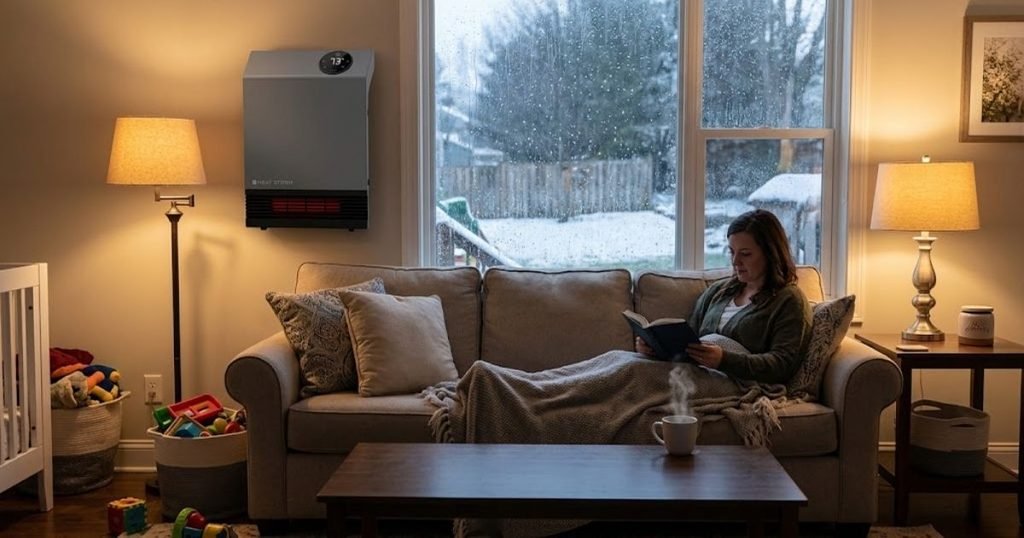
How Does a Heat Storm Heater Work?
Understanding the technology behind your heating equipment helps you choose the right appliance for your space. Heat Storm primarily utilizes two types of electric heating technologies: infrared heating and ceramic PTC heating.
- Infrared Heating: Unlike traditional convective heaters that warm the air in a room, infrared heaters emit invisible radiant waves that directly warm people and objects within their effective line of sight. This provides a cozy, sun-like warmth immediately upon turning on the unit. Many Heat Storm infrared models also incorporate a quiet internal fan to help circulate the warmed air more evenly throughout the space.
- Ceramic PTC Heating: Positive-Temperature-Coefficient (PTC) ceramic heaters use self-regulating ceramic stones. As the stones heat up, their electrical resistance increases, naturally regulating the maximum temperature and preventing overheating. While they still convert electricity into heat via standard electrical resistance, ceramic heaters rely more heavily on forced-air circulation to warm a room.
- Thermostat Control & Zone Heating: Most Heat Storm units feature built-in digital thermostats that allow you to set your desired temperature. When the room reaches that temperature, the unit cycles off or scales back power. This supports zone heating—the practice of heating only the rooms you are actively using while lowering the thermostat on your whole-house central heating system.
- Wi-Fi Functionality: Compatible models feature built-in Wi-Fi, allowing you to connect the heater to your home network. Using a supported smartphone app, you can adjust temperatures, set weekly schedules, and monitor usage from anywhere.
- The Reality of Electric Resistance: It is vital to remember that standard electric resistance heaters convert nearly all the electricity they consume into heat at the point of use. An infrared heater does not produce more heat out of the same watt of electricity than any other conventional electric heater; its advantage lies in how effectively it directs radiant warmth straight to you and the objects around you.
READ MORE: Best 6 Infrared Heater Indoor: Reviews, Cost & Compared
Heat Storm Heater Review & Comparison: Cost, Pros & Cons
To help you navigate your options, we have examined five popular models across the Heat Storm lineup, detailing their specifications, ideal use cases, and practical trade-offs.
1: Heat Storm HS-1500-PHX-WIFI Infrared Heater, Wi-Fi Wall Mounted
The Heat Storm HS-1500-PHX-WIFI is one of the brand’s flagship offerings, combining robust infrared heating performance with modern smart-home integration.
- Key Features: Delivers a maximum heating output of 1,500 watts (with lower-power adjustment options), a patent-pending safe-to-touch grill, digital thermostat, remote control, and built-in Wi-Fi connectivity.
- Design & Installation: Designed specifically for wall-mounted installation, it comes with a specialized wall bracket that allows the unit to mount flush against the wall. This keeps floor space completely clear a major perk for cramped bedrooms, nurseries, or home offices. It also includes a built-in cord management system.
- Advantages: The wall-mounted setup keeps cords out of walkways and eliminates bulky floor units. Smartphone app controls make it simple to schedule heating cycles so your room is warm right when you wake up or log into work.
- Drawbacks: Permanent wall mounting requires locating studs or using proper anchors and having an appropriately placed outlet nearby. Furthermore, Wi-Fi connectivity depends on a stable 2.4 GHz home network and app reliability.
- Verdict: This is the best Heat Storm heater for homeowners who want a permanent, space-saving heating solution for medium-sized indoor spaces and appreciate smart-home convenience.

2: Heat Storm Tradesman 1500-Watt Infrared Heater Tripod Combo
If your heating needs extend beyond standard living rooms into workshops, garages, or covered patios, the Heat Storm Tradesman 1500-Watt Infrared Heater Tripod Combo is built for the job.
- Key Features: A heavy-duty 1,500-watt infrared heating unit mounted on an adjustable, sturdy tripod stand. It delivers direct radiant warmth and often features weather-resistant construction suitable for demanding environments.
- Portability & Placement: The included tripod allows you to adjust the height and angle of the heater, directing warmth precisely where you are standing or working. Unlike wall units, it can be moved around as your workspace layout changes.
- Advantages: Exceptional directional heating. If you are working at a workbench in a chilly garage, the infrared rays warm you directly without wasting energy trying to heat a poorly insulated, drafty garage ceiling.
- Drawbacks: It occupies floor space via its tripod legs, which can be a tripping hazard in tight workshops. It is also designed for supplemental, localized warmth and will struggle to heat an entire uninsulated multi-car garage on a freezing day.
- Verdict: Highly recommended for DIYers, mechanics, and hobbyists who need rugged, portable Heat Storm infrared heater performance in protected outdoor or workshop environments.

3: Heat Storm Phoenix Infrared Space Heater — HS-1500-PHX
For buyers who want the core performance of the Phoenix line without the complexity of smart-home apps, the standard Heat Storm Phoenix Infrared Space Heater (HS-1500-PHX) is a dependable alternative.
- Key Features: A 1,500-watt infrared heating system equipped with a digital thermostat, remote control, and a clear LED display. Depending on the exact retail package, it often includes both wall-mounting hardware and removable feet for tabletop or floor use.
- Simplicity & Control: This non-Wi-Fi version relies on physical buttons and a handheld remote. There is no need to download apps, connect to Wi-Fi routers, or troubleshoot software updates.
- Advantages: It offers great versatility out of the box—you can mount it to the wall or set it up with feet. Its straightforward operation makes it exceptionally user-friendly for guests or tech-averse family members.
- Drawbacks: Lacks remote scheduling via smartphone unless paired with an external smart plug (which must be rated for high-wattage space heaters). Coverage is still limited by room insulation and layout.
- Verdict: An ideal choice for buyers seeking a reliable, straightforward Heat Storm 1500-watt heater without paying for or dealing with Wi-Fi features.

4: Heat Storm HS-1000-WX-WIFI Infrared Wi-Fi Heater, 1,000 Watt
Not every room requires a full 1,500 watts of power. The Heat Storm HS-1000-WX-WIFI scales down the capacity for smaller spaces while retaining modern smart features.
- Key Features: A 1,000-watt heating capacity packed into a compact, wall-mountable frame with built-in Wi-Fi, digital thermostat, and app compatibility.
- Intended Use: Perfect for smaller bedrooms, home offices, walk-in closets, or tiny homes where a 1,500-watt unit might overpower the circuit or overheat a tiny footprint.
- Advantages: Lower maximum power draw reduces strain on older electrical circuits while still providing effective zone heating for modest spaces. It retains the clean, wall-mounted aesthetic of its larger siblings.
- Drawbacks: With a lower maximum wattage, its recovery time in very cold or drafty rooms is slower. It is definitely not suited for large, open-concept living areas.
- Verdict: An excellent pick for apartment residents or homeowners looking for a specialized, lower-wattage Heat Storm wall-mounted heater for compact rooms.

5: Heat Storm 1500-Watt Ceramic PTC Heater with Wi-Fi — HS-1500-PTC-WI
Stepping away from pure infrared technology, the Heat Storm 1500-Watt Ceramic PTC Heater with Wi-Fi (HS-1500-PTC-WI) offers an alternative heating mechanism for indoor environments.
- Key Features: A 1,500-watt unit utilizing ceramic PTC heating elements, paired with Wi-Fi connectivity, digital thermostat controls, and scheduling capabilities.
- Technology Difference: While infrared models focus heavily on radiant warmth, this ceramic model relies on forced-air distribution powered by an internal fan passing air over self-regulating ceramic stones.
- Advantages: Provides rapid ambient air warming, making it effective at raising the overall temperature of small-to-medium rooms quickly through convective air movement.
- Drawbacks: Like all 1,500-watt electric heaters, it draws substantial electrical current at full blast. Fans used in ceramic heaters can also produce a low hum that some light sleepers might notice.
- Verdict: A solid option for shoppers who prefer traditional convective ceramic heating over infrared radiant heat, backed by the convenience of smartphone app controls.

READ MORE: EdenPURE Heaters Review — Prices & Comparison
Heat Storm Heater Comparison Table
| Comparison Factor | HS-1500-PHX-WIFI | Tradesman 1500 Tripod | Phoenix HS-1500-PHX | HS-1000-WX-WIFI | HS-1500-PTC-WI |
| Model Number | HS-1500-PHX-WIFI | Tradesman 1500 | HS-1500-PHX | HS-1000-WX-WIFI | HS-1500-PTC-WI |
| Heating Technology | Infrared | Infrared | Infrared | Infrared | Ceramic PTC |
| Maximum Wattage | 1,500W | 1,500W | 1,500W | 1,000W | 1,500W |
| Mounting / Placement | Wall-Mounted | Tripod / Portable | Wall or Floor | Wall-Mounted | Portable / Floor |
| Wi-Fi Control | Yes | No | No | Yes | Yes |
| Thermostat & Remote | Included | Included | Included | Included | Included |
| Intended Use | Bedrooms, Offices | Workshops, Patios | General Indoor | Small Rooms | General Indoor |
| Main Advantage | Smart wall-mount | Rugged directional heat | Simple, versatile | Lower wattage draw | Rapid ambient air heat |
| Main Drawback | Requires wall install | Occupies floor space | No smart features | Slower in cold spaces | Fan noise / Draws 1500W |
| Price Tier | Mid-Range | Mid-to-High | Budget-Friendly | Budget-Friendly | Mid-Range |
Comparison Analysis
When reviewing the options, your choice ultimately boils down to placement, technology, and power requirements. If you want a seamless, smart wall unit, the HS-1500-PHX-WIFI is a top contender. For garages and workspaces where fixed walls aren’t available, the Tradesman 1500 Tripod Combo offers unmatched directional flexibility. If you prefer to keep things simple without apps, the standard Phoenix HS-1500-PHX delivers robust infrared warmth. For smaller rooms or restricted electrical circuits, the 1,000-watt HS-1500-WX-WIFI shines. Finally, if you prefer convective ceramic heat over radiant infrared, the HS-1500-PTC-WI provides a great alternative.
READ MORE: Best Envi Wall Heater: Review, Cost & Comparison
Heat Storm Heater Pros and Cons
A balanced review requires examining both the positive and negative aspects of these popular appliances.
Advantages
- Versatile Mounting Options: From flush wall brackets to heavy-duty tripods, Heat Storm offers configurations that adapt to various living and working spaces.
- Floor Space Preservation: Wall-mounted models clear up room on the floor, keeping walkways safe and tidy.
- Smart Integration: Compatible Wi-Fi models let you manage schedules and adjust temperatures remotely via phone apps.
- Targeted Infrared Warmth: Infrared units heat people and objects directly, offering immediate comfort in chilly zones.
- Clean Operation: Electric operation means no on-site combustion, venting requirements, or messy fuel storage.
Drawbacks
- Electricity Consumption: Running a 1,500-watt appliance continuously will noticeably increase your monthly electric bill.
- Supplemental Only: These units are designed to supplement, not replace, central heating systems in large or poorly insulated spaces.
- Installation Effort: Wall-mounted units require basic tools, stud finding, and careful placement near an electrical outlet.
- Network Dependency: Smart features require a stable 2.4 GHz Wi-Fi signal and app support to function correctly.
- Outdoor Limitations: Outdoor models like the Tradesman provide great directional warmth, but cannot magically heat an entire wide-open, windy patio.
How Much Does It Cost to Run a Heat Storm Heater?
Understanding the ongoing operating cost is crucial before making a purchase. You can easily estimate electricity costs using this standard formula:
OperatingCost=Wattage1,000HoursUsedElectricityRateperkWh
For the sake of a practical example, let’s assume a national average electricity rate of $0.16 per kWh (note: your actual rate may be higher or lower depending on your local utility provider).
- 1,000-Watt Heater (e.g., HS-1000-WX-WIFI) for 1 Hour:
$$\left(\frac{1,000}{1,000}\right) \times 1 \times \$0.16 = \$0.16 \text{ per hour}$$ - 1,500-Watt Heater (e.g., Phoenix HS-1500-PHX) for 1 Hour:
$$\left(\frac{1,500}{1,000}\right) \times 1 \times \$0.16 = \$0.24 \text{ per hour}$$ - 1,500-Watt Heater Running for 8 Hours at Continuous Full Power:
$$\left(\frac{1,500}{1,000}\right) \times 8 \times \$0.16 = \$1.92 \text{ per day}$$
Keep in mind that these calculations assume continuous full-power operation. In reality, built-in digital thermostats, Eco modes, and lower-power settings cause the heater to cycle on and off, reducing total energy consumption. Always check your local utility bill for your exact kWh rate.
READ MORE: Safe Portable Heaters: 6 Reviews & Essential Safety Tips
Is a Heat Storm Heater Safe?
Electric space heaters require careful handling to ensure home safety. When operating any Heat Storm model, American households should follow these essential safety guidelines:
- Read the Manual: Always adhere strictly to the manufacturer’s installation, clearance, and operating instructions.
- Direct Plug-In: Plug your heater directly into a standard 120V wall outlet. Avoid using extension cords or power strips, as high-wattage heating appliances can overload them and create a fire hazard.
- Maintain Clearances: Keep combustible materials—such as curtains, bedding, furniture, papers, and clothing—at least three feet away from the front, sides, and rear of the heater.
- Avoid Blocked Vents: Never obstruct the air intakes or exhaust openings.
- Secure Wall Units: Ensure wall-mounted heaters are securely fastened to wall studs or installed using heavy-duty drywall anchors specified in the manual.
- Supervision: Exercise caution around children and pets. While many Heat Storm models feature touch-safe grills, hot surfaces can still pose risks.
- Inspection: Regularly inspect power cords and plugs for fraying or damage. If a cord is damaged, discontinue use immediately.
How to Choose the Best Heat Storm Heater for Your Home
To narrow down your options and select the right unit, run through this quick buyer’s checklist:
- Evaluate Room Size: Match the room’s square footage against the manufacturer’s primary heating guidance. Don’t expect a single unit to heat an entire drafty basement.
- Check Electrical Capacity: Ensure your room’s circuit can handle a 1,500-watt load, or opt for a 1,000-watt model if circuit capacity is limited.
- Choose Your Technology: Decide whether you want radiant infrared warmth or convective ceramic PTC airflow.
- Determine Placement: Decide if you have open wall space for a wall-mounted model or if a portable/tripod unit is more practical.
- Assess Smart Features: Decide if smartphone app scheduling and Wi-Fi capability justify the slight price bump.
- Calculate Running Costs: Factor local electricity rates into your budget for extended winter operation.
- Review Safety Features: Verify tip-over protection, thermal cut-offs, and cool-touch grill designs.
- Compare Budget & Warranty: Review current retail pricing, return windows, and manufacturer warranty terms.
Frequently Asked Questions
Are Heat Storm heaters any good?
Yes, Heat Storm heaters are widely regarded for their durable build quality, innovative wall-mounting designs, and efficient zone-heating capabilities. However, their satisfaction depends entirely on matching the correct model wattage and technology to the specific room size and insulation levels.
How much does it cost to run a Heat Storm heater?
Operating costs depend on your local utility rates and wattage. At an average rate of $0.16 per kWh, running a 1,500-watt heater costs roughly $0.24 per hour of continuous operation. Thermostat cycling and lower-power settings typically reduce this total.
Can a Heat Storm heater heat an entire room?
These units excel at supplemental zone heating. While they can comfortably heat a small-to-medium enclosed bedroom or office, their ability to heat an entire room depends heavily on outdoor temperatures, room insulation, and ceiling height. They are not intended to serve as a whole-house primary heating system.
Can I control a Heat Storm heater with my phone?
Yes, smartphone control is available on specific Wi-Fi-enabled models (such as the HS-1500-PHX-WIFI and HS-1000-WX-WIFI). Buyers must verify that the model explicitly states “Wi-Fi” and download the manufacturer-supported app for remote scheduling and temperature adjustments.
Which Heat Storm heater is best for a bedroom or home office?
For most bedrooms and home offices, wall-mounted infrared models like the HS-1500-PHX-WIFI are popular because they preserve floor space and offer quiet operation. If the room is exceptionally small or has limited electrical capacity, the 1,000-watt HS-1000-WX-WIFI is a smart alternative.
Conclusion
Choosing the right supplemental heating solution comes down to understanding your space, your installation preferences, and your budget. There is no single “best” Heat Storm heater for every home—what works wonders in a drafty garage workshop on a tripod might not be what you want mounted in a nursery. By evaluating your room size, checking electrical limits, and utilizing features like digital thermostats and Wi-Fi scheduling, you can dramatically improve your winter comfort.
Before making your final purchase, take time to compare exact model specifications, check current pricing across retailers, read through the official owner’s manual, and verify product availability. Invest in the right model today and enjoy targeted, cozy warmth all winter long!
Source List
- Heat Storm Official Website: https://www.heatstorm.com/
- Heat Storm Product Collection & Specifications: https://www.heatstorm.com/collections/all
- Heat Storm Phoenix Wi-Fi Product Documentation: https://www.heatstorm.com/products/phoenix-wifi-smart-heater
- Heat Storm Tradesman Tripod Combo Product Page: https://www.heatstorm.com/products/1500-watt-tradesman-heater-tripod-combo
- Official Heat Storm User Manuals & Support: https://www.heatstorm.com/pages/manuals