There are few kitchen surprises quite as frustrating as finishing a meal, unloading clean dishes, and discovering a pool of murky, stagnant water sitting at the bottom of the tub. If you are dealing with a dishwasher not draining, you are certainly not alone. Every week, homeowners across the United States encounter this exact issue. Whether you are dealing with standing water in dishwasher tubs or a complete appliance standstill, understanding the root cause can save you time, stress, and unnecessary repair bills.
Proper drainage is essential for a clean, sanitary cycle. Your dishwasher relies on a delicate balance of water fill valves, heating elements, drainage pumps, and plumbing lines to wash away food debris and soap scum. When this cycle is disrupted, it typically boils down to one of two things: a physical clog blocking the exit path, or a mechanical failure within the machine’s pumping system.
In this comprehensive guide written from years of hands-on appliance repair experience, we will walk you through everything you need to know about dishwasher troubleshooting. Lets deep dive into “Dishwasher Not Draining? Causes, Fixes & When to Call Pro”
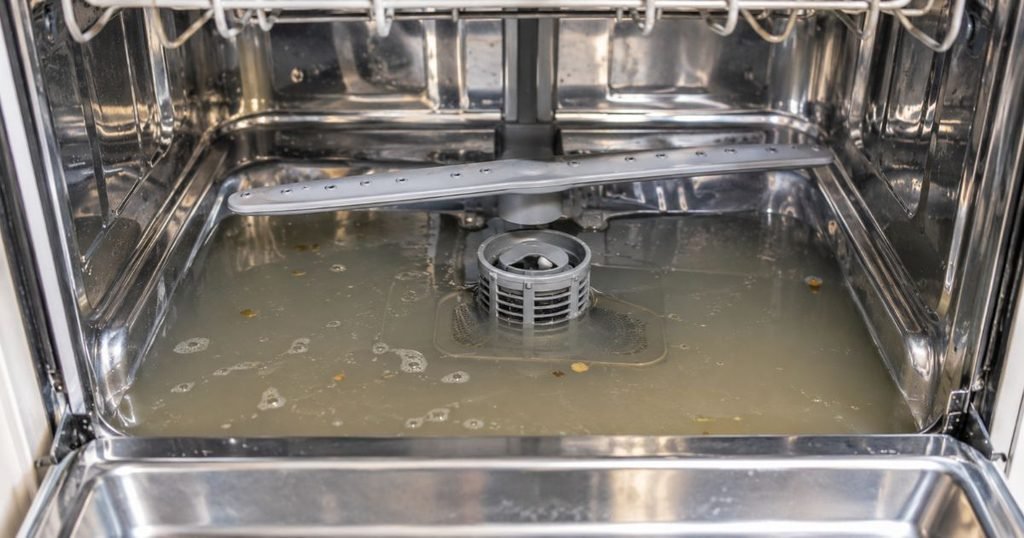
Is It Normal to Have Water at the Bottom of a Dishwasher?
Before tearing your kitchen apart, it is important to understand normal dishwasher behavior. A common point of confusion for American homeowners is whether a small amount of moisture in the bottom of the tub is actually a problem.
In most modern dishwashers, a small puddle of water roughly half an inch to an inch deep sitting underneath the removable filter or inside the sump area is completely normal. Manufacturers design systems this way on purpose. Keeping standing water in the pump sump keeps the pump seal moist and pliable, preventing it from drying out, cracking, and eventually leaking.
However, there is a clear line between a healthy pump sump and a drainage failure. If you see water rising above the base of the lower spray arm, covering the filter mesh entirely, or splashing out onto your kitchen floor when you open the door, your dishwasher is definitely not draining water. If food particles are floating in that water or it smells foul after a cycle, you are facing a true drainage blockage.
READ MORE: How to Plumb a Dishwasher Drain
10 Common Reasons Your Dishwasher Is Not Draining
When a dishwasher drain clogged or mechanical failure occurs, it usually points to one of ten frequent culprits. Let’s examine each issue, how to identify it, and whether it is safe to tackle yourself.
1. Clogged Dishwasher Filter
- What causes it: Food particles, grease, paper product remnants, and hard water minerals accumulate over time in the fine mesh filter located at the bottom of the tub.
- Warning signs: Water pools after every cycle; food particles remain caked on plates; gritty sediment lines the bottom.
- How to identify: Open the dishwasher, remove the bottom rack, and inspect the cylindrical or flat mesh filter assembly. If it is packed with debris, you have found your culprit.
- DIY safety: Completely safe for homeowners to service. Just watch out for sharp glass shards trapped in the filter mesh.
2. Blocked Dishwasher Drain Hose
- What causes it: Food debris, grease buildup, or a physical kink in the corrugated hose running from the dishwasher to your sink plumbing or garbage disposal.
- Warning signs: Water fails to evacuate; slow drainage; gurgling noises in the kitchen sink during the cycle.
- How to identify: Trace the drain hose underneath your kitchen sink (usually connected near the top or onto a garbage disposal inlet) to look for visible kinks, tight bends, or squashed sections.
- DIY safety: Safe to check and clear, provided you place towels underneath and disconnect power before accessing lower cabinet spaces.
3. Clogged Drain Pump or Pump Impeller
- What causes it: Small objects like toothpicks, broken glass, fruit stickers, or bone fragments slip past the filter and jam the pump impeller blades.
- Warning signs: The dishwasher hums or buzzes loudly during the drain cycle but water refuses to move; standing water remains.
- How to identify: Access the sump area underneath the filter (or remove the kickplate depending on your model) to check if the impeller spins freely or is obstructed by debris.
- DIY safety: Moderate. You must handle components carefully and avoid forcing parts. Wear cut-resistant gloves if probing for broken glass.
4. Faulty Dishwasher Drain Pump
- What causes it: Electrical winding failure, internal mechanical burnout, or normal wear and tear on the drain pump motor over years of operation.
- Warning signs: No humming sound at all during the drain phase; multitester shows open electrical continuity; complete lack of pump action.
- How to identify: Listen closely during the drain cycle. If the control board signals the pump to run, but the pump remains completely silent and dead, the motor may have failed.
- DIY safety: Advanced. Involves working near electrical connections and accessing the lower service panel. Requires unplugging the unit entirely.
5. Clogged Garbage Disposal
- What causes it: Food waste builds up inside the garbage disposal chamber where the dishwasher drain hose attaches, preventing water from flowing out.
- Warning signs: Kitchen sink drains slowly or backs up; turning on the disposal causes water to back up into the dishwasher.
- How to identify: Inspect the disposal inlet nipple under the sink or run the disposal to see if it clears. If the disposal inlet port is plugged with grease and food paste, water cannot escape.
- DIY safety: Safe for standard homeowners, provided the disposal switch is turned off and unplugged at the wall outlet.
6. Garbage Disposal Knockout Plug Not Removed After Installation
- What causes it: When homeowners or contractors install a brand-new garbage disposal, they often forget to punch out the plastic knockout plug inside the dishwasher inlet port.
- Warning signs: Brand-new dishwasher refuses to drain from day one, even though all hoses look clean and connected.
- How to identify: Disconnect the dishwasher drain hose from the disposal and inspect the inlet port. If a solid plastic barrier is blocking the hole, the plug was never removed.
- DIY safety: Safe to check and remove using a screwdriver and hammer under the sink.
7. Blocked Dishwasher Air Gap
- What causes it: Lint, grease, and food debris accumulate inside the brass or chrome cylindrical air gap mounted on your kitchen countertop or sink ledge.
- Warning signs: Water leaks out of the air gap vent holes during cycles; dishwasher not draining at end of cycle.
- How to identify: Remove the decorative metal cap and plastic cover of the air gap on your sink. Look inside for a buildup of gray slime or debris restricting the inner tube.
- DIY safety: Very safe and straightforward DIY task requiring no special tools.
8. Clogged Kitchen Sink Drain or Plumbing Connection
- What causes it: Grease, soap scum, and food waste clog the main kitchen sink trap or branch line where the dishwasher shares drainage space.
- Warning signs: The kitchen sink drains sluggishly or stands full; water from the sink backs up into the dishwasher tub.
- How to identify: Run your kitchen faucet at full blast. If the sink fills up or drains extremely slowly, your household plumbing is restricted.
- DIY safety: Moderate. Cleaning the P-trap under the sink is a standard DIY task, but deeper main stack clogs require a licensed plumber.
9. Improperly Installed Drain Hose or Missing Required High Loop
- What causes it: The drain hose was installed flat along the cabinet floor without a high loop or air gap, allowing wastewater from the sink to gravity-feed back into the dishwasher.
- Warning signs: Clean cycles leave dirty, gray standing water in the tub; wastewater flows backward into the machine after the sink is used.
- How to identify: Look under your sink cabinet. The drain hose should be secured as high as possible against the underside of the countertop or run through an air gap.
- DIY safety: Safe to fix by securing the hose upward with zip ties or brackets.
10. Electrical Problems, Faulty Wiring, or Control Board Issues
- What causes it: A power surge, loose wiring harness, burnt relay on the electronic control board, or a failed door latch switch stopping the control board from initiating drainage.
- Warning signs: Erratic cycle behavior; control lights flashing error codes; dishwasher fills and washes, but completely skips the drain phase.
- How to identify: Check for error codes in your owner’s manual. Test power output to the drain pump using a digital multimeter if experienced with electrical testing.
- DIY safety: Low for DIY. Working with live household voltage and sensitive electronic control boards requires professional expertise.
READ MORE: Garbage Disposal Clogged? Causes, Safe Fixes & When to Call
How to Fix a Dishwasher That Won’t Drain (Step-by-Step)
When faced with a dishwasher won’t drain scenario, following a systematic troubleshooting process ensures you solve the problem safely without damaging your kitchen cabinets or flooring.
Step 1: Turn Off the Dishwasher and Prepare the Area
Before touching any internal components, safety comes first. Press the cancel or power button to stop any active cycle. To prevent electrical shock, unplug your dishwasher from the wall outlet under the sink, or switch off the dedicated circuit breaker at your main electrical panel. Lay down thick towels and place a shallow pan or bucket under the sink area to catch any residual water from hoses.
Step 2: Remove Standing Water From the Dishwasher
You cannot inspect or clean components effectively while swimming in water. If you are dealing with standing water in dishwasher tubs, you need to bail it out manually:
- Grab a plastic cup or small container to scoop out the bulk of the water into a bucket.
- Use large kitchen towels or a thick cellulose sponge to soak up the remaining shallow puddles.
- For stubborn or hard-to-reach water in the sump, use a turkey baster or a manual hand pump to suck out the last drops.
Step 3: Clean the Dishwasher Filter
A dishwasher filter clogged with grease and food debris is the #1 reason for drainage failure.
- Open the dishwasher door and pull out the lower dish rack.
- Locate the cylindrical filter assembly at the bottom of the tub (consult your specific manufacturer manual if unsure).
- Unlock the filter by turning it counterclockwise and lifting it out along with the flat mesh plate.
- Take the parts to your kitchen sink, scrub them gently with a soft brush and dish soap under warm running water to clear all mesh openings, then lock them securely back into place.
Step 4: Inspect the Drain Pump Area
With the filter removed, you have direct access to the pump sump area.
- Carefully inspect the opening for broken glass, toothpicks, bones, or hard plastic tags. Wear thick utility gloves to protect your hands.
- Gently touch the pump impeller blades to check if they rotate or feel jammed by a foreign object. If something is wedged tightly, use needle-nose pliers to extract it gently. Never force or bend the impeller blades.
Step 5: Check the Dishwasher Drain Hose
A pinched or dishwasher drain hose clogged with grease can halt drainage instantly.
- Open your under-sink cabinet and inspect the corrugated rubber hose leading from the dishwasher side wall.
- Ensure the hose is not sharply kinked, pinched behind the dishwasher chassis, or crushed against the wall.
- Disconnect the hose end carefully from the garbage disposal or sink tailpiece, holding a bucket underneath. Blow through it or flush it with warm water to clear internal blockages. Ensure your installation includes a proper high loop secured near the countertop to prevent backflow.
Step 6: Check the Garbage Disposal Connection
If your dishwasher drains into a garbage disposal, the inlet nipple is a frequent bottleneck.
- Turn off power to the garbage disposal under the sink.
- Loosen the spring clamp or hose clamp securing the dishwasher drain hose to the disposal nipple.
- Inspect the inside of the nipple using a flashlight. If grease, food waste, or an unremoved knockout plug is blocking the opening, clear it out completely with a screwdriver or wire brush. Reconnect the hose tightly.
Step 7: Inspect and Clean the Dishwasher Air Gap
If your local plumbing code requires an air gap on your kitchen sink, check it for blockages.
- Twist off the decorative outer metal cover from the top of the air gap cylinder on your sink.
- Lift off the inner plastic cap.
- Inspect the internal plastic passages for slimy residue, soap buildup, or food particles. Clean it thoroughly using a small bottle brush or toothpick, rinse it with warm water, and snap the covers back into place.
Step 8: Check the Kitchen Sink Drain
Sometimes the dishwasher is working fine, but your household plumbing is letting you down.
- Turn on your kitchen faucet. If the water pools in the sink or drains sluggishly, your kitchen P-trap or main branch line is clogged.
- Place a bucket beneath the P-trap under the sink, unscrew the slip nuts, and clean out accumulated hair, soap scum, and grease. Reassemble tightly and test.
Step 9: Run a Short Test Cycle
Once you have cleared clogs, reconnected hoses, and secured all filters:
- Restore electrical power at the breaker or plug the unit back in.
- Run a short rinse-only cycle or quick wash cycle.
- Monitor the dishwasher closely during the drain phase to ensure water evacuates rapidly and smoothly.
- Check under the sink and around the base of the machine with a flashlight to verify there are no leaks from loosened hose clamps or unseated gaskets.
READ MORE: Best Water Pressure Booster Pump: Review & Costs
How to Manually Drain a Dishwasher
If your appliance has stopped mid-cycle and refuses to pump out water automatically, knowing how to manually drain a dishwasher will prevent a messy overflow when you open the door.
- Power down: Turn off the circuit breaker or unplug the appliance to ensure absolute safety around water and electrical components.
- Clear the interior: Pull out the upper and lower dish racks if they obstruct your workspace or if you need to remove dishes to prevent them from sitting in dirty water.
- Scoop the bulk water: Use a plastic pitcher or deep measuring cup to bail out the standing water into a bucket.
- Soak up the remainder: Use old bath towels or a large sponge to absorb stubborn residual water in the floor of the tub.
- Clear the sump: Access the filter well. If water is still trapped above the pump because of a blockage, soaking up water around the filter will reveal any trapped debris or foreign objects jamming the impeller.
- Avoid risks: Never attempt to probe deep electrical wiring harnesses or dismantle internal pump housing components while water is present.
Dishwasher Not Draining but Humming: What Does It Mean?
One of the most classic troubleshooting scenarios homeowners encounter is a dishwasher not draining but humming. When you hear this distinct electrical humming or buzzing sound, it tells you two important things:
- The control board is sending electrical power correctly to the drain pump motor.
- The motor is trying to run, but something is preventing it from completing its mechanical job.
Common reasons for this behavior include:
- Jammed pump impeller: A small piece of broken glass, a peach pit, or a plastic label is wedged tightly against the spinning impeller blades, locking them in place while the motor tries to turn.
- Debris blockage: Sludge, grease, or heavy sediment has packed tightly inside the volute housing around the pump.
- Defective pump motor winding: While the motor receives power, internal mechanical seizure or worn motor bearings prevent the shaft from spinning, resulting in a continuous electrical hum that can overheat the motor if left running.
If clearing debris from the filter and pump sump does not stop the humming and force water out, the drain pump is likely mechanically compromised and requires attention.
Dishwasher Not Draining After a Cycle: What Should You Check?
When a dishwasher not draining at end of cycle occurs, it can disrupt your entire evening routine. When this happens unexpectedly, run through this quick checklist before calling for service:
- Was the cycle interrupted? If someone opened the door mid-cycle or a power flicker occurred, the machine may have paused before reaching its scheduled drain sequence. Try running a manual cancel/drain cycle (usually by holding the Start/Cancel button for 3 seconds).
- Is the filter clean? A heavily soiled filter blocks water flow right at the intake point.
- Is the garbage disposal blocked? Since most American dishwashers drain through the garbage disposal, a clogged disposal will block dishwasher outflow entirely.
- Are there error codes? Check the digital display or flashing indicator lights on your control panel. Codes like “OE” (LG), “i30” or “i20” (Frigidaire), or “E24” (Bosch) specifically point to drainage or pump issues.
READ MORE: What to Do When a Pipe Bursts: 10 Emergency Steps
Dishwasher Drain Pump Repair or Replacement:
The drain pump is the workhorse responsible for forcing wastewater out of the tub through the drain hose and into your plumbing. Understanding how it operates helps you make informed repair decisions.
- What it does: Powered by a small electric motor, the pump uses an impeller to pull water from the sump and push it upward against gravity through the drain hose.
- Signs of failure: Loud grinding noises, complete silence when voltage is applied, persistent leaks from the pump seal, or intermittent draining.
- Cleaning vs. Replacement: Often, a pump is not broken—it is simply jammed by foreign objects. Thorough cleaning of the pump chamber resolves most issues. However, if the motor windings are burned out or the internal plastic impeller fins snap off, dishwasher drain pump replacement becomes necessary.
- Parts and expertise: Always source exact OEM replacement parts matching your specific appliance brand (Whirlpool, Bosch, GE, KitchenAid, Samsung). Professional diagnosis prevents you from buying an expensive pump when the real issue is just a clogged house drain.
Dishwasher Repair Cost in the USA
When DIY troubleshooting falls short, knowing what to expect financially helps you decide whether to repair or replace your appliance. Below is an overview of typical US repair considerations and cost factors.
| Repair or Service | Typical Cost Considerations |
| Dishwasher filter cleaning | Usually DIY (Free) |
| Drain hose cleaning | Usually DIY or minor service labor ($75 – $150) |
| Drain hose replacement | Parts and labor ($100 – $200) |
| Drain pump replacement | Parts and labor ($150 – $350) |
| Air gap cleaning | Usually DIY (Free to $50) |
| Professional diagnostic visit | Service call and diagnostic fee ($100 – $200) |
| Dishwasher control board repair | Parts and labor ($250 – $500) |
Note on US Pricing: Final repair bills vary based on your geographic location, local technician labor rates, brand parts availability (luxury European brands versus standard domestic models), and whether your appliance is covered under a manufacturer or home warranty plan.
READ MORE: Best Water Pressure Booster Pump: Review & Costs
When Should You Call a Professional Dishwasher Repair Technician?
While tackling clogs and cleaning filters is great for DIYers, certain red flags mean it is time to step back and call a professional appliance repair technician or licensed plumber:
- The dishwasher still refuses to drain after you have thoroughly cleaned the filter, checked the hoses, and cleared the garbage disposal connection.
- The drain pump makes terrifying grinding, screeching, or burning electrical odors when powered on.
- Your kitchen circuit breaker trips repeatedly whenever the dishwasher attempts to drain.
- You notice visible frayed wiring, water damage, or scorch marks around the lower electrical components.
- Water is actively leaking underneath the appliance onto your kitchen subfloor.
- Persistent error codes remain locked on the control display despite resets.
- If the blockage is deep within the household plumbing stack or main sink branch line, a licensed plumber is better equipped to snake the line than an appliance technician.
How to Prevent Dishwasher Drainage Problems
An ounce of prevention is worth a pound of cure when it comes to kitchen appliances. Implement these simple habits to keep your dishwasher draining smoothly for years to come:
- Clean the filter regularly: Make it a habit to inspect and rinse your dishwasher filter once a month.
- Scrape, don’t pre-wash: Modern enzyme-based detergents need food soils to cling to, but you should always scrape large bones, fruit pits, and heavy chunks of food into the trash before loading.
- Run hot water first: Run your kitchen sink faucet until the water is hot right before starting your dishwasher; this ensures the wash cycle starts with hot water, dissolving grease effectively.
- Keep disposal clear: Run your garbage disposal regularly and keep it clean with ice cubes or citrus peels.
- Run maintenance cycles: Use a commercial dishwasher cleaner or a cup of white vinegar on a hot cycle every few months to dissolve mineral scale and grease buildup inside hidden hoses.
- Address issues early: If you notice slow drainage or odd noises, investigate immediately before a minor clog turns into a flooded kitchen floor.
Dishwasher Not Draining: Troubleshooting Checklist
| Symptoms | Possible Cause | Recommended Action |
| Water remains at the bottom | Clogged filter | Clean the filter mesh thoroughly |
| Dishwasher hums but does not drain | Jammed pump or foreign object | Inspect sump and remove debris safely |
| Water backs up into dishwasher | Drain connection or backflow issue | Inspect hose routing and high loop |
| Dishwasher recently installed | Knockout plug in disposal | Check installation manual and remove plug |
| Sink and dishwasher both drain slowly | Household plumbing blockage | Clear P-trap or contact a plumber |
| No drainage and unusual electrical behavior | Electrical or control issue | Contact an appliance technician |
Frequently Asked Questions
Why is my dishwasher not draining at the end of a cycle?
A dishwasher usually fails to drain at the end of a cycle due to a clogged filter, a blocked drain hose, or food debris jamming the drain pump impeller. Additionally, if your dishwasher connects to a garbage disposal under your sink, a clogged disposal inlet or an unremoved knockout plug can prevent wastewater from escaping.
How do I force my dishwasher to drain?
To force your dishwasher to drain, press and hold the “Cancel” or “Drain” button on your control panel for three to five seconds. If the machine does not respond automatically, turn off the power at the breaker, bail out standing water with a cup, and check the filter and pump sump for physical blockages.
How do I unclog a dishwasher that won’t drain?
Start by cleaning the removable mesh filter at the bottom of the tub. Next, check the corrugated drain hose under your sink for kinks or clogs. Inspect the garbage disposal inlet connection where the hose attaches to ensure it is completely clear of grease, food paste, and debris.
Why is there standing water in the bottom of my dishwasher?
A small puddle of water (about half an inch) sitting beneath the filter area is normal to keep pump seals moist. However, excessive standing water covering the bottom of the tub or containing food debris indicates a drainage blockage caused by a clogged filter, restricted hose, or jammed pump.
How much does it cost to fix a dishwasher that won’t drain?
Fixing a drainage issue yourself costs nothing in labor. If you hire a professional technician, a basic diagnostic service call typically ranges from $100 to $200. If a new drain pump or drain hose is required, total professional repair costs generally range between $150 and $350 depending on your location and appliance brand.
Sources and References
- Whirlpool Official Product Support & Technical Documentation — Guidance on filter maintenance, error codes, and drainage troubleshooting.
- Bosch Official Dishwasher Support — Expert insights on pump impeller jams, drainage hoses, and E24 error code diagnostics.
- GE Appliances Owner Support — Procedures for clearing air gaps, garbage disposal connections, and manual drainage steps.
- Frigidaire Appliance Maintenance Guides — Recommendations for safe DIY repairs, electrical safety, and plumbing connections.
- Samsung Home Appliance Troubleshooting Manuals — Best practices for managing standing water and identifying drainage pump failures.
Disclaimer
Disclaimer: Troubleshooting and repair procedures for dishwashers vary significantly by brand, model, and year of manufacture. Always consult your specific appliance owner’s manual before attempting DIY maintenance or disassembly. If you feel uncomfortable working near water and electrical components, or if repairs require opening electrical panels, always disconnect power and contact a qualified, licensed appliance repair technician.

