Dealing with a washing machine drain clogged issue can quickly turn a routine laundry day into a stressful household emergency. There are few things more alarming than walking into your laundry room to find a pool of soapy water spreading across the floor, or opening your washing machine lid only to find the drum completely filled with gray, stagnant water.
A washing machine drainage failure rarely happens overnight. Usually, it starts with subtle warning signs: a load of clothes coming out slightly wetter than usual, a faint musty odor near the utility sink, or a faint gurgling sound coming from the drainpipe during the spin cycle. The problem itself can originate from several different parts of the system ranging from a kinked drain hose or a lint-choked pump filter to an obstructed laundry standpipe or a blockage deep within the home’s main sewer line.
In this comprehensive, expert-led guide, you will learn how the washing machine drainage system works, how to identify the exact symptoms of a blockage, how to safely troubleshoot and clear common clogs step-by-step, and when it is time to call a licensed professional plumber or appliance repair technician. Lets deep dive into “Washing Machine Drain Clogged: Causes & Fixes”
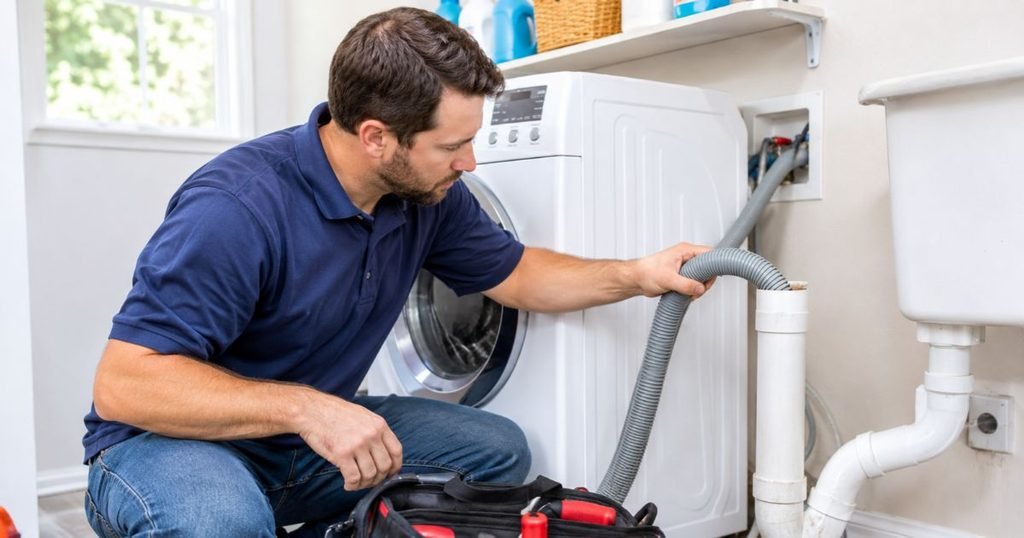
What Does a Clogged Washing Machine Drain Mean?
To understand why a washing machine drain clogged problem occurs, it helps to look at how wastewater travels out of your appliance and into your home’s plumbing network. Every time your washing machine runs a cycle, it pumps out dozens of gallons of water laden with laundry detergent residue, fabric softener, loose lint, hair, pet fur, and dirt particles.
During the drain cycle, the washer’s internal drain pump forces this wastewater up through an internal hose, through a rubber or corrugated drain hose connected to the back of the machine, and over into an upright vertical pipe known as the laundry standpipe. From the standpipe, the water flows downward into your home’s branch drain lines, eventually meeting the main sewer stack and exiting your property.
When a blockage occurs, it can happen in two distinct zones:
- The Appliance Drainage System: This includes the washer’s internal drain pump, the pump filter (if present), and the flexible external drain hose. Problems here are typically handled by appliance technicians or DIYers comfortable with tools.
- The Household Plumbing System: This includes the vertical standpipe, the P-trap beneath the floor or behind the wall, branch drain pipes, and the main sewer line. Problems here require plumbing expertise.
Identifying where the blockage lives is the most critical step in solving the problem efficiently and avoiding wasted time and effort.
READ MORE: Washing Machine Takes Too Long to Fill? Causes & DIY fixes
Common Signs Your Washing Machine Drain Is Clogged
Recognizing the early indicators of a drainage issue can save you from costly water mitigation and emergency plumbing bills. Here are the most frequent warning signs that your washing machine drainage system is compromised:
- Washing machine not draining completely: The cycle finishes, but you open the door or lid to find water still sloshing around inside.
- Water remaining inside the drum: Standing water refuses to recede, even after waiting several minutes or attempting to cancel and reset the cycle.
- Washer draining very slowly: The machine eventually empties, but the drain cycle takes twice as long as normal because water is bottlenecking somewhere in the path.
- Water backing up into a utility sink: If your washing machine shares a drain line or sits adjacent to a laundry utility sink, wastewater may overflow into the sink when the washer pumps out.
- Water overflowing from the standpipe: Water spills out of the top of the vertical PVC pipe where the washer’s drain hose is inserted, signaling that water is entering the pipe faster than it can escape.
- Gurgling sounds from the laundry drain: Bubbling or gurgling noises indicate trapped air in the plumbing lines caused by a partial obstruction restricting water flow.
- Unpleasant sewer or musty odors: Debris, organic matter, and stagnant water trapped in hoses or lines create foul smells that permeate the laundry room.
- Clothes coming out excessively wet: Because the final spin cycle relies on effective water removal, a clogged drain prevents proper spinning, leaving garments soaked and heavy.
- Washer stopping during the drain or spin cycle: Modern washing machines feature built-in safety controls that will pause or throw an error code if they detect that water cannot be evacuated within a designated time frame.
Each of these symptoms points toward specific restrictions within either the machine’s components or your home’s drainage plumbing.
READ MORE: How to Clean Lint From Washing Machine Drain Hose: Step-by-Step
What Causes a Washing Machine Drain to Clog?
Understanding the root cause of a blockage helps you select the correct remedy. Below are the primary culprits behind a washing machine drain clogged scenario.
Lint and Fabric Fibers Accumulating Inside the Drain System
Every load of laundry sheds microscopic fabric fibers and lint. While the washing machine’s tub holes and drain pump filter catch larger particles, finer lint mixes with soap scum and coats the interior walls of drain hoses and household pipes over time, gradually narrowing the pathway until water can no longer pass freely.
Hair and Pet Fur Blocking the Drain
If you wash pet bedding, blankets covered in animal fur, or heavily soiled garments, loose hair and pet fur will shed into the wash water. Hair acts like a net, catching lint, detergent residue, and dirt, forming dense clumps that quickly choke narrow drain hoses and P-traps.
Coins, Buttons, Socks, and Other Small Objects
Coins left in pockets, loose buttons, collar stays, drawstrings, and even baby socks frequently slip past the washing machine’s agitator or drum baffles. These objects can wedge themselves inside the drain pump, lodge tightly in the corrugated drain hose, or block the entry point of the laundry standpipe.
A Clogged or Kinked Washing Machine Drain Hose
The flexible hose connecting the back of your washing machine to the standpipe is vulnerable to physical deformation. If the washing machine vibrates excessively during high-speed spin cycles and shifts position, the drain hose can become sharply kinked, pinched, or crushed against the wall, severely restricting water flow.
A Dirty or Blocked Washer Pump Filter
Many front-load washing machines feature a built-in coin trap or drain pump filter located behind a small access panel near the bottom front of the unit. Over months of use, this filter accumulates lint, coins, hairpins, and grit. When the filter becomes completely packed, water cannot reach the pump, halting drainage entirely.
A Malfunctioning or Obstructed Drain Pump
The drain pump is the mechanical heart of your washer’s drainage system. If foreign debris slips past the pump guard and jams the impeller blades, or if the pump motor burns out due to electrical wear or overheating, the machine will be physically unable to push wastewater out.
Soap Residue and Excessive Detergent Buildup
Using too much liquid detergent or traditional high-sudsing soap in a modern High-Efficiency (HE) washing machine creates thick, glue-like soap scum. This residue coats the inside of drain lines, binding loose lint and minerals together into a rock-hard buildup that restricts water movement.
A Clogged Laundry Standpipe
The vertical PVC pipe behind your washing machine can develop localized clogs. Over time, hair, lint, and detergent sludge settle in the lower bend or P-trap of the standpipe. When the washing machine pumps water into the pipe, it backs up and overflows immediately.
Blockages in the Main Household Drain Line
If the clog is located further down the line such as in the main branch drain or sewer stack it will affect not just the washing machine, but potentially neighboring plumbing fixtures like toilets, showers, or bathroom sinks.
Improper Drain Hose Installation
If a drain hose is pushed too far down into the standpipe (touching the bottom or the trap curve) or if it is installed improperly without a proper siphon break, it can cause drainage issues or even create a self-siphoning effect that drains the washer prematurely. Always consult your specific manufacturer’s installation instructions for correct hose placement.
READ MORE: How to Plumb a Washing Machine Drain — Step-by-Step DIY Guide
Washing Machine Drain Hose vs. Household Drainpipe:
Before attempting any troubleshooting, it is essential to distinguish between the flexible hose attached to your machine and the rigid plumbing pipe built into your home’s wall or floor.
| Feature | Washing Machine Drain Hose | Household Drainpipe (Standpipe / P-Trap) |
| Location | External flexible hose connecting the rear of the washer to the wall outlet. | Rigid PVC pipe and P-trap integrated into the home’s framing and plumbing system. |
| Main Purpose | Conveys wastewater from the internal pump to the household plumbing. | Carries wastewater away from the laundry area to the main sewer line. |
| Common Blockage Causes | Kinks, internal lint accumulation, trapped coins, or pinched routing. | Lint buildup, hair clogs, soap scum, grease, or main sewer line roots. |
| Warning Signs | Leaks behind the machine, slow drainage, localized pooling. | Standpipe overflowing, gurgling drains, water backing up into sinks. |
| Basic Troubleshooting | Straighten hose, inspect for pinches, detach and flush with water. | Inspect standpipe level, use a manual drain snake or hand auger. |
| Professional Help Needed | If the hose is torn, degraded, or improperly sized by the manufacturer. | If clogs are deep in the wall, recurring, or tied to main sewer backups. |
How to Unclog a Washing Machine Drain (Step-by-Step DIY Guide)
If you are experiencing a washing machine drain clogged issue, follow these step-by-step instructions to troubleshoot and resolve the problem safely. Always consult your washer manufacturer’s owner manual before servicing internal parts.
Step 1: Turn Off the Washing Machine and Disconnect Power
Safety is paramount. Never work on an energized appliance, especially when standing water is present on the laundry room floor. Unplug the washing machine power cord from the electrical wall outlet completely before touching hoses, filters, or panels.
Step 2: Turn Off the Water Supply
Before moving the appliance or disconnecting any hoses, turn off the hot and cold water supply valves located on the wall behind the washing machine. This prevents accidental leaks or pressure blowouts while you work.
Step 3: Check the Drain Hose for Kinks and Blockages
Carefully pull the washing machine forward just enough to access the rear connections.
- Inspect the flexible drain hose from end to end. Look for sharp bends, pinches, or heavy crushing caused by the machine vibrating against the wall.
- If the hose appears kinked, gently straighten it.
- If you suspect debris is trapped inside, place a shallow pan or towels beneath the hose connection, disconnect the hose from the standpipe, and check for blockages. You can take the hose outside and flush it thoroughly with a garden hose to clear trapped lint.
Step 4: Check the Washing Machine Drain Pump Filter
If your washing machine is a front-load model equipped with an accessible cleanout filter (consult your owner’s manual to verify if your specific model has one):
- Locate the small service door near the bottom corner of the machine front.
- Place a shallow baking dish or flat pan and several old towels directly beneath the panel to catch the residual water trapped in the drum.
- Slowly open the small emergency drain tube or unscrew the filter plug a quarter-turn at a time to let water trickle out in a controlled manner.
- Once drained, remove the filter entirely, clear out accumulated hair, coins, lint, and debris, rinse it under running water, and screw it back in tightly.
Step 5: Inspect the Laundry Standpipe
If the hoses and pump filter are completely clear, the blockage is likely in your home’s plumbing.
- Remove the washing machine drain hose from the vertical PVC standpipe.
- Shine a flashlight down the pipe to check for visible obstructions, lint buildup, or soap sludge near the opening.
- If standing water is visible inside the standpipe, the P-trap or branch line is blocked.
Step 6: Check the Utility Sink and Nearby Drain
Observe whether a nearby laundry utility sink or floor drain is draining slowly or backing up. If multiple laundry-area fixtures are draining sluggishly, the clog is situated deeper in the shared branch drain line rather than a single standalone pipe.
Step 7: Run a Test Drain Cycle
Once you have cleared any visible kinks, cleaned the hose, or removed blockages from the pump filter, reassemble all components securely. Plug the washing machine back in, turn on the water supply valves, and run a short rinse-and-drain or spin test cycle with an empty drum. Monitor the area closely for leaks or overflows.
READ MORE: Main Sewage Line Clogged: Signs, Causes & Solutions
How to Unclog a Washing Machine Standpipe
When a washing machine drain clogged issue stems from the vertical standpipe, homeowners must exercise patience to avoid damaging their home’s plumbing infrastructure.
A washing machine standpipe is a vertical PVC pipe typically 1.5 to 2 inches in diameter designed to handle the high-volume surge of water pumped out by modern washers. If water overflows the top of this pipe during a drain cycle, it means the water cannot pass through the P-trap fast enough.
To address a clogged standpipe:
- Remove the drain hose from the standpipe opening.
- Determine if water drains freely by pouring a bucket of warm water down the pipe (if the P-trap is only partially blocked, water may back up immediately).
- Use a hand-operated drum auger (drain snake). Feed the flexible steel cable gently into the standpipe opening until you feel resistance at the P-trap curve. Turn the crank handle clockwise while applying gentle pressure to break through or hook the blockage (such as dense lint mats or clumped hair).
- Avoid damaging PVC drainpipes. Never use excessive force or heavy commercial mechanical rooters designed for main cast-iron sewer lines on fragile household PVC standpipes, as cracking the pipe behind the drywall will result in major water damage.
- Call a licensed plumber if the snake hits an immovable obstruction or if clearing the P-trap does not resolve the overflowing standpipe.
Can You Use Drain Cleaner to Unclog a Washing Machine Drain?
A common temptation for homeowners facing a slow-draining washer is to pour liquid chemical drain cleaner down the drain hose or standpipe. Plumbing experts and appliance manufacturers strongly advise against this practice.
- Component Damage: Chemical drain cleaners rely on harsh caustic chemicals (like sodium hydroxide or sulfuric acid) or oxidizing agents. These chemicals generate intense heat. If poured into a washing machine drain hose, they can melt, warp, or degrade rubber seals, plastic fittings, and internal pump components.
- Severe Safety Hazards: If a chemical drain cleaner fails to clear the clog and sits stagnant in the hose or standpipe, attempting to disconnect the hose later puts you at high risk of severe chemical burns splashing onto your skin or eyes.
- Chemical Reactions: Never mix chemical drain cleaners with bleach, laundry detergent residue, or other household cleaners. Mixing products can create toxic fumes, hazardous chemical reactions, or dangerous gas emissions.
- Safer Alternatives: Rely on mechanical troubleshooting such as clearing the pump filter, straightening the drain hose, flushing lines with warm water, or using a manual drain snake.
Why Is My Washing Machine Still Not Draining After Cleaning the Drain?
If you have verified that the drain hose, pump filter, and laundry standpipe are completely clear and unobstructed, but your washing machine still refuses to drain, the problem lies within the appliance’s internal mechanical or electrical systems. Possible underlying issues include:
- Damaged or Failing Drain Pump: The pump motor may run, but internal plastic impeller blades can snap off, preventing water from being pressurized and pushed outward.
- Internal Pump Obstruction: Foreign objects (such as a stray wire underwire from a bra or a small coin) may be lodged inside the internal housing past the external filter screen.
- Faulty Lid Switch or Door Lock: Modern washing machines will not initiate or complete a drain/spin cycle if the safety mechanism fails to recognize that the door or lid is securely locked.
- Defective Control Board or Wiring: A malfunctioning electronic control board may fail to send the correct electrical voltage signal to activate the drain pump motor during the cycle.
- Incorrect Drain Hose Installation: If the drain hose is positioned improperly or inserted too deep/shallow, it can disrupt normal water pressure dynamics.
- Excessive Detergent Suds: Using non-HE detergent creates an excessive blanket of heavy suds. Sensors inside the machine detect “suds lock” and will pause or refuse to drain until the suds dissipate.
- A Deeper Household Plumbing Blockage: A restriction far down in the main building drain can prevent water from escaping even when the immediate standpipe appears clear.
Appliance mechanical issues require an experienced appliance repair technician, while persistent deep plumbing blockages require a licensed plumber.
READ MORE: Plumber for Clogged Shower Drain: When to Call & Cost
Washing Machine Drain Clogged: Front-Load vs. Top-Load Washers
Drainage behavior and maintenance requirements differ significantly depending on whether you own a front-load or top-load washing machine.
| Feature | Front-Load Washers | Top-Load Washers |
| Common Drainage Problems | Clogged coin traps/pump filters, trapped debris in rubber door gaskets, pump blockages. | Kinked drain hoses, worn drain pumps, heavy lint accumulation in standpipes. |
| Pump Filter Accessibility | Almost always equipped with an easily accessible cleanout filter behind a front bottom panel. | Rarely feature user-accessible external pump filters; debris passes directly into hoses or pump. |
| Drain Hose Inspection | Straightforward rear connection; requires checking the internal connection to the pump housing. | Simple external hose inspection; easy to disconnect and flush with water. |
| Typical Warning Signs | Error codes (e.g., OE or ND), water pooling near the front base, slow draining. | Standing water in drum, overflow at standpipe, wet clothes after final spin. |
| Basic Maintenance Requirements | Clean the front pump filter every 3 to 6 months; wipe door seals to prevent debris buildup. | Periodically inspect rear hoses, avoid overloading, and use the correct amount of HE detergent. |
When Should You Call a Professional Plumber?
Knowing when to step back and call a professional protects your home from accidental water damage and saves you from unnecessary frustration.
Call a Plumber When:
- The laundry standpipe repeatedly overflows despite cleaning attempts.
- Water backs up into your utility sink, floor drain, or nearby plumbing fixtures.
- Multiple drains in your home are slow or clogged simultaneously.
- The laundry drain produces persistent, loud gurgling sounds whenever other water fixtures are used.
- A hand-operated drain snake cannot clear the obstruction in the standpipe or P-trap.
- You suspect a collapsed, cracked, or root-infested main sewer line.
Call an Appliance Repair Technician When:
- The washing machine drain pump makes grinding, humming, or unusual electrical buzzing noises without pumping water.
- The washer refuses to drain even though the external drain hose and household standpipe are completely clear.
- The internal drain pump is cracked, leaking, or electrically defective.
- Persistent error codes relating to drainage continue appearing on the digital display.
- Internal wiring or electronic control board malfunctions prevent the pump from receiving power.
Warning: If you notice sparking, burning odors, or electrical tripping at the circuit breaker when the washer attempts to drain, unplug the machine immediately and contact a professional.
How Much Does It Cost to Fix a Clogged Washing Machine Drain in the USA?
Repair costs for a washing machine drain clogged issue vary widely depending on the root cause, whether the problem stems from the appliance or the household plumbing, and local labor rates across the United States. Below is a general cost breakdown for common interventions.
| Service Type / Repair Item | Estimated Cost Range (USD) | Primary Cost Factors |
| DIY Drain Hose Cleaning | $0 (Time only) | Cost of basic tools or towels; no professional labor required. |
| Professional Washing Machine Drain Hose Repair | $75 – $175 | Hose replacement part costs and standard service call fees. |
| Drain Pump Filter Cleaning | $90 – $150 | Service technician labor rate for troubleshooting and clearing debris. |
| Washing Machine Drain Pump Replacement | $150 – $350 | Cost of OEM replacement pump part plus professional labor. |
| Laundry Standpipe Cleaning / Snaking | $100 – $250 | Plumber hourly rates and equipment required to clear the P-trap. |
| Professional Main Drain Snaking / Hydro-Jetting | $250 – $600+ | Severity and depth of main sewer line blockages. |
| Main Sewer Line Inspection (Camera) | $300 – $600 | Specialized camera equipment and diagnostic reporting. |
Key Cost Factors to Keep in Mind:
- Location and Local Labor Rates: Plumber and technician rates vary significantly between major metropolitan areas and rural regions across the US.
- Type and Age of Washing Machine: Older appliances or high-end units may require specialized parts that increase repair expenses.
- Accessibility: Tight laundry closets, stacked units, or built-in cabinetry can increase labor time.
- Emergency Service Fees: Calling a plumber or technician on weekends, holidays, or late at night incurs higher emergency dispatch rates.
How to Prevent Your Washing Machine Drain from Clogging
An ounce of prevention is worth a pound of cure. Implementing these simple maintenance habits will keep your washing machine drainage system running smoothly for years to come:
- Empty pockets before washing clothes: Make it a strict household rule to check all pockets for coins, receipts, tissues, and small items before loading garments.
- Use the correct amount of HE detergent: Always use High-Efficiency (HE) detergent formulated for modern washers, and never exceed recommended dosage guidelines to prevent sticky soap scum buildup.
- Avoid overloading the washer: Overloading strains the motor, reduces washing efficiency, and prevents water from circulating and draining properly.
- Clean accessible pump filters regularly: If your front-load washer has a cleanout filter, set a calendar reminder to check and clean it every 3 to 6 months.
- Inspect the drain hose periodically: Check the rear of your washing machine twice a year to ensure the drain hose is securely attached, unkinked, and free of sagging loops.
- Keep the laundry standpipe clear: Avoid storing items around the standpipe opening that could accidentally fall in or obstruct airflow.
- Run monthly cleaning cycles: Use a dedicated washing machine cleaner or a hot water cycle with white vinegar and baking soda to dissolve internal detergent residue and mineral buildup.
- Remove excess pet hair before washing: Shake out pet blankets and heavily fur-covered items outdoors or use a lint roller before placing them in the machine.
- Address slow drainage early: Never ignore a sluggish drain cycle; resolve minor clogs before they harden into severe blockages.
- Schedule professional plumbing checkups: If your home has older plumbing or a history of slow lines, schedule an annual inspection with a licensed plumber.
Frequently Asked Questions
How do you unclog a washing machine drain?
To unclog a washing machine drain, first determine if the blockage is in the appliance or your home plumbing. Check and straighten the flexible drain hose, clean the washer’s front pump filter (if applicable), and inspect the laundry standpipe. If the standpipe is backed up, use a manual hand auger (drain snake) to clear obstructions in the P-trap without using harsh chemical cleaners.
Why is my washing machine drain backing up?
A washing machine drain typically backs up because wastewater is entering the household plumbing faster than it can escape. This is usually caused by a buildup of lint, hair, and soap scum inside the standpipe P-trap, or a deeper restriction in your home’s branch drain or main sewer line. Overloaded detergent suds can also restrict water flow.
Can a clogged washing machine drain cause water to overflow?
Yes, a clogged washing machine drain is one of the leading causes of laundry room flooding. When the drain hose or standpipe is blocked, the high-volume water pumped out during the spin cycle has nowhere to go, forcing it to spill out over the top of the standpipe or leak from disconnected hose fittings onto your floor.
How do I know if my washing machine drain hose is clogged?
Signs of a clogged or restricted drain hose include water pooling directly behind the washing machine, slow water evacuation during cycles, or the washer pausing with an error code. You can confirm a hose blockage by disconnecting it from the standpipe, checking for visible kinks or internal debris, and flushing it with water.
Should I call a plumber for a clogged washing machine drain?
You should call a licensed plumber if your laundry standpipe repeatedly overflows, water backs up into a utility sink or other household fixtures, or a hand auger fails to clear the blockage. If the washer pump is making grinding noises or failing mechanically, contact an appliance repair technician instead.
Final Thoughts
Dealing with a washing machine drain clogged issue can feel overwhelming, but understanding how your appliance and plumbing system work together makes troubleshooting manageable. By identifying the root cause whether it is a simple kinked hose, a lint-filled pump filter, or a blocked standpipe you can take safe, methodical steps to restore normal drainage.
Always prioritize safety by disconnecting power and water supplies before inspecting your appliance, and avoid pouring harsh chemical cleaners into your washing machine or drain pipes. Addressing slow drainage early and practicing proactive maintenance will protect your home from water damage, extend the lifespan of your appliance, and keep your laundry routine running smoothly.

