A slow-draining shower or a stubborn blockage is one of the most common and frustrating household plumbing headaches US homeowners face. While many people reach for a bottle of chemical drain cleaner or a cheap plastic zip-it tool at the first sign of trouble, these quick fixes often only mask a deeper issue. Ignoring a recurring slow-draining shower can lead to severe pipe corrosion, structural water damage, unpleasant sewer gas odors, and even catastrophic main sewer line backups that cost thousands of dollars to repair.
Understanding when you can safely tackle a minor clog with basic DIY methods and when it is time to call a licensed plumber for clogged shower drain services can save you time, stress, and unnecessary repair expenses. In this comprehensive guide, we will break down the common causes of shower clogs, warning signs that indicate a professional is needed, what a plumber to unclog shower drain actually does, realistic US pricing and costs, and how to choose the right professional for your home. Lets deep dive into “Plumber for Clogged Shower Drain: When to Call & Cost”
Why Does a Shower Drain Get Clogged?
Unlike kitchen sinks, which frequently trap grease, food particles, and coffee grounds, shower drains deal with a very specific blend of organic debris. Over time, various substances accumulate inside the drain trap and vertical or horizontal waste pipes, gradually restricting water flow until a full blockage occurs.
Here are the primary culprits behind most shower drain clogs:
- Hair Buildup: By far the most common cause of a shower drain clogged with hair. Human hair sheds naturally during washing, and when it combines with soap residue, it forms a dense, tenacious net inside the P-trap. Hair does not dissolve easily and acts like a net, catching other debris.
- Soap Scum and Shampoo Residue: Traditional bar soaps contain animal fats and hard water minerals that react to form an insoluble residue known as soap scum. This sticky substance coats the interior walls of your drainpipes, narrowing the diameter and grabbing onto loose hair and skin cells.
- Mineral Deposits from Hard Water: In many regions across the United States, hard water contains high concentrations of calcium and magnesium. Over years of use, these minerals precipitate out of the water, forming hard, crusty scale deposits inside the pipes that trap other organic waste.
- Dirt, Skin Cells, and Body Debris: Every time you shower, millions of microscopic dead skin cells, dirt, body oils, and pet dander wash down the drain. While individual particles seem harmless, they accumulate and bind with soap scum to form a thick sludge.
- Foreign Objects Accidentally Dropped: Razors, shampoo bottle caps, children’s bath toys, loofah mesh, and cotton swabs frequently slip down shower drains, creating an immediate physical barrier that catches hair and paper.
- Blockages Deeper Inside the Drainpipe: Sometimes the blockage isn’t right at the drain opening. Hair and grease can travel down into the branch drain or main stack, creating a stubborn clog far beyond the reach of standard consumer tools.
- Plumbing Vent or Drainage System Problems: If your home’s roof plumbing vent is blocked by leaves, bird nests, or debris, it can create a vacuum effect that severely slows down drainage throughout the bathroom plumbing system, mimicking the symptoms of a physical clog.
DIY vs. Professional Diagnosis: Homeowners can often successfully remove surface-level hair clogs located within the top few inches of the drain using a plastic hair snake or by cleaning the stopper. However, if the clog is located past the P-trap, involves hard scale, or stems from venting or main line issues, a professional diagnosis and specialized equipment are required.
READ MORE: Bathtub Won’t Drain? Common Causes & 10 Easy to Fixes
Signs You Need a Plumber for a Clogged Shower Drain
Not every slow drain requires an immediate emergency service call, but ignoring early warning signs can turn a minor nuisance into a major plumbing disaster. Knowing when to transition from home remedies to professional bathroom plumbing services is essential for protecting your home.
Watch out for these critical warning indicators:
- Water Drains Very Slowly: If your shower takes significantly longer to empty than it used to, or if you consistently finish your shower standing in an inch or two of water, a restriction is forming.
- Standing Water Accumulates During Showers: If water builds up faster than it escapes, forcing you to turn off the water mid-shower to let it drain, your drainage capacity is heavily compromised.
- Gurgling Sounds Come from the Drain: If you hear bubbling, gurgling, or burping noises while the shower drains—or when you flush the toilet or run the bathroom sink—it indicates trapped air escaping through the drain, often pointing to a partial vent blockage or a main line restriction.
- Unpleasant Sewage-like Odors: A foul, sulfurous, or musty smell wafting from the shower drain usually means decomposing organic matter, hair, and soap sludge are trapped in the P-trap, or worse, sewer gases are escaping because the P-trap has dried out or experienced siphonage.
- Water Backs Up into the Shower or Nearby Fixtures: If turning on the bathroom sink or flushing the toilet causes water to bubble up through your shower drain, you are dealing with a severe downstream blockage in your primary drainage stack.
- Repeated Clogs Despite DIY Cleaning: If you clear the drain every week with a plunger or chemical cleaner only for the clog to return within days, the root cause has not been resolved.
- Multiple Bathroom Fixtures Slow Down Simultaneously: If your shower, bathtub, and sink are all draining sluggishly at the same time, the problem is almost certainly located in the main branch drain, requiring professional intervention.
What Does a Plumber Do to Unclog a Shower Drain?
When you hire a licensed professional for professional shower drain cleaning, they do not simply guess at the problem. Instead, they follow a systematic, methodical diagnostic and remediation process to ensure the plumbing is fully restored without damaging your pipes.
Here is what you can expect during a professional service call:
- Initial Inspection and Discussion of Symptoms: The plumber starts by asking about your drainage history, how long the problem has persisted, and whether other fixtures are affected.
- Checking the Shower Drain and Accessible Plumbing: They examine the visible drain cover, strainer, and accessible under-sink or crawlspace/basement plumbing (if applicable) to evaluate the pipe material (PVC, ABS, cast iron, or copper) and age.
- Identifying Location and Cause: By assessing water behavior and plumbing layout, the plumber determines whether the clog is localized in the P-trap, the branch line, or the main sewer line.
- Removing Accessible Hair and Debris: For clogs near the top, the plumber removes the stopper or drain grid and physically pulls out compacted hair and soap buildup using professional-grade retrieval tools.
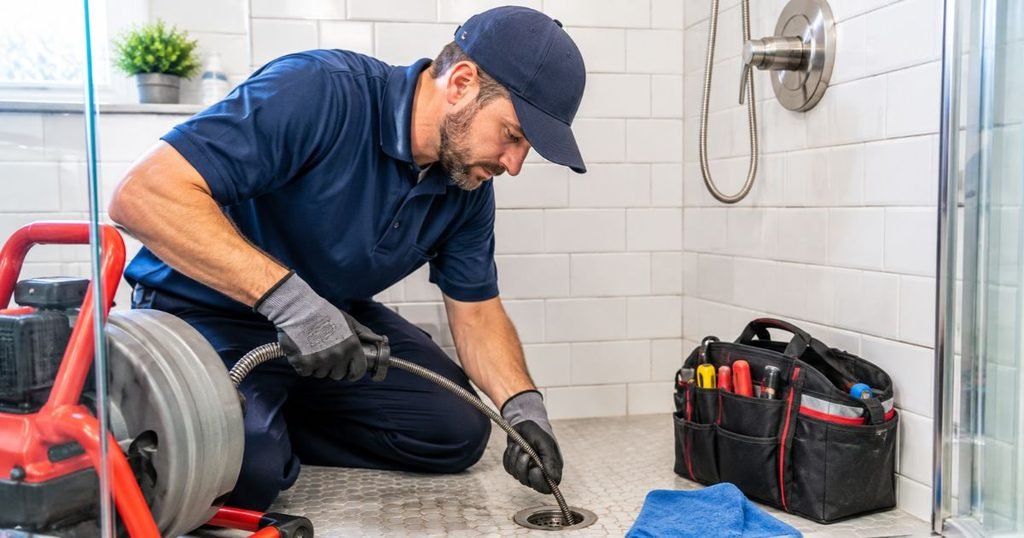
- Using a Professional Drain Snake or Auger: For deeper clogs, the plumber feeds a motorized cable auger with specialized cutting heads down the drainpipe. Professional drain snaking breaks through dense root intrusions, compacted hair masses, and soap scale, clearing the pipe walls effectively.
- Hydro Jetting When Suitable: For severe grease, mineral scale, or recurring buildup in older pipes, high-pressure water jetting (hydro jetting) scours the interior of the pipes clean, washing away all accumulated debris.
- Camera Inspection for Stubborn Issues: If a clog repeatedly returns or the plumber suspects a collapsed, cracked, or misaligned pipe, they insert a flexible fiber-optic sewer camera to inspect the interior of the drain line in real time.
- Testing Drainage After Service: Finally, the plumber runs hot water through the system, verifies rapid and smooth drainage, and cleans up the work area completely.
READ MORE: How to Fix Clogged Drains: DIY vs Professional Repair
DIY Shower Drain Cleaning vs. Hiring a Professional Plumber
Homeowners often debate whether to attempt fixing a slow drain themselves or call a professional shower drain cleaning service. Below is a helpful comparison table outlining the effectiveness, risks, and appropriate use cases for various methods.
| Cleaning Method / Tool | Effectiveness Level | Risk of Pipe Damage | Best Used For |
| Hair Removal Tools (Plastic Zips) | Moderate | Low | Surface hair clogs in the top 6–12 inches of the drain. |
| Drain Strainers (Prevention) | High (Preventative) | None | Keeping hair and debris out of the drain opening. |
| Manual P-Trap Cleaning | High (if accessible) | Low to Moderate | Accessible under-sink or exposed bathtub/shower traps. |
| Cup Plungers & Toilet Plungers | Moderate | Low | Dislodging soft, loose clogs right near the drain opening. |
| Professional Drain Snakes (Augers) | High | Low (when used correctly) | Stubborn, compacted clogs located deep within branch lines. |
| Hydro Jetting | Extremely High | Low (requires pipe assessment) | Heavy grease, mineral scale, and severe buildup in main lines. |
| Professional Camera Inspection | Diagnostic (100%) | None | Locating structural breaks, roots, or chronic mystery clogs. |
Essential Safety Advice for DIY Plumbing
Before attempting any DIY drain cleaning, keep these critical safety rules in mind:
- Never Mix Chemical Drain Cleaners: Combining different chemical drain openers (such as bleach, ammonia, or commercial acid-based cleaners) can trigger violent chemical reactions, releasing toxic chlorine gas or causing explosive splattering.
- Read Product Labels Carefully: If you choose to use a commercial liquid cleaner as a last resort, follow manufacturer instructions precisely and wear protective eyewear and gloves.
- Beware of Standing Chemicals: Never use a plunger or mechanical drain snake if chemical drain cleaner is sitting in the drain. Plunging can splash corrosive liquid onto your skin, eyes, and bathroom surfaces.
- Know When to Stop: If a plunger or hand snake does not clear the clog within a few attempts, or if you notice water leaking around your fixtures or backing up into other rooms, stop immediately and call an emergency plumber for clogged shower drain issues.
READ MORE: Safe Enzyme Drain Cleaners — The Eco-Friendly Way to Keep Drains Clear
How Much Does a Plumber Charge to Unclog a Shower Drain?
Understanding the cost to hire a plumber for a clogged shower drain helps you budget appropriately and avoid sticker shock. Plumbing prices vary based on geographic location, labor rates, the time of day, and the severity of the blockage.
Typical Cost Breakdown in the United States
- Service Call / Diagnostic Fee: Most plumbers charge a standard dispatch fee just to come to your home, inspect the issue, and provide an estimate. This typically ranges from $75 to $250, which is sometimes waived if you approve the repair work.
- Basic Shower Drain Unclogging: Clearing a straightforward hair clog right at the drain opening or P-trap generally costs between $125 and $250.
- Professional Drain Snaking: Snaking a branch line or deeper shower drain using a motorized auger typically ranges from $150 to $350.
- Complex Blockage Removal: If the clog requires dismantling fixture traps, clearing multi-story stacks, or addressing difficult access points, prices can range from $250 to $500+.
- Hydro Jetting Services: High-pressure water jetting for severe scale or grease blockages usually costs between $350 and $800+ depending on line length and accessibility.
- Sewer Camera Inspection: Adding a video camera inspection to diagnose recurring or mysterious clogs generally costs an additional $250 to $500.
- Emergency / After-Hours Callouts: Calling an emergency plumber for clogged shower drain situations during nights, weekends, or holidays typically incurs premium hourly rates or emergency dispatch fees ranging from $250 to $500+ on top of standard repair costs.
Cost Comparison Table
| Plumbing Service Type | Estimated US Price Range | Factors Affecting Cost |
| Service Call / Dispatch Fee | $75 – $250 | Geographic region, company size, time of day. |
| Basic Drain Unclog / P-Trap Cleaning | $125 – $250 | Accessibility, severity of hair/soap buildup. |
| Standard Drain Snaking (Augering) | $150 – $350 | Length of pipe, cable size required, stubbornness of clog. |
| Hydro Jetting | $350 – $800+ | Pipe diameter, length, severity of scale/grease. |
| Video Camera Inspection | $250 – $500 | Equipment sophistication, recording requirements. |
| Emergency / After-Hours Surcharge | $250 – $500+ | Night, weekend, or holiday dispatch. |
Pro Tip for Homeowners: Always request a clear, itemized written estimate before authorizing your plumber to begin work. A reputable professional will explain the pricing structure transparently and alert you to any potential complications before proceeding.
When Is a Clogged Shower Drain an Emergency?
While a slow-draining shower is annoying, certain symptoms elevate the situation from a standard maintenance chore to an urgent plumbing emergency that requires immediate professional dispatch.
Contact an emergency plumbing service immediately if you experience:
- Wastewater or Raw Sewage Backing Up: If blackish, foul-smelling water or sewage begins bubbling up into your shower pan, bathtub, or toilet, your main sewer line is severely blocked or compromised. This poses an immediate health hazard.
- Active Water Overflow and Property Damage: If water is overflowing the shower threshold and soaking bathroom subfloors, drywall, or ceiling finishes in rooms below, turn off your main water supply (if applicable) and call an emergency plumber right away.
- Multiple Fixtures Failing Simultaneously: When sinks, toilets, and showers throughout the bathroom or home back up at the same time, it points to a total blockage in the main building drain.
- Suspected Structural Pipe Failure: If you notice wet spots on ceilings below the bathroom, foul sewer smells accompanied by wall dampness, or a sudden drop in water pressure alongside drainage failure, pipes may be cracked or broken.
READ MORE: How to Clean Lint From Washing Machine Drain Hose: Step-by-Step
How to Choose the Right Plumber for a Clogged Shower Drain
Finding a trustworthy, competent plumber gives you peace of mind and ensures quality workmanship. When searching for local bathroom plumbing services, use this practical hiring checklist:
- Verify State and Local Licensing: Ensure the plumbing contractor holds an active, valid state or local plumbing license. Licensing guarantees they have passed rigorous testing and possess proper training.
- Check Insurance Coverage: Verify that the plumber carries both general liability insurance and workers’ compensation insurance to protect your property and workers in case of an accident.
- Read Recent Customer Reviews: Look at independent review platforms (Google, Yelp, Better Business Bureau) to gauge customer satisfaction and reliability.
- Ask About Experience: Inquire whether they specialize in residential drain cleaning, shower blockages, and trenchless or camera diagnostics.
- Request Upfront Estimates: Avoid contractors who refuse to provide pricing guidelines or refuse to give written estimates before starting work.
- Inquire About Inspection and Testing: Make sure the technician tests the drainage system thoroughly and cleans up the work area before leaving.
- Understand Emergency and Warranty Policies: Ask if they offer a workmanship warranty or guarantee on their drain-cleaning services (e.g., a 30-day clog-free guarantee).
- Beware of High-Pressure Sales Tactics: Avoid dishonest contractors who claim your entire plumbing system must be replaced immediately without showing you camera footage or offering logical repair alternatives.
How to Prevent Shower Drain Clogs in the Future
The best way to deal with a clogged shower drain is to stop clogs from forming in the first place. Adopting a few simple maintenance habits can keep your bathroom plumbing flowing smoothly for years to come:
- Install a Quality Hair Catcher: Invest in a silicone or stainless-steel mesh drain hair catcher that sits over your drain opening. It captures loose hair before it enters the P-trap without significantly slowing down water flow.
- Remove Visible Hair After Every Shower: Make it a quick habit to wipe away trapped hair from the hair catcher or drain grate after your shower and toss it into the trash can.
- Flush the Drain Regularly: Once a month, pour a kettle of boiling water down the drain (if you have metal or PVC pipes; avoid boiling water with older ABS pipes if manufacturer guidelines advise against it, or use very hot tap water mixed with baking soda and vinegar) to help dissolve minor soap residue.
- Avoid Washing Excess Debris Down: Never wash pet hair, mud, heavy clay masks, or excessive bath salts down the shower drain.
- Maintain a Bathroom Cleaning Routine: Clean your shower floor, tub walls, and drain cover weekly with non-abrasive cleaners to prevent soap scum accumulation.
- Address Slow Drainage Early: The moment you notice your shower draining slightly slower than normal, take action immediately with a gentle hair tool or professional cleaner before a dense plug forms.
- Schedule Periodic Professional Maintenance: If your household includes multiple long-haired residents, consider booking an annual professional drain cleaning service to keep branch lines pristine.
Frequently Asked Questions
How much does a plumber charge to unclog a shower drain?
Basic shower drain unclogging typically costs between $125 and $350, depending on whether the clog is easily removed from the P-trap or requires professional drain snaking further down the branch line. Additional fees may apply for camera inspections or emergency service hours.
When should I call a plumber for a clogged shower drain?
You should call a professional plumber if DIY methods (like plunging, hair snakes, or boiling water) fail to clear the blockage, if the clog keeps returning repeatedly, if you hear loud gurgling sounds, or if water backs up into multiple bathroom fixtures simultaneously.
Can a plumber remove hair from a clogged shower drain?
Yes. Removing hair clogs is one of the most common tasks residential plumbers perform. They use specialized tools, motorized augers, and professional extraction techniques to pull dense hair masses out of shower traps and pipes completely.
How long does it take a plumber to unclog a shower drain?
For most standard shower clogs, a professional plumber can complete the diagnosis, snaking, and drainage testing within 30 to 60 minutes. More complex blockages involving hydro jetting or sewer camera inspections may take 1 to 2 hours.
Is a clogged shower drain a plumbing emergency?
An ordinary slow-draining shower is a standard maintenance issue, not an emergency. However, if raw sewage is backing up into your shower, water is overflowing and damaging your home, or multiple fixtures are blocked at once, it becomes an urgent plumbing emergency requiring immediate professional assistance.
Final Thoughts:
Dealing with a sluggish shower or standing water is never how anyone wants to start or end their day. While minor surface hair clogs can often be managed with simple DIY tools and preventative strainers, stubborn, recurring, or deep-seated blockages require professional expertise and specialized equipment.
Hiring a qualified plumber for clogged shower drain issues ensures that the root cause of the blockage is safely identified and resolved without risking damage to your home’s plumbing infrastructure. By addressing drainage problems early, investing in routine maintenance, and calling a trusted local professional when DIY methods fall short, you can protect your home, extend the lifespan of your pipes, and enjoy a hassle-free shower experience every single day.

