Knowing how plumbing companies operate and how to separate qualified, reputable contractors from overpriced or unlicensed operators protects your home’s water system, keeps your household safe, and prevents small repair bills from snowballing into five-figure structural water damage.
Modern plumbing networks rely on pressurized potable water lines, gravity-fed drainage and venting pipes, backflow preventers, and gas or electric heating appliances that must meet strict local building codes. Partnering with the right local plumbing company ensures repairs are diagnosed accurately, completed with code-compliant materials, and backed by legitimate insurance and workmanship warranties. Lets deep dive into “Plumbing Companies: How to Choose the Right Plumber”
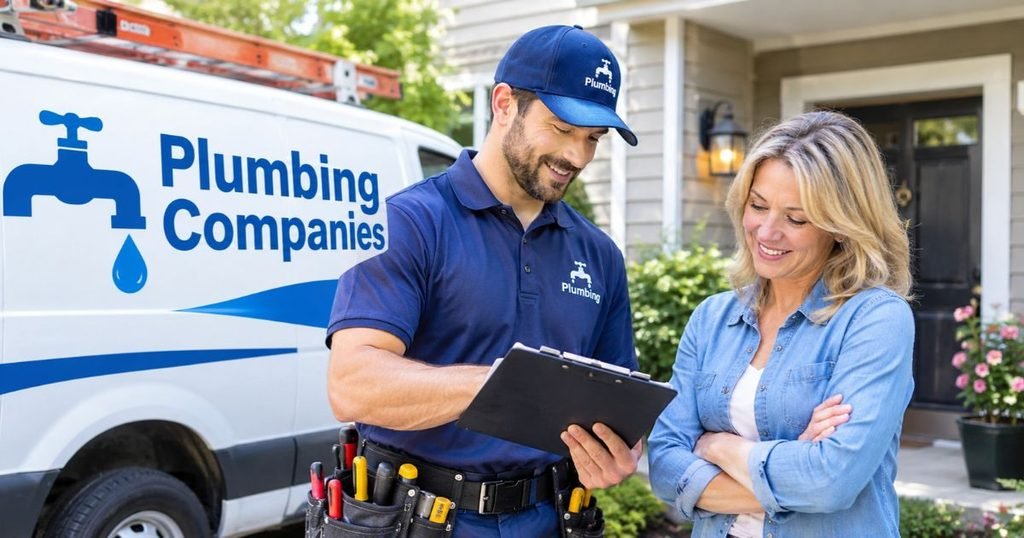
What Is a Plumbing Company?
A plumbing company is a licensed trade business that installs, maintains, inspects, and repairs piping systems, fixtures, drainage networks, and water heating equipment in residential, commercial, or industrial buildings. Unlike a general handyman who handles minor cosmetic tasks, professional plumbing contractors specialize in the mechanical systems that bring clean water into a property, remove wastewater safely, and where permitted by local trade rules service residential fuel-gas piping.
Behind the scenes, established plumbing businesses operate with a structured team. Depending on the size of the company, operations typically include dispatchers and customer service coordinators, warehouse or fleet managers who keep service vans stocked with common valves, fittings, and replacement parts, and field technicians at varying licensing tiers:
- Apprentice Plumbers: Entry-level technicians training under the direct supervision of experienced plumbers while completing classroom instruction.
- Journeyman Plumbers: Licensed tradespeople who have passed state or municipal exams and can perform installations and repairs independently.
- Master Plumbers: Senior plumbing professionals who hold the highest trade credential in their jurisdiction, often responsible for pulling building permits, designing complex piping layouts, and overseeing company compliance.
While an independent plumber usually works solo or with a single helper out of one truck, a plumbing company maintains multiple service vehicles, administrative support, specialized diagnostic machinery, and broader scheduling capacity.
READ MORE: Commercial Plumbing Services: Complete Guide for Businesses
What Services Do Plumbing Companies Offer?
Full-service plumbing contractors handle everything from swapping out a worn washer to repiping an entire house. Understanding how companies categorize their work helps you describe your issue clearly and confirm you are calling the right specialist.
Plumbing Repair Services
Everyday wear, mineral buildup, shifting soil, and freezing temperatures eventually degrade household pipes and fixtures. Core plumbing repair services include:
- Leaking pipes and faucets: Fixing corroded copper joints, failing PEX crimps, worn cartridge valves, and dripping outdoor hose bibbs before moisture causes mold or wood rot.
- Burst and damaged pipes: Replacing split supply lines caused by winter freezes, excessive water pressure, or physical impact.
- Running toilets: Replacing faulty flappers, fill valves, flush valves, or cracked wax rings that waste hundreds of gallons of water per week.
- Low water pressure: Diagnosing clogged aerators, failing pressure-reducing valves (PRVs), partially closed shutoff valves, or severely scaled galvanized steel pipes.
- Drain and sewer problems: Resolving sluggish sink drains, gurgling toilets, and recurring wastewater backups.
Drain Cleaning and Sewer Services
Standard chemical drain cleaners from a hardware store rarely clear deep blockages and can damage older pipes. Professional drain and sewer work covers:
- Clogged kitchen and bathroom drains: Using mechanical augers (drain snakes) to clear grease, soap scum, hair, and foreign objects from branch lines.
- Main sewer line blockages: Clearing tree root intrusion, collapsed pipe sections, or heavy debris in the main lateral running from the house to the municipal sewer or septic tank.
- Hydro jetting: Scouring the interior walls of drain and sewer pipes using high-pressure water streams to remove hardened grease, scale, and root fibers.
- Sewer camera inspections: Feeding a waterproof fiber-optic camera through cleanouts to pinpoint exact pipe damage, bellies, or root entry without digging up the yard.
- Sewer line repair and replacement: Performing traditional trench excavation or trenchless rehabilitation methods, such as cured-in-place pipe (CIPP) lining and pipe bursting.
Water Heater Services
Water heaters work every day and account for a substantial share of household energy use. Professional technicians service both storage-tank and on-demand units:
- Traditional tank water heater repair: Replacing failed heating elements, thermostats, thermocouples, gas control valves, and temperature-and-pressure (T&P) relief valves.
- Tankless water heater installation: Sizing, venting, and installing high-efficiency on-demand units, including upgrading gas lines or electrical circuits when required.
- Water heater maintenance: Flushing sediment from storage tanks, inspecting or replacing sacrificial anode rods, and descaling tankless heat exchangers.
- Water heater replacement: Safely disconnecting, hauling away, and replacing aging tanks typically every 8 to 12 years in compliance with local seismic strapping, expansion tank, and venting codes.
Plumbing Installation Services
Whether you are remodeling a bathroom or upgrading outdated fixtures, plumbing installation services include:
- Toilets and faucets: Installing standard, comfort-height, or dual-flush toilets along with touchless, pull-down, or widespread faucets.
- Kitchen and bathroom sinks: Mounting undermount, drop-in, farmhouse, and vessel sinks, plus garbage disposals and water filtration systems.
- Shower and bathtub fixtures: Installing pressure-balanced mixing valves, rain showerheads, freestanding tubs, and accessible walk-in shower drains.
- Water supply lines: Repiping aging galvanized or polybutylene supply networks with modern PEX or Type L copper tubing.
- New plumbing systems: Designing and roughing in complete drain-waste-vent (DWV) and potable water layouts for home additions, basement bathrooms, and accessory dwelling units (ADUs).
Emergency Plumbing Services
Water damage escalates by the minute. Many local plumbing companies offer 24-hour plumbing services for urgent situations that threaten property or sanitation:
- Burst pipes: Rapid shutoff, containment, and pipe repair when pressurized water is actively flooding walls, ceilings, or basements.
- Severe water leaks: Stopping major leaks at main shutoff valves, water heater tanks, or slab-embedded lines.
- Sewer backups: Clearing raw sewage backing up into floor drains, tubs, or downstairs toilets.
- Overflowing toilets: Resolving severe blockages when a single household toilet overflows or multiple fixtures back up simultaneously.
- Sudden water heater failures: Addressing leaking tanks or complete loss of hot water in occupied homes or rental properties.
Commercial Plumbing Services
Commercial properties operate under heavier usage loads and stricter health and accessibility regulations than single-family homes:
- Office and retail plumbing: Maintaining multi-stall restrooms, sensor-operated flushometers, drinking fountains, and backflow prevention assemblies.
- Restaurants and commercial kitchens: Installing and servicing grease traps, interceptors, three-compartment sinks, commercial dishwashers, and floor drains.
- Commercial water heaters: Maintaining high-capacity storage tanks, commercial booster heaters, and recirculating hot water loops.
- Large-scale drainage systems: Servicing roof drains, storm sumps, lift stations, and multi-story vertical soil stacks.
- Commercial plumbing maintenance: Providing scheduled preventive inspections, annual backflow testing, and hydro jetting to prevent business shutdowns.
READ MORE: Plumbing Inspection: Checklist, What It Includes & Cost
Different Types of Plumbing Companies
Not every plumbing business handles every type of job. Knowing how contractors specialize helps narrow your search quickly.
| Type of Plumbing Company | Primary Services Offered | Typical Customers Served |
| Residential Plumbing Companies | Fixture repairs, leak detection, water heater service, repiping, and bathroom/kitchen remodels | Homeowners, condo owners, landlords, and residential property managers |
| Commercial Plumbing Companies | High-capacity piping, backflow testing, grease interceptors, commercial restrooms, and code compliance | Restaurants, retail stores, offices, schools, medical facilities, and industrial buildings |
| Emergency Plumbing Companies | 24/7 rapid dispatch for burst pipes, active flooding, severe leaks, and urgent sewer backups | Homeowners and facility managers facing immediate, after-hours plumbing emergencies |
| Drain Cleaning & Sewer Specialists | Hydro jetting, drain snaking, sewer video inspections, root removal, and trenchless sewer line repair | Properties with recurring clogs, aging sewer laterals, or heavy tree root intrusion |
| New Construction Plumbing Contractors | Blueprint reading, underground rough-ins, top-out piping, gas piping, and final fixture trim-out | Custom home builders, general contractors, and commercial developers |
| Full-Service Plumbing Companies | Comprehensive repairs, drain cleaning, water heaters, installations, maintenance plans, and 24/7 emergency response | Residential homeowners, multi-family properties, and light commercial businesses |
READ MORE: 24 Hour Emergency Plumber Near Me: Urgent Plumbing Help & Costs
How to Find Reliable Plumbing Companies Near You
When water is pooling on the floor, it is tempting to click the first sponsored ad that pops up. Taking ten structured minutes to vet local plumbing companies saves money and prevents poor workmanship.
- Search for local plumbing companies: Start by looking for established businesses with a verifiable local street address in your city or metro area rather than national lead-generation call centers that simply sell your phone number to the highest bidder.
- Check state and local licensing requirements: Plumbing licensing in the United States is regulated at the state, county, or municipal level. Confirm that the contractor holds an active plumbing license valid in your specific jurisdiction.
- Verify general liability insurance and workers’ compensation: Ask for proof of general liability coverage (which protects your home if accidental water or structural damage occurs during work) and workers’ compensation insurance (which protects you from liability if a technician is injured on your property).
- Read recent customer reviews: Check Google Business Profiles, the Better Business Bureau (BBB), Nextdoor, and local neighborhood forums. Look closely at reviews from the past six to twelve months, paying attention to punctuality, cleanliness, billing transparency, and how the company handled callbacks.
- Check the company’s experience with similar plumbing problems: A contractor who excels at installing bathroom fixtures may not have trenchless sewer equipment or experience with tankless water heater descaling. Ask how frequently they handle your exact issue.
- Ask for written estimates: For non-emergency work, request an itemized written quote detailing labor, materials, diagnostic fees, and warranty terms before any tools come out.
- Compare service charges and warranties: Look beyond the headline number to see whether the company uses flat-rate or hourly billing, how long parts and labor are guaranteed, and whether follow-up visits are covered.
- Confirm emergency service availability: Even if you are hiring a plumber for a routine repair today, knowing whether they offer 24-hour plumbing services for existing customers helps you build a long-term relationship.
- Ask about permits and inspections when required: Major jobs such as water heater replacements, sewer line replacements, gas line extensions, and whole-home repiping often require municipal permits and city inspections under local building codes.
What Should You Look for When Hiring a Plumbing Company?
Reputable plumbing contractors in the USA share clear operational traits that homeowners can verify independently rather than taking marketing slogans at face value.
- Proper licensing and qualifications: Never rely solely on a badge printed on a website. Most state plumbing boards, state departments of labor and licensing, or municipal building departments maintain free online license lookup portals where you can search a contractor’s name or license number to confirm active status and check for disciplinary actions.
- Insurance coverage: Request a current Certificate of Insurance (COI) sent directly from the company’s insurance broker, especially for larger remodeling, repiping, or excavation projects.
- Experienced plumbing technicians: Ask whether the person arriving at your home is a licensed journeyman or master plumber, or an apprentice working under supervision.
- Transparent pricing: Dependable companies explain their pricing model flat-rate vs. time-and-materials upfront over the phone and provide written authorization before starting repairs.
- Professional communication: Look for clear appointment windows, text or phone notifications when the technician is en route, and plain-English explanations of what failed and why.
- Written warranties: Quality workmanship should come with a clear written labor warranty (commonly 30 days to one year or more depending on the service) alongside manufacturer warranties on fixtures and water heaters.
- Reliable customer support: Call the company’s main phone line during business hours. A staffed local office with a physical address makes resolving warranty questions far easier than chasing a disconnected cell number.
- Appropriate tools and equipment: Well-equipped plumbers arrive with modern diagnostic tools such as high-definition sewer cameras, acoustic leak detectors, thermal imaging cameras, and hydro jetters reducing guesswork and unnecessary drywall cuts.
- Positive customer feedback: Look for consistent patterns of honesty, such as technicians telling homeowners when a fixture can be repaired for a small fee instead of pushed into a full replacement.
READ MORE: Air Conditioning Companies — Compare, Costs & How to Choose
How Much Do Plumbing Companies Charge in the USA?
Plumbing service costs across the United States vary significantly depending on your city, state, home construction, and the urgency of the repair. Because labor rates in major coastal metro areas differ dramatically from rural Midwest or Southern markets, no single nationwide price applies to every household. However, understanding how plumbing contractors structure their pricing helps you evaluate quotes fairly.
- Labor charges: Companies typically use either hourly billing or upfront flat-rate pricing. Under hourly billing, you pay for the technician’s time on site (and sometimes travel time). Under flat-rate pricing, the company charges a set price per task based on industry standard repair times, meaning you know the exact total before work starts regardless of whether the repair takes 45 minutes or two hours.
- Service call and diagnostic fees: Many companies charge a dispatch or diagnostic fee to send a stocked van and licensed plumber to your home and inspect the problem. Some waive or credit this fee toward the repair if you approve the work during the same visit.
- Parts and materials: Costs depend on pipe materials (copper is significantly more expensive than PEX or PVC), fixture brands, specialty valves, and whether the technician already carries the part on the truck or must make a supply-house run.
- Job complexity: Replacing an exposed shutoff valve in an unfinished basement takes far less labor than locating and repairing a pinhole leak embedded inside a concrete slab or behind tiled shower walls.
- Emergency and after-hours charges: Calling for nights, weekends, or major holidays typically incurs an overtime multiplier or higher emergency dispatch fee.
- Geographic location: Local cost of living, state licensing and insurance overhead, and regional building code requirements heavily influence local labor rates.
- Permit and inspection costs: When local building codes require a permit such as for water heater swaps, main water service lines, or sewer replacements municipal permit fees are added to the project invoice.
Rather than relying on generic online price averages that may not reflect your local market, ask two or three licensed local contractors to quote your specific project after inspecting the site.
Questions to Ask Before Hiring a Plumbing Company
Asking direct questions before authorizing work establishes clear expectations and eliminates surprise charges when the invoice arrives.
- Are you licensed and insured? Ask for their state or municipal plumbing license number and confirm they carry both general liability and workers’ compensation insurance.
- Do you provide written estimates? Confirm that you will receive a clear written breakdown of scope, parts, and total price before repairs begin.
- Do you charge a service or diagnostic fee? Ask how much the initial visit costs and whether that fee is applied toward the final repair bill.
- Do you offer emergency plumbing services? Find out if they handle after-hours leaks or backups and what their after-hours rates look like.
- Is your workmanship covered by a warranty? Clarify how long labor is guaranteed and what happens if a leak or clog returns within that window.
- Will you obtain the necessary permits? For water heaters, gas lines, repiping, or sewer work, verify that the contractor pulls the required municipal permits and schedules city inspections.
- Who will perform the plumbing work? Confirm whether company employees or third-party subcontractors will be inside your home.
- Are additional charges possible? Ask what unforeseen issues—such as hidden pipe corrosion behind a wall—could change the price, and require that any change orders be approved by you in writing first.
READ MORE: A&B Plumbing
Warning Signs of Unreliable Plumbing Companies
Most plumbing contractors are hardworking professionals, but aggressive sales tactics and unlicensed operators do exist. Watch out for these common red flags:
- Refusing to provide license information when required: A legitimate contractor will gladly share their license number. Evasiveness usually means they are unlicensed or working outside their permitted jurisdiction.
- No proof of insurance: If an uninsured worker floods your upstairs bathroom or gets hurt on your stairs, you could face severe financial liability.
- Unusually low estimates: Quotes dramatically lower than every other local bidder often rely on subpar materials, skipped permits, or bait-and-switch add-ons once the work is underway.
- Pressure to approve expensive repairs immediately: Be cautious of technicians who claim your entire sewer line or water heater must be replaced immediately without showing you physical evidence or sewer camera footage.
- Unclear or constantly changing pricing: Verbal guesses that keep climbing without documented scope changes signal poor business practices.
- Demanding full payment before work begins: While large installations or special-order fixtures may reasonably require a partial deposit, reputable companies do not demand 100% payment upfront for standard repairs.
- Refusing to provide written agreements: Never authorize substantial work based solely on a handshake or verbal promise.
- Poor communication and questionable reviews: A sudden wave of identical five-star reviews posted on the same day, mixed with detailed complaints about overcharging or unreturned calls, warrants walking away.
If a quote feels high-pressure or suspicious, thank the technician for their time, pay any agreed-upon diagnostic fee, and get a second opinion from another licensed local contractor.
Plumbing Company vs. Independent Plumber: Which Is Better?
Homeowners often wonder whether to hire a multi-truck plumbing company or a solo independent plumber. Both can deliver high-quality work, but each brings distinct operational strengths.
| Comparison Factor | Established Plumbing Company | Independent Plumber |
| Pricing | Often higher due to fleet, office, and insurance overhead; frequently uses standardized flat-rate pricing | Often lower hourly or project rates due to minimal business overhead |
| Service Availability | Larger technician roster allows faster same-day or next-day scheduling | Limited to one schedule; may book out days or weeks for non-urgent jobs |
| Experience & Specialization | Broad team expertise across drain cleaning, water heaters, repiping, and complex diagnostics | Deep personal craftsmanship, though capabilities depend on one individual’s specialties |
| Emergency Response | Frequently offers 24/7 on-call dispatchers and night/weekend technicians | Limited after-hours availability; if sick or on another job, you must call elsewhere |
| Equipment & Resources | Invests in expensive gear like hydro jetters, trenchless lining rigs, and leak locators | Carries standard repair tools and drain snakes; may rent specialized machinery |
| Warranty & Customer Support | Dedicated office staff and long-term business continuity to honor multi-year warranties | Personal accountability, though warranty service relies entirely on one person’s availability |
READ MORE: Should I Buy a House with Galvanized Plumbing?
How to Choose the Best Plumbing Company for Your Needs
Finding the right plumbing contractor comes down to matching the company’s strengths to your specific situation:
- Match the company to the job: Choose a drain and sewer specialist for recurring main-line backups, a residential service company for leaks and water heaters, or a commercial contractor for business facilities.
- Verify credentials before booking: Confirm active state or local licensing and active insurance coverage so your property and household are protected.
- Compare two or three written estimates: For non-emergency installations, water heater replacements, or sewer repairs, getting multiple written quotes lets you compare scope, equipment quality, and warranty terms side by side.
- Prioritize clarity and accountability over size or rock-bottom pricing: The biggest franchise with the flashiest billboards is not automatically better than a mid-sized, family-owned local plumbing company with master plumbers, transparent flat-rate pricing, and strong community reviews.
Building a relationship with a trustworthy local plumber before an emergency strikes means you already have a vetted number saved on your phone when a pipe bursts or a water heater fails.
Frequently Asked Questions
How do I find the best plumbing company near me?
Start by searching for local plumbing companies with a verified physical address in your area, then check recent customer reviews on Google and the Better Business Bureau. Verify their plumbing license through your state or municipal licensing board, confirm they carry general liability and workers’ compensation insurance, and request written estimates from two or three qualified contractors for non-emergency projects.
How much do plumbing companies charge per hour?
Hourly plumbing rates in the United States vary widely depending on your city, state, job complexity, and whether the call occurs during normal business hours or as an after-hours emergency. Many modern plumbing companies use upfront flat-rate pricing per repair task rather than hourly billing, alongside a diagnostic or service call fee, so ask each local company to explain its fee structure before scheduling.
What services do professional plumbing companies offer?
Professional plumbing companies offer leak detection and pipe repair, faucet and toilet repairs, drain cleaning, hydro jetting, sewer camera inspections, sewer line replacement, tank and tankless water heater repair and installation, fixture upgrades, whole-home repiping, preventive maintenance, commercial plumbing services, and 24-hour emergency plumbing repairs.
How do I know if a plumbing company is licensed and insured?
Ask the company directly for its state or municipal plumbing license number and request a Certificate of Insurance showing active general liability and workers’ compensation coverage. You can independently verify the license number using the online license lookup tool provided by your state plumbing board, state contractor licensing agency, or local city building department.
Is it better to hire a plumbing company or an independent plumber?
Both options can provide excellent workmanship depending on the job. An independent plumber often offers lower overhead costs and personalized attention for routine repairs and small fixture installations, while an established plumbing company typically provides faster scheduling, 24/7 emergency dispatch, specialized diagnostic equipment like hydro jetters and sewer cameras, and stronger administrative backing for warranties.
Sources and References
- U.S. Bureau of Labor Statistics (BLS): Occupational Outlook Handbook — Plumbers, Pipefitters, and Steamfitters (role definitions, licensing overview, and trade qualifications).
- U.S. Environmental Protection Agency (EPA): WaterSense Program (household leak statistics, water efficiency standards, and fixture performance).
- Federal Trade Commission (FTC): Consumer Advice — Hiring a Contractor (best practices for vetting contractors, verifying licenses and insurance, obtaining written estimates, and avoiding home repair scams).
- International Association of Plumbing and Mechanical Officials (IAPMO) & International Code Council (ICC): Uniform Plumbing Code (UPC) & International Plumbing Code (IPC) (permitting, inspection, and code-compliance standards across U.S. jurisdictions).
- Pipeline and Hazardous Materials Safety Administration (PHMSA) / U.S. Department of Transportation: Natural Gas Leak Safety Guidelines (emergency evacuation and reporting procedures for suspected residential gas leaks).

