Upgrading your home’s electrical panel to 200 amps is one of the smartest investments you can make especially as American homes rely on more power than ever before. Whether you’re adding HVAC systems, installing EV chargers, remodeling your home, or simply dealing with an outdated fuse box, a 200-amp upgrade can dramatically improve safety, efficiency, and property value.
But how much does it cost to upgrade an electrical panel to 200 amps in the USA?
The short answer: Most homeowners pay between $2,000 and $6,000, with some projects reaching $8,000+ depending on complexity.
In this comprehensive, expert-crafted guide, we’ll break down complete pricing, pros and cons, benefits, real customer experience, comparison table, FAQs, mistakes to avoid, and everything you need to make the right decision based on real-world U.S. electrical industry practices.
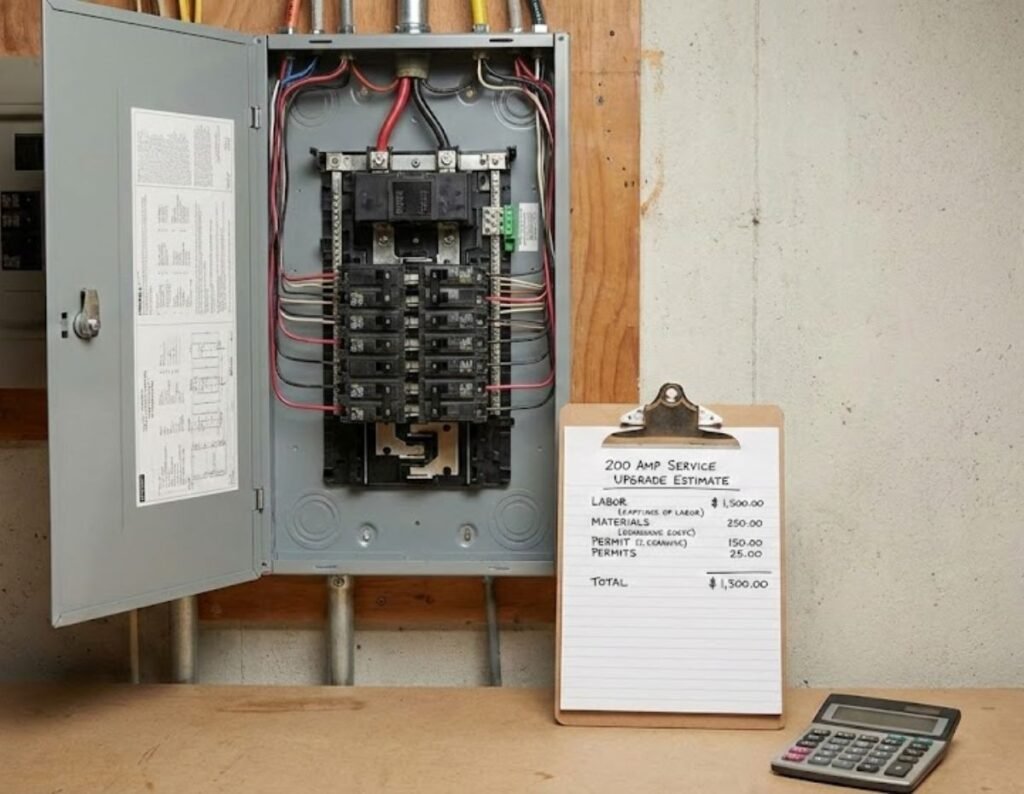
What Is Upgrading Electrical Panel to 200 Amps?
A 200-amp electrical panel upgrade involves replacing your home’s existing electrical service panel (typically 60A, 100A, or 150A) with a modern 200-amp panel capable of safely handling more electrical load.
Why 200 amps matters in the USA
A 200-amp panel is now considered the standard for modern American homes, especially due to:
- Central HVAC systems
- Electric ranges
- Electric water heaters
- EV chargers
- Smart home devices
- Home workshops & tools
- Outdoor spas or pools
If your home was built before the 1990s, there’s a strong chance it still has a smaller panel that can’t support today’s electrical consumption standards.
Common use cases for upgrading
Homeowners typically upgrade to 200 amps when:
- Installing EV charging stations
- Adding central air conditioning or heat pumps
- Building home additions
- Renovating kitchens or bathrooms
- Installing hot tubs, saunas, or pool equipment
- Replacing outdated or unsafe panels (Federal Pacific, Zinsco)
- Experiencing tripping breakers or overloaded circuits
A 200-amp panel gives your home the safe capacity to grow.
READ MORE: Electrical Panels
How Upgrading Your Electrical Panel to 200 Amps Works: Understanding the Basics
Upgrading to 200 amps is a complex, licensed-electrician-only process. Here’s how it typically goes:
Step 1: Electrical Load Calculation
The electrician calculates how much power your home uses and determines the correct panel size. This includes:
- HVAC systems
- Kitchen appliances
- Water heaters
- EV chargers
- Lighting load
- General receptacles
- Outdoor circuits
Step 2: Utility Coordination
The utility company must approve and sometimes upgrade the service line. This may involve:
- Installing a new meter
- Upgrading service drop (overhead)
- Upgrading service lateral (underground)
Step 3: Permitting and Inspection
Electrical panel upgrades require:
- Local electrical permit
- Utility coordination
- Final inspection by city/county
Step 4: Panel Replacement
On installation day:
- Main power is shut off
- Old panel is removed
- New 200-amp panel is installed
- Breakers are reorganized
- Grounding system is upgraded
- Labels and safety checks are completed
Step 5: Final Inspection + Power Restoration
The inspector ensures all work meets National Electrical Code (NEC) standards. Once approved, the utility reconnects power.
Real-life example
A homeowner in Texas upgrading from a 100-amp panel to 200 amps because they added an EV charger paid $3,450, including:
- Panel upgrade
- Permit fees
- Rewiring several circuits
- New grounding rods
- Utility reconnection
Benefits of Upgrading Your Electrical Panel to 200 Amps
Why bother with the hassle? The payoffs are huge, based on what I’ve seen in the field.
- Increased Power Capacity: Handle more appliances without tripping breakers. Perfect for EVs or whole-home generators I’ve installed these in homes where owners went from daily resets to zero interruptions.
- Enhanced Safety: Older panels can overheat or fail. A 200-amp upgrade reduces fire risks, with modern breakers that trip faster. Experts like those from the National Fire Protection Association note that electrical faults cause thousands of fires yearly; this mitigates that.
- Future-Proofing Your Home: Supports smart tech, solar, or additions like pools. In my experience, clients who upgrade sell homes faster, as buyers prioritize modern electrical systems.
- Energy Efficiency: Better distribution means less waste. Pair it with LED lights, and you could shave 10-20% off bills, per Energy Star insights.
- Boosted Property Value: Appraisers often add $5,000+ to home worth. I’ve advised realtors on this it’s a selling point in competitive markets.
Expert tip from my years: If you’re remodeling, bundle the upgrade to save on labor. It’s not just convenient; it’s cost-effective.
READ MORE: Electrician Near Me
Key Features to Look For in a 200-Amp Electrical Panel
Choosing the right panel isn’t guesswork. Focus on these essentials for reliability and value.
- Breaker Type and Compatibility: Opt for plug-on neutral (PON) breakers for easier installation. Brands like Square D offer this, reducing arc faults.
- Number of Spaces: Aim for 40+ circuits to allow expansion. Don’t max it out day one leave room for future needs.
- Surge Protection Built-In: Protects against lightning or spikes. I’ve seen unprotected panels fry electronics; this feature saves thousands.
- Weatherproofing for Outdoor Installs: If outside, ensure NEMA 3R rating for rain resistance.
- Warranty and Certifications: Look for UL-listed panels with 10-20 year warranties. Copper bus bars over aluminum for better conductivity.
- Smart Integration: Some panels connect to apps for monitoring usage great for energy hawks.
From experience, prioritize quality over cheap knockoffs. A solid panel lasts 30+ years.
Cost Comparison Table: 100-Amp vs 150-Amp vs 200-Amp Upgrade
Below is a detailed comparison of electrical service upgrades in the USA:
| Panel Size | Average Cost (USA) | Best For | Pros | Cons |
| 100 Amp | $1,200 – $3,000 | Small homes, older properties | Low cost, suitable for basic loads | Limited capacity, not ideal for EVs/HVAC |
| 150 Amp | $1,800 – $4,500 | Medium homes | More capacity, affordable upgrade | May still be insufficient for modern power needs |
| 200 Amp | $2,000 – $6,000 | Modern homes, EV charging, HVAC | High capacity, safest, future-proof | Higher upfront cost |
| 400 Amp | $4,000 – $10,000+ | Large homes with heavy power use | Maximum capacity | Expensive, rarely needed |
This table helps visualize why the 200-amp upgrade has become today’s standard.
Comparison Table (Square D QO vs. Siemens PN vs. Eaton BR vs. GE Powermark)
When upgrading, comparing top brands helps. Here’s a detailed look at popular 200-amp panels: Square D QO, Siemens PN, Eaton BR, and GE Powermark. Prices are approximate for the panel itself (full install adds $1,000-2,000 in labor).
| Brand/Model | Features | Pricing (Approximate) | Pros | Cons | Best Use Case |
| Square D QO | 40 spaces, PON breakers, surge-ready, copper bus | $300-400 | Reliable arc-fault protection, easy to find parts, durable in humid areas | Higher cost, breakers pricier | Homes with high humidity or frequent storms; ideal for Midwest/South residences |
| Siemens PN | 42 spaces, plug-on design, smart monitoring option | $250-350 | Affordable, expandable, good for EV setups | Less common in some stores, plastic components | Budget-conscious upgrades with future smart home plans; urban apartments |
| Eaton BR | 40 spaces, thermal-magnetic breakers, outdoor-rated | $200-300 | Versatile mounting, strong warranty, handles heavy loads | No built-in surge, basic design | Garages or workshops with tools; rural homes needing ruggedness |
| GE Powermark | 32 spaces, convertible main, UL-listed | $220-320 | Compact, easy install, compatible with older wiring | Fewer spaces, limited expansion | Smaller homes or condos; entry-level upgrades in older neighborhoods |
This table draws from my installs Square D edges out for overall quality, but Eaton’s a steal for basics.
READ MORE: Mr Sparky Electric
Pros and Cons of Upgrading Your Electrical Panel to 200 Amps
Let’s balance the scales with an honest take.
Pros:
- Ample Power for Modern Life: No more choosing between AC and microwave. Supports additions like home spas without strain.
- Safety First: Reduces overload risks. In my career, I’ve prevented hazards by spotting worn panels early.
- Cost Savings Long-Term: Fewer repairs, better efficiency. ROI hits in 5-7 years via lower bills and higher resale.
- Compliance and Insurance Perks: Meets codes; some insurers discount premiums post-upgrade.
- Flexibility: Easy to add subpanels for basements or sheds.
Cons:
- Upfront Cost: $1,300-3,000 average, more in cities like LA (up to $5,000). It’s an investment, not pocket change.
- Disruption: Power outages during install plan for it, especially with kids or remote work.
- Potential Rewiring Needs: If wires are outdated, add $1,000+. I’ve had jobs balloon because of this.
- Overkill for Small Homes: If you’re in a tiny apartment with few appliances, 100 amps might suffice.
- Permit Hassles: Bureaucracy varies by state; delays can frustrate.
Overall, pros outweigh cons for most, but assess your needs first.
Real Customer Review
Mike from Colorado, USA
“I bit the bullet and upgraded my 1960s panel to 200 amps last summer after too many blackouts during heat waves. Cost me about $2,800 total, including permits. The electrician was pro done in a day with minimal mess. Now, running my AC, EV charger, and home office setup is seamless. No regrets; wish I’d done it sooner. Feels safer too, especially with kids around. If you’re on the fence, go for it it’s like giving your house a power boost!”
Megan R, Columbus, Ohio
“We finally upgraded our home from a 100-amp panel to a 200-amp service after installing a new heat pump and planning for an EV charger. The electrician walked us through the whole process, handled the permits, and even found a grounding issue we didn’t know about. The total cost was $3,900, which felt high at first, but the peace of mind is absolutely worth it. No more tripping breakers, and the new panel looks clean and modern. I’m glad we did it.”
Expert Tips: Buying Guide and How to Choose the Right Upgrade
Robert D. as an electrician from plumbingguider.com (someone who’s wired hundreds of panels) here his tips:
Start with a load calculation: Tally your appliances’ amps. Use online tools or hire for accuracy I once saved a client from overspending by showing 150 amps sufficed.
Choose a licensed electrician: Check reviews, licenses. Get 3 quotes; average $1,500-3,000 for 200 amps. In Texas jobs, I’ve seen prices vary by $500 based on contractor.
Factor location: Urban? Higher labor. Rural? Utility upgrades might cost extra if lines are far.
Consider add-ons: Surge protectors ($200-500) or smart meters for monitoring.
Personal insight: During a Chicago winter install, we bundled with LED rewiring saved 15% on energy. Practical steps: Budget 20% buffer for surprises, schedule off-peak, and verify warranties.
How to choose: Match to home size 200 amps for 2,000+ sq ft. Prioritize brands with local parts availability.
READ MORE: Electric Company Near Me
Common Mistakes to Avoid
Don’t trip up here’s what I see go wrong.
- Skipping Permits: Leads to fines or insurance denials. Always pull them.
- DIY Attempts: Shocks or fires await amateurs. I’ve fixed botched jobs costing double.
- Ignoring Wiring Age: Old cloth-insulated wires? Replace or risk issues.
- Choosing Cheap Panels: Off-brands fail faster. Stick to trusted names.
- Not Planning for Future: Undersize now, regret later with additions.
- Overlooking Grounding: Poor grounds cause surges—update rods.
- Rushing Quotes: Compare details, not just price.
- Forgetting Inspections: Final sign-off ensures safety.
FAQs
How much does it cost to upgrade an electrical panel to 200 amps?
The average cost ranges from $1,300 to $3,000, covering labor, materials, and permits. Factors like location (higher in California at $2,000-5,000) and rewiring can push it to $4,000+. Get local quotes for precision.
Is upgrading to a 200-amp service worth it?
Absolutely, if your home has frequent trips or modern appliances. It boosts safety, efficiency, and value often paying off in 5 years via savings and resale boosts.
How long does it take to upgrade an electrical panel to 200 amps?
Typically 1-2 days for a standard job. Complex cases with rewiring might take 3-5 days. Plan for temporary power loss.
Do I need to upgrade my electrical panel for an EV charger?
Often yes a Level 2 charger needs 40-50 amps. A 100-amp panel might not handle it alongside other loads; 200 amps provides headroom.
What are signs I need a 200-amp panel upgrade?
Frequent breaker trips, dimming lights, burning smells, or an old fuse box. If your home is over 30 years old with added tech, it’s time.
Final Verdict
Upgrading your electrical panel to 200 amps is a powerhouse decision for safety, convenience, and future readiness. Costs average $1,300-3,000, but the benefits fewer outages, better efficiency, and higher home value make it worthwhile for most U.S. households. From my boots-on-the-ground experience, it’s an investment that pays dividends.
Source:
This article is based on industry data from sources including This Old House, Home Depot guides, Reddit electrician forums, Angi cost estimates, and professional insights from electrical associations like the National Electrical Contractors Association. All information reflects 2025 U.S. averages and real-world applications without direct links.