If your home still uses an electric fuse box, you’re not alone many houses built before the 1960s and 1970s rely on fuses rather than modern circuit breakers. This guide explains what a fuse box does, the types you might find, safety and code considerations, what common problems mean, cost and upgrade options, and how to choose a licensed electrician without encouraging any unsafe DIY work.
Quick Summary
An electric fuse box is the service device that distributes power around older homes and uses replaceable fuses to protect circuits. Fuses come in different styles (plug/screw-in, cartridge/bolt-on, service entrance fuses) and are valued for their simplicity but many are now considered outdated because they can be inconvenient, limit modern loads, and sometimes fail to meet current National Electrical Code (NEC) safety expectations.
If you notice frequent blown fuses, overheating, buzzing, rust, or a damaged panel, treat those as warning signs and call a licensed electrician do not open the panel or swap parts yourself. Upgrading to a modern circuit-breaker panel (or to new service equipment) improves reset convenience and often provides better compatibility with today’s appliances, AFCI/GFCI requirements, and higher load demands.
Replacement costs vary widely depending on panel size, service capacity, local labor rates, and whether meter or service upgrades are required; budgets commonly range from a few hundred for simple fuse replacement to several thousand dollars for full panel/service upgrades. Always verify NEC references (e.g., Articles 110, 230, 240) with the latest edition and consult manufacturer datasheets (e.g., Eaton, Siemens, Square D) when planning work.
What is an Electric Fuse Box?
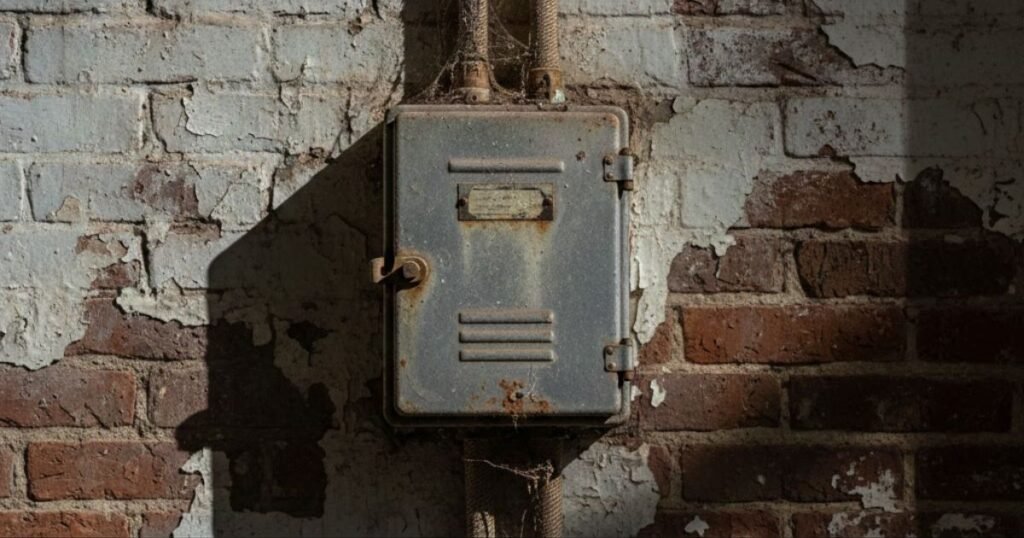
An electric fuse box (often called a fuse panel or fused service equipment) is the household device that receives electricity from the utility and distributes it to branch circuits through individual overcurrent protective devices fuses. Each fuse contains a conductive element sized to melt (blow) when current exceeds a safe level; when a fuse blows, it opens the circuit and stops power flow to protect wiring and connected equipment from overheating.
Basic parts of a fuse box:
- Service entrance (where utility power enters).
- Fuse holders (screw-in or cartridge style) that hold individual fuses for each circuit.
- Bus bars / distribution block that routes current to fuse holders.
- Main disconnect fuse (on some older systems) that disconnects power to the whole house.
Short history:
Fuse panels were standard in U.S. residential construction through the early-to-mid 20th century. As household electrical demands grew more high-draw appliances, HVAC systems, and electronics circuit breakers became the norm from the 1960s onward. Breaker panels offer the convenience of resetting a tripped breaker, and modern breakers include advanced protections (arc-fault, ground-fault). However, many older homes still have fuse boxes that remain serviceable if properly maintained and if they meet local code/inspection requirements.
How it protects:
Fuses are overcurrent protection devices intended to act quickly under short-circuit conditions. Their physics is straightforward the fuse element heats and melts at a predictable current/time curve. Cartridge fuses in particular can handle higher interrupting capacities than simple screw-in fuses, which is why some industrial or service entrance applications historically used them.
Safety note:
Because a blown fuse removes power by destroying a component, swapping in a higher-rated fuse to “stop” repeat blowing is dangerous it defeats protection and increases fire risk. If fuses blow repeatedly, contact a licensed electrician. Never attempt live-panel diagnostics or wiring changes yourself.
(NEC references to consider when writing: NEC Article 240 Overcurrent Protection; NEC Article 230 Services. Verify against the latest NEC edition before publication.)
READ MORE: SEU Cable: The Homeowner’s Complete Guide (Uses, Specs, Costs, Safety)
Types of Fuse Boxes and Fuses
Fuse boxes and the fuses they use vary by era and application. Below are the common types homeowners may encounter.
1. Plug (screw-in) fuses (aka Edison-base)
- Where found: Older residential panels (common pre-1960s/1970s).
- How they look: Round, screw-in like a light bulb base.
- Typical amp ratings: Commonly 15–30A for branch circuits (illustrative verify with datasheets).
- Pros: Simple, inexpensive, easy to replace with the correct fuse.
- Cons: Limited amp range, older holders can oxidize/corrode, sometimes lower interrupting capacity.
2. Cartridge fuses (bolt-on / ferrule)
- Where found: Some later older homes, industrial, and service-entrance applications.
- How they look: Cylindrical or rectangular cartridges secured by clips or bolts.
- Typical amp ratings: Often 30–100A or higher in service applications (illustrative).
- Pros: Higher current capacity, better interrupting ratings, available in time-delay or fast-acting types.
- Cons: Require the correct holder and replacement cartridge; larger and often costlier.
3. Service entrance (SE) fuses / main fuses
- Where found: At the point the utility connects to the property, sometimes combined with the meter or main panel.
- Role: The main protective device for the whole service. Older main fuses can be large cartridge types.
- Implications: If service fuses are older or undersized for current loads, a service upgrade may be needed to support modern electrical demand.
4. Specialty / industrial fuses
- Where found: Workshops, garages, or homes with industrial equipment.
- Examples: High-interrupting capacity fuses, fuse blocks for three-phase equipment.
When assessing any fuse type, consult manufacturer datasheets (e.g., Eaton, Littelfuse, Bussmann) for exact amp ratings, time-current characteristics, and interrupting ratings. These documents help electricians choose the correct replacement component that matches the panel’s rating and the circuit’s intended use.
Fuse Box vs Circuit Breaker Panel — When Each Is Used
Many homeowners wonder whether a fuse box is “okay” or it’s time to convert to a breaker panel. The table below compares systems at a glance.
Comparison Table — Fuse Box vs Breaker Panel
| System / Fuse Type | Typical Use | Typical Amp Ratings | Pros | Cons | Typical Cost Range (USD) |
| Plug (Screw-in) Fuse | Older residential service | e.g., 15–30A (illustrative) | Simple, inexpensive | Outdated, limited safety features | Low–moderate |
| Cartridge (Bolt-on) Fuse | Some older homes / industrial | e.g., 30–100A (illustrative) | Higher current capacity, robust | Larger, special holders may be needed | Moderate–high |
| Fuse Box (system) | Whole-house protection in older homes | n/a | Simple fail-safe (fuse blows) | Replacing a fuse is temporary; can be inconvenient; may not meet modern code | Varies |
| Breaker Panel (modern) | Most new residential installations | 15–200A branch, 100–400A service | Resettable, AFCI/GFCI options, easier to add circuits | Higher upfront cost to retrofit | Moderate–very high |
Footnote: Ranges are illustrative verify with local electrician and manufacturer datasheets.
READ MORE: Hot Tub Wiring: What U.S. Homeowners Need to Know
Which is better?
- Safety & convenience: Modern breaker panels with appropriately sized breakers, AFCI and GFCI protection, and correct service sizing generally offer better safety and convenience than old fuse boxes.
- When fuse boxes may be acceptable: If the fuse box is in good condition, inspected and approved by a local electrical authority, and the home’s usage is modest, some homeowners opt to keep fuse systems. Insurance companies sometimes require upgrades, however check your policy.
- When to upgrade: Frequent blown fuses, inability to add circuits, signs of panel overheating, or if an inspection requires code-compliant upgrades are common triggers for replacement.
Transition considerations
Upgrading from a fuse box to a breaker panel typically involves:
- Choosing the appropriate panel size (amp service rating).
- Verifying wire sizes and branch-circuit compatibility.
- Adding modern protective devices (AFCI/GFCI) where required by current NEC rules.
- Obtaining permits and inspections.
Always have a licensed electrician provide a written estimate and plan, and obtain the necessary permits before any service work.
Common Problems & What They Mean
Below are common issues homeowners report with fuse boxes, plus what they generally indicate. These are diagnostic observations do not treat them as instructions to work on live equipment.
1. Repeated blown fuses
What it suggests: A persistent overload, short, or a failing appliance. Repeatedly replacing a fuse without diagnosing the cause is unsafe.
Do this instead: Stop using the affected circuit and call a licensed electrician.
2. Buzzing or humming panel
What it suggests: Loose connections, overloaded circuits, or failing components any of which can create heat and potential fire risk.
Do this instead: De-energize the area only by qualified personnel; have an electrician inspect immediately.
3. Warm or discolored panel cover or melted insulation
What it suggests: Overheating or arcing. This is a serious hazard.
Do this instead: Avoid the area and schedule an emergency electrical inspection.
4. Corrosion, rust, or water damage
What it suggests: Moisture intrusion can degrade connections and protective devices. Water and electricity are a dangerous combination.
Do this instead: Keep the area dry and have a professional assess and remediate.
5. Difficulty finding replacement fuses or sockets that don’t fit new components
What it suggests: Obsolescence some older fuse types and holders are no longer standard and may need conversion.
Do this instead: Discuss retrofit options with a licensed electrician who can source compatible parts or recommend an upgrade.
6. Insurance or inspection flags
What it suggests: Many insurers or municipal inspectors may require upgrades from old fused equipment to modern breaker panels for continued coverage or compliance.
Do this instead: Follow inspector guidance and obtain necessary permits and licensed labor.
Remember: the only safe “fix” for electrical hazards is professional evaluation and repair. Never bypass safety devices or replace a fuse with one of a higher amp rating to avoid future blowing doing so risks fire.
Safety, Code, and Permits (NEC highlights, inspections)
Electrical work in the U.S. must comply with the National Electrical Code (NEC) as adopted locally. The code is periodically updated, so always verify the edition your jurisdiction enforces.
NEC articles commonly applicable to fuse boxes and upgrades
- NEC Article 110 — General Requirements for Electrical Installations: Requires safe, accessible enclosures and secure connections.
- NEC Article 230 — Services: Covers service equipment, grounding, and disconnects.
- NEC Article 240 — Overcurrent Protection: Governs fuses and breakers, sizing principles, and protective device characteristics.
- NEC AFCI/GFCI rules (various sections): Modern code requires arc-fault and ground-fault protection in many circuits (e.g., bedrooms, kitchens) that older fuse systems may not provide.
READ MORE: Circuit Breaker Repair — Costs, Signs & When to Hire
Permits and inspections
- Permits: Any significant electrical work panel replacement, service upgrades, new circuits typically requires a permit. The licensed electrician usually secures the permit as part of the job.
- Inspections: After work, an electrical inspection verifies the installation meets local code. Keep copies of permits and inspection reports they matter for resale and insurance.
Accessibility and labeling
- Panels must be accessible (working space clearance) and circuits clearly labeled. If the panel is in an awkward location or blocked, the inspector can require relocation or corrective work.
Insurance considerations
- Insurance companies may charge higher premiums or refuse coverage if an older fuse box is present or if previously done electrical work lacked permits. Disclose equipment details to your agent and follow recommendations.
Always prioritize safety
- Only licensed electricians (and in some places licensed contractors or journeymen under supervision) should open service equipment, test live components, or perform wiring changes. This avoids personal harm and helps ensure code compliance.
Replacement, Upgrade, and Cost Considerations
Deciding whether to repair, replace, or upgrade a fuse box involves safety, functionality, future load expectations, and cost.
Factors affecting cost
- Panel type and amperage: Replacing a simple fuse holder vs. converting to a modern 100A or 200A breaker panel changes cost. Higher-amp service and meter upgrades add expense.
- Labor and local rates: Electrician hourly rates and permit fees vary by region.
- Rewiring needs: Existing wiring gauge and condition may require upgrades if undersized for new breakers.
- Additional safety devices: Adding AFCI/GFCI breakers or subpanels increases cost.
- Accessibility and complications: Difficult access, asbestos/lead remediation, or structural changes raise the price.
Typical price ranges (illustrative)
- Simple fuse replacement or fuse holder repair: Low hundreds of dollars.
- Conversion to a small breaker panel (basic, 100A): Often ~$1,000–$2,500 depending on region and complexity.
- Full service upgrade to 200A with panel swap and meter work: Frequently $1,500–$5,000+ (varies widely).
- Extensive rewiring, multiple subpanels, or remediation: $5,000–$15,000+ for major renovations.
Note: These are ballpark ranges. Obtain at least two written quotes from licensed electricians and confirm whether a permit and inspection are included in the estimate.
Cost vs. value
Upgrading adds resale appeal and may reduce insurance costs. It also enables safe use of modern appliances and electric vehicle chargers. Balance immediate cost against long-term safety and functionality.
Choosing a Licensed Electrician
Selecting the right professional is crucial.
Credentials and vetting
- Licensing: Confirm the electrician is licensed in your state/local jurisdiction. Request license number and verification through local licensing boards if available.
- Insurance: Ask for proof of liability insurance and worker’s compensation.
- Experience with older homes: Not every electrician specializes in vintage equipment find one comfortable with fuse-to-breaker conversions and historic wiring.
- References and reviews: Look for recent customer reviews and ask for references for similar jobs.
- Written estimate and scope: Get a detailed written estimate that lists work, materials, permit/inspection costs, and timeline.
READ MORE: Outlet Installation: Costs, Types & When to Hire a Pro
Questions to ask
- “Will you obtain the permit and schedule the inspection?”
- “What panel brand/models do you recommend and why?” (Good answers reference manufacturer datasheets such as Eaton, Siemens, Square D.)
- “Do you anticipate needing to upgrade the service or meter?”
- “How will you address AFCI/GFCI requirements?”
- “What warranty do you provide on labor and parts?”
Red flags
- Unwillingness to provide a written quote.
- Pressure to use higher-rated fuses or to bypass a protective device.
- No insurance or license verification.
Frequently Asked Questions
Q1: What is an electric fuse box?
A: An electric fuse box is an older-style service panel that uses replaceable fuses as overcurrent protection for individual branch circuits. When a circuit draws too much current, the fuse blows and opens the circuit.
Q2: Fuse box vs breaker panel — which is safer?
A: Modern breaker panels typically offer safer, more convenient reset capability and can incorporate AFCI/GFCI protection required by current codes. Many inspectors recommend replacing very old fuse boxes to meet modern safety expectations.
Q3: How much does it cost to replace an old fuse box?
A: Costs vary widely. Simple fuse repairs are relatively inexpensive, but converting to a modern breaker panel or upgrading service to 200A commonly ranges from about $1,000 to several thousand dollars. Get written quotes from licensed electricians.
Q4: Is my old fuse box safe?
A: Not always. Warning signs include frequent blown fuses, buzzing, heat, corrosion, or water damage. If you see any of these, stop using affected circuits and call a licensed electrician for an inspection.
Q5: Can I replace a blown fuse myself?
A: Replacing a properly sized fuse is straightforward, but you should not work on live panels, attempt diagnostics, or replace fuses with higher-rated ones. For repeated problems or any panel access, hire a licensed electrician.
Conclusion
If your home still uses an electric fuse box, it’s worth evaluating safety, capacity, and compliance with current codes. While fuses can protect circuits, modern living often outpaces older equipment and routine warnings like frequent blown fuses, buzzing, or visible damage should prompt immediate professional attention. For any inspection, repair, or upgrade, hire a licensed electrician who will obtain permits, follow NEC requirements, and provide a written estimate. Schedule an inspection to understand your options and get a tailored plan that balances safety, cost, and long-term value.
Author Bio
Stephen Hayes is a licensed electrician and Master Electrician with experience inspecting and upgrading residential electrical systems in older homes. He works with homeowners and municipalities to ensure safe, code-compliant electrical service and specializes in service upgrades and fuse-to-breaker conversions. For specifics about your home, consult a licensed local electrician and verify NEC code references against your jurisdiction’s adopted edition.