If you’re a homeowner in the USA, your electrical panel is like the heart of your home’s power system. It’s that metal box usually tucked away in your basement, garage, or utility room, quietly distributing electricity to every light, outlet, and appliance. But let’s face it most people don’t think about their electrical panel until something goes wrong, like a tripped breaker during a storm or flickering lights when you plug in your new EV charger. Understanding your electrical panel isn’t just smart; it can save you money, prevent fires, and keep your family safe.
In this comprehensive guide, we’ll dive deep into what electrical panels are, how they work, the different types available in the USA, when and why you might need an upgrade, installation tips, maintenance advice, and more. Whether you’re dealing with an old fuse box in a historic home or planning a modern smart panel upgrade, we’ve got you covered. We’ll also include a handy comparison table of popular brands, eye-catching tips in bullet points, and real FAQs pulled straight from common Google searches to answer your burning questions.
What Is an Electrical Panel?
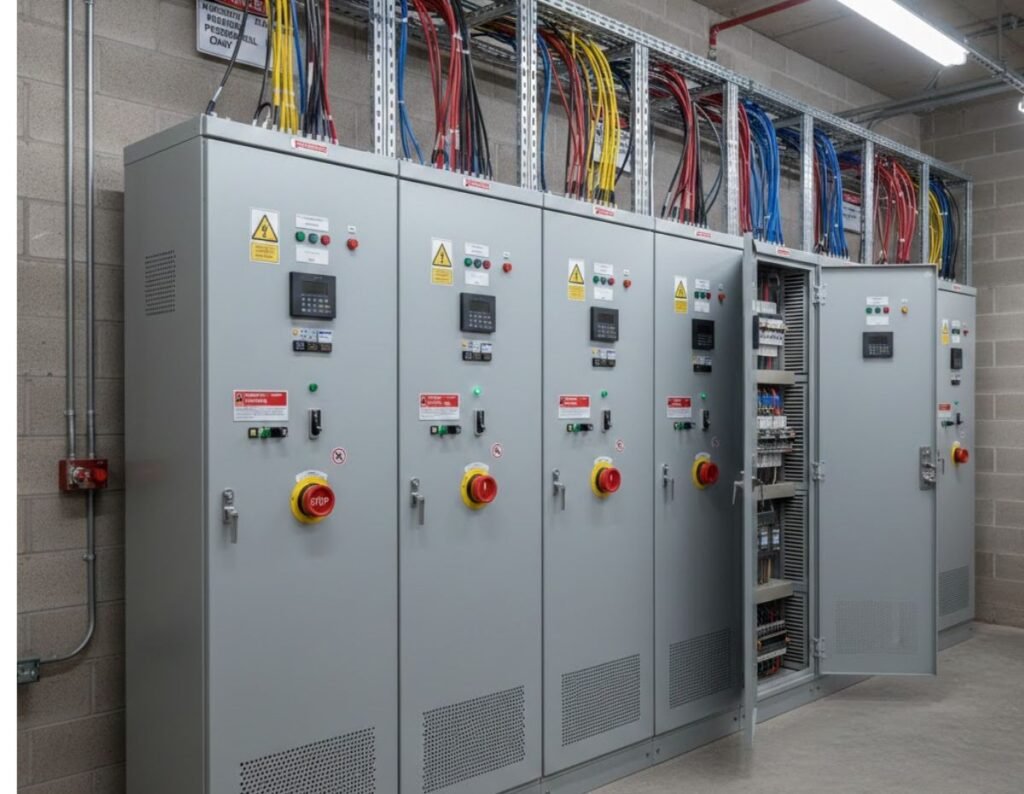
An electrical panel is the main control hub for distributing electricity throughout your home. It receives power from the utility company and divides it into circuits that power your outlets, appliances, and lighting. Inside the panel, circuit breakers protect each circuit from overloads and electrical faults.
Key Functions of an Electrical Panel:
- Distributes power safely throughout the home
- Protects circuits from overheating or electrical fires
- Shuts off power when a breaker detects unsafe current
- Supports modern electrical loads, including high-demand appliances
In the United States, most homes use 100-amp, 150-amp, or 200-amp panels although 200 amps is the recommended standard for modern homes.
Why Electrical Panels Matter in Modern Homes
Today’s American households use significantly more power than they did even a decade ago. With increasing numbers of:
- Smart home systems
- Air conditioning
- Home offices and equipment
- Electric vehicle chargers
- High-efficiency appliances
- Home entertainment systems
… your electrical panel must be capable of handling higher and more consistent loads.
Top Reasons Your Electrical Panel Is Important:
➡ Safety First — Prevent fires caused by overloaded circuits
➡ Supports Modern Living — Keeps appliances and devices running smoothly
➡ Improves Home Value — Buyers prefer updated electrical systems
➡ Necessary for Add-Ons — EV chargers, hot tubs, and renovations require more power
➡ Compliance with U.S. Electrical Codes — Outdated panels may violate NEC standards
READ MORE: Mr Sparky Electric
Types of Electrical Panels Commonly Used in the USA
There are several types of electrical panels, each with unique functions. Here’s a breakdown to help you identify what your home uses.
A. Main Breaker Panel
This is the most common type. It features a main breaker that can shut off the entire home’s electrical power.
Pros:
- Easy to shut down power in emergencies
- Supports high amperage (100A–400A)
- Meets all NEC requirements
Cons:
- Can become overcrowded
- Replacement requires full power shutoff
B. Main Lug Panel
These do not have a main breaker. Instead, the power supply lines run directly into the lugs.
Used for:
- Subpanels
- Special power zones (garages, workshops, additions)
Pros:
- More budget-friendly
- Great for expanding circuits
Cons:
- Must be connected to a main breaker upstream for safety
C. Subpanel
Acts as a secondary power distribution panel. Commonly used when homeowners expand their property.
Common Locations:
- Garages
- Detached buildings
- Home additions
Pros:
- Reduces the load on the main panel
- Makes wiring expansions easier
Cons:
- Requires professional installation
D. Fuse Box (Outdated)
Older homes (pre-1960s) may still use fuse boxes instead of circuit breakers.
Why They Are Problematic:
- Unsafe for modern loads
- Fuses must be replaced, not switched
- May violate current NEC codes
Fuse boxes should be replaced immediately for safety reasons.
READ MORE: Electrician Near Me
Electrical Panel Comparison Table
| Panel Type | Best For | Pros | Cons |
| Main Breaker Panel | Most homes | High safety, easy shutoff | Costlier than main lug |
| Main Lug Panel | Subpanels | Affordable, expandable | Needs upstream breaker |
| Subpanel | Additions, garages | Adds more circuits | Requires professional installation |
| Fuse Box (Old) | Pre-1960 homes | None | Unsafe & outdated |
| 400-Amp Service Panel | Large homes, EVs | Supports heavy loads | Most expensive |
How Electrical Panels Work: A Simple Breakdown
Ever wondered what’s happening inside that gray box on your wall? Electrical panels aren’t magic they’re engineered systems that safely manage power flow. Let’s demystify the process step by step.
Electricity enters your home via service wires from the utility pole or underground line. It passes through your meter, which tracks usage for billing. Then, it hits the electrical panel’s main lugs or breaker.
Inside, hot bus bars (usually two for 240V service) distribute power to individual circuit breakers. Each breaker connects to a circuit a loop of wiring serving specific areas. Neutral and ground bars handle return paths and safety grounding.
When you flip on a light, current flows from the hot wire through the device and back via neutral. If demand exceeds the breaker’s rating (e.g., 15 amps for lights), it trips magnetically or thermally, breaking the circuit. This prevents overheating, which could melt wires or start fires.
In fuse boxes, a metal filament melts instead, requiring replacement. Modern breakers are resettable, making them superior.
Panels also include surge protection in some models, guarding against lightning or grid spikes crucial in storm-prone areas like Texas.
For 240V appliances (dryers, ovens), breakers span both hot buses. Grounding ensures faults divert to earth, tripping breakers via GFCI/AFCI tech.
Smart panels add sensors and Wi-Fi, letting you monitor via apps. For example, if your AC spikes usage, the panel alerts you.
In multi-family units or commercial buildings, panels might include metering for each unit, complying with local codes.
Understanding this helps troubleshoot: A tripped breaker often means overload; reset it, but investigate causes like too many devices on one circuit.
Electrical Panel Amperage: Which Do You Need?
The amperage determines how much electrical load your home can handle. Older homes usually have 60-amp or 100-amp panels, while modern homes use 150A or 200A.
Common Panel Sizes in the USA
| Amperage | Ideal Use | Is It Still Safe? |
| 60 Amp | Very old homes | No — needs upgrading |
| 100 Amp | Small homes, few appliances | Borderline outdated |
| 150 Amp | Medium homes | Safe for most homes |
| 200 Amp | Modern homes | Best choice |
| 400 Amp | Luxury homes, EV chargers, shops | High-performance |
READ MORE: Electric Company Near Me
Signs Your Electrical Panel Needs an Upgrade
Ignoring your electrical panel is like driving a car without checking the oil eventually, it’ll break down. Here are key red flags that scream “upgrade time” for USA homeowners.
- Frequent Tripped Breakers: If breakers trip weekly, your panel can’t handle modern loads. Homes with air fryers, computers, and chargers need more amps.
- Burning Smells or Scorch Marks: This is serious could indicate arcing or loose connections. Call an electrician immediately to avoid fires.
- Flickering Lights: When using high-power appliances, dimming lights suggest insufficient capacity or wiring issues.
- Old Age: Panels over 25-30 years old (common in pre-1990s homes) may not meet current NEC standards. Brands like Stab-Lok or Pushmatic are recall risks.
- Rust or Corrosion: In damp basements or coastal areas, rust compromises safety. Replace before it leads to shorts.
- Warm Panel: A hot-to-touch panel means overload or poor ventilation. Normal operation should be cool.
- Insurance Denials: Many U.S. insurers refuse coverage for outdated panels, forcing upgrades.
- Home Additions: Adding rooms, pools, or EVs? Your 100-amp panel won’t cut it aim for 200+ amps.
Spot these? Don’t delay. The average lifespan is 30-40 years, but heavy use shortens it. Upgrading prevents outages and boosts efficiency.
Dangerous Electrical Panel Brands to Replace Immediately
Certain panels have been proven unsafe:
- Federal Pacific Electric (FPE) Stab-Lok)
- Zinsco / Sylvania panels
- Challenger panels
- Pushmatic panels
These panels have high failure rates and are known fire hazards.
Cost of Replacing an Electrical Panel in the USA
Replacing an electrical panel isn’t cheap, but it’s an investment in safety and home value. Costs vary by location, panel type, and labor.
Nationally, expect $1,500-$4,000 for a standard 200-amp upgrade, per HomeAdvisor data. Breakdown: Panel itself ($200-$500), permits ($100-$300), labor ($800-$2,000), and wiring updates ($400+ if needed).
In high-cost areas like New York City or San Francisco, prices hit $3,000-$6,000 due to strict codes and union labor. Midwest states like Ohio might be $1,200-$2,500.
Factors influencing cost:
- Amp Rating: 100-amp ($1,000-$2,000) vs. 400-amp ($3,000-$5,000) for large homes.
- Type: Smart panels add $1,000+ for tech features.
- Location: Outdoor panels in Florida cost more for weatherproofing.
- Permits/Inspections: Mandatory everywhere, adding $200-500.
Shop around get quotes from 3-5 licensed electricians. Rebates from utilities (e.g., for energy-efficient models) can offset costs, especially in green states like Colorado.
Long-term savings? New panels reduce energy waste and qualify for insurance discounts.
READ MORE: Frontier Electric
Step-by-Step Guide to Electrical Panel Installation
Installing or replacing an electrical panel is a job for pros DIY is dangerous and often illegal. Here’s what happens in a typical USA installation.
- Assessment: Electrician inspects your current setup, calculates load needs using NEC formulas (e.g., 3 watts/sq ft for general use).
- Permits: Apply to local building department. In California, this includes seismic checks.
- Power Shutoff: Utility company disconnects service safety first.
- Removal: Old panel comes out, wires labeled and detached.
- Mounting New Panel: Secured to wall, grounded properly. Subpanels need feeder wires from main.
- Wiring: Connect main lugs, breakers, neutrals. AFCI/GFCI installed per code.
- Testing: Power restored, everything checked for faults.
- Inspection: Official sign-off ensures compliance.
Time? 4-8 hours for simple swaps, days for major rewires. Post-install, label breakers clearly for easy reference.
Choose NEMA-rated enclosures: Type 1 for indoors, Type 3R for outdoors.
Essential Maintenance Tips for Your Electrical Panel
Keep your panel humming with these easy tips no tools required for most.
Eye-Catching Maintenance Must-Dos:
- Inspect Visually Monthly: Look for dust, pests, or damage. Clean gently with a dry cloth—never water!
- Test Breakers Annually: Flip them off/on to prevent sticking. If one won’t reset, call a pro.
- Keep It Clear: Ensure 3 feet of space around the panel (NEC rule) for access and ventilation.
- Monitor Usage: Use a clamp meter or app to track loads—avoid maxing out circuits.
- Schedule Pro Checkups: Every 3-5 years, or after storms. Costs $100-$200, worth it for peace of mind.
- Label Everything: Update breaker labels after changes saves time during outages.
- Protect from Elements: In garages, use covers; in basements, elevate if flood-prone.
Following these extends panel life and cuts repair bills.
Safety Precautions Every Homeowner Should Follow
Safety isn’t optional with electrical panels one wrong move can be deadly. Always hire licensed pros for work.
Key rules:
- Never touch wires or breakers with wet hands.
- Use insulated tools if resetting.
- Shut off main breaker before any nearby work.
- Install smoke detectors nearby.
- Avoid overloading: Calculate loads (e.g., no 1,800W heater on 15-amp circuit).
In kids’ homes, add childproof covers. For seniors, consider voice-activated smart panels.
ESFI stats: Proper safety prevents 90% of electrical accidents.
READ MORE: HVAC Near Me
Common Electrical Panel Problems and How to Fix Them
Problems crop up, but early fixes prevent disasters.
- Tripped Breakers: Unplug devices, reset. Persistent? Redistribute loads or upgrade.
- Buzzing Noises: Loose connections electrician needed to tighten.
- Overheating: Clean vents, reduce load.
- Arc Faults: AFCI breakers detect and trip replace faulty wiring.
- Double-Tapped Breakers: Illegal; add pigtails or new breakers.
For fuse boxes: Blown fuses mean overload don’t oversize.
Troubleshoot safely: If unsure, call pros. Average repair: $200-$500.
Comparison Table: Popular Electrical Panel Brands in the USA
Here’s a quick comparison of top brands for 200-amp main breaker panels:
| Brand | Key Features | Pros | Cons | Price Range (Panel Only) |
| Square D | QO series with plug-on neutral, AFCI/GFCI ready | Reliable, easy install, wide availability | Slightly pricier | $250-$450 |
| Siemens | PN series, surge protection options | Affordable, expandable | Fewer smart integrations | $200-$400 |
| Eaton | BR series, corrosion-resistant | Durable for harsh climates | Bulkier design | $220-$420 |
| GE | PowerMark Gold, modular breakers | Budget-friendly, good for basics | Limited high-amp options | $180-$350 |
Choose based on needs—Square D for quality, Siemens for value.
FAQs About Electrical Panels
- Why do I need a replacement panel?
You might need one if your current panel is outdated, overloaded, or unsafe. Signs include frequent trips, burning smells, or if it’s a recalled brand. Upgrading ensures it handles modern appliances and complies with codes.
- What is the electric panel replacement cost going to be?
Costs range from $1,500 to $4,000 on average, depending on amps, location, and extras like smart features. Factor in permits and labor get multiple quotes.
- Does this replacement require a permit?
Yes, in nearly all U.S. jurisdictions. Permits ensure work meets NEC standards and pass inspections, protecting your insurance and safety.
- How long will the electrical panel replacement process take?
Typically 4-8 hours for a straightforward swap, but up to a few days if rewiring is involved. Plan for power outages during the job.
- What type of electrical panel is best for my home or business?
For homes, a 200-amp main breaker panel works well; businesses might need 400-amp or commercial-grade. Consider smart options for energy monitoring consult an electrician for tailored advice.
Conclusion:
Your electrical panel might be out of sight, but it shouldn’t be out of mind. From understanding types and workings to spotting upgrade needs and maintaining safety, this guide equips you for confident homeownership in the USA. Remember, when in doubt, call a licensed pro it’s not worth the risk.
Investing in a quality panel pays off in reliability, efficiency, and peace of mind. Stay powered up, stay safe!