Hey there, fellow American homeowner! If you’ve ever been caught in a blackout during a brutal storm or a sweltering heatwave, you know that sinking feeling when the lights flicker out and everything grinds to a halt. Power outages are no joke they can spoil food, disrupt work, and even pose health risks if you’re relying on medical equipment.
That’s where a reliable home generator comes in, and finding top-notch generator installers near me (or you, wherever you are in the USA) is key to getting that peace of mind. In this comprehensive guide, we’ll dive deep into everything you need to know about generator installation services across the country. Whether you’re in bustling New York or sunny California, we’ve got you covered with tips, comparisons, and real recommendations.
As power grids face more strain from extreme weather and aging infrastructure, searches for “generator installers near me” have skyrocketed in 2025. This article is your one-stop resource for finding the best generator installers in the USA, understanding costs, and picking the perfect setup for your home. We’ll keep things straightforward, easy to read, and packed with practical advice no fluff, just facts to help you stay powered up.
Why You Need a Home Generator
Let’s start with the basics: Why bother with a generator at all? In the USA, power outages affect millions annually, costing billions in damages. According to recent reports, the average household experiences about 1.5 outages per year, lasting around 100 minutes each but in storm-prone areas like the Gulf Coast or Midwest, that can stretch to days.
A home generator isn’t just a luxury; it’s a smart investment. Here’s why more folks are turning to generator installation services:
- Uninterrupted Power for Essentials: Keep your fridge running, lights on, and HVAC system humming during blackouts.
- Protection for Your Family: Ideal for homes with elderly residents, kids, or anyone needing medical devices like CPAP machines or oxygen concentrators.
- Boost Home Value: A professionally installed standby generator can increase your property’s resale value by up to 5%, especially in outage-heavy regions.
- Peace of Mind in Extreme Weather: With climate change ramping up hurricanes, wildfires, and blizzards, generators are becoming must-haves.
- Cost Savings Over Time: Avoid hotel stays or spoiled groceries pay once for installation and save repeatedly.
Types of generators vary, but for most homes, standby (or whole-house) models are the gold standard. They automatically kick in within seconds of an outage, powered by natural gas or propane. Portable generators are cheaper and great for occasional use, while inverter models offer cleaner power for sensitive electronics. Solar-powered options are gaining traction too, especially in sunny states like Arizona or Florida.
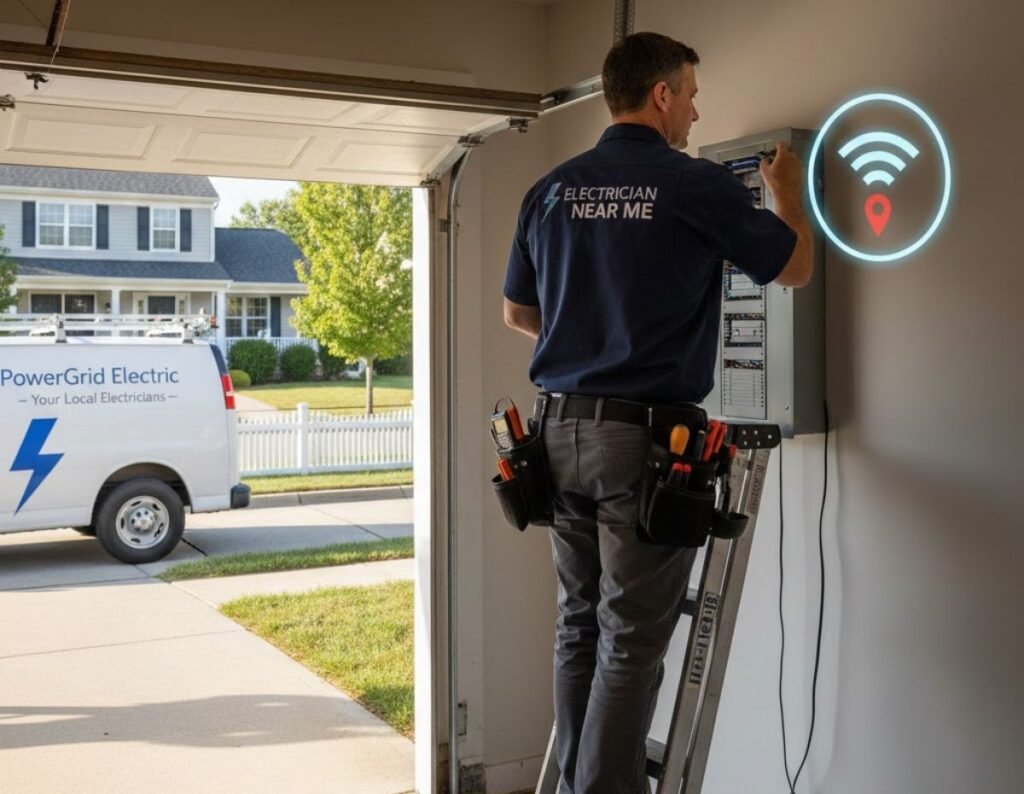
What “generator installers near me” usually do
Local installer services typically include:
- On-site load assessment and sizing recommendation.
- Proposal and equipment selection (brand & model).
- Site prep (pad, leveling, access).
- Mechanical and electrical installation (including transfer switch wiring).
- Fuel hookup (natural gas, propane, diesel) or configuration for portable units.
- System testing (transfer tests, run tests).
- Permits and coordination of required inspections.
- Post-installation paperwork to activate manufacturer warranties and maintenance contracts.
Professional installers should handle permits, local code compliance, and final inspection scheduling things many DIYers or general electricians may not fully manage.
READ MORE: Electric Company Near Me
How to Choose the Right Generator for Your Home
Picking a generator isn’t as simple as grabbing the biggest one on the shelf. You need to match it to your home’s needs, budget, and location. Start by calculating your power requirements: Add up the wattage of essentials like your AC unit (3,000-5,000 watts), fridge (600-800 watts), and sump pump (1,000-2,000 watts). Most average homes need 10-20 kW for whole-house coverage.
Key factors to consider when scouting generator installers in the USA:
- Fuel Type: Natural gas is convenient and endless (as long as lines are up), propane stores well, diesel is efficient for larger setups, and solar is eco-friendly but weather-dependent.
- Noise Level: Look for models under 60 dB quieter than a normal conversation to avoid annoying neighbors.
- Warranty and Support: Opt for brands with 5-10 year warranties and local service networks.
- Smart Features: Many 2025 models integrate with apps for remote monitoring, auto-testing, and energy optimization.
- Environmental Impact: If you’re eco-conscious, check for low-emission certifications.
Don’t forget local regulations some areas require permits or specific setbacks from property lines. A good installer will handle this, but always verify their credentials: Look for licensed electricians, factory-certified technicians, and positive reviews on sites like Yelp or BBB.
Pro Tip: Use online tools from brands like Generac or Kohler to size your generator. Enter your zip code, and it’ll suggest models tailored to your region’s weather patterns.
Types of generators (short primer) — pick the right category
Understanding generator types helps you choose the right installer and quote:
- Portable generators — small, mobile units. No permanent install required, but if you plan to hard-wire a portable to a home via a transfer switch, hire a pro. Portable units are generally the cheapest upfront but less convenient for full-home backup.
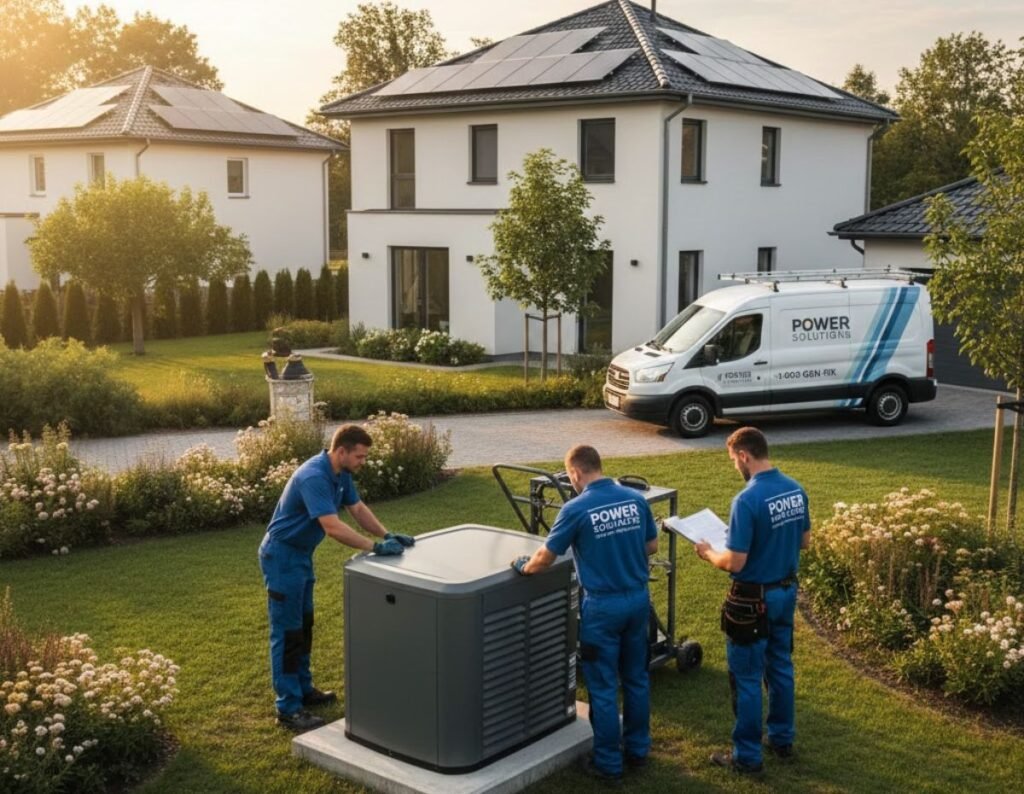
- Standby (whole-house) generators — permanently installed, automatic-start units that power everything you select when the grid fails. Require a concrete pad, permanent fuel hookup (usually natural gas or propane), and professional installation. These are common for homeowners who want automatic, hands-off protection.
- Inverter generators — quieter, cleaner power useful for electronics; usually portable but sometimes sized for larger loads. They’re good for sensitive electronics and camping, not full-house backup.
- Commercial/Industrial generators — larger units for businesses, often with more complex electrical integration and redundancy.
- Battery backup / stationary power stations — not fuel-burning generators, but sometimes included in the backup-power conversation. They’re quieter and emissions-free but have different cost/performance tradeoffs. (Useful for partial backup and for powering sensitive loads.)
Comparison table — generator types & installer needs
| Feature / Need | Portable | Inverter | Standby (Partial) | Standby (Whole-house) |
| Typical unit cost (USD) | $500–$2,500 | $800–$4,000 | $2,000–$6,300 | $5,000–$18,000+ |
| Professional install required? | Optional (recommended for hard-wiring) | Optional | Yes | Yes |
| Transfer switch needed | Recommended | Recommended | Required | Required |
| Fuel types | Gas/gasoline/propane | Gas/gasoline/propane | Natural gas/propane/diesel | Natural gas/propane/diesel |
| Auto-start capability | No | Some models do | Yes (auto) | Yes (auto) |
| Best for | Short outages, camping, job sites | Quiet/sensitive electronics | Partial essential loads | Whole-home backup |
| Typical installer expertise | General handyman/electrician | Electrician | Certified generator dealer/ licensed electrician | Certified dealer with fuel hookup experience |
| Permits & inspections | Sometimes | Sometimes | Usually | Usually |
READ MORE: Electrician Near Me
Top Generator Brands: A Side-by-Side Comparison
With so many options, how do you pick the best? We’ve researched the leading brands based on reliability, user reviews, and expert tests from sources like Consumer Reports and Popular Mechanics. Here’s a handy comparison table of the top five home generator brands for 2025. We focused on standby models since they’re the most common for professional installation.
| Brand | Power Range (kW) | Fuel Types | Average Installed Cost | Warranty | Key Pros | Key Cons | Best For |
| Generac | 7-48 | Natural Gas, Propane, Diesel | $10,000-$25,000 | 5-10 years | Affordable, wide dealer network, auto-start features | Can be noisier than competitors | Budget-conscious homeowners |
| Kohler | 6-150 | Natural Gas, Propane, Diesel | $12,000-$30,000 | 5 years | Quiet operation, robust build, excellent cold-weather performance | Higher upfront cost | High-end homes in harsh climates |
| Briggs & Stratton | 7-26 | Natural Gas, Propane | $9,000-$20,000 | 6-10 years | Reliable engines, easy maintenance, good value | Limited larger models | Mid-sized homes |
| Cummins | 13-200 | Natural Gas, Propane, Diesel | $15,000-$40,000 | 5 years | Industrial-grade durability, global support | More expensive, bulkier | Large estates or commercial use |
| Honda | 3-10 (portable focus) | Gasoline, Propane | $5,000-$15,000 | 3-5 years | Super quiet, fuel-efficient, portable options | Not ideal for whole-house without add-ons | Smaller homes or hybrid setups |
This table draws from 2025 reviews emphasizing durability and efficiency. Generac leads in sales due to its accessibility, while Kohler edges out in premium features. Prices include installation expect variations based on your location and home size.
Eye-Catching Tips for Brand Selection:
- Go Generac if You’re on a Budget: It’s the #1 seller for a reason reliable and widely available.
- Choose Kohler for Silence: Perfect if you live in a dense neighborhood.
- Opt for Cummins for Heavy Duty: If you have a big property or frequent outages.
- Consider Honda for Portability: Great starter if you’re not ready for a full standby install.
- Factor in Fuel Availability: Natural gas is king in urban areas, propane in rural spots.
Remember, the brand is only as good as the installer. Let’s move on to finding pros near you.
How to find the best “generator installers near me”
Searching for “generator installers near me” will return ads, directories, and independent pros. Here’s a step-by-step vetting guide that actually works.
- Start locally — directories + dealer locators: use manufacturer dealer locators (e.g., Generac or Honda dealers), and local service directories (Angi, Thumbtack, Yelp, HomeAdvisor). Dealer locators often show authorized dealers who can protect your warranty.
- Check license & insurance: verify the electrician’s license number on your state or municipal license lookup site. Ensure the company carries liability insurance and worker’s comp.
- Confirm generator-brand authorization: many manufacturers require installation by an authorized dealer to maintain warranty coverage (Generac explicitly encourages authorized dealer installations to qualify for dealer warranty terms). Ask the installer to confirm they’re an authorized dealer for the brand you’re buying.
- Read reviews and look for job photos: look through recent Google, Yelp, and Angi reviews. Search within reviews for reps mentioning punctuality, clean job sites, and responsiveness for service calls (post-install support matters).
- Ask about permitting & inspections: a pro should include permit acquisition and inspection coordination in their quote. If the installer charges extra for this, get a line-item description.
- Request detailed written quotes: quotes should include model numbers, transfer switch specs, pad work (concrete or polymer pad), trenching, permit fees, and any electrical panel upgrades.
- Compare at least 3 quotes: don’t choose the lowest blindly. Compare warranty handling, brand, and included maintenance.
- Get a timeline & start-to-finish expectations: how long to obtain permits, expected days of on-site work, and the expected outage (if any) during hookup.
- Maintenance & service contract options: ask about annual service plans. Generators need periodic maintenance; a local service plan saves headaches.
- Confirm fuel-source responsibilities: who arranges natural gas line hookup or propane tank installation? Some installers coordinate; others expect you to arrange third-party contractors.
READ MORE: HVAC Near Me
The Generator Installation Process: Step by Step
Once you’ve chosen your installer, what happens next? A professional installation ensures safety and efficiency. Here’s the typical timeline (1-2 weeks total):
- Site Assessment: Installer visits to evaluate your electrical panel, fuel source, and placement (usually 5-7 feet from home).
- Permitting: They handle local permits—costs $100-500.
- Preparation: Digging for concrete pad, running gas lines (if needed).
- Installation Day: 4-8 hours to mount the unit, connect wiring, and test.
- Final Testing and Training: Run a simulation outage and show you the ropes.
Common Challenges and Solutions:
- Space Issues: Opt for compact models if your yard is small.
- Fuel Line Extensions: Budget extra if your gas meter is far.
- Electrical Upgrades: Older homes may need panel updates ($1,000-3,000).
Safety first: Never DIY generators involve high voltage and gas, risking fires or carbon monoxide poisoning.
Costs and Financing for Generator Installation in the USA
Budgeting is crucial. A basic 10kW standby generator installed runs $8,000-15,000, while premium 20kW setups hit $20,000+. Factors influencing price:
- Generator size and brand
- Labor (higher in cities like NYC)
- Add-ons like transfer switches ($500-1,000)
- Fuel storage tanks ($1,000+ for propane)
Breakdown:
- Unit: 40-50% of cost
- Installation: 30-40%
- Permits/Upgrades: 10-20%
Financing options abound: Home equity loans, manufacturer promos (0% APR from Generac), or federal tax credits for energy-efficient models. In disaster-prone areas, grants may cover part of the cost.
To save: Shop during off-season (spring/fall) and bundle with maintenance plans.
READ MORE: Best Plumbers Near Me | Free Estimate offer
Local-permit & code considerations (expect differences by city/state)
Permits and inspections vary widely. Typical items that trigger permits:
- Permanent generator installation
- Transfer switch wiring and load shedding equipment
- Fuel line work (natural gas or propane)
- Concrete pads in flood-prone zones may need elevation adjustments
Your installer should know local building and electrical codes and will apply for permits. If they don’t offer to get permits, that’s a red flag.
Timeline — how long will installation take?
A simple generator swap or portable-install-plus-transfer-switch can be done in 1–2 days. A full standby installation that includes permits, pad pouring, gas line work, and utility coordination often takes 1–4 weeks from quote to commissioning depending on permit turnaround and scheduling, but actual on-site installation is typically 1–3 days. (Exact time depends on local permitting and whether additional electrical work is required.)
Maintenance and Warranty Tips for Longevity
Your generator’s lifespan (10-20 years) depends on care. Annual tune-ups cost $200-400 and include oil changes, filter replacements, and load testing.
Eye-Catching Maintenance Must-Dos:
- Run Weekly Tests: Most auto-test, but manual runs prevent issues.
- Monitor Fuel: Keep tanks full; stabilize gasoline if using portable.
- Clean Regularly: Dust and debris can clog vents.
- Schedule Pro Service: Certified techs spot problems early.
- App Integration: Use smart monitoring for alerts.
Warranties cover parts/labor extend them for $100-300/year. If issues arise, contact your installer first.
FAQs on Generator Installers
- How much does it cost to have a whole house generator installed? Expect $10,000-$25,000 total, including the unit and labor. Costs vary by size (10-20kW for most homes) and location cheaper in rural areas, pricier in cities.
- What is the best brand of generator to buy? Generac tops lists for affordability and availability, but Kohler wins for quiet, reliable performance in harsh weather. Check our comparison table above for details.
- How long does it take to install a generator at home? Typically 1-2 days for the actual install, but the full process (assessment to testing) spans 1-2 weeks, including permitting.
- Do you need a permit to install a home generator? Yes, in most USA jurisdictions. Your installer handles this, but it ensures compliance with codes for safety and placement.
- What size generator do I need to run my whole house? Calculate your wattage needs—average homes require 10-20kW. Use online calculators from brands like Cummins for precise sizing based on appliances.
Conclusion:
There you have it a complete roadmap to finding the best generator installers near me in the USA. From understanding types and brands to navigating costs and regional pros, you’re now equipped to make a smart choice. Don’t wait for the next outage; contact a local installer today for a free quote. Stay safe, stay powered, and enjoy that unbreakable peace of mind.