If you’re reading a contractor quote or shopping for a service upgrade, this guide explains what SEU cable is, how it compares to SER, typical ratings and materials, high-level NEC code considerations, ampacity basics, buying and cost expectations, and when to call a licensed electrician. This is written for U.S. single-family and multi-unit homeowners who want clear, practical info not wiring instructions. Always hire a licensed electrician for live electrical work and permit/inspection steps.
What is SEU cable?
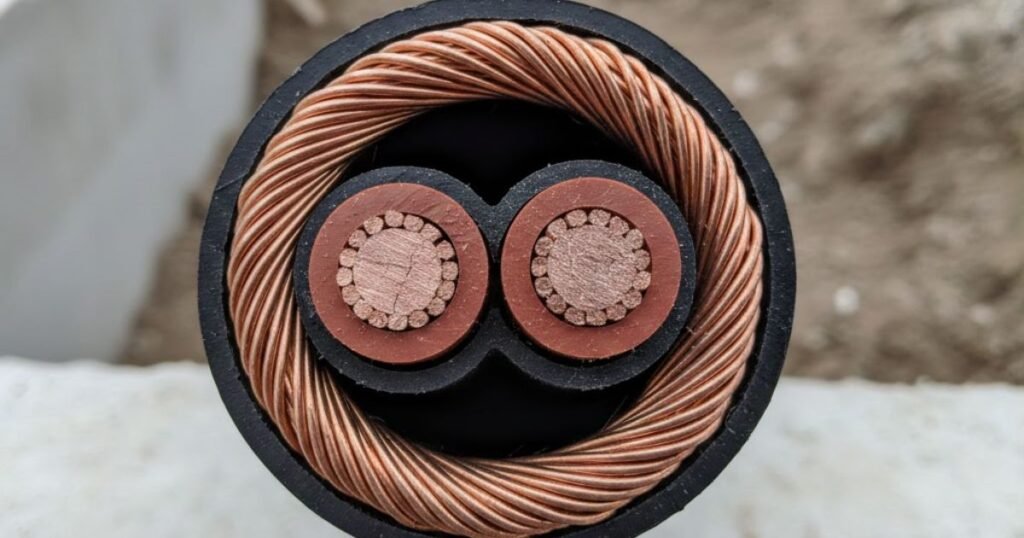
Quick definition: SEU = Service Entrance, Style U (unarmored). It’s a type of service-entrance cable that usually has two insulated current-carrying conductors (hots) and a concentric neutral (a neutral made of multiple wires wrapped around the other conductors). SEU is commonly rated for 600 V and 90°C conductor temperatures, and comes in copper or AA-8000 aluminum alloy constructions with XLPE/XHHW-2 or THHN/THWN-type insulation and a sunlight-resistant gray PVC outer jacket. These features make it a standard choice for meter-to-panel or panel-feeder work in dwellings and many multi-unit buildings.
Short plain-English note: SEU looks like a flat cable where the neutral wraps around the two inner conductors it’s compact and made for bringing the service from the meter to the main panel.
SEU vs SER
| Characteristic | SEU (Service Entrance, Unarmored) | SER (Service Entrance, Round/Armored) | When to choose |
| Typical shape/appearance | Flat/semiflat; neutral concentric around conductors | Round or compact round; individual insulated conductors plus a bare ground | SEU for simple meter-to-panel feeders; SER where a separate earth/ground conductor is required or for multi-conductor feeders |
| Number of conductors | Typically 2 insulated conductors + concentric neutral | 2–4 insulated conductors + bare (or insulated) ground | SER if you need a separate equipment grounding conductor |
| Neutral type | Concentric (wrapped around the other conductors) | Bare or insulated separate neutral conductor | SEU where concentric neutral is acceptable per code |
| Armor/Protection | Unarmored (Style U) | Style R (round) often with reinforcement tape or heavier jacket | SER when extra toughness or easier separation of conductors is wanted |
| Typical conductor materials | Copper or AA-8000 aluminum alloy | Copper or AA-8000 aluminum alloy | Depends on price/performance needs |
| Voltage & temp rating | Commonly 600 V; conductor temp 90°C | Commonly 600 V; conductor temp 90°C | Check jacket printing & datasheet |
| Wet/dry suitability | Often permitted in wet/dry above-ground locations per listing | Often permitted in wet/dry above-ground locations per listing | Verify manufacturer listing |
| Common uses | Meter to main panel; panel feeder in dwellings | Panel feeders, multi-unit feeders, when separate ground needed | SER for feeders requiring a dedicated ground |
| Underground allowed? | Generally not permitted underground (above-ground use) | Generally not used underground—check USE/USE-2 for underground types | Use USE-2 or conduit for underground runs |
| Typical bend radius/handling | Relatively stiff; limited bend radius due to concentric neutral | More flexible in some sizes | Consider handling when routing |
| Pros & cons | Compact, economical for many service runs; concentric neutral saves space | Easier to access individual conductors; may include dedicated ground | SEU saves room; SER offers separate ground and easier terminations |
Big practical difference: SEU uses a concentric neutral (wrapped around the live conductors), while SER provides separate conductors including a bare or insulated ground. For most direct meter-to-panel service runs in single-family homes, SEU is common and economical; if your job or local code requires a separate equipment grounding conductor or a different feeder layout, SER (or another cable type) may be chosen.
READ MORE: Hot Tub Wiring: What U.S. Homeowners Need to Know
SEU cable technical specs
Below are the typical characteristics you’ll see in product specs and jacket print. Always check the cable’s jacket printing and manufacturer datasheet for the specific product you’re buying ratings can vary slightly by product.
- Voltage rating: Typically 600 V.
- Temperature rating (conductor): Commonly 90°C (when used per listing and per NEC allowance).
- Conductor materials: Copper or AA-8000 aluminum alloy (compact-stranded for flexibility).
- Insulation types: XHHW-2 / XPLE / THHN/THWN family used on individual conductors inside SE assemblies.
- Jacket: Gray, sunlight-resistant PVC; assembly often reinforced with tape for handling.
- Common assemblies: 2-conductor + concentric neutral (SEU), 3- or 4-conductor assemblies (SER) for larger feeders.
- Typical marking on jacket: “TYPE SEU” or “TYPE SE” with voltage and temp ratings and manufacturer ID (read jacket print to confirm).
Tip for homeowners: The cable jacket is your truth-teller it shows the type (SEU/SER), voltage/temp ratings, and often the manufacturer part number. Always confirm the cable label matches your electrician’s plan and the product datasheet.
NEC & code considerations
This section summarizes key code points homeowners should be aware of; it intentionally avoids procedural installation steps. Always verify with your local Authority Having Jurisdiction (AHJ) local amendments can differ from the national NEC edition.
- Service conductors and services are covered by NEC Article 230. This article sets rules for how service conductors are routed, where they can pass through structures, and clearances for overhead feeds. For homeowner planning, it’s essential that service cables meet Article 230 requirements.
- Type SE cable family rules: Type SE cable (including SEU and SER) is listed for above-ground use in wet or dry locations when used per the listing, and is commonly rated 600 V and 90°C for conductor insulation. However, Type SE is not permitted for underground installation unless specifically listed for such use (USE/USE-2 is for underground). Consult the product listing and NEC Article 338 for permitted uses.
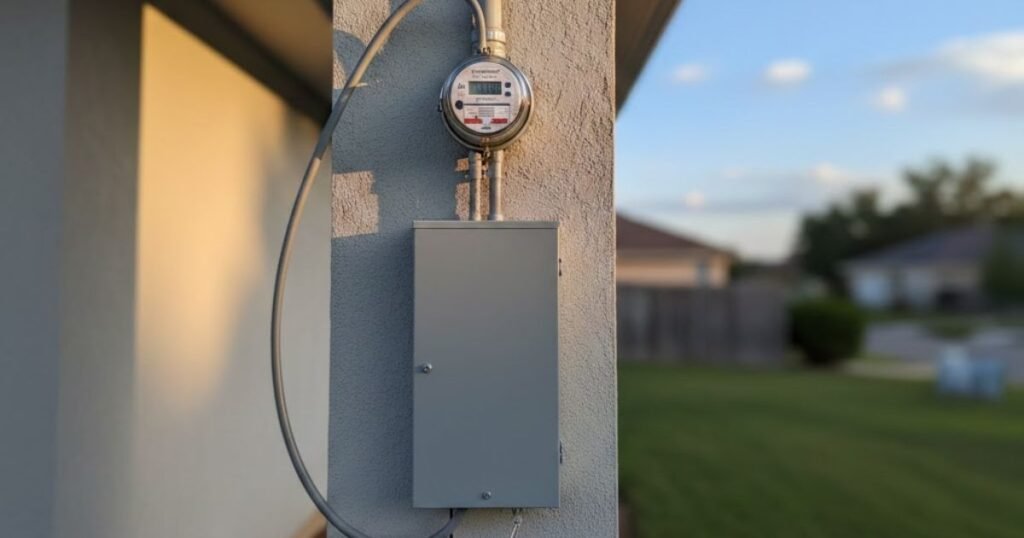
- Meter-to-panel routing and service disconnects: NEC has rules about where service conductors can pass and what equipment must be accessible. These rules affect where and how SE cable is run from the meter to the panel your electrician will size and route conductors to meet those requirements.
- Local permitting and AHJ verification: Even when the NEC allows a cable type, local jurisdictions may have different approval steps or additional requirements. Always pull permits and request final inspection for service upgrades. (This is non-optional for safety and insurance reasons.)
Homeowner action item: Ask your contractor to show the product datasheet and explain where the cable will be routed, and confirm they will obtain permits and inspections.
Sizing & ampacity — conceptual explanation
Concepts, not calculations:
Ampacity is the maximum current a conductor can carry continuously under stated conditions. Ampacity depends on conductor material (copper vs aluminum), insulation temperature rating, number of conductors bundled (which can require derating), and the NEC ampacity tables. For SE/SEU cables, manufacturers publish ampacity guidance; the NEC tables (e.g., Table 310.16 in many editions now renumbered in some editions) are the baseline for conductor ampacity.
Aluminum vs copper tradeoffs (high level):
- Copper has higher conductivity, so a smaller copper conductor carries the same current as a larger aluminum conductor. Copper is more expensive but offers better conductivity and mechanical strength.
- AA-8000 aluminum alloy (used in modern SEU/SER) is lighter and less expensive per foot; it’s the common aluminum choice for service conductors in residential work. Aluminum conductors are larger for the same ampacity and require specific terminations and attention to anti-oxidant/torque practices (done by licensed electricians).
Example note for 200 A service:
Many installers use 2-0 or 3/0 aluminum SEU assemblies for 200 A services (actual size varies by conductor type, insulation rating, and derating factors). Copper equivalents are smaller in gauge but cost more. These are estimates an electrician or engineer must calculate the exact conductor size for your installation using the NEC and manufacturer tables.
Important safety reminder: When sizing feeders, many real-world factors matter simultaneous load, derating, ambient temperature, conduit fill, and device ratings and they’re governed by the NEC and local codes. Don’t attempt sizing calculations unless you’re a qualified professional.
READ MORE: Circuit Breaker Repair — Costs, Signs & When to Hire
Installation contexts & limitations
Where SEU is typically used and where it’s not:
- Above-ground meter-to-panel runs: SEU is a standard choice for overhead or above-ground service entrance runs from the meter base to the main service disconnect/panel in many dwellings.
- Wet locations above ground: Many SE products are listed for wet or dry above-ground locations (this is a listing condition manufacturer datasheet will state it). Despite being allowed in wet locations above ground, SEU is generally not permitted underground. For buried service conductors, USE/USE-2 or conductors in conduit are the correct choices.
- Detached structures & subpanels: Where a separate equipment grounding conductor is required (for example, some subpanel configurations or detached structures), SER (with a separate ground) or individual conductors in conduit may be used instead. Consult your electrician and the AHJ.
Buying guide & cost ranges (estimates)
All costs are estimates label them with date and that they are rough market estimates. Prices vary by region, supplier, and market fluctuations (aluminum and copper commodity prices change).
- Material differences: Aluminum SEU is commonly less expensive than copper SEU. Copper SEU may be chosen where mechanical robustness or smaller conductor size is needed. Manufacturer options include XHHW-2 insulation on conductors and sunlight-resistant jackets.
- Per-foot cost ballpark (U.S., 2026 estimates):
- AA-8000 aluminum SEU (common sizes for 100–200 A): roughly $1.50–$5.00 per foot depending on size (2-0, 3/0, 4/0, etc.).
- Copper SEU (same service capacities): $6–$20+ per foot depending on size and market.
These are approximate retail prices as of early 2026 — get current quotes from suppliers or your electrician.
- Labor & whole-job cost: For a 200 A service upgrade (meter base + service cable replacement + panel swap + labor & permit) homeowners often see $2,000–$6,000+ depending on complexity, location, and materials. Simple cable replacement alone will be less; full service upgrades (new mast, new meter base, trenching or rerouting) add cost. Always get multiple written quotes and confirm what each quote includes (materials, permits, inspections, utility coordination).
- Where to buy: Reputable electrical wholesalers and manufacturer distributors (Southwire, Priority Wire, Encore, etc.) or big-box stores stock SEU/SE products. Ask your electrician to specify an exact manufacturer and part number so you can confirm ratings.
Buyer’s checklist: Confirm the cable type, voltage, temperature rating, conductor material, and manufacturer part number on the quote; ask for the manufacturer datasheet and UL/ETL listing name.
Safety, inspections & when to hire a pro
This guide is informational only do not attempt live electrical service or meter work yourself.
- Always hire a licensed electrician for service entrance work. Only licensed professionals have the training, tools, and insurance to handle service conductors safely.
- Permits & inspections: Service upgrades require permits and final inspection in nearly every U.S. jurisdiction. Permits protect you, your house, and your insurance coverage.
- Common red flags on a quote: Vague materials, “we’ll use what fits” (no part numbers), or refusal to pull permits. Get specifics in writing and insist on licensed contractors and permits.
- After installation: Request the product datasheet and final inspection report for your records.
READ MORE: Outlet Installation: Costs, Types & When to Hire a Pro
Ask your electrician these 5 questions
Before you sign a quote or buy materials, ask your electrician these exact questions:
- Which Type SE product (manufacturer & part number) will you use, and can I see the datasheet?
- Is SEU allowed by the local AHJ for this run, or do you recommend SER/individual conductors or conduit instead?
- What conductor material and exact gauge will you use for a 200 A (or X A) service, and what NEC table or manufacturer chart supports that sizing?
- Will permits be pulled and a final inspection scheduled with the utility/AHJ? What’s included in the quote?
- How will terminations be done (aluminum terminations, torque specs, anti-oxidant where needed), and will you provide a warranty/receipt showing materials used?
Final safety note
SEU cable is a widely used, economical service-entrance option for many U.S. homes but it is not a DIY item for untrained people. Service entrance work involves potentially lethal voltages and utility coordination. Use this guide to understand what’s on a quote and to have informed conversations with electricians then hand the actual work to licensed pros who will pull permits and arrange inspections.
Author & review note
Written by: Istiak Chowdhury— homeowner-friendly technical writer (electrical content specialization)
Reviewed by: a licensed electrician (Master Electrician, 10+ years’ experience) — reviewed the article for technical accuracy and safety emphasis. The reviewer confirms that SEU and SER are common Type SE cable styles and that product datasheets and local AHJ rules must be followed before installation.