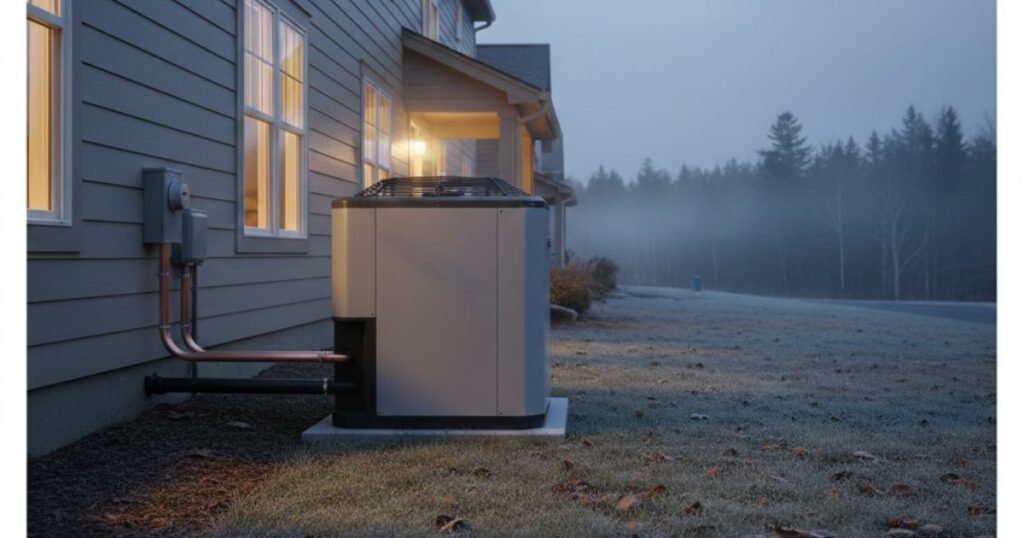
If someone tells you they need a “3-ton” heat pump, they mean a system roughly rated at 36,000 BTU per hour a common size for many single-family homes. A 3-ton air-source heat pump is often the sweet spot for homes roughly in the 1,200–2,500 sq ft range depending on climate, insulation and layout. It can cool and heat year-round, often replacing an older AC + furnace setup and delivering big efficiency wins in mild to moderate climates.
Before you call an installer: expect wide price variation. A full installed 3-ton central heat-pump job can be a tight, inexpensive swap if ductwork, panel and refrigerant lines are straightforward or a major project if you need duct repairs, a new air handler, a panel upgrade or line-set changes. National cost guides put typical installed ranges from a few thousand to well into five figures so read on for exact examples, manufacturer specs, step-by-step sizing, and a comparison table you can print and bring to quotes. Lets deep dive into “Best 3-Ton Heat Pumps of 2026: Reviews, Prices & Comparison”
READ MORE: Carrier Heat Pump Reviews (2026) — Models, Costs, Pros & Cons
What a “3-ton” heat pump is
A 3-ton heat pump refers to capacity: one ton = 12,000 BTU/hour, so 3 tons ≈ 36,000 BTU/hr. That rating describes how much heat the system can move in one hour. Heat pumps come in several flavors:
- Air-source heat pumps (ASHPs) — the most common residential option; they move heat between house and outside air.
- Ground-source (geothermal) — much more efficient but far higher upfront cost, rare for typical retrofit/replace projects.
- Ductless mini-split systems — heat pumps with indoor wall/ceiling units, handy where ductwork is absent.
- Split vs packaged: most 3-ton systems for homes are split systems (outdoor condenser/heat-pump + indoor air handler or coil). Packaged rooftop units exist but are less common for single-family homes.
Efficiency ratings to watch (new labeling uses SEER2 / HSPF2): SEER2 measures cooling efficiency; HSPF2 measures heating efficiency for heat pumps. Higher numbers = lower operating cost. Manufacturer product pages list SEER2 / HSPF2 values for each model check them before you buy. (See brand pages cited later.)

How to know if a 3-ton unit is right for your home
1. Start with the right tool: Manual J
The only accurate way to size HVAC is a Manual J load calculation (ACCA Manual J). Manual J considers square footage, ceiling height, insulation, windows, orientation, air leakage and local climate. Most building codes and reputable contractors use Manual J to pick equipment. Don’t let a contractor quote a size based only on a rule of thumb.
2. Rules of thumb (useful for quick ballpark)
If you want a quick estimate before calling a pro, many contractors use rules of thumb but they’re approximate:
- Warm/mild climates: ~20–25 BTU per sq ft → 2,000 sq ft × 20 = 40,000 BTU (≈ 3.3 tons).
- Moderate climates: ~25–30 BTU per sq ft.
- Cold climates: ~30–40+ BTU per sq ft.
Those rules give a ballpark but can be misleading: a drafty, older 1,800-sq-ft house in a cold zone might need 4+ tons; a well-insulated 2,200-sq-ft house in a temperate zone might do fine with 2.5–3 tons. Use these only for planning.
READ MORE: Weil‑McLain Boiler Reviews (2026) — Models, Costs, Pros & Cons
3. Typical square-foot ranges (very approximate)
- Tight, well-insulated home in mild climate: 1,600–2,500 sq ft → 2.5–3 ton might be right.
- Average insulation, mixed climates: 1,200–2,000 sq ft → 3 ton possible depending on layout.
- Cold, older homes, poor insulation: 1,200–1,800 sq ft may need 3–4 ton or hybrid approach.
Example scenarios
- 2000 sq ft, coastal Virginia, good insulation: A 3-ton heat pump often fits.
- 1800 sq ft, upstate NY, older windows and minimal insulation: a 3-ton unit could be undersized; Manual J may recommend 3.5–4 tons or a cold-climate model with higher heating capacity.

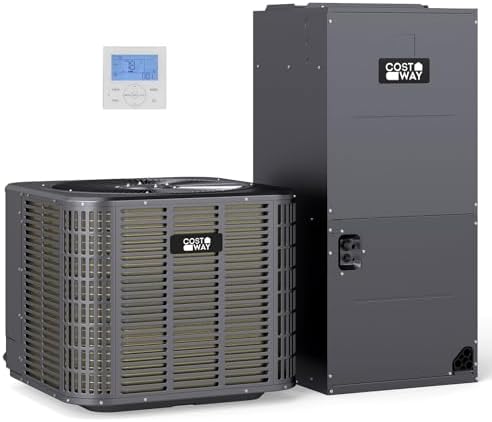
- [ENERGY EFFICIENT COOLING] This 36000 BTU/h, 19 SEER2, 208-230V, ETL Listed, AHRI Certified pre-charged air conditioner …
- [STRONG SYSTEM] This air conditioner features advanced smart functions for enhanced comfort and convenience, including 4…
- [AMPLE COVERAGE] This unit provides cooling and heating for up to 2500 Sq. Ft and able to work in environments as low as…
Why Manual J, not square footage only
Manual J converts building characteristics into BTU/hr heating and cooling loads. It avoids oversizing (short cycles, humidity issues) and undersizing (constant runtime, poor comfort). If you’re replacing equipment, ask the installer for a copy of the Manual J it will show how they arrived at the recommended size.
Sample calculation
Ballpark method (quick):
House = 2,000 sq ft in a moderate climate. Use 25 BTU/sq ft → 2,000 × 25 = 50,000 BTU → ≈ 4.2 tons. That suggests a 4-ton unit.
Why that can mislead:
- It ignores insulation, orientation, window area, ceiling height, and air leaks.
- If your home is very tight with spray foam and upgraded windows, your real heating load may be 30–40% lower than the rule of thumb.
- Conversely, a drafty 2,000 sq ft older house might need more than 4 tons.
Takeaway: rules of thumb are a starting point. Ask for a Manual J to confirm. Helpful free calculators and basic guidance exist, but they’re not a substitute for a professional load calculation.
READ NORE: Fujitsu Heat Pump Reviews (2026): Models, Costs & Real-World Pros & Cons
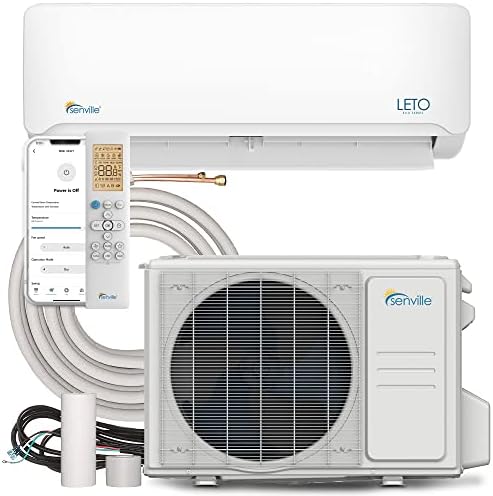
- Alexa Enabled Mini Split AC/Heating System: Integrate with voice control or app, allowing you to adjust your mini split …
- Versatile 4-in-1 Mini Split: All-season solution with air conditioning, heat pump (functional up to 5F/-15C), dehumidifi…
- Stylish & Functional Mini Split AC: Suitable for both home and business. Provides performance without compromising aesth…
Cost breakdown — unit, parts, labor, total installed price
Costs vary by region, system type (air-source split vs ductless vs packaged vs geothermal), efficiency, and job complexity. Below are typical line items and real price snapshots from dealer/manufacturer pages and national cost guides.
Typical line items
- Outdoor condenser / heat-pump unit (unit-only) — the outdoor compressor/condenser.
- Indoor air handler / evaporator coil — often required if replacing both outdoor and indoor equipment.
- Refrigerant line set & electrical disconnect — materials and installation.
- Pad and mounting hardware — concrete or composite pad for outdoor unit.
- Ductwork modification or replacement — if ducts are leaky, undersized, or incompatible.
- Electrical upgrades — service panel or dedicated circuit if needed.
- Thermostat / controls — smart thermostat upgrades add cost.
- Permits / inspections — permit fees vary by jurisdiction.
- Old equipment removal & disposal — often a line item.
- Labor — installer time (typically a full day to several days depending on complexity).
Real price snapshot (sourced)
- National averages: Angi’s recent national survey lists an average installed heat pump cost ≈ $6,086 (most homeowners $4,243–$7,939), but note that range excludes complex jobs and premium units. That average is useful but won’t cover big retrofits.
- Typical installed ranges cited by homeowner guides: many consumer sites report ranges roughly $4,000–$12,000 for common residential installs, with complex jobs up to $20k+.
- Manufacturer/dealer listing (example bundle): Trane Resolute™ Cold Climate 3-ton dealer listing (unit + dealer package) shows $8,999.99 as a retail/installed package price on a dealer page a real example of a dealer quote for a 3-ton cold-climate package.
- Unit-only retail examples: Goodman 3-ton condenser listing shows a unit price ≈ $5,379 for a 3-ton high-efficiency condenser on a retailer page; some complete systems (condenser + air handler) will be higher.
- Open-box / used market: used and open-box condensers can appear in the $1,800–$4,100 range on marketplaces such as eBay and surplus dealers (prices vary widely and require caution).
Example installed cost breakdown (typical mid-range swap)
- Unit (3-ton mid SEER2): $3,500–$6,000 (unit-only retail).
- Air handler / coil: $800–$2,500.
- Labor & basic materials: $1,500–$4,000 (site dependent).
- Permits & disposal: $150–$800.
- Duct repairs / electrical upgrades (if required): $500–$6,000+.
Total typical installed (mid-range): $6,000–$12,000. Complex jobs (duct replacement + panel upgrade + premium unit) can reach $15,000–$25,000. Always get multiple written quotes and ask installers for itemized bids.
READ MORE: Wall Heaters: Goodman Heat Pump Review 2026 | Efficiency, Cost, Pros & Cons
Heat Pump Comparison Between Trane vs Carrier vs Goodman vs Daikin vs Mitsubishi vs Lennox
Quick comparison representative 3-ton heat pumps (unit price & installed estimate)
| Brand / Model | Type | Capacity (BTU) | SEER2 | HSPF2 | Unit-only price (USD) | Typical installed price (USD) | Warranty | Best for |
| Trane Resolute™ Cold Climate (3-ton) | Split (cold-climate) | 36,000 | up to 20 SEER2 | up to 10.5 HSPF2 | See Price | $8,500–$12,000 (dealer + nationwide range) | 10-year parts & compressor (registered) | Cold climates / year-round comfort |
| Goodman 3-Ton GLXS4 / GLZS4 | Split | 36,000 | up to 15.2 SEER2 | ~ spec varies | See Price | $6,000–$10,000 (national averages) | 10-year parts (varies) | Value / budget installs |
| Carrier Comfort / Performance Series (3-ton) | Split | 36,000 | 14.3–18.5 SEER2 (varies by series) | 7.5–8.1 HSPF2 typical | Unit-only list ~$3,125–$4,000+ for basic condenser listings | $6,000–$10,000+ typical range | Standard Carrier parts warranty | Balanced cost & efficiency |
| Carrier Ductless 38MBRCQ36AA3 (Condenser) | Ductless (only outdoor unit) | 36,000 | 19.2 SEER2 | HSPF2 depends on indoor head combo | $3,125 (condenser only) | Combine w/ indoor heads + install: $7,000–$12,000+ | Better efficiency / quieter performance | |
| Daikin 3-Ton Packaged Unit | Packaged (roof or ground) | ~34,000 | Depends on model; mid-range | Depends on unit | See Price | $6,000–$10,000+ typical range | Varies by dealer | Compact packaged installations |
| Lennox (mid / premium 3-ton) | Split | 36,000 | Mid-teens to ~19+ SEER2 (typical for premium)* | High-end units ~9+ HSPF2* | Unit-only range often $3,000–$6,000+* | $7,000–$13,000+ typical installed* | High efficiency / quieter operation | |
| Mitsubishi (ductless / Hyper-Heat) | Ductless multi-zone | 36,000 | Often 18–22+ SEER2* | 9+ HSPF2* | See Price | $8,000–$15,000+ (multi-zone systems) | Excellent low-temp performance / zoning |
READ MORE: Mitsubishi Heat Pump Buying Guide 2026: Comparison, Models & Costs

Top models & brand notes
Below are representative models across price tiers chosen to illustrate common options, typical SEER2/HSPF2 levels, and “best for” use cases. For each model, I cite the manufacturer or dealer spec page for efficiency numbers.
Value / Budget tier
Goodman 3-Ton GLXS4 / GLZS4 series — Why consider: Goodman competes strongly on price and warranty for budget installs. Retail listings show unit prices in the $3k–$6k range for a condenser (depending on configuration). SEER2 numbers vary by exact model (GLZS4 variants list up to ~15.2 SEER2 in some bundles). Good for basic split-system replacements when budget matters.
Mid range (best value + efficiency)
Trane 20 Series / Resolute™ Cold Climate (3-ton) — Why consider: branded reliability, cold-climate performance, and dealer availability. Trane lists up to ~20 SEER2 and 10.5 HSPF2 for some 3-ton cold-climate packages; dealer bundle examples show installed package pricing (one dealer listing: $8,999.99). Good if you want reputable dealer support and solid warranty coverage.
Lennox EL19KPV / EL18 series (3-ton options) — Why consider: Lennox offers higher SEER2 options (some models up to ~19–19.5 SEER2 with ~9 HSPF2 on certain 3-ton models) — appealing where operating cost and quiet operation matter. These sit in a higher mid-range price band.
Premium / cold-climate / ductless options
Daikin / Mitsubishi multi-zone 36,000 BTU systems (ductless or multi-zone) — Why consider: excellent performance for homes without ducts or for spot zoning. Daikin multi-zone 36,000 BTU systems list SEER2 up to ~20 and HSPF2 values around ~9–10 depending on configuration; multi-zone packages can retail in the $6k+ range for the outdoor plus indoor heads (installation varies widely). Mitsubishi’s multi-zone outdoor units list comparable SEER2/HSPF2 and are especially strong for low-temperature heating performance in hyper-heat variants. Good for additions, basements, or homes without ducts.
What to pick for your home
- Budget & basic replacements: Goodman or value models. Expect lower unit cost, acceptable efficiency.
- Cold climates: look at cold-climate models (Trane Resolute, Mitsubishi Hyper-Heat) with high HSPF2 and low-temp ratings.
- Quiet / premium efficiency: Lennox, Carrier, Daikin higher SEER2/HSPF2, higher upfront cost, better long-term operating savings.
Tip: always ask dealers for the specific model number and the official spec sheet (PDF) so you can verify SEER2 and HSPF2 numbers and confirm the unit’s low-temperature heating performance. Manufacturer spec sheets are the authoritative source.
READ MORE: Daikin Heat Pump Buying Guide: Best Models & Prices (2026)

Pros & cons of choosing a 3-ton heat pump
Pros
- Good match for many homes: 3 tons is a common sweet spot for many 1,200–2,500 sq ft homes depending on climate.
- Dual-function: one system for heating and cooling (often more efficient than separate furnace + AC in mild climates).
- Wide model selection: available in budget to premium tiers and in ducted or ductless configurations.
Cons
- May be wrong if not sized properly: oversizing or undersizing harms comfort and efficiency use Manual J.
- Potential for high retrofit cost: if ducts, electrical panel, or refrigerant lines need work, installed cost rises quickly.
- Cold climate caveat: in very cold areas you may need a cold-climate model or supplemental heat (or geothermal), which changes cost.
Installation tips, permits & code reminders
What to ask potential installers
- Do you run a Manual J? Ask for the calculation and a written recommendation.
- Model & spec sheet: request the exact model number, SEER2/HSPF2 ratings, and the manufacturer spec sheet.
- Itemized written quote: include unit, air handler, labor, duct work, electrical work, permits, and disposal.
- License & insurance: verify contractor license and liability insurance.
Permits & inspections
- Most jurisdictions require a permit for HVAC replacements or new installations fees vary. Permits ensure work meets code and is inspected by the local AHJ (authority having jurisdiction). Ask the installer which permits they will pull.
Electrical panel & ducting considerations
- Panel upgrades may be needed if the home lacks the capacity for the new unit’s compressor (especially in two-compressor or high-SEER systems).
- Ductwork: leaky or undersized ducts reduce system effectiveness; sealing, insulating, or resizing can be required. Get a duct inspection and airflow report (CFM) if ducts are old.
Tip: get at least two to three written quotes with the same scope of work and equipment to compare apples to apples. Ask about warranties (parts vs compressor vs labor) and whether labor warranty is transferable.
READ MORE: Geothermal Heat Pump Buying Guide: 2026 Costs & Savings
Operating costs & efficiency
SEER2 (Seasonal Energy Efficiency Ratio, updated labeling) measures cooling efficiency higher SEER2 means lower electricity use for every BTU of cooling. HSPF2 measures heating efficiency for heat pumps higher HSPF2 means cheaper electric heating. Manufacturer spec sheets show SEER2/HSPF2 for each model use them to compare expected operating cost.
How efficiency affects runtime cost
A higher-SEER2 unit uses less electricity to cool; a higher-HSPF2 saves on winter heating. For example, moving from a 14 SEER2 to an 18 SEER2 can cut cooling electricity use noticeably over a season (savings depend on run hours and local electricity rates). Manufacturer spec pages and energy calculators can estimate annual operating cost given your climate and usage.
Payback considerations
Payback depends on electric rates, your climate (heating vs cooling dominance), hours of use, and incentives. Higher-efficiency units cost more up front but may pay back over time; do the math or ask your installer for an annual energy estimate based on local weather and the unit’s SEER2/HSPF2.
Maintenance to keep efficiency high
Clean/replace filters, keep the outdoor unit free of debris, schedule annual tune-ups, and check refrigerant charge and airflow. Proper maintenance preserves rated efficiency and prolongs life.
READ MORE: What is a Ductless Heat Pump? Comparison, Benefits, Costs & Efficiency
Maintenance, common problems & troubleshooting
Seasonal checklist
- Replace or clean filters every 1–3 months.
- Clear 2–3 ft of debris around outdoor unit.
- Annual HVAC tune-up (inspect refrigerant charge, electrical connections, coils, and blower).
Common problems
- Short cycling (turns on/off frequently) often caused by oversizing, thermostat placement, or airflow problems.
- Weak heating/cooling — could be low refrigerant, duct leaks, or compressor issues.
- Strange noises — loose fan blades, failing compressor, or debris.
Troubleshooting before calling a pro
- Check thermostat settings and batteries.
- Replace filter.
- Ensure outdoor unit isn’t blocked.
- If system won’t start or trips breakers, turn off and call a trained technician. Don’t attempt compressor or refrigerant service yourself it requires certified techs.
When to call a pro
Persistent loss of capacity, refrigerant leaks, frozen coils, tripped breakers, burning smell, or water leaking into the house call a licensed HVAC technician. Regular tune-ups can prevent many issues.
When to replace vs repair
Consider repair if:
- Unit is under 8–10 years, repair is minor, and efficiency loss is small.
- The repair cost is less than ~30% of the cost of a replacement unit (rule of thumb).
Consider replacement if:
- Unit is older than 12–15 years, frequent breakdowns, compressor failure, major refrigerant leak, or efficiency is poor and you plan to stay in the home. New heat pumps are more efficient and may qualify for incentives.
- If a repair requires a major component (compressor or evaporator coil) and the unit is aged, replacement often makes better long-term sense.
Ask your contractor for a lifecycle cost analysis some will show estimated operating costs remaining for repaired vs replacement options.
READ MORE: Heat Pump vs AC: Which Is Better for U.S. Homeowners?
Financing, rebates & incentives
There are time-sensitive federal, state and utility incentives for heat-pump installations (and for certain efficiency thresholds). Important steps:
- Check federal tax credits (e.g., the Energy Efficient Home Improvement Credit and related tax incentives) availability and eligibility change over time, so verify on official government or IRS pages and manufacturer eligibility lists.
- Utility rebates: many utilities run heat-pump rebates, sometimes with income-qualified tiers. These are updated often; check your utility’s rebate portal.
- State and local programs: some states offer electrification or home-efficiency rebates and financing.
- Contractor financing: dealers frequently offer financing options; compare APRs and terms.
How to check: use the federal tax credit pages, the Database of State Incentives for Renewables & Efficiency (DSIRE), and your local utility rebate page. Don’t rely on a single number from a third-party article incentives can expire or change. Ask your installer to confirm eligibility before purchase; many dealers will help apply for rebates. (I’m not listing stale dollar amounts here check the official program pages for up-to-date figures.)
Conclusion
A 3-ton heat pump is a versatile, common choice for many U.S. homes but the right fit depends on your climate, insulation, ductwork and electrical service. Start with a Manual J load calculation, get 2–3 itemized quotes using the same scope, demand model numbers and spec sheets, and verify permits and warranties. Use the sample costs and models above to benchmark dealer quotes, and check local incentives before signing. If you want, I can help you extract model spec numbers from any quote and compare them side-by-side.
READ MORE: Best Heat Pump Air Conditioner Review | Costs, Benefits & Value
5 FAQ
How much does a 3-ton heat pump cost to install?
Installed costs vary widely. National averages put typical installs in the $4,000–$12,000 band for standard jobs; mid-range dealer packages often land $6k–$10k, while complex retrofits can reach $15k+. Always get multiple itemized quotes.
What size heat pump do I need for a 2,000 sq ft house?
There’s no one-size answer. Rules of thumb suggest 2.5–4 tons depending on climate and insulation, but a Manual J load calculation is the correct method. A 3-ton unit sometimes fits a well-insulated 2,000-sq-ft home in a mild climate.
Is a 3-ton heat pump enough for cold climates?
Possibly but in very cold climates select a cold-climate heat pump with strong low-temp heating capacity or consider supplemental heat. Manufacturers publish low-temperature performance and HSPF2 ratings to compare.
Can I replace only the outdoor unit and keep my old air handler?
Sometimes. If the existing indoor coil and air handler are compatible and in good shape, a condenser swap is possible. But mismatched components reduce efficiency and may cause refrigerant or airflow issues get a professional compatibility check.
Where can I find rebates and tax credits for heat pump installations?
Check the federal tax credit pages, DSIRE for state programs, and your local utility rebate portal. Incentives change often ask your contractor to confirm eligibility before purchasing.