Choosing a new air conditioner is a big step. It is about more than just staying cool. For many of us, it is about peace of mind. You want to know that when the July heat hits, your home will stay comfortable without breaking the bank. You also want a system that is easy to use and won’t require a repairman every other month.
Carrier is a name most people recognize. They have been around for over 100 years. In fact, their founder, Willis Carrier, invented the very first modern air conditioning system in 1902. Today, they are still known as a “gold standard” brand. They offer units that are very quiet and very efficient. This article will help you understand if a Carrier system is the right fit for your budget and your home. We have gathered the latest 2026 pricing and compared them to other popular brands to make your choice easier. Lets deep dive into “Carrier AC Reviews 2026 — Comparison, Performance, & Cost”

Quick Buying Summary (TL;DR)
If you are in a hurry, here is the “short and sweet” version:
- Best for Budget: The Carrier Comfort™ Series is reliable and has the lowest upfront cost.
- Best for Efficiency: The Carrier Infinity® Series with Greenspeed® technology saves the most on monthly bills.
- Best for Quiet Operation: The Carrier Infinity® 26 is whisper-quiet, perfect for light sleepers.
- Bottom Line: Carrier is a premium brand. It costs more upfront than budget brands, but it lasts a long time and runs very quietly.
READ MORE: Goodman AC Unit Review: Performance, Costs & Which Model to Buy
Carrier Product Lines Explained
Carrier groups their air conditioners into three main “families.” Think of these like trim levels on a car. One is basic and reliable, one is mid-range, and one is the “luxury” model with all the bells and whistles.
1. The Carrier Infinity® Series
This is Carrier’s top-tier line. It is designed for maximum comfort and the lowest possible energy bills.
- Who it’s best for: Homeowners who plan to stay in their home for 10+ years and want the quietest system possible.
- Key Features: These units use “variable-speed” technology. This means the AC can turn itself up or down in tiny increments, like a dimmer switch for a light. This keeps the temperature very steady.
- Warranty: 10-year parts limited warranty (if registered within 90 days).
- Best for: Families who want the highest energy savings and the most consistent indoor temperature.
2. The Carrier Performance™ Series
This is the middle-of-the-road option. It balances cost with high-end features.
- Who it’s best for: People who want a system that is better than “basic” but don’t want to pay the premium price of the Infinity line.
- Key Features: Most of these are “two-stage” units. They have a “high” setting for the hottest days and a “low” setting for milder weather. This saves energy compared to a basic unit.
- Warranty: 10-year parts limited warranty (if registered within 90 days).
- Best for: Homeowners looking for a great balance of reliability and monthly energy savings.
3. The Carrier Comfort™ Series
This is Carrier’s most affordable line. It is simple, sturdy, and gets the job done.
- Who it’s best for: Those on a fixed budget or for a home where the AC isn’t running 24/7.
- Key Features: These are “single-stage” units. They are either 100% “on” or 100% “off.” While they use more energy than the higher-end models, they are much cheaper to buy.
- Warranty: 10-year parts limited warranty (if registered within 90 days).
- Best for: Budget-conscious buyers who still want a name-brand system they can trust.
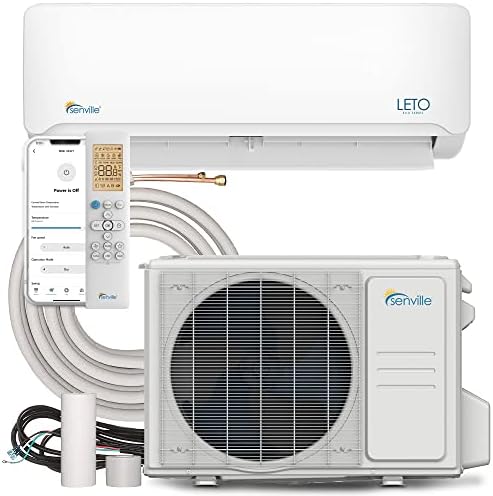
- Alexa Enabled Mini Split AC/Heating System: Integrate with voice control or app, allowing you to adjust your mini split …
- Versatile 4-in-1 Mini Split: All-season solution with air conditioning, heat pump (functional up to 5F/-15C), dehumidifi…
- Stylish & Functional Mini Split AC: Suitable for both home and business. Provides performance without compromising aesth…
READ MORE: American Standard HVAC Systems: Complete Buyer’s Guide for U.S. Homeowners (2026)
Carrier AC Installation Cost Snapshot (2026)
One of the biggest questions is always: “How much will this actually cost?” Prices can vary depending on where you live and which contractor you hire. However, we have pulled the latest national averages to give you a clear picture.
Prices checked: March, 2026
| Unit Size | Typical Installed Price Range |
| 1.5-Ton | $3,000 – $5,000 |
| 2.0-Ton | $3,500 – $6,500 |
| 2.5-Ton | $4,500 – $8,500 |
| 3.0-Ton | $5,500 – $10,500 |
Real-World Example: For a standard 1,200-square-foot home, a 2-ton Carrier Performance unit typically costs $5,200 fully installed including local permits and basic labor.
What adds to the cost?
The “sticker price” of the AC unit is only part of the story. Several other things can change your final bill:
- New Indoor Coil: Often, the indoor part of your system (the evaporator coil) needs to be replaced to match the new outdoor unit.
- Ductwork Repairs: If your home is older, your ducts might be leaky. Fixing them can cost $1,000 to $3,000 but will save you money on bills.
- Labor & Permits: Most cities require a permit to install an AC. Labor costs also vary by city; a tech in New York City will cost more than one in a small town.
- The Line Set: These are the copper pipes that carry the cooling fluid. If they are old or the wrong size, they must be replaced.
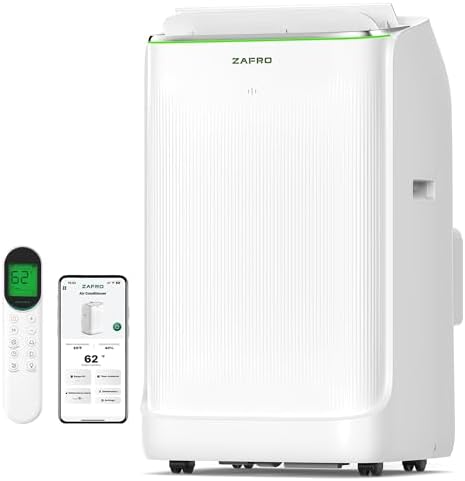
- 【Powerful Inverter Cooling with Dual Hose System】- ZAFRO smart inverter portable air conditioners is powered by upgraded…
- 【Energy Saving Performance with Smart Inverter Technology】- Our inverter portable air conditioner featuring smart invert…
- 【72Hrs Drainage-Free Cooling with Self-Evaporating System】- Say goodbye to manual draining with the self-evaporating con…
READ MORE: Air Conditioning Companies — Compare, Costs & How to Choose
Comparison Table — Carrier vs Trane vs Lennox vs Goodman vs Rheem (2026)
It helps to see how Carrier stacks up against the competition. Here is how they compare in the current 2026 market.
| Brand | Model Example | Typical Price (Installed) | Top SEER2 Rating | Warranty (Parts) | Best For… |
| Carrier | Infinity 26 | $3,500 – $15,000 | 26.0 | 10 Years | Maximum quiet and comfort. |
| Trane | XV20i | $5,000 – $14,000 | 22.0 | 10 Years | Extreme reliability in hot climates. |
| Lennox | SL28XCV | $3,500 – $12,500 | 28.0 | 10 Years | The highest energy efficiency. |
| Goodman | GVXC20 | $3,200 – $9,500 | 24.5 | 10 Years | Best for those on a strict budget. |
| Rheem | Prestige RA20 | $3,000 – $11,000 | 20.0 | 10 Years | Simple design and easy repairs. |

- CARRY YOUR COMFORT ALONG, WITH OUR PORTABLE HOME AC: Infuse a chilling super satisfying environment into every hot place…
- AN AC, A DEHUMIDIFIER, AND A FAN, ALL 3-IN-1: A chilly room temperature from a room air conditioner is not always the re…
- AUTO-SWING, TIMER, PUSH BUTTON CONTROL AND MORE: SereneLife’s portable ac unit for rooms comes with loads of features fo…
Pros & Cons of Carrier AC
Every brand has its strengths and weaknesses. Here is the “honest neighbor” breakdown for Carrier.
Carrier Overall
Pros:
- Whisper Quiet: Their high-end units are among the quietest in the world. You can stand right next to them and still have a normal conversation.
- Expert Dealers: Carrier requires their “Authorized Dealers” to go through a lot of training. This means your installer is likely very skilled.
- Better Humidity Control: Carrier systems are excellent at pulling moisture out of the air, which is vital for staying comfortable in the South or Midwest.
Cons:
- Higher Price: You will pay more upfront than you would for a brand like Goodman.
- Expensive Parts: If a part breaks out of warranty, Carrier parts can be more expensive than “generic” brands.
- Warranty Rules: You must register your unit within 90 days, or your warranty is cut in half.
By Product Line
- Infinity Line: (Pros) Incredible comfort. (Cons) High initial cost.
- Performance Line: (Pros) Great balance of price/value. (Cons) Not quite as quiet as the Infinity.
- Comfort Line: (Pros) Very affordable. (Cons) Can be a bit noisy and uses more electricity.

- QUIET OPERATION & INSTALLATION: This system mandates professional installation as it’s not a DIY mini split AC. This air…
- AMPLE COVERAGE: This unit provides cooling and heating for up to 550 Sq. Ft and able to work in environments as low as 1…
- SMART SENSOR TECHNOLOGY: The unit will sense room temperature at the remote control, instead of at the indoor unit durin…
READ MORE: Rheem Air Conditioner Review 2026 — Performance, Costs & Which Model to Buy
Carrier AC Reviews: Real-World Performance
When we look at what homeowners are saying in 2026, a few themes keep popping up.
The Good News: Many owners praise how much their energy bills dropped after switching to a Carrier Infinity system. One homeowner in Florida noted, “My bill went from $250 a month to $160. The unit is so quiet I sometimes forget it’s running.” Seniors often mention that the “Greenspeed” technology prevents that “blast of cold air” feeling, instead providing a gentle, steady flow of cool air.
The Complaints: The most common frustration is about repairs. While Carrier units are generally very reliable, if a specific part is needed, it can sometimes be on backorder. Some owners also mentioned that they were surprised by high labor costs for repairs, as the standard warranty covers the part but not the technician’s time.
Key Takeaway: Carrier is highly rated for comfort and noise, but you should always ask your dealer about a “labor warranty” for extra protection.
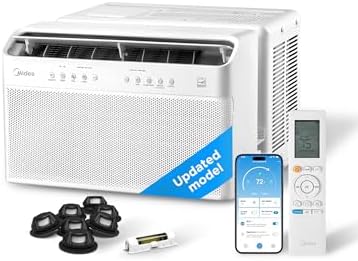
- ULTRA QUIET – The U-shape design of Midea U Smart Inverter air conditioner uses your window to block noise outside. The …
- MORE THAN 37% ENERGY SAVINGS – With the advanced DC Inverter technology, Midea U window air conditioner achieves over 35…
- SMART CONTROL – Midea U Smart Inverter air conditioner is Wi-Fi enabled and can be controlled from anywhere using the Sm…
Carrier Warranty Registration, Service & Longevity
Carrier units are built to last. If you take care of your system, you can expect it to run for 15 to 20 years.
The Warranty Rules:
- Standard Warranty: Most Carrier units come with a 10-year parts limited warranty.
- The Catch: You have to register the unit online within 90 days of installation. If you forget, the warranty usually drops to only 5 years.
- Consumer Choice: In 2026, Carrier offers a “Consumer Choice” option. You can choose between a 10-year parts warranty OR a 5-year parts warranty that includes 3 years of labor coverage.
Bottom Line: Always make sure your installer registers the unit for you. Keep a copy of that registration in a safe place.
READ MORE: Carrier Heat Pump Reviews (2026) — Models, Costs, Pros & Cons

- Confortotal mini split with wifi compatible with Alexa & Google
- 12000btu ductless mini split air conditioner and heat pump 1 ton and can cool or heat up to 750 Sq Ft
- Precharged Compressor unit easy to install
How to Choose the Right Unit
keep these practical points in mind:
- [ ] Proper Sizing: Do not just buy the same size you had before. Have the dealer do a “Load Calculation” to see what your home actually needs now.
- [ ] Noise Levels: If the AC unit is near a bedroom window or a patio where you sit, ask for a unit with “Silencer System II” technology.
- [ ] Simple Controls: Carrier’s Infinity Touch control is very easy to read. It has large text and a bright screen.
- [ ] Energy Rebates: Ask your dealer about local utility rebates. Many seniors qualify for extra savings for installing energy-efficient units.
- [ ] Indoor Air Quality: If you have allergies or respiratory issues, ask about “HEPA” filters or UV lights that can be added to your Carrier system.
Installer & Dealer Tips
The person who installs the AC is just as important as the brand you buy.
- Look for the Seal: Only use a “Carrier Factory Authorized Dealer.” This ensures they have the right tools and training.
- Get Three Quotes: Never take the first offer. Comparing three different dealers helps you find the best price.
- Ask for “Itemized” Quotes: You want to see exactly how much you are paying for the unit, the labor, and the permits.
- Maintenance Plans: Ask if the dealer offers a yearly “tune-up” plan. This keeps your warranty valid and prevents summer breakdowns.
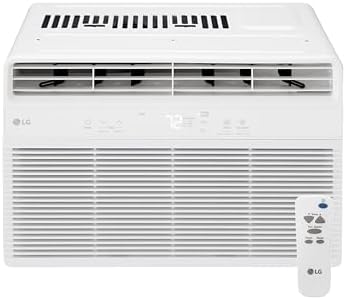
- [MAXIMUM COOLING] Cooling Coverage up to 150 Square ft. is ideal for cooling small rooms with 5,000 BTU window air condi…
- [MAXIMUM USABILITY] With the user friendly panel and remote control, you can operate window air conditioners with LCD di…
- [Easy Installation & Cleaning] This AC has a fixed chassis and installs easily in a double hung window (size W 21″ – 35″…
Frequently Asked Questions
How much does a Carrier air conditioner cost to buy and install?
In 2026, the average cost for a Carrier central AC system ranges from $3,500 to $15,000. Most homeowners with a medium-sized home will pay between $5,500 and $8,500 for a complete installation. The final price depends on the unit’s size, its efficiency (SEER2) rating, and whether your home needs new ductwork or wiring.
Is Carrier a reliable AC brand for a family with seniors?
Yes, Carrier is highly recommended for senior households. Their units are famous for being extremely quiet, which is great for light sleepers. Their high-end models also offer very steady temperatures, preventing the sudden “hot and cold flashes” that older systems often cause. They are widely considered one of the top three most reliable brands in the U.S.
How long do Carrier air conditioners last with regular maintenance?
A well-maintained Carrier air conditioner typically lasts between 15 and 20 years. To reach this age, you should have a professional technician service the unit once a year. This includes cleaning the coils, checking the refrigerant levels, and ensuring the electrical parts are in good shape.
What warranty does Carrier offer on residential AC units?
Carrier typically offers a 10-year parts limited warranty to the original owner, provided the unit is registered within 90 days of installation. If not registered, the warranty period is usually 5 years. Some premium models also include a unit replacement warranty if a major part like the compressor fails within the first 10 years.
Carrier vs Trane vs Lennox — which is better for energy savings?
All three are excellent, but Lennox currently holds the record for the highest peak efficiency. However, Carrier’s “Greenspeed Intelligence” is often considered the best for real-world savings because it adjusts so smoothly to your home’s needs. Trane is often picked for its sheer durability in very hot climates. Any of these three will significantly lower your bills compared to a 10-year-old unit.
Bottom Line
Carrier is a premium choice that offers some of the best comfort and quietness on the market today. While it may cost a little more than “budget” brands, the long-term energy savings and reliability often make it worth the investment.
Next Step: Would you like me to help you create a list of questions to ask your local Carrier dealer when they come out for an estimate?