If you are comparing air to air heat pump vs air to water, you are probably trying to answer a simple question: which system is the better fit for your home?
Both options can improve comfort and energy efficiency. Both can reduce dependence on older heating systems. But they work in different ways, and that difference matters a lot when it comes to installation, cost, performance, and long-term value.
For USA homeowners, the best choice depends on the home itself, the local climate, the existing setup, and the comfort level you want. This guide breaks everything down in plain English so you can compare both systems with confidence. Lets deep dive into “Air to Air Heat Pump vs Air to Water: Differences, Costs, and Best Uses”
READ MORE: Air to Water Heat Pump — Complete 2026 Buyer’s Guide (costs, brands, pros & cons)
What Is an Air to Air Heat Pump?
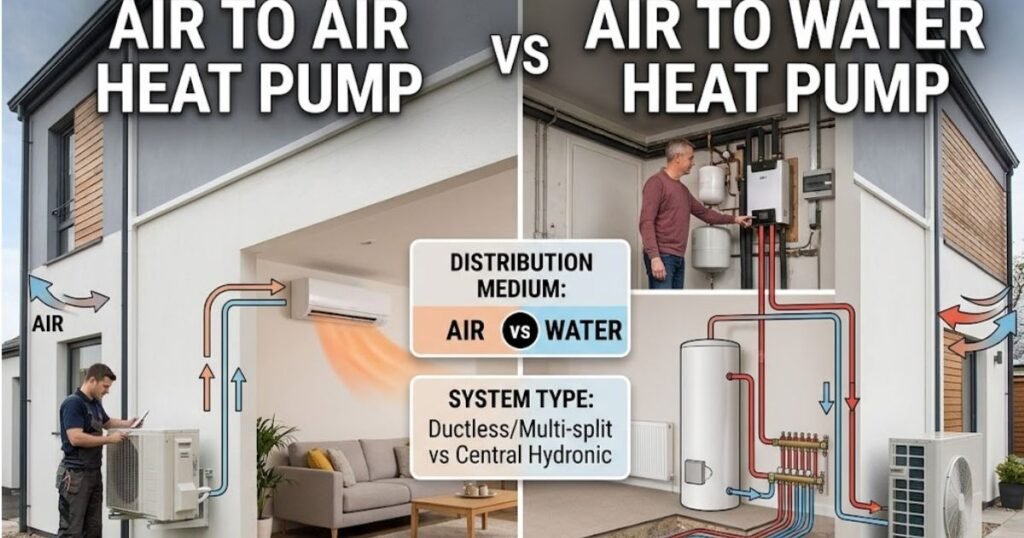
An air to air heat pump is a home heating and cooling system that moves heat between the outdoor air and the indoor air. In simple terms, it does not create heat the way a furnace does. Instead, it transfers heat from one place to another.
In winter, it pulls heat from outside air and brings it indoors. In summer, it reverses the process and removes heat from inside your home. That is why it can both heat and cool.
How it works
An air to air heat pump typically includes:
- An outdoor unit
- One or more indoor units
- Refrigerant lines
- A blower or fan system
The system uses refrigerant to absorb and release heat. Even when outdoor temperatures feel cold, there is still usable heat energy in the air. The heat pump captures that energy and moves it into the home.
What it heats and cools
This system heats and cools the air in your living spaces. It is often used with:
- Ducted systems
- Ductless mini-splits
- Zoned comfort setups
- Whole-home HVAC systems
Why homeowners choose it
Many homeowners prefer air to air heat pumps because they are:
- Good for both heating and cooling
- Often easier to install in homes with existing ductwork
- Well suited for many USA homes
- A practical choice for energy efficient home heating
For many families, this is the most familiar style of heat pump for home use because it feels similar to a central air conditioner or forced-air furnace setup.
READ MORE: Geothermal Heat Pump Buying Guide: 2026 Costs & Savings
What Is an Air to Water Heat Pump?
An air to water heat pump also pulls heat from outdoor air, but instead of heating indoor air directly, it transfers that heat into water. That heated water is then sent through a home’s heating system.
This is a different kind of air to water heat pump system and is often used in homes that rely on:
- Radiators
- Underfloor heating
- Fan coil units
- Domestic hot water systems in some designs
How it works
The system takes heat from outside air and transfers it into water through a heat exchanger. That heated water circulates through pipes to warm the home.
What it can heat
Depending on the setup, an air to water system can support:
- Room heating through radiators
- Floor heating through underfloor loops
- Hot water production
- Zoned heating in larger homes
Why some homes use it
Homeowners may choose this system because it works well with hydronic heating. It can be a smart option in homes that do not rely on ducted air delivery, or in homes being renovated for a different kind of heating layout.
In other words, it is often chosen when the home already has, or is being designed for, a water-based heating system.
READ MORE: Carrier Heat Pump Reviews (2026) — Models, Costs, Pros & Cons
Air to Air Heat Pump vs Air to Water: Key Differences
To help you visualize the choice, let’s look at how these systems stack up side-by-side.
| Feature | Air to Air Heat Pump | Air to Water Heat Pump |
| Medium | Heats/Cools Air | Heats/Cools Water |
| Primary Delivery | Vents, Ducts, or Wall Heads | Radiant Floors or Radiators |
| Cooling Ability | Excellent (Native AC) | Limited (Requires Fan Coils) |
| Hot Water Supply | No (Needs separate water heater) | Yes (Can provide shower/tap water) |
| Installation Style | Ductwork or Wall Mounts | Plumbing and Pipework |
| Noise Level | Moderate (Fan noise) | Very Low (Silent pipes) |
| Maintenance | Filter changes, Coil cleaning | Water pressure, Pump checks |
Which One Is Better for USA Homes?
Deciding which system is “better” depends entirely on your specific circumstances. The US is a massive country with wildly different climates and housing stocks.
1. The Climate Factor
If you live in the Southern US (Florida, Texas, Arizona), an air to air heat pump is usually the winner. You need powerful dehumidification and cooling for 8 months of the year, which air to air systems excel at.
If you live in the Northeast or Midwest, an air to water system with radiant floor heating is a luxury that makes a -10°F morning feel much more bearable. However, you will still need a plan for cooling in the summer.
2. The Ductwork Dilemma
- Does your home have existing ducts? If yes, an air to air heat pump is a “drop-in” replacement for your old furnace/AC combo. It is the most cost-effective path.
- Does your home have no ducts? You can choose between a ductless air to air “mini-split” or an air to water system. Air to water is much more invasive to install in an existing home but provides a cleaner look (no boxes on the walls).
3. Renovation vs. New Build
For a New Build, you have a blank slate. Many homeowners are now opting for air to water systems to get that “toasty toe” feeling of radiant floors. For a Renovation, air to air is almost always the faster and cheaper installation.
READ MORE: Weil‑McLain Boiler Reviews (2026) — Models, Costs, Pros & Cons
Cost Comparison: Budgeting for Your System
Let’s talk numbers. Please keep in mind that these are general ranges for the USA market in 2024–2026. Costs fluctuate based on your local labor rates and the size of your home.
Equipment and Installation Costs
- Air to Air Heat Pump: Generally ranges from $6,000 to $15,000 for a full central system. Ductless mini-splits can be cheaper ($3,000–$5,000 per zone).
- Air to Water Heat Pump: Generally ranges from $12,000 to $25,000+. The equipment itself is specialized, and the plumbing required for radiant floors or radiators is much more labor-intensive than running tin ducts.
Long-Term Operating and Maintenance
- Monthly Bills: Both are highly efficient. However, air to water can be slightly more efficient for heating because water retains heat much better than air does.
- Maintenance: Air to air systems require you to change filters every 1–3 months. Air to water systems are “set and forget” for the most part, but you’ll want a professional to check the water pressure and pumps annually.
Energy Efficiency and Comfort
The Comfort Factor
Air to Air provides instant gratification. Turn it on, and you feel the temperature change in minutes. However, it can create “hot and cold spots,” and some people find the sound of blowing air distracting.
Air to Water is the marathon runner. It takes longer to heat up a room, but once it’s warm, the temperature is incredibly stable. There are no drafts, and it doesn’t stir up dust or allergens—making it a top choice for people with asthma or allergies.
Humidity Control
In a humid US summer, Air to Air is king. It naturally removes moisture from the air as it cools. Air to Water systems struggle here; if you run cold water through floor pipes, they can actually “sweat” (condensation), which can damage wood floors. To cool with air to water, you usually need to add “fan coil units,” which essentially turns that part of the system back into an air to air setup.
READ MORE: Best Bosch Heat Pump Air Conditioner: Review, Comparison & Buying Guide
Pros and Cons of Each System
Air to Air Heat Pump
Pros:
- Lower Upfront Cost: Cheaper to buy and install in most US homes.
- Dual Purpose: Exceptional heating and cooling in one box.
- Dehumidification: Keeps the home crisp and dry in summer.
- Availability: Almost every HVAC contractor in the US knows how to fix these.
Cons:
- Air Movement: Can feel drafty or dry out the air in winter.
- Noise: You will hear the fans and the “whoosh” of air.
- No Water Heating: You still need a separate water heater for your showers.
Air to Water Heat Pump
Pros:
- Superior Comfort: Radiant heat is widely considered the most comfortable heating method.
- Domestic Hot Water: Can provide all the hot water for your home, saving even more on utilities.
- Silence: Near-silent operation inside the home.
- Efficiency: Water is a more efficient medium for transporting heat than air.
Cons:
- Higher Cost: Significant investment for the heat pump and the plumbing.
- Complex Cooling: Providing AC is more difficult and often requires extra equipment.
- Installer Scarcity: Finding a technician who specializes in hydronic heat pumps can be harder in some US states.
READ MORE: Best Cold Climate Heat Pump Review 2026: Top Picks & Buying Guide
Best Use Cases: Which One Fits Your Life?
Choose an Air to Air Heat Pump if…
- You already have ductwork in your home.
- You live in a region with very hot, humid summers.
- You are on a tighter budget for the initial installation.
- You want a simple, “all-in-one” heating and cooling solution.
Choose an Air to Water Heat Pump if…
- You are building a custom “forever home” and want maximum comfort.
- You want radiant floor heating (warm feet!).
- You want your heat pump to also handle your domestic hot water.
- You suffer from allergies and want to avoid blowing dust around the house.
Installation and Maintenance
Installation Complexity
Installing an air to air system is usually a 1–2 day job for a professional crew. They hook up the outdoor compressor, line up the indoor air handler, and charge the refrigerant lines.
An air to water installation is more like a construction project. It involves plumbing, manifold setups, and if doing radiant floors significant floor work. This is best planned during a major renovation or new build.
Routine Maintenance Tasks
- Air to Air: Change your filters! This is the #1 reason these systems fail. You should also keep the outdoor unit clear of leaves and snow.
- Air to Water: Check the system pressure gauge occasionally. Because it’s a “closed-loop” water system, it rarely needs topping off, but it’s good to check for leaks.
READ MORE: Heat Pump vs AC: Which Is Better for U.S. Homeowners?
Common Mistakes Homeowners Make
- Chasing the Lowest Price: A cheap heat pump installed poorly will cost you more in repairs than a high-end system installed correctly.
- Ignoring the “Water” in Air to Water: Many homeowners forget that an air to water system can replace their gas or electric water heater. If you don’t factor that saving in, the air to water system looks more expensive than it actually is.
- Under-Sizing for Cold Climates: In very cold US states (like Minnesota or Maine), you need a “cold climate” rated heat pump. Standard models may struggle when the temperature drops below 5°F.
- Skipping the Manual: Heat pumps work differently than furnaces. They like to “set it and forget it” rather than having the thermostat cranked up and down constantly.
Homeowner Checklist: Preparing for Your Quote
Before you call an HVAC professional, have this info ready:
- [ ] Home Square Footage: (To determine the “tonnage” or size needed).
- [ ] Current Fuel Source: (Are you switching from oil, propane, or electric baseboard?).
- [ ] Ductwork Status: (Do you have vents in every room?).
- [ ] Insulation Levels: (A well-insulated home needs a much smaller, cheaper heat pump).
- [ ] Primary Goal: (Is it lower bills, better comfort, or eco-friendliness?).
FAQ Section
What is the difference between an air to air heat pump and an air to water heat pump?
An air to air heat pump moves heat into your home via air (vents and fans), while an air to water heat pump moves heat into a water circuit (radiant floors or radiators).
Is an air to water heat pump better than an air to air heat pump?
“Better” is subjective. Air to water provides more consistent, comfortable heat and handles domestic hot water. Air to air is much better at cooling/dehumidifying and is generally cheaper to install.
Can an air to air heat pump heat and cool a home?
Yes! Air to air heat pumps are designed to be “bi-directional.” They are essentially an air conditioner that can run in reverse to provide heat during the winter.
Are air to water heat pumps more efficient?
Generally, yes. Water can carry about 4 times more heat than air for the same volume. This makes the distribution of heat in an air to water system more energy-efficient, though the outdoor units themselves have similar efficiency ratings.
Which heat pump is best for a USA homeowner?
For the majority of USA homeowners with existing ductwork, an air to air heat pump is the most practical and cost-effective choice. However, for those building new or seeking the ultimate in comfort and hot water integration, air to water is the premium choice.
Final Recommendation
Choosing between an air to air heat pump vs air to water really comes down to your home’s “bones” and your personal comfort goals.
- Go Air to Air if you want a reliable, dual-purpose system that handles the brutal US summers just as well as the winters, and you want to keep your installation costs manageable. It is the practical “Swiss Army Knife” of HVAC.
- Go Air to Water if you are looking for the gold standard of comfort. If you hate the sound of fans and want the luxury of warm floors and integrated hot water, the higher investment is well worth it for the long-term lifestyle upgrade.
Whichever you choose, you are making a smart move for your wallet and the planet. Modern heat pumps are the most energy-efficient way to stay comfortable, and they are quickly becoming the standard for the modern American home. Contact a qualified local installer today to see which system your specific home can support!