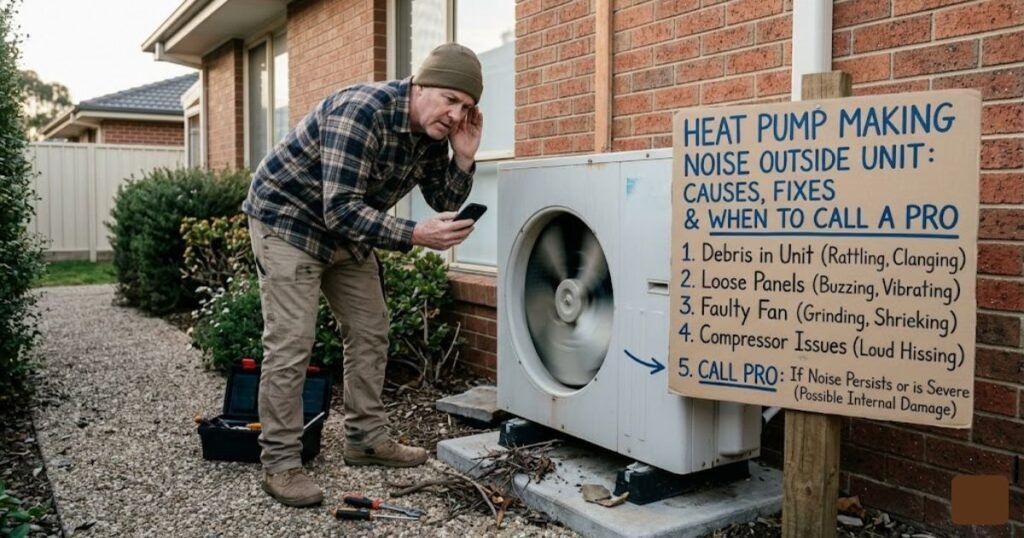
There is nothing quite like the peace and quiet of a relaxing evening at home, right? You’re settled in, the house is at the perfect temperature, and then you hear it. A strange “clunk,” a persistent “thump,” or maybe a high-pitched “shriek” coming from the backyard. You look out the window, and sure enough, your heat pump making noise outside unit is the culprit.
First off, take a deep breath. It is perfectly normal to feel a bit of “homeowner anxiety” when your HVAC system starts acting like a percussion instrument. We rely on these machines to keep us cool in the blistering summer and cozy during those freezing winter nights. When they start making a racket, it’s easy to start calculating repair bills in your head.
But here is the good news: Not every noise is a sign of a total system meltdown. Some sounds are just part of the job, while others are simple fixes you can handle yourself in a few minutes. In this guide, we are going to walk through everything you need to know about outside heat pump noise. We’ll cover what’s normal, what’s a red flag, and how to tell if you need a pro or just a screwdriver. Lets deep dive into “Heat Pump Making Noise Outside Unit: Causes, Fixes & When to Call a Pro”
READ MORE: Carrier Heat Pump Reviews (2026) — Models, Costs, Pros & Cons
Slide these heavy-duty anti-vibration pads under your washer or dryer in minutes to lock the machine in place, absorb up to 94% of shock and noise, and protect your tile or hardwood from scratches:

What a Normal Heat Pump Noise Sounds Like
A heat pump is not silent. That is important to know right away. Many homeowners worry when they hear the system running, but some sounds are completely normal.
A healthy outdoor unit may make:
- Soft humming while the system runs
- Light fan noise as air moves through the unit
- Brief start-up sounds when the system turns on
- Gentle clicking when it cycles on or off
These sounds are usually steady and mild. They do not suddenly get loud. They do not sound like metal hitting metal. They do not shake the house.
If the sound is similar to what you have always heard, it may simply be normal operation. But if the heat pump outside unit making noise is new, louder, or sharper than before, it is worth checking.
A simple rule helps:
- Same sound as usual? Probably normal.
- New sound or louder sound? Check it.
- Harsh, loud, or repeated sound? Call a pro.
Restore quiet, reliable airflow to your system with this exact-fit replacement motor, designed for easy installation and built to handle the outdoor elements season after season:

- 1/10HP, 1100RPM, 0.75A, 208-230V, Include 1 pc 5MFD capacitor.
- Replacement Fan Motor: 5KCP39BGS069S, Fasco # G3907, GE 3907, Genteq # 3S001, Dayton # 6DLL0, 5KCP39BGY824S, HC33GE233A,…
- Rotation = CCW Shaft End; Shaft Diameter 1/2″, Body Diameter 5-5/8″(48 Frame).
Common Reasons a Heat Pump Outside Unit Makes Noise
There are many reasons an outdoor unit can become louder than normal. Some are minor. Some need repair. Here are the most common causes in plain English.
1. Loose panels or screws
Outdoor units sit outside in rain, wind, heat, and cold. Over time, screws can loosen. Panels can vibrate. That can create a heat pump rattling outside sound.
This is one of the easiest causes to fix. Sometimes the problem is just a cover or access panel that is not secured well.
2. Debris inside the unit
Leaves, twigs, grass, mulch, and small debris can get pulled into or around the outdoor unit. When the fan spins, those items can make noise.
This may sound like:
- rattling
- tapping
- light banging
- scraping
If the noise starts after a windy day or after yard work, debris may be the cause.
3. Fan blade problems
The outdoor fan moves a lot of air. If a blade is bent, loose, dirty, or damaged, it can create noise. It may also make the unit vibrate more.
A fan issue can cause:
- buzzing
- rattling
- scraping
- wobbling sounds
If the fan is the problem, the unit may not move air properly either.
4. Refrigerant issues
Refrigerant helps the heat pump transfer heat. If there is a leak or pressure issue, the system may start to sound different. Some refrigerant problems create a hissing sound. Others can cause louder humming or struggling noises.
This is not a DIY repair. Refrigerant issues should always be handled by a trained technician.
5. Compressor problems
The compressor is a major part of the system. It is one of the most important parts, and one of the most expensive to repair.
A failing compressor may cause:
- loud humming
- banging
- buzzing
- hard starting
- repeated clicking
If the compressor is struggling, the whole system may also lose heating or cooling performance.
6. Frozen or dirty coils
Coils can get dirty over time. In cold weather, they can also freeze when something is not working right. Dirty or frozen coils can make the unit sound odd and can reduce airflow.
That may lead to:
- louder running noise
- strain on the system
- poor performance
- unusual cycling
If the unit is iced up, do not force it. Let a professional check why it happened.
7. Vibration from poor leveling
The outdoor unit should sit firmly on a stable base. If the pad has shifted, sunk, or tilted, the unit can vibrate more than it should.
That can create:
- humming
- rattling
- buzzing
- vibration through the ground
Sometimes the problem is not inside the unit at all. It is the surface under it.
8. Failing motor or bearings
The fan motor and its bearings can wear out with age. When that happens, the unit may start to sound rough or squeaky.
You might hear:
- squealing
- grinding
- scraping
- whining
These sounds often mean a part is wearing out and should be inspected soon.
9. Electrical relay or contactor noise
Heat pumps use electrical parts to start and stop the system. A contactor or relay can make a click when the unit turns on. That is normal.
But if the clicking becomes rapid, loud, or repeated, it may be a sign of an electrical issue. Electrical problems should be checked by a professional.
READ MORE: Heat Pump Running but Not Cooling: Causes, Fixes & When to Call a Pro
This heavy-duty foaming sprayer connects right to your garden hose, automatically mixing your favorite HVAC cleaner at 5 custom dilution ratios for a deep, professional-grade wash in minutes:

Different noise types and what they may mean
A heat pump loud noise outside does not always tell you the exact problem, but the type of sound gives helpful clues.
1. Rattling
A rattling sound often points to loose parts, debris, or a panel that is vibrating. It can also happen if the unit is not sitting firmly on the pad.
What it may suggest:
- loose screws
- loose panel
- twigs or leaves inside
- weak mounting
- worn hardware
2. Buzzing
Buzzing can be minor, but it can also point to an electrical or mechanical issue. A loose part, failing motor, or electrical component can all buzz.
What it may suggest:
- loose electrical parts
- motor trouble
- capacitor issue
- contactor problem
- refrigerant strain in some cases
3. Grinding
Grinding is one sound you should not ignore. It usually means something is rubbing when it should not be. That could be a worn motor bearing or a damaged fan part.
What it may suggest:
- worn bearings
- fan blade rubbing
- motor failure
- internal mechanical damage
4. Squealing
Squealing often comes from a motor or bearing issue. It can also happen when a part is under strain.
What it may suggest:
- worn motor
- failing bearings
- belt-related issue in some systems
- friction from moving parts
READ MORE: Why Is My Heat Pump Blowing Warm Air? Causes, Fix, and Costs
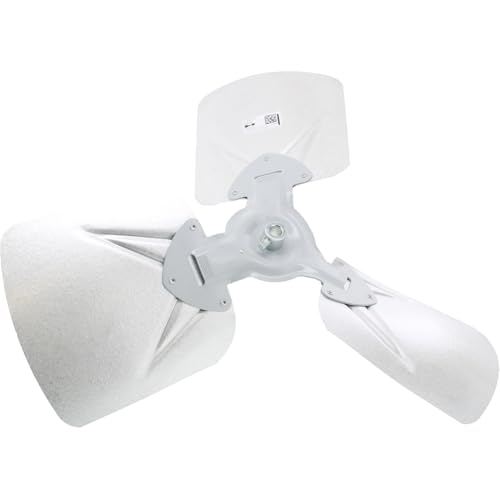
Stop that loud rattling, scraping, or vibration before it damages your condenser motor or bends your outdoor unit out of shape. Direct-fit and balanced for smooth airflow, this exact 3-blade 22-inch Goodman replacement blade installs easily to restore quiet, reliable performance to your heat pump:
5. Banging
Banging is a serious noise. It can happen when a part is loose, when the fan is damaged, or when the compressor is having trouble.
What it may suggest:
- loose internal component
- fan issue
- compressor trouble
- something hitting inside the cabinet
6. Clicking
A single click at startup or shutdown is usually normal. Repeated clicking is different.
What it may suggest:
- relay or contactor issue
- electrical problem
- control problem
- hard starting
7. Hissing
A hissing sound is often linked to airflow or refrigerant. It may come from a refrigerant leak, a pressure change, or air movement through a small opening.
What it may suggest:
- refrigerant leak
- pressure problem
- airflow issue
8. Vibrating
Some vibration is normal. Too much vibration is not. If the whole unit seems to shake, the base may be uneven or a part may be loose.
What it may suggest:
- poor leveling
- loose mounting
- worn fan assembly
- unbalanced component
9. Loud humming
A low hum can be normal. A loud or strained hum is different. It may mean the system is working too hard or struggling to start.
What it may suggest:
- compressor issue
- electrical problem
- failing capacitor
- fan motor strain
READ MORE: Emergency Heat Pump Repair: Signs, Costs & What to Do
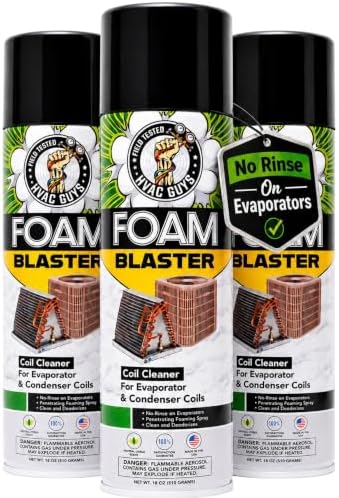
This professional-grade foaming action penetrates deep into tight coil fins—acting as a convenient no-rinse solution for indoor evaporators and a quick light-rinse spray for outdoor condensers:
Easy Checks Homeowners Can Do Safely
You don’t need to be an HVAC expert to do some basic detective work. However, Safety First! Before you put your hands anywhere near the internal parts of the unit, go to your exterior disconnect box (the small metal box mounted on the wall near the unit) and pull the switch or flip the breaker to “Off.”
Once the power is off, here is what you can check:
- The Visual Inspection: Look around the base of the unit. Are there piles of leaves, tall weeds, or mulch touching the sides? Clear a two-foot “buffer zone” around the unit to let it breathe.
- The Debris Check: Peek through the top grille with a flashlight. Do you see a stick or a bunch of pine needles stuck in the fan area? If you can reach it safely with a pair of pliers (with the power off!), try to remove it.
- The Level Test: Put a carpenter’s level on top of the unit. If it’s significantly tilted, that could be the source of your vibration. You might need a pro to help re-level the pad.
- The “Hand Test” for Panels: Sometimes you can find a rattle just by gently pressing your hand against different parts of the metal cabinet while the unit is running (be careful of moving parts!). If the noise stops when you press on a panel, you’ve found your culprit. Just tighten the screws on that panel.
- Ice Check: Is the unit encased in a block of ice? If so, turn the system off and let it melt. A “frozen” unit is often caused by a dirty air filter inside the house, so go check your furnace filter while you wait!
- Nearby Objects: Sometimes the noise isn’t the heat pump at all. Check if a nearby fence gate, a downspout, or a piece of patio furniture is vibrating against the unit.
When the Noise Is a Warning Sign
Sometimes, a heat pump rattling outside is a minor annoyance. Other times, it’s a distress signal. If you notice any of the following “red flags,” stop the DIY efforts and call a licensed HVAC technician immediately.
- The Burning Smell: If the noise is accompanied by the smell of ozone, burning plastic, or “hot” metal, shut it down. This is a major electrical risk.
- The Screech of Death: A loud, metal-on-metal screeching or grinding sound usually means a component is about to fail catastrophically.
- The “Never-Ending” Startup: If the unit clicks and hums but never actually starts, you could burn out the motor by leaving it on.
- Tripping Breakers: If your circuit breaker trips every time the heat pump tries to turn on, there is a short circuit or a grounded component. Do not keep flipping the breaker back on; you could cause an electrical fire.
- Rapid Icing: If the unit ices up again immediately after you’ve melted it, your defrost board or refrigerant levels are likely to blame.
- Poor Performance: If the unit is making a weird noise and your house isn’t getting cool (or warm), the noise is likely coming from a failed heart (the compressor) or a leak.
READ MORE: Is a Heat Pump Worth It in Summer? A Simple Homeowner’s Guide
Heat Pump Repair Cost Overview
We know the “C-word” (Cost) is what every homeowner worries about. While prices vary wildly depending on where you live in the U.S. and what brand of unit you have, here are some general ballparks to help you budget.
| Repair Task | Estimated Cost Range (Parts & Labor) |
| Tightening Panels / Minor Cleaning | $75 – $150 (Basic service call) |
| Replacing a Capacitor | $150 – $350 |
| Replacing a Fan Motor | $300 – $700 |
| Fixing a Refrigerant Leak & Recharge | $400 – $1,200 (Depends on amount of gas) |
| Replacing a Defrost Board | $250 – $500 |
| Replacing a Compressor | $1,500 – $3,000+ |
Pro Tip: If your unit is more than 12-15 years old and needs a new compressor, most technicians will recommend replacing the whole outdoor unit instead. The cost of a compressor is often half the price of a new, more efficient system with a fresh warranty.
How to Reduce Heat Pump Noise
Maybe your unit isn’t broken, it’s just… loud. Some older models were built before “quiet technology” was a big selling point. If you want to turn down the volume on your noisy outdoor heat pump, here are a few homeowner-friendly tricks.
Install Vibration Pads
You can buy rubber and cork “iso-pads” that sit under the corners of the unit. These absorb the vibration before it can travel into the concrete pad and into your home’s foundation. It’s a cheap way to dampen a low-frequency hum.
Use a Sound Blanket
Yes, they make “sweaters” for compressors! A compressor sound blanket is a heavy, insulated wrap that goes around the compressor inside the unit. It can reduce noise by up to 40%. Just make sure you get one that is compatible with your specific model so it doesn’t cause overheating.
Keep Up with Landscaping
Plants are natural sound barriers. Planting some tall, airy shrubs a few feet away from the unit can help muffle the sound for you and your neighbors. Just make sure you leave plenty of room for airflow; if you “choke” the unit with plants, it will get louder and break down sooner.
Regular Cleaning
A clean unit is a quiet unit. Every spring, gently spray down the exterior coils with a garden hose (don’t use a pressure washer!) to get rid of dust and pollen. This keeps the pressures low and the motors happy.
READ MORE: Heat Pump vs AC: Which Is Better for U.S. Homeowners?
Preventive Maintenance Tips
The best way to deal with outside heat pump noise is to prevent it from happening in the first place. Think of your heat pump like a car; you wouldn’t drive 50,000 miles without an oil change, right?
- Change Indoor Filters Monthly: It seems unrelated, but a clogged indoor filter makes the outdoor unit work much harder. This leads to vibration and premature wear.
- Annual Professional Tune-ups: Have a pro come out once a year (ideally in the spring) to check refrigerant levels, tighten electrical connections, and oil the motors if necessary.
- Clear the Snow: In the winter, make sure snow isn’t burying the unit. If the fan has to chop through snow or ice, it’s going to make a terrifying noise.
- Listen Regularly: Every now and then, walk past your unit while it’s running. If you know what “normal” sounds like, you’ll catch a “weird” noise much faster.
Conclusion
At the end of the day, your heat pump is a workhorse. It spends its life out in the elements, fighting the heat and the cold to keep you comfortable. A little bit of heat pump making noise outside unit action is to be expected over time.
Most of the time, the fix is something simple like clearing away a few fallen branches or tightening a loose screw on a side panel. However, if your unit is screaming, grinding, or causing your lights to flicker, don’t play the hero. Turn it off and call in a local professional. Catching a small noise today can save you from a massive repair bill tomorrow.
Frequently Asked Questions
Why is my heat pump making noise outside?
There are several reasons, ranging from simple to complex. Common causes include loose metal panels, debris like sticks or leaves stuck in the fan, or even the unit being unlevel. More serious causes include failing motor bearings, a struggling compressor, or a refrigerant leak.
Is it normal for a heat pump outdoor unit to be loud?
It depends on what you mean by “loud.” It is normal to hear a steady hum, the sound of rushing air, and an occasional “whoosh” during the defrost cycle. However, sharp noises like banging, grinding, or high-pitched squealing are not normal and should be inspected.
Why does my heat pump rattle when it starts?
A rattle at startup is often caused by the initial torque of the motor shaking the unit’s cabinet. If screws have loosened over time, the panels will chatter against each other. It can also be caused by the refrigerant lines vibrating against the frame of the unit as the pressure builds.
What does a buzzing outside heat pump mean?
Buzzing is typically an electrical sound. It often points to a failing contactor or a capacitor that is struggling to provide enough power to start the motor. In some cases, a very fast vibration of a loose part can also sound like a buzz.
When should I call a technician for a noisy heat pump?
You should call a pro if you hear grinding, persistent banging, or high-pitched screeching. Other warning signs include a burning smell, the unit tripping the circuit breaker, or if the unit stays loud even after you’ve cleared away debris and tightened visible screws.