Imagine flicking on a light switch, running your refrigerator, or charging your phone in the middle of a dense forest, deep in a desert canyon, or during a massive statewide power outage. There is no power line connecting you to the local utility company, and no monthly electric bill landing in your mailbox.
Today, a complete solar power kit completely changes the equation. These all-in-one packages take the guesswork out of building an independent energy ecosystem, bundling everything you need to capture, regulate, store, and use clean energy wherever you are.
This comprehensive guide breaks down exactly how an off-grid solar power system operates, matches system features to real-world power requirements, details realistic current market costs, and highlights the best off-grid solar kits available today. Lets deep dive into “Best Off-Grid Solar Kits in the USA: Complete Buyer’s Guide”
What Is an Off-Grid Solar Kit?
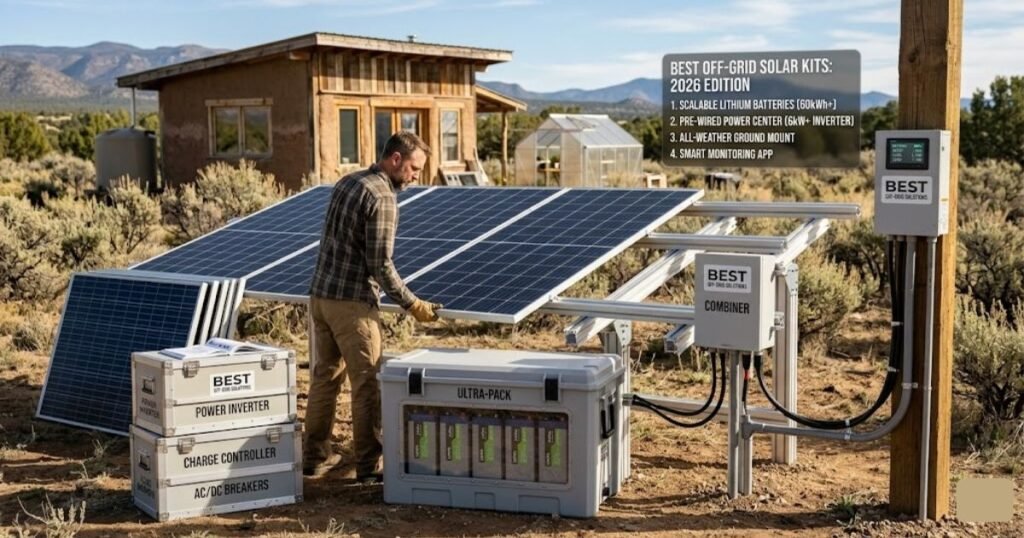
An off-grid solar kit is a bundled power system that usually includes solar panels, a charge controller, an inverter, batteries, wiring, and mounting hardware. The U.S. Department of Energy describes a solar electric system as typically made up of those core parts, and it separates off-grid systems from grid-connected systems because off-grid systems are not tied to utility power lines.
In plain language, the kit collects sunlight, stores power, and then turns that stored energy into usable household electricity. Some kits are full stationary systems built for homes and cabins. Others are portable solar generator kits designed for RVs, camping, and backup use.
A complete off-grid solar power system often includes:
- Solar panels to capture sunlight
- A solar charge controller to manage charging
- Batteries for off-grid battery storage
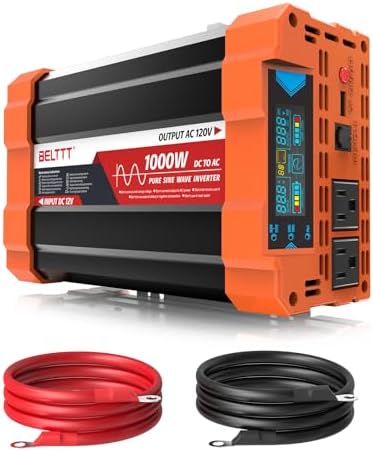
- An inverter to convert DC power to AC power
- Wiring, breakers, and mounting gear
- Optional monitoring or app control
READ MORE: Home Battery Backup Without Solar: Best Options for U.S. Homeowners
How Off-Grid Solar Kits Work
The process is simple once you break it into steps. Solar panels generate direct current (DC) electricity from sunlight. A charge controller regulates that power so the batteries are charged safely. The batteries store the energy. Then the inverter converts the stored DC electricity into alternating current (AC) power for normal household appliances.
That is the basic flow:
- Panels collect sunlight.
- The charge controller manages charging.
- Batteries store the energy.
- The inverter changes DC to AC.
- Lights, appliances, and devices use the electricity.
This is also why solar panels alone are not enough for off-grid living. DOE notes that to produce power on their own, solar systems need a properly configured inverter and a storage system.
Who Needs an Off-Grid Solar Kit?
Off-grid solar kits are a strong fit for people who live or spend time in places where grid power is limited, costly, unreliable, or unavailable. DOE specifically notes that off-grid systems are most common in remote areas where connecting to utility power can be more expensive than buying an off-grid system.
They are useful for:
- Remote homes and rural properties
- Cabins and sheds
- RVs, camper vans, and trailers
- Tiny homes
- Farm buildings and workshops
- Emergency backup power users
- People who want less dependence on the electric grid
READ MORE: Solar Powered Heat Pump Cost: USA Homeowner Guide to Savings
Key Features to Look For
When comparing off-grid solar kits, the details matter more than the marketing. A good kit is the one that matches your actual power use, not the biggest one on the page.
Look closely at:
- System size: A 400W kit is very different from a multi-kilowatt home system.
- Daily power output: Can it cover your lights, fridge, pumps, or small AC?
- Battery capacity: More stored energy means more nighttime and cloudy-day backup.
- Battery chemistry: Lead-acid is usually cheaper; lithium or LiFePO4 is often lighter, longer-lasting, and more convenient in modern portable systems. DOE’s older residential guidance favors deep-discharge lead-acid for stationary systems, while today’s premium portable kits commonly use lithium-based batteries.
- Inverter size: This controls what appliances you can run at once.
- Expandability: Some systems let you add batteries or panels later.
- Installation difficulty: DIY-friendly kits save money, but bigger systems may need a pro.
- Warranty and support: Especially important for expensive systems.
- Weather resistance: Helpful for outdoor, RV, or cabin use.
- Monitoring features: App control and Bluetooth can make life easier.
READ MORE: Solar Water Heater
How to Choose the Right Kit
Start with your power needs. The NREL off-grid planning guide emphasizes that off-grid design begins with the load profile: what you want to power, how often you use it, and how much energy you need over a full day. NREL also notes that off-grid planning depends on capital and operating costs, replacement costs, available solar area, and desired reserve levels.
A simple way to choose is this:
- For a cabin or weekend retreat: A smaller kit may be enough if you only run lights, phones, a fan, a laptop, and maybe a small fridge.
- For an RV or camper: Portability and easy setup matter more than huge battery capacity.
- For home backup: Look for a larger inverter, strong battery storage, and good expandability.
- For full-time off-grid living: Choose a system that can grow with your load and leave room for future panels or batteries.
Also think about:
- How many appliances you want to run at once
- How much sunshine your location gets
- How much roof or ground space you have
- Whether you need something portable or fixed
- How much you can spend now versus later
Calculate Your True Daily Energy Usage
You cannot guess your way to a reliable off-grid design. You must perform a basic energy audit. Make a list of every item you intend to power, look at its data label to find its running wattage, and multiply that by the number of hours you plan to run it each day.
Example Calculation:
– Compact Refrigerator: 60 Watts x 24 Hours = 1,440 Watt-Hours (1.44 kWh)
– LED Light Bulbs (x5): 40 Watts x 5 Hours = 200 Watt-Hours (0.20 kWh)
– Laptop Charging: 65 Watts x 4 Hours = 260 Watt-Hours (0.26 kWh)
-Total Absolute Minimum Daily Need = 1,900 Watt-Hours (1.90 kWh)
READ MORE: 8 Best DREO Smart Tower Fans 2026: Review & Comparison
Best Off-Grid Solar Kit Options
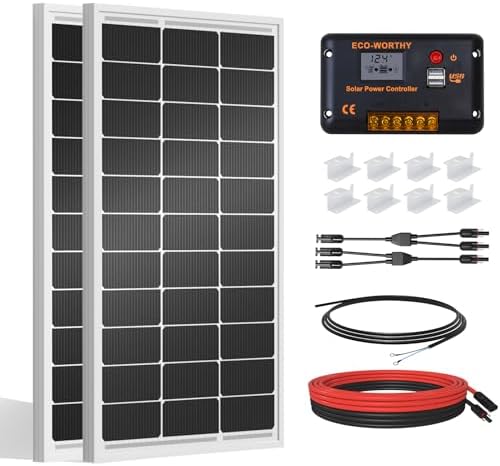
1) Renogy 400W 12V Starter Solar Panel Kit
This is a strong choice for DIY buyers who already understand the basics of off-grid power or already have part of a system in place. Renogy lists it as an affordable off-grid RV power option with optional PWM or MPPT charge controller choices and a clear wiring diagram. It is also priced far below larger complete systems, which makes it attractive for budget-conscious users.
- Best for: RVs, small cabins, and beginners who want a starter build.
- Strengths: Low price, simple layout, flexible panel/controller options.
- Limitations: It is not a full battery-backed home system by itself, so it is more of a foundation than a complete solution.
- Ease of Installation: Extremely High. A highly accessible weekend project for any novice DIYer.
- Component Quality: High-quality baseline panels and a highly dependable, industry-proven charge controller.
- Value for the Money: Exceptional. An incredibly cheap way to get a safe, highly functional foot in the door of the solar ecosystem.
- Recommendation Verdict: If you are outfitting a basic camper, building a tiny storage shed workshop, or want a tangible hands-on system to learn how off-grid solar operates without spending thousands, this is the absolute standard starter kit to buy.
2) EcoFlow DELTA Pro + 400W Solar Panel
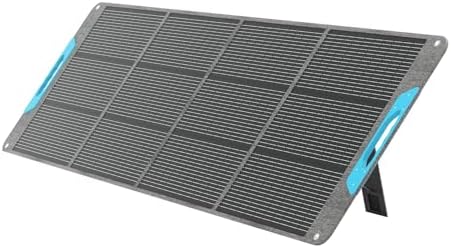
EcoFlow’s DELTA Pro line is built for serious backup and off-grid flexibility. The official product page shows 3,600Wh of battery capacity for the DELTA Pro, and the extra battery expands total storage further. EcoFlow also lists a 400W portable solar panel, making the system easy to pair with solar charging.
- Best for: Home backup users who want a powerful, modular system.
- Strengths: Large battery capacity, expandable design, strong home-backup potential.
- Limitations: It is expensive compared with small RV kits, and the full setup can get heavy and pricey as you add batteries and panels.
- Ease of Installation: High. Uses completely pre-molded, color-coded proprietary cables that click into the main hub frame like a computer setup.
- Component Quality: Elite. Highly advanced solid-state electronics encased in a rugged, heavily protected, and beautifully designed housing.
- Value for the Money: Great for users who value simplicity, clean space integration, and absolute ease of mind over raw budget savings.
- Recommendation Verdict: The definitive premier option for high-end mobile builds and tiny homes. It eliminates all installation stress, provides a stunning touch-screen command console, and delivers a clean look that looks right at home in a high-end camper bay or utility closet.
3) Jackery Solar Generator 2000 Plus
Jackery’s Solar Generator 2000 Plus is one of the more balanced high-end portable kits. The company lists 2,042.8Wh of capacity, 3,000W output, expandable storage from 2 to 24kWh, and LiFePO4 battery chemistry. Jackery also says it can power heavy-duty devices up to 6,000W and fast-charge with solar panels.
- Best for: RV users, cabins, and people who want a portable system that can grow.
- Strengths: Strong output, expandable capacity, long-life battery, fast solar charging.
- Limitations: Higher price than basic kits, and the full setup needs add-ons for maximum value.
- Ease of Installation: Very easy. The internal electrical distribution is completely pre-built inside the rolling housing, requiring you only to set up the exterior panel array and plug it in.
- Component Quality: Premium grade across the board, backed by a strong domestic tracking app and an exceptionally robust battery management system.
- Value for the Money: Excellent. Gives you heavy-duty household power capability without requiring an expensive custom wall installation or professional electrician fees.
- Recommendation Verdict: An absolute powerhouse for seasonal properties and homesteaders who want the raw output to run a full-sized household refrigerator, power tools, and water pumps without undergoing a permanent, complex electrical construction project.

4) BLUETTI AC200L
BLUETTI’s AC200L is another solid mid-to-high-range portable option. The official product page lists 2,048Wh of capacity and 2,400W output, with expansion up to 7kWh and 80% recharge in as little as 45 minutes. That makes it attractive for users who care about fast recharge and flexible expansion.
- Best for: Cabins, RVs, and users who want quick recharging.
- Strengths: Fast charging, good output, app control, expandable storage.
- Limitations: It is still a portable power station, so it is not the same as a fixed whole-home solar array.
- Ease of Installation: Moderate to advanced. Requires solid mechanical aptitude, fundamental wiring knowledge, and proper safety planning to handle the high current pathways.
- Component Quality: Heavy-duty, industrial-grade build design focused purely on reliable long-term service and raw physical resilience over cosmetic appearance.
- Value for the Money: Outstanding. Offers some of the absolute lowest cost-per-watt metrics for a comprehensive, high-capacity residential-scale system on the market.
- Recommendation Verdict: If you are building a permanent home or large cabin off the grid, require standard 240V power to run everyday residential appliances, and want a tough, industrial system that prioritizes heavy motor-starting capacity above all else, this kit is an incredible workhorse.

5) Goal Zero Yeti 3000X + Boulder 200
Goal Zero’s Yeti 3000X kit is built for rugged portable power. REI’s product listing shows 3,032Wh of battery storage, a 2,000W AC inverter with 3,500W surge, and enough strength to handle full-size refrigerators and other higher-demand appliances. Goal Zero also says the Boulder 200 solar panels are built for portable, rugged use and that the kit can recharge from the sun in as little as 18 hours.
- Best for: Campers, off-grid events, and backup users who want a durable kit.
- Strengths: Large battery, rugged panel design, good surge handling.
- Limitations: This is not the cheapest option, and solar recharge is not as fast as some newer premium systems.
- Ease of Installation: Advanced. While engineered as a cohesive DIY-friendly kit with comprehensive schematics, the high voltage and deep home integration mean most owners will want a licensed electrician to handle the final breaker box hookups.
- Component Quality: Absolute Top-Tier. Uses fully certified, code-compliant components that easily clear strict local building inspector requirements.
- Value for the Money: Superb for permanent residential applications. The long-term durability, elite efficiency, and massive 10-year component warranties easily justify the initial premium cost.
- Recommendation Verdict: The ultimate choice for permanent, whole-home off-grid living. If you want to cut the utility cord completely but still want the freedom to run central AC, wash laundry, and live with the exact same electrical luxury as a city home, the PRIME PRO is the definitive system to deploy.
6) Anker SOLIX F2000
Anker’s SOLIX F2000 gives you 2,048Wh of capacity, 2,400W output, and expansion options through solar and extra batteries. Anker also highlights a 10-year lifespan, app monitoring, and SGS certifications tied to UL standards. That makes it appealing for buyers who want a polished, mainstream portable backup system.
- Best for: Home backup, RVs, and first-time portable solar buyers.
- Strengths: Strong output, app control, good safety certifications, expandable bundle options.
- Limitations: It is still a portable unit rather than a full fixed off-grid home system.
- Ease of Installation: Instant. Zero electrical wiring required; simply roll it into place, plug your appliances directly into its 14 built-in face ports, and set up the folding solar panels outside.
- Component Quality: Excellent solid-state safety design utilizing the SuperSafe LIFEBMS system to protect against overcurrent, voltage spikes, and thermal issues.
- Value for the Money: Great. Provides high-capacity emergency insurance and portable power flexibility for a highly reasonable entry price.
- Recommendation Verdict: An ideal choice for suburban homeowners who want immediate, zero-maintenance emergency power backup during major storms without having to cut holes into their home’s permanent walls or handle complex electrical panel wiring.

READ MORE: Best 10,000 BTU Portable Air Conditioner: Reviews & Comparison
Off-Grid Solar Kit Comparison Table
To help you visually see how these six systems line up against each other, look at this side-by-side breakdown of their core capabilities:
| Product Name | Continuous Power Output | Core Battery Capacity | Primary Best Use Case | Installation Complexity | Expansion Capability |
| 1. Renogy 400W Starter | Dependent on external inverter | Dependent on external battery | Small sheds, vans, learning DIY solar | Very Low (Plug-and-play panels) | High (Highly modular) |
| 2. EcoFlow Power Kit | 3,600W Continuous | 2.0 kWh to 15.0 kWh | Luxury RVs, camper vans, tiny homes | Low (Custom pre-molded plugs) | Medium (Within EcoFlow line) |
| 3. BLUETTI Apex 300 | 3,840W Continuous | 2.76 kWh Base | Seasonal cabins, mobile homesteads | Low (Rolling all-in-one station) | Medium (Accepts add-on batteries) |
| 4. SunGoldPower 8000W | 8,000W Continuous | 10.24 kWh Base | Full-time cabins, remote homesteads | Moderate (Requires wall mounting) | High (Scalable battery/panel arrays) |
| 5. EG4 PRIME PRO 10.6kW | 12,000W Continuous | 32.0 kWh Base | Permanent luxury homes, large farms | High (Professional wiring advised) | Massive (Open architecture design) |
| 6. VTOMAN FlashSpeed Pro | 3,600W Continuous | 3.10 kWh Base | Emergency home backup, job sites | Instant (Zero wiring required) | Medium (Supports extra battery blocks) |
Best by use case
- Beginners: Anker SOLIX F2000 or BLUETTI AC200L
- Cabins: Renogy 400W kit or Jackery 2000 Plus
- Home backup: EcoFlow DELTA Pro
- RVs: Renogy 400W kit or Jackery 2000 Plus
- Long-term off-grid living: EcoFlow DELTA Pro or a larger Renogy home system
- Budget buyers: Renogy 400W Starter Solar Panel Kit
READ MORE: EdenPURE Heaters Review 2026 — Prices & Comparison
Cost of Off-Grid Solar Kits
Costs vary a lot, because off-grid systems can range from small starter kits to large whole-home setups. NREL’s off-grid planning materials show that real project costs involve solar panels, batteries, generators, fuel, O&M, replacement costs, and financial assumptions, not just the hardware box price.
A realistic rough guide looks like this:
Budget kits:
Smaller starter kits can begin in the low hundreds. Renogy’s 400W 12V Starter Solar Panel Kit is listed at $394.99, and its 600W Starter Solar Panel Kit starts from $659.99. These are more like building blocks than full house systems.
Mid-range kits:
Complete kits with battery storage often land in the roughly $1,900 to $3,500 range. Renogy’s 400W 12V Complete Solar Panel Kit with 2.4kWh batteries starts from $1,899.99, the 400W kit with 3.6kWh batteries starts from $2,099.99, and its 5.12kWh ShadowFlux kit is listed at $3,199.99.
Premium kits:
Larger home-focused systems can move into the several-thousand-dollar range and beyond. Renogy lists an 11.52kWh Power Kit starting from $3,599.99 and a 20.48kWh battery storage system at $8,449.99. EcoFlow and Jackery also offer large expandable power stations that can be paired with solar panels for serious backup or off-grid use.
Other costs to plan for:
Installation, permits, mounting hardware, replacement batteries, and maintenance should all be part of the budget. Off-grid systems are a long-term investment, so the cheapest upfront option is not always the lowest-cost option over time.
Pros and Cons of Off-Grid Solar Kits
Pros
- Energy independence
- Lower dependence on the utility grid
- Backup power during outages
- Useful in remote locations
- Clean, renewable energy
- Can scale up over time if the kit is expandable
Cons
- High upfront cost
- Power depends on sunlight and season
- Batteries have limits and eventually wear out
- There is a learning curve for sizing and setup
- Bigger systems may need professional installation
- Maintenance and future expansion may be necessary
READ MORE: Best Convector Heater Review: 2026 Best Models & Comparison
Off-Grid Solar Kit Installation and Setup Tips
A good installation starts with the right location. Solar panels should have a clear view of the sun, and your battery bank should be placed somewhere safe, dry, and well-ventilated. For home-style systems, the best setup also depends on your expected hourly load, available solar area, and reliability goals.
A few practical tips:
- Aim panels where they get strong sun for most of the day.
- Keep batteries protected from heat, moisture, and physical damage.
- Use the right wire size, breakers, and connectors.
- Check local electrical codes and permit rules before a permanent install.
- Hire a professional if you are unsure about high-voltage work or permanent wiring.
Off-Grid Solar Kit Maintenance Tips
Off-grid solar kits are low-maintenance compared with fuel generators, but they are not maintenance-free. DOE explains that storage and inverter systems are what make solar usable when the sun is not available, so keeping those parts healthy matters.
Simple maintenance habits help a lot:
- Clean panels when dirt, dust, snow, or grime reduce output.
- Watch battery health and charge levels.
- Inspect wiring and connections for wear.
- Check output on the display or app if your kit has monitoring.
- Do seasonal checks after storms, winter weather, or long storage periods.
READ MORE: Carrier Heat Pump Reviews (2026) — Models, Costs, Pros & Cons
Common Mistakes to Avoid
The biggest mistake is buying a kit that is too small. NREL’s off-grid planning guidance makes it clear that system design should begin with your actual load, not a guess. If you underestimate your energy use, the system may fall short very quickly.
Other mistakes include:
- Buying too little battery storage
- Ignoring inverter limits
- Forgetting about cloudy days and winter sun
- Not planning for future expansion
- Choosing cheap components that cannot handle long-term use
- Assuming a portable station is the same thing as a full home off-grid system
FAQs
How many solar panels do I need for an off-grid system?
It depends on how much electricity you use each day, how much sunlight your location gets, and how much battery storage you have. NREL recommends sizing off-grid systems from the load profile first, then matching solar and storage to that demand.
Can an off-grid solar kit power a house?
Yes, but only if the system is sized correctly. DOE says off-grid systems are the home’s main source of power, and they rely on batteries and an inverter to keep electricity available when the sun is not shining. Large home systems cost much more than small portable kits.
What size battery do I need for off-grid living?
There is no one-size-fits-all answer. The battery bank should match the number of appliances you run, how long you want backup power, and how much reserve you want for cloudy weather. NREL notes that off-grid planning depends on expected demand, storage size, replacement cost, and desired reserve levels.
Are off-grid solar kits worth it?
They can be worth it if you need energy independence, live in a remote area, or want reliable backup power during outages. The tradeoff is a higher upfront cost and the need to size the system correctly.
How long do off-grid solar batteries last?
Battery life depends on chemistry, usage, and maintenance. Modern portable systems often use lithium-based batteries and may advertise long cycle life, while older residential guidance discusses deep-discharge lead-acid batteries as a lower-cost stationary option. The best answer is to check the manufacturer’s cycle rating and warranty.
Conclusion
Off-grid solar kits are a smart solution for people who want power without full reliance on the utility grid. The right kit depends on your location, your budget, and how much electricity you actually need. Smaller kits work well for RVs, cabins, and portable backup use, while larger expandable systems are better for home backup and long-term off-grid living.
If you are just starting out, the safest approach is to match the system to your real daily load, choose quality batteries and a properly sized inverter, and leave room for expansion later. That is the easiest way to buy an off-grid solar kit that stays useful for years instead of feeling too small after the first season.